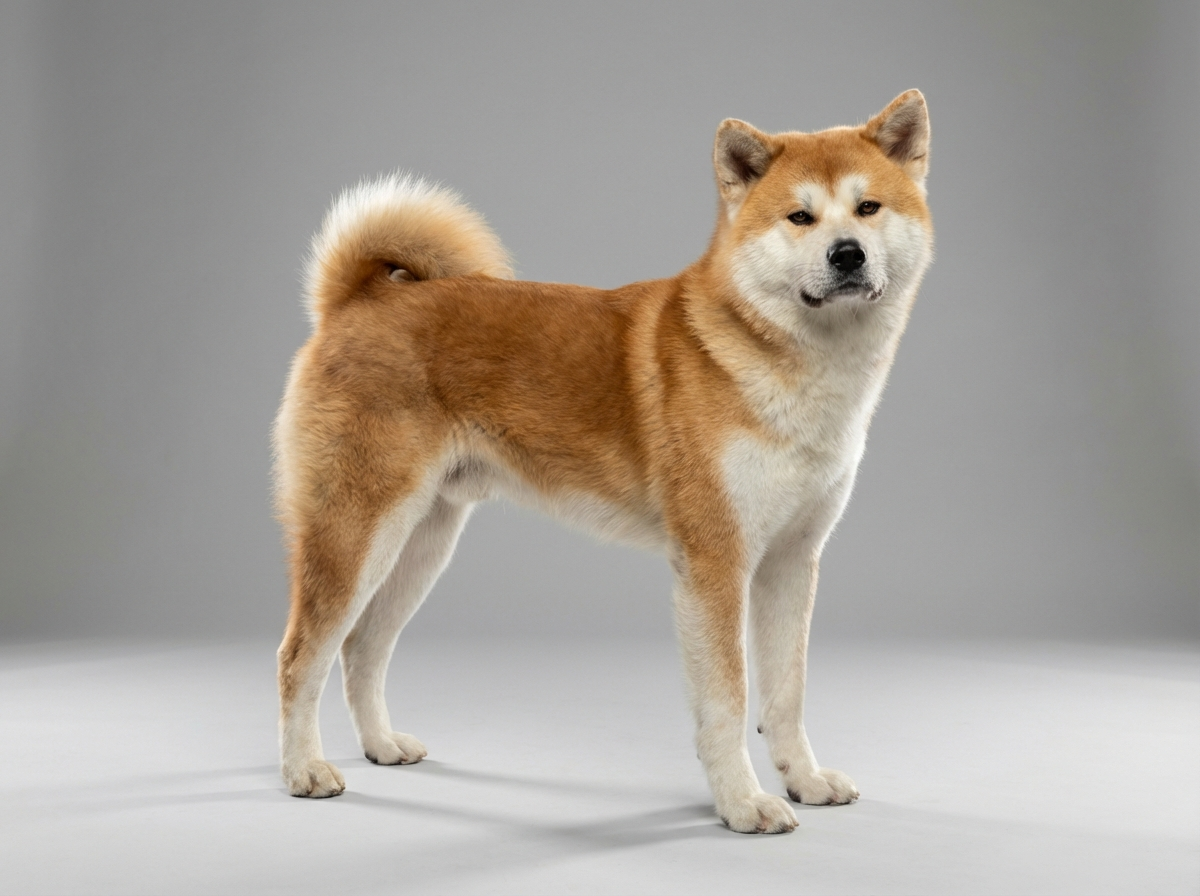
Health
What's usually the real limit on an Akita's exercise?
Heat tolerance from the dense double coat, more often than general fitness.

Quick answer
What's usually the real limit on an Akita's exercise?
Heat tolerance from the dense double coat, more often than general fitness.
An Akita that suddenly seems to run out of steam mid-walk isn't necessarily out of shape — this breed's dense double coat often hits its limit well before its muscles do.
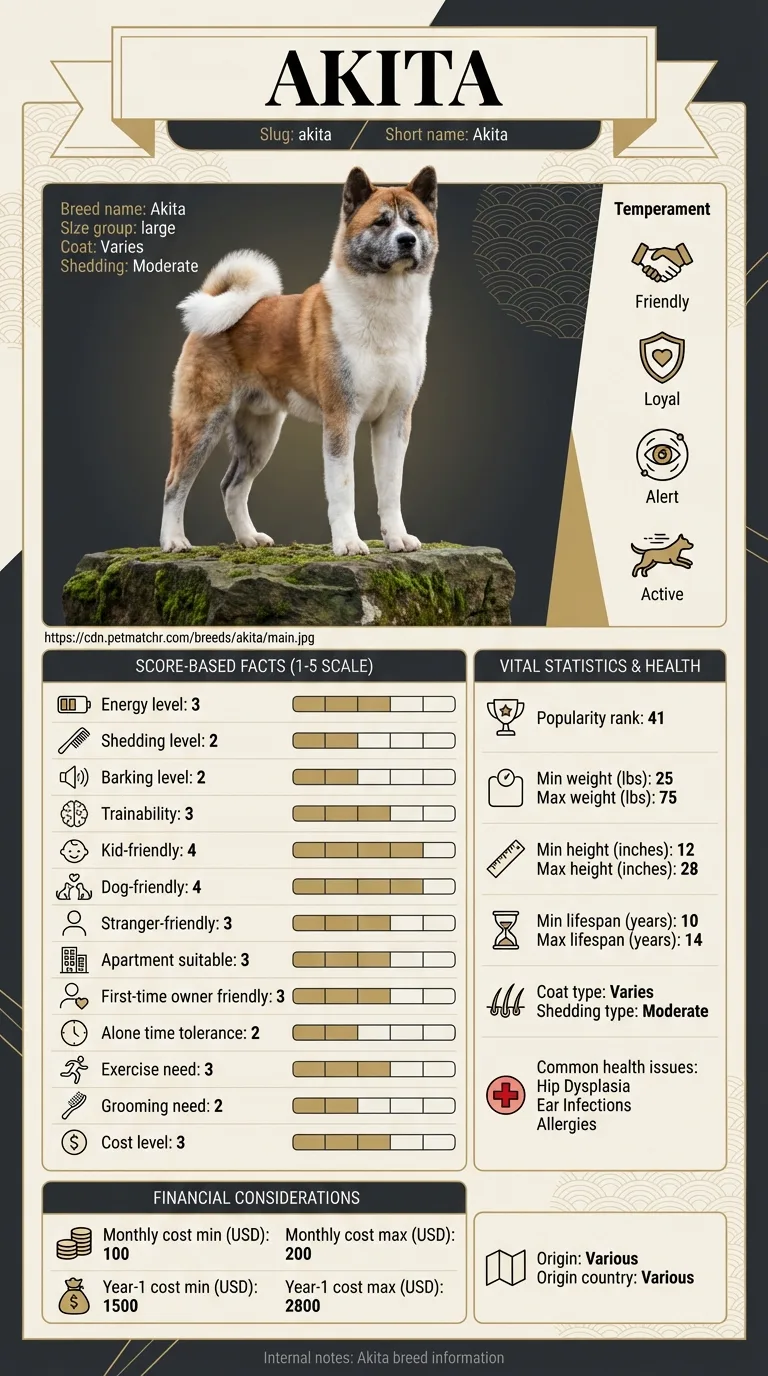
Owners of Akitas in warmer climates, or those exercising their dog during the hottest parts of the day, are the ones who run into this most often.
This guide is not medical advice. If your dog shows pain, sudden behavior change, or worsening symptoms, consult a licensed veterinarian.
Some links may be affiliate links. We may earn a commission at no extra cost to you. We only suggest products we believe are helpful for dog owners.
We research and check what we publish, but we do not warrant that any figure, date, price, or statement is accurate, complete, or current, and we accept no liability for any loss, cost, injury, or other harm arising from the use of this site. Use it as one reference among several. You remain responsible for your own decisions and for your dog's care - confirm anything that matters with a licensed veterinarian or another qualified professional before you act on it. Full disclaimer.
Check this first
Collapse, disorientation, extremely rapid or labored breathing that doesn't improve with rest, or bright red or blue-tinged gums during or after exercise are signs of a heat-related emergency and need immediate veterinary care. Given this breed's coat-driven heat sensitivity, this progression can happen faster than an owner might expect.
Gradually reduced stamina that's consistent across multiple outings, without any acute distress, warrants a vet visit to rule out an underlying medical cause like cardiac disease or hypothyroidism, particularly if the pattern is new or worsening.
The distinguishing factor for routine management is whether tiredness resolves normally with rest and cooling during a single outing (typical heat-related exercise intolerance) versus whether it represents a new, persistent pattern across many outings regardless of temperature (worth a full medical workup).
If any of these apply, call your vet or an emergency clinic now. The rest of this page is for the cases that are not an emergency.
Exercise intolerance in Akitas is most often driven by this breed's dense double coat retaining heat rather than dissipating it efficiently, making heat management the real key to supporting good exercise tolerance, rather than treating reduced stamina as a fitness or conditioning issue.
Reduced exercise tolerance in warm weather is a common, expected pattern for this breed given its coat, making it less a rare health concern and more a routine management consideration for most Akita owners, particularly in warmer climates.
The Akita's dense double coat, developed for the cold, snowy mountainous regions of northern Japan, is highly effective at retaining body heat but correspondingly poor at releasing it during exertion. This is the primary breed-specific driver behind reduced exercise tolerance, distinct from general fitness or conditioning.
Ambient temperature and humidity are the dominant environmental factors affecting this breed's exercise tolerance. Exercise timing, intensity, and coat maintenance are the main levers owners have to manage this factor day to day.
Seek emergency care for collapse, disorientation, or labored breathing that doesn't improve with rest and cooling. Schedule a vet visit for exercise intolerance that's new, worsening, or occurring even in cool weather.
Because the underlying limitation is heat tolerance rather than fitness, some intuitive responses actually make things worse. Avoid these mistakes.
See all Akita health problems, which breeds are prone to exercise intolerance, or the full Akita breed guide for temperament, exercise needs and ownership costs.
Heat-related exercise intolerance typically resolves within minutes of rest, shade, and water during a single outing. If an underlying medical cause is identified through a vet workup, that condition's own treatment timeline would apply.
Success is a dog that exercises comfortably within appropriately timed and intensity-adjusted activity for the season, without signs of excessive heat-related fatigue or distress.
Bianca noticed her Akita, Otis, seemed to run out of energy much faster than her neighbor's shorter-coated dog during their usual midday summer walks in Sacramento. Concerned Otis might be out of shape, she mentioned it to her vet, who explained that heat, not fitness, was the far more likely limiting factor for this breed. Bianca shifted their walks to early mornings, added water breaks, and kept up with regular brushing to reduce coat matting. Otis's stamina during walks improved dramatically once the exercise happened in cooler conditions, confirming heat tolerance, not fitness, had been the real issue all along.
Key takeaway: For an Akita, reduced exercise stamina is more often about managing heat than building fitness — adjusting timing and coat care usually resolves it directly.
This breed's dense double coat, developed for a cold climate, retains heat effectively but dissipates it poorly, meaning heat buildup during exercise often becomes the limiting factor well before general fitness does.
It's the most common and plausible explanation given the breed's coat, but a persistent pattern, especially one that occurs even in cool weather, is worth investigating for other causes like cardiac disease or hypothyroidism.
This is a moderate-energy breed, so consistent daily walks and play are usually sufficient; the key adjustment for heat tolerance is timing and intensity rather than overall duration.
Yes — a well-maintained, properly brushed double coat manages heat more effectively than a matted one, which traps additional heat and can meaningfully worsen exercise tolerance.
Early morning or evening, avoiding the hottest midday hours, is generally the most comfortable and safest timing for this breed in warm weather.
Yes, particularly if it's happening even in cool weather or seems to be progressing over weeks to months, since this could indicate an underlying cardiac or endocrine condition worth ruling out.
Yes — senior Akitas may show reduced exercise tolerance due to normal aging, joint discomfort, or age-related conditions like early heart disease, on top of the breed's baseline heat sensitivity.
Heat tolerance from the dense double coat, more often than general fitness.
Early morning or evening, avoiding the hottest midday hours.
Yes — a well-brushed coat manages heat more effectively than a matted one.
If it's new, worsening, or occurs even in cool weather, since it could indicate an underlying medical cause.
Consistent daily walks and play are usually sufficient for this moderate-energy breed.
A one-page prep sheet for this condition: the signs, the questions to ask, what to get priced. Unlocks here.
You get: Vet visit prep sheet
No spam. One-click unsubscribe. See our privacy policy.
Preview page 1 before you decide.