Living
What's the best time of day to walk a Pug in summer?
Early morning or evening, avoiding the hottest, most humid parts of the day.

Quick answer
What's the best time of day to walk a Pug in summer?
Early morning or evening, avoiding the hottest, most humid parts of the day.
For a Pug, breathing itself is a bit of daily work, and managing that well is most of what keeps BOAS from becoming a crisis.
This affects essentially every Pug owner to some degree, since some level of airway restriction is close to universal in this breed. It matters most for owners in hot or humid climates and those managing an energetic or overweight dog, where the daily effort of breathing adds up fastest.
This guide is not medical advice. If your dog shows pain, sudden behavior change, or worsening symptoms, consult a licensed veterinarian.
Some links may be affiliate links. We may earn a commission at no extra cost to you. We only suggest products we believe are helpful for dog owners.
We research and check what we publish, but we do not warrant that any figure, date, price, or statement is accurate, complete, or current, and we accept no liability for any loss, cost, injury, or other harm arising from the use of this site. Use it as one reference among several. You remain responsible for your own decisions and for your dog's care - confirm anything that matters with a licensed veterinarian or another qualified professional before you act on it. Full disclaimer.
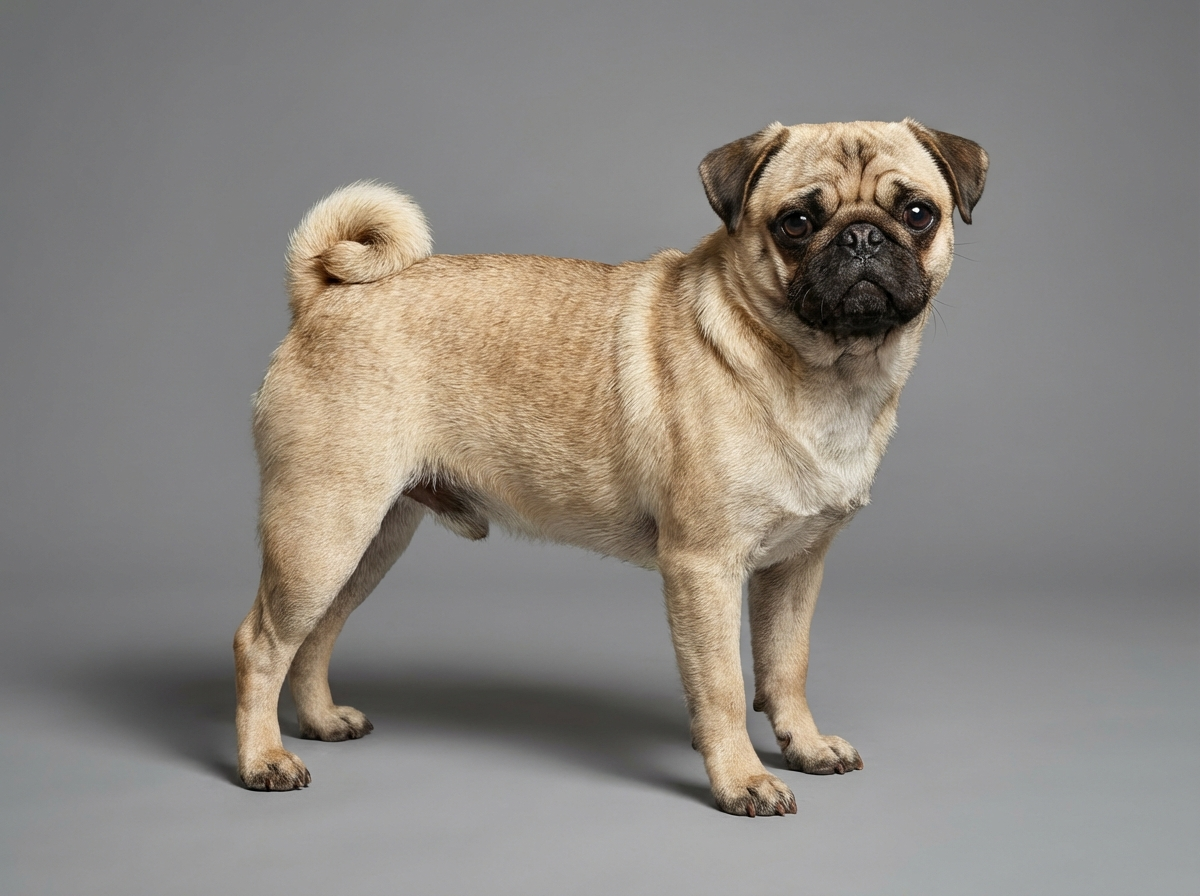
Brachycephalic Airway Syndrome describes the combined effect of a shortened muzzle, narrowed nostrils, and elongated soft palate restricting airflow in this breed. For most Pugs, it shapes daily life through reduced heat tolerance, added exercise limits, and a need for ongoing weight and environment management rather than being an occasional issue.
Some degree of airway restriction is close to universal in this breed given its facial structure, though the severity requiring active daily management versus surgical correction varies significantly from dog to dog.
The shortened muzzle, narrowed nostrils, and elongated soft palate that define this breed's appearance also physically restrict airflow, meaning breathing simply takes more daily effort than it does for a dog with typical facial proportions.
Heat, humidity, and excess weight are the three most significant daily environmental factors that compound this breed's baseline airway restriction, all three of which are within an owner's ability to actively manage.
Talk to your vet if breathing effort seems to be increasing over time, if your dog struggles to cool down after mild activity, or if you notice blue-tinged gums, collapse, or an inability to settle after exertion. These signs suggest BOAS may be progressing to a point needing more active management or surgical evaluation.
See all PUG health problems, which breeds are prone to brachycephalic airway syndrome boas, or the full PUG breed guide for temperament, exercise needs and ownership costs.
Daily management changes, like walk timing and gear adjustments, show benefits almost immediately. This is an ongoing, lifelong management situation rather than something that resolves on a set timeline.
Success means a Pug who can comfortably manage normal daily activity within appropriate limits, not a dog whose breathing sounds like a longer-nosed breed's, since some baseline noise and effort is simply part of this breed's anatomy.
Dogs cool themselves primarily by panting, moving air over the moist surfaces of the mouth and throat. A narrowed airway makes panting a less efficient cooling method to begin with, which is why heat and humidity are consistently the biggest daily risk factor for a Pug with BOAS. Walks are best scheduled for the coolest parts of the day, midmorning or evening in warm months, with close attention to how hard a dog is working to breathe rather than a fixed distance or time goal. Exercise intensity matters more than duration: a Pug can usually manage a longer, unhurried walk far better than a short but intense one.
A harness rather than a neck collar is close to essential, since any pressure on the throat further restricts an already narrow airway. At home, air conditioning or at minimum good airflow during warm months isn't a luxury for this breed; it's a meaningful part of managing daily breathing load. Weight management also plays a direct daily role, since excess weight around the neck and chest adds further pressure on the airway. None of these changes eliminate BOAS, but together they reduce how hard a Pug has to work to breathe on an ordinary day.

If you think your Pug has brachycephalic airway syndrome (boas), the plan is three steps: write down what you have seen and when it started, book a veterinary appointment rather than waiting for the next flare, and take video of the behaviour or symptom before you go — the thing you are worried about rarely happens in the consulting room. Screening in the parents covers brachycephalic airway syndrome (boas), pug dog encephalitis, corneal ulcers.
What the vet visit should produce is a diagnosis and a written plan, not just reassurance: what is being ruled out, what the monitoring interval is, and which signs mean you come back sooner. Ask what the treatment costs across a year rather than per visit, because that is the number that decides whether you are managing this condition or reacting to it.
Between appointments, keep a short log — dates, what you saw, what changed. It is the single most useful thing an owner brings to a follow-up, and for brachycephalic airway syndrome (boas) it is often what separates a clear pattern from a guess.
Every summer, four-year-old Bella seemed to struggle more on her usual midday walk, panting hard and needing to stop and rest partway through. Her owner initially assumed this was just how Pugs were, until a vet visit confirmed her breathing effort during exercise was more than expected even for this breed, and recommended shifting her walk schedule entirely. Moving walks to early morning, switching her collar to a harness, and trimming a few extra pounds over the following months noticeably changed her summer routine. Bella still pants and snorts, normally for her breed, but no longer needs to stop and recover mid-walk the way she used to.
Key takeaway: Daily BOAS management is less about eliminating symptoms and more about adjusting the conditions, timing, gear, and weight, that determine how hard a Pug has to work to breathe on an average day.
Most Pugs have some degree of airway restriction given this breed's facial structure, though severity varies widely. Not every Pug has symptoms severe enough to need surgical correction, but some level of daily management benefits nearly all of them.
Compare your dog's typical snoring and snorting baseline to how they sound and look during and after exercise or in heat. Increased effort, blue-tinged gums, collapse, or an inability to calm down after exertion are signs of a worsening or emergency situation, not just normal Pug noise.
There's no single universal number, since humidity and a dog's fitness and weight matter too, but many owners of brachycephalic breeds avoid walks above roughly 75 to 80 degrees Fahrenheit, especially with any humidity, and shift to early morning or evening instead.
Yes, a well-fitted harness avoids putting pressure on the throat that a collar can, which matters more in a breed whose airway has little spare capacity to begin with.
Yes, it can progress, partly due to ongoing effort-related swelling in the throat tissues over time and partly due to weight gain, which is why ongoing management, not just early-life awareness, matters throughout a dog's life.
For dogs with more severe airway restriction, surgical widening of the nostrils or shortening of the soft palate can meaningfully improve breathing and quality of life. This is a decision made with a vet based on severity, not something every Pug needs.
Yes, since panting is a much less efficient cooling method in this breed, keeping ambient temperature down reduces how hard a dog has to work to regulate its body temperature throughout the day.
Bringing water and planning a route with shaded rest points is a reasonable precaution in warm weather, and knowing the signs of overheating in advance means you can turn back and cool your dog down before things escalate.
Early morning or evening, avoiding the hottest, most humid parts of the day.
A harness, to avoid adding pressure to an already narrow airway.
Yes, excess weight adds pressure on the airway and makes daily breathing noticeably harder.
Increasing effort to breathe, especially after mild exertion, or an inability to cool down are signs to flag with your vet.
No, many Pugs manage well with lifestyle adjustments alone; surgery is reserved for more significant airway restriction.
A one-page prep sheet for this condition: the signs, the questions to ask, what to get priced. Unlocks here.
You get: Vet visit prep sheet
No spam. One-click unsubscribe. See our privacy policy.
See a sample page before you decide.
Early access list
The free prep sheet covers the same-day warning signs, a symptom log and the questions to ask. We are considering a fuller kit that adds a cost worksheet for the usual tests and treatments (US price ranges with their sources) and a plain-English guide to ways of covering the bill. It is not built yet; this list tells us whether it is worth building.
One email, no spam, unsubscribe anytime. Information only, not veterinary advice.