Living
Which fits an apartment better?
The Pug, rating very high (5/5) against the Collie's low (2/5) -- though it doesn't love being left alone for long periods.

Quick answer
Which fits an apartment better?
The Pug, rating very high (5/5) against the Collie's low (2/5) -- though it doesn't love being left alone for long periods.
Collie (Rough Collie) or Pug? On paper they differ most on apartment suitability, and on the scales Collie (Rough Collie) is the heavier at 50–75 lbs. Here is how the two compare on everything that shapes an ordinary week.
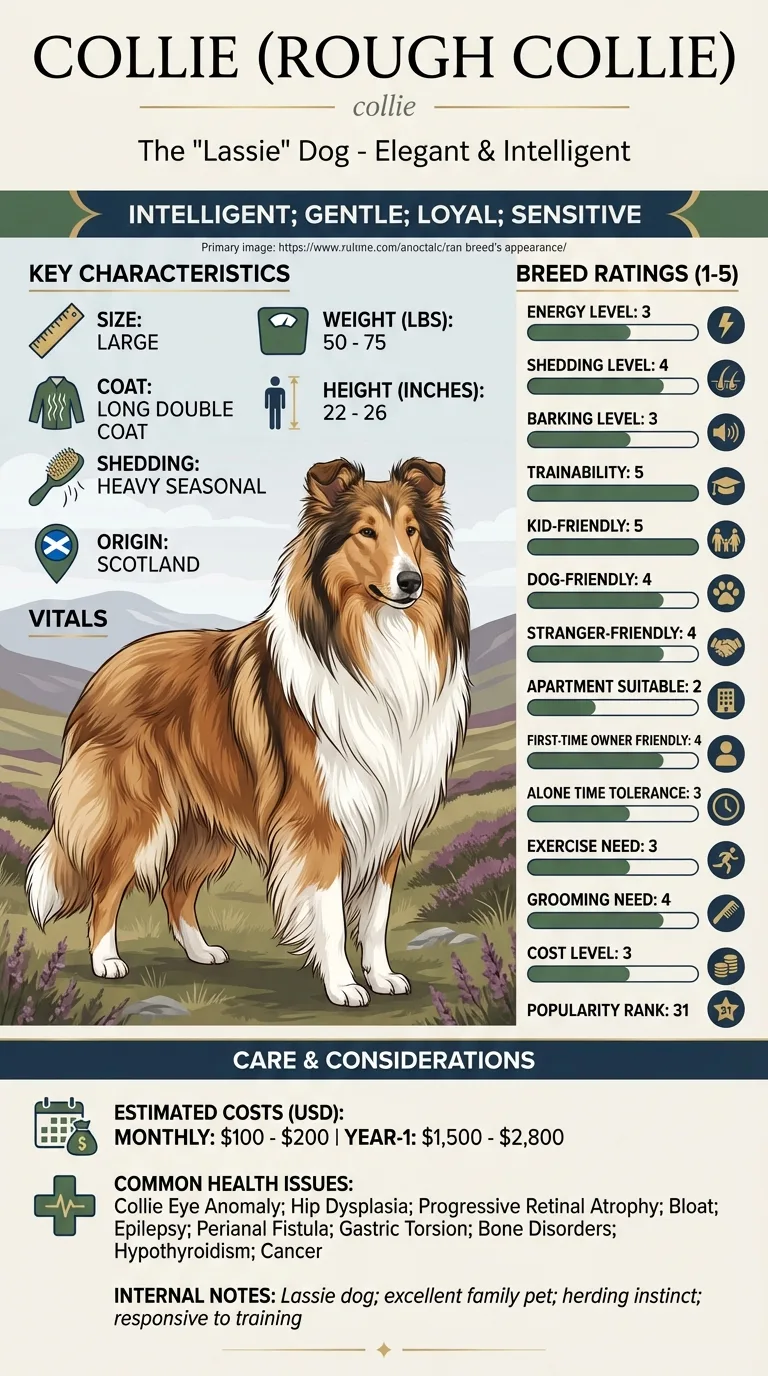
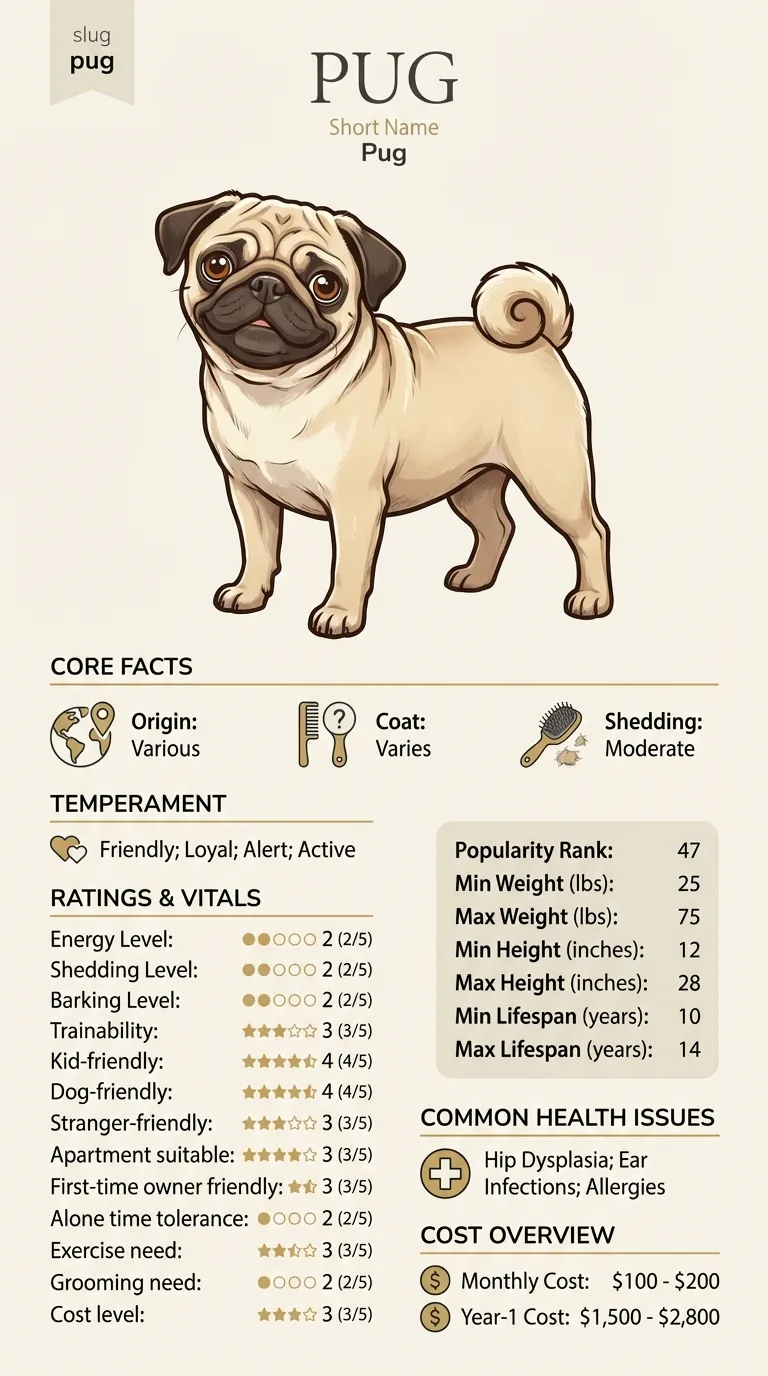
This is for someone already down to Collie (Rough Collie) and Pug and deciding between them. For this pair the decision usually turns on apartment suitability and grooming need, so those are covered first and in most detail. Anyone choosing from a flat has a clear answer here: Pug rates 5/5 against 2/5. The focus throughout is on daily consequences rather than breed background.
Between Collie (Rough Collie) and Pug, apartment suitability is what separates them, and Pug is the lower-effort dog of the two to keep.
Choose Collie (Rough Collie) if the dog will be alone during the working day, you want a dog that picks up training quickly and you want a dog that can keep up with an active routine.
Choose Pug if you are in a flat or a smaller home, this is your first dog and you do not want a standing grooming appointment.
| Feature | collie | pug | Winner |
|---|---|---|---|
| Size class | large | small | Equal |
| Weight | 50–75 lbs | 14–18 lbs | Equal |
| Height | 22–26 in | 10–13 in | Equal |
| Lifespan | 11–14 years | 13–15 years | pug |
| Exercise need | Moderate (3/5) | Low (2/5) | pug |
| Grooming need | High (4/5) | Low (2/5) | pug |
| Shedding | High (4/5) | High (4/5) | Equal |
| Energy level | Moderate (3/5) | Low (2/5) | Equal |
| Barking | Moderate (3/5) | Low (2/5) | pug |
| Apartment suitability | Low (2/5) | Very high (5/5) | pug |
| Good for first-time owners | High (4/5) | Very high (5/5) | pug |
| Tolerates being alone | Moderate (3/5) | Low (2/5) | collie |
| Trainability | Very high (5/5) | Moderate (3/5) | collie |
| Good with kids | Very high (5/5) | Very high (5/5) | Equal |
| Good with other dogs | High (4/5) | High (4/5) | Equal |
| Friendly to strangers | High (4/5) | Very high (5/5) | pug |
| Cost level | Moderate (3/5) | Moderate (3/5) | Equal |
| Coat | Long double coat | Short, smooth double coat | Equal |
| Origin | Scotland | Various | Equal |
| Typical monthly cost | $100–$200 | $80–$150 | Equal |
| Typical first-year cost | $1,500–$2,800 | $1,100–$2,300 | Equal |
A Pug is a small, compact dog -- 14-18 pounds and 10-13 inches -- built almost nothing like a Rough Collie's 50-75 pounds and 22-26 inch frame. Beyond the raw numbers, the build itself differs: the Pug is a brachycephalic, flat-faced breed, while the Collie has a long muzzle and an athletic build suited to herding. These aren't just different sizes, they're different body plans with different physical limits.
The Pug rates low (2/5) for exercise need against the Collie's moderate (3/5), and that's partly a function of its flat face -- Pugs overheat and struggle to breathe hard during exertion, so their exercise ceiling is genuinely lower, not just a preference. The Collie can handle, and benefits from, more sustained activity. If you want a dog for long runs or hikes, neither is ideal, but the Pug is the more limited of the two.
Grooming demand favors the Pug, low (2/5) against the Collie's high (4/5) -- no brushing marathons here. Shedding is a surprise tie, though: both rate high (4/5) despite the Pug's short coat. Pugs are famous among owners for shedding heavily year-round despite looking low-maintenance, so don't let the short hair fool you. A lint roller earns its keep with either breed, just for different reasons.
The Pug rates very high (5/5) for apartment suitability against the Collie's low (2/5), and it barks less too -- low (2/5) versus moderate (3/5). Its lower exercise need makes it a genuinely easier fit for small-space living. The tradeoff is that it tolerates being alone worse, low (2/5) versus the Collie's moderate (3/5), so a Pug left alone all day is more likely to struggle than a Collie in the same situation.
The Collie pulls well ahead on trainability, very high (5/5) against the Pug's moderate (3/5) -- Pugs are affectionate but can be stubborn about following commands. The Pug actually rates slightly higher for first-time owners, very high (5/5) versus the Collie's high (4/5), likely reflecting its smaller size and lower exercise demands rather than easier obedience. Expect easier logistics but a more stubborn student with the Pug.
Both breeds rate very high (5/5) with kids and high (4/5) with other dogs -- a genuine tie on both fronts. The Pug edges ahead with strangers, very high (5/5) against the Collie's high (4/5); it's a breed known for being friendly to nearly everyone it meets. Either dog fits a busy household with visitors and other pets without much concern -- one of the more evenly matched categories in this comparison.
The Pug lives 13-15 years against the Collie's 11-14, a modest edge. Their health profiles don't overlap at all, which is unusual for this comparison set: the Pug's five tracked conditions -- Brachycephalic Airway Syndrome, Pug Dog Encephalitis, corneal ulcers, hemivertebrae, and obesity -- are almost entirely a function of its flat face and body shape. The Collie's ten conditions run toward eye disease, bloat, and cancer instead.
Costs sit close on paper: both rate moderate (3/5) overall, with the Pug slightly cheaper monthly ($80-$150 versus $100-$200) and in year one ($1,100-$2,300 versus $1,500-$2,800). What the numbers don't capture is that brachycephalic breeds like the Pug can carry higher lifetime vet costs tied to breathing issues -- budget a little extra cushion beyond the base figures here.
Collie (Rough Collie) weighs 50–75 lbs and lives 11–14 years; Pug weighs 14–18 lbs and lives 13–15 years. The two diverge most on apartment suitability, grooming need and trainability. They are level on cost level, good with other dogs and good with kids, so those cannot decide it. The table below marks a winner only where one breed is genuinely easier for a typical owner; size and origin are facts rather than merits and stay level. Ratings come from one source applied to both breeds, so they are meaningful against each other rather than as absolute scores.

Yes, clearly better suited -- very high (5/5) apartment suitability against the Collie's low (2/5), and it barks less too. Just know it doesn't love being left alone for long stretches, rating low (2/5) on that front.
No -- both breeds rate high (4/5) for shedding. The Pug's short coat is deceptive; it sheds heavily year-round despite the lack of length.
The Collie, by a wide margin -- very high (5/5) trainability against the Pug's moderate (3/5). Pugs are affectionate but can be genuinely stubborn about obedience work.
No -- their health lists don't overlap at all. The Pug's risks center on its flat face and body shape (breathing issues, corneal ulcers), while the Collie's run toward eye disease, bloat, and cancer.
The Pug, modestly -- $80-$150 monthly and $1,100-$2,300 in year one, against $100-$200 and $1,500-$2,800 for the Collie. Factor in that brachycephalic breeds can carry extra vet costs the baseline figures don't capture.
The Collie -- moderate (3/5) against the Pug's low (2/5). The Pug's flat face limits how much exertion it can safely handle, especially in heat.
Yes, very high (5/5), tied with the Collie on this measure. Both breeds also rate high with other dogs and are considered friendly, easygoing family dogs.
The Pug, rating very high (5/5) against the Collie's low (2/5) -- though it doesn't love being left alone for long periods.
$80-$150 for a Pug or $100-$200 for a Collie -- close, though the Pug's brachycephalic health risks can add unbudgeted vet costs over time.
Not much -- it rates low (2/5), partly because its flat face limits how hard it can safely exert itself, especially in warm weather.
No overlap at all -- the Pug's conditions are tied to its flat face and body shape, while the Collie's run toward eye disease and bloat. Completely different risk profiles.
See every pug comparison.
Secure checkout on Stripe. We never see your card.
7-day money-back guarantee. Instant access.
Health information here is general and is not veterinary advice. If your dog shows pain, sudden behaviour change, or worsening symptoms, consult a licensed veterinarian.
Some links on this site are affiliate links. We may earn a commission at no extra cost to you, and we only suggest products we believe are helpful for dog owners.
We research and check what we publish, but we do not warrant that any figure, date, price, or statement is accurate, complete, or current, and we accept no liability for any loss, cost, injury, or other harm arising from the use of this site. Use it as one reference among several. You remain responsible for your own decisions and for your dog's care - confirm anything that matters with a licensed veterinarian or another qualified professional before you act on it. Full disclaimer.
Match your lifestyle to the right dog.
Take quizNot sure which breed is right for you? Take our 2-minute quiz to find out.
Take the quiz