DogBreedCompass
← Back to breed profile

Understanding Labradoodle Exercise Intolerance

Labradoodle exercise intolerance can hinder your dog's activity levels and overall health. This condition can lead to overheating and overexertion risks.

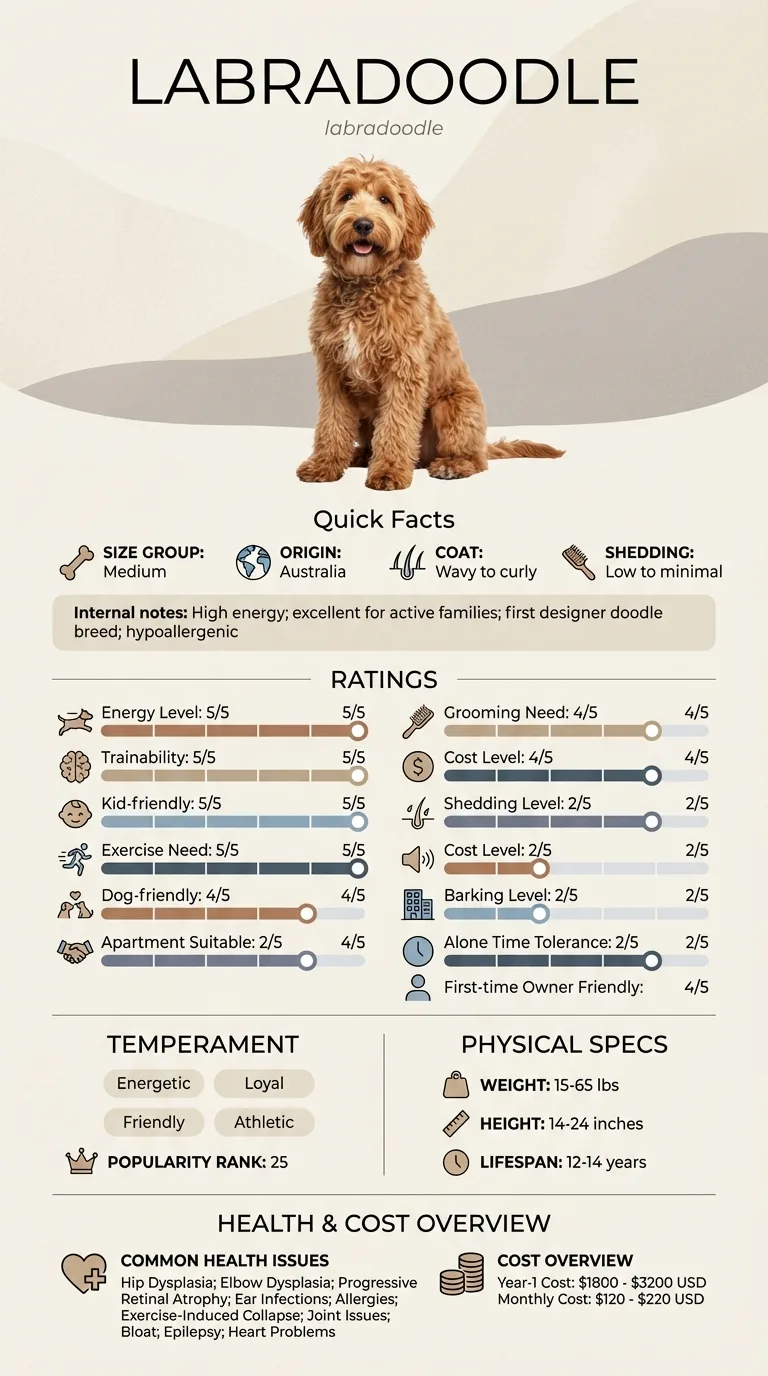
Understanding Labradoodle Exercise Intolerance infographic

Owners of Labradoodles, especially those who expect high energy and activity from their pets, often face this challenge. Busy families or first-time dog owners may find it particularly difficult to manage their dog's exercise needs safely.

Important reminder

This guide is not medical advice. If your dog shows pain, sudden behavior change, or worsening symptoms, consult a licensed veterinarian.

Some links may be affiliate links. We may earn a commission at no extra cost to you. We only suggest products we believe are helpful for dog owners.

What this problem looks like

Labradoodle exercise intolerance can be a frustrating issue for owners. This condition often manifests as unusual fatigue or reluctance to engage in physical activities. Even though Labradoodles are typically energetic and athletic dogs, some may struggle with exercise due to overheating or overexertion.

Common triggers

  • Hot weather or high humidity
  • Long or intense exercise sessions
  • Underlying health issues such as joint problems or respiratory conditions

Exercise intolerance is not uncommon in Labradoodles, especially those with specific health concerns. Owners should be attentive to their dog's stamina and adjust activity levels accordingly to prevent discomfort.

Why this happens

Breed factors

Labradoodles are an energetic breed, typically requiring a good amount of exercise. However, some may have a genetic predisposition to exercise intolerance, which can lead to overheating or fatigue during physical activities. Additionally, certain health issues common in the breed, such as hip dysplasia or heart problems, can affect their ability to handle vigorous exercise.

Environment factors

Environmental factors also play a significant role in exercise intolerance. Hot weather can lead to overheating, making it difficult for Labradoodles to engage in regular activities. Lack of proper acclimatization to exercise can cause them to tire quickly or show signs of distress. Furthermore, if they live in a small space with limited access to exercise opportunities, it can negatively impact their stamina.

What you can try

At-home strategies

  • Start with short, low-impact walks to gauge your Labradoodle's stamina. Gradually increase the duration as they adapt.
  • In hot weather, schedule exercise during cooler parts of the day, like early morning or late evening.
  • Provide plenty of water and take breaks during physical activities to prevent overheating.
  • Engage in indoor activities, such as fetch or puzzle toys, to keep their mind and body active without overexertion.

When to consider a trainer

If you're unsure how to manage your Labradoodle's exercise routine or if their behavior changes significantly, consider consulting a professional dog trainer. They can provide tailored strategies and training methods to address exercise intolerance effectively.

When to talk to your vet

If your Labradoodle consistently shows signs of fatigue or distress during moderate exercise, it's essential to talk to your vet. They can assess for underlying health issues and recommend appropriate treatments or lifestyle changes to help your dog.

Realistic expectations

Within 4 to 6 weeks, you should notice improvements in your Labradoodle's exercise tolerance with consistent training and management.

Success means your Labradoodle can enjoy playtime without excessive panting or fatigue. They should be eager for daily walks and can gradually increase their activity levels without showing signs of distress.

Mistakes that make this worse

Many Labradoodle owners unknowingly reinforce exercise intolerance through common mistakes. Here are some behaviors to avoid and safer alternatives to consider.

  • 1. Ignoring Signs of Fatigue: Pushing your Labradoodle to keep exercising despite signs of tiredness can lead to overheating. Instead, pay attention to their cues and give them breaks.
  • 2. Overheating in Hot Weather: Exercising during peak heat can be dangerous for your dog. Opt for early morning or late evening walks when temperatures are cooler.
  • 3. Not Hydrating Enough: Failing to provide water during exercise can exacerbate fatigue. Always have fresh water available before, during, and after activity.
  • 4. Lack of Variety: Repeating the same exercise routine can lead to burnout or boredom. Mix it up with different activities like swimming or agility training.
  • 5. Exercising on Hard Surfaces: Running on concrete can strain your Labradoodle's joints. Choose softer terrains like grass or dirt for walks and play.
  • 6. Ignoring Health Check-ups: Overlooking regular vet visits can delay the diagnosis of underlying health issues. Schedule routine check-ups to monitor your Labradoodle's condition.
  • 7. Forcing Social Interactions: If your Labradoodle shows anxiety around other dogs, forcing them to socialize can worsen their stress. Gradually introduce them to new friends in a controlled environment.

When Labradoodle Exercise Intolerance is an Emergency

If your Labradoodle shows severe signs of exercise intolerance, it's crucial to act quickly. Red flags include excessive panting, lethargy, or collapse after only light activity. These symptoms can signal serious health issues, such as heatstroke or heart problems, and require immediate veterinary attention.

On the other hand, mild exercise intolerance can often be monitored. If your Labradoodle seems tired after a typical walk but recovers after resting, you might not need to panic. Keep track of their behavior and ensure they have plenty of water and rest periods. If they continue to show signs of fatigue over time, consult your vet for a thorough check-up.

Remember, it’s better to be safe than sorry. If you're ever in doubt about your dog's health, don’t hesitate to contact your veterinarian. They can help determine if the issue is serious or if it's something that can be managed with a structured exercise plan.

Understanding Labradoodle Exercise Intolerance - When Labradoodle Exercise Intolerance is an Emergency

Jenna's Journey with Max the Labradoodle

Jenna, a busy nurse in Atlanta, adopted Max, a Labradoodle full of energy. However, she quickly realized Max would tire easily during playtime and even struggle with short walks. Concerned, Jenna consulted a vet and learned Max had exercise intolerance. Together, they created a balanced exercise plan that included short, frequent walks and gentle play sessions. Over weeks, Jenna gradually increased the duration and intensity, ensuring Max had plenty of water breaks. Soon, Max was happily trotting alongside Jenna, enjoying longer walks without getting exhausted.

Key takeaway: With patience and proper guidance, you can help your Labradoodle manage exercise intolerance, allowing them to thrive and enjoy a more active lifestyle.

Frequently asked questions

Why does my Labradoodle have exercise intolerance?

Labradoodles may experience exercise intolerance due to various factors such as genetics, underlying health issues, or overheating. Common health concerns like hip dysplasia or heart problems can contribute to this condition. It's essential to monitor your dog's activity levels and consult a vet if you notice any signs of distress.

How can I help my Labradoodle with exercise intolerance?

To assist a Labradoodle with exercise intolerance, provide shorter, more frequent walks instead of long sessions. Always ensure they have access to water and a cool environment during exercise. Gradually increase their activity levels while observing their response to ensure they aren't overexerting themselves.

What are the symptoms of exercise intolerance in Labradoodles?

Signs of exercise intolerance in Labradoodles include excessive panting, lethargy, and reluctance to walk or play. You might also see them lie down or seek shade more often than usual. If these symptoms occur, it's crucial to reduce their activity and consult your veterinarian.

Can training help with Labradoodle exercise intolerance?

Yes, training can help by teaching your Labradoodle to recognize their limits during exercise. Gradual desensitization to physical activity and positive reinforcement for resting can be effective. Always reward your dog for listening to their body and taking breaks.

What type of exercise is best for Labradoodles with exercise intolerance?

Gentle activities like short walks, swimming, or interactive play in cool weather are best for Labradoodles with exercise intolerance. Avoid high-impact sports and long-distance running until your dog shows improvement. Always tailor activities to your dog's current fitness level.

When should I see a vet for my Labradoodle's exercise intolerance?

If your Labradoodle frequently shows signs of exercise intolerance or if symptoms worsen, it's time to visit the vet. Immediate concerns include difficulty breathing, persistent lethargy, or signs of pain. Early intervention can help prevent serious health issues.

What are the signs of exercise intolerance in Labradoodles?

Signs of exercise intolerance in Labradoodles can include excessive panting, lethargy, stumbling, or even collapsing after activity. If your Labradoodle shows these symptoms, it’s essential to reduce their exercise and consult a vet.

Can age affect exercise intolerance in Labradoodles?

Yes, older Labradoodles may experience exercise intolerance due to natural aging or health issues like arthritis. It's crucial to adjust their activity level as they age and consult a vet for tailored exercise recommendations.

How can I train my Labradoodle to manage exercise intolerance?

Training your Labradoodle to manage exercise intolerance involves gradual conditioning. Start with shorter, less intense activities, and slowly increase duration while monitoring for signs of fatigue. Positive reinforcement can help them adjust.

When should I see a vet for my Labradoodle's exercise intolerance?

If your Labradoodle consistently struggles with exercise, experiences severe symptoms, or shows any unusual behavior, it's time to see a vet. Early intervention can help address underlying health issues.

Could my Labradoodle's diet contribute to exercise intolerance?

Yes, an improper diet can lead to obesity, which may exacerbate exercise intolerance. Ensure your Labradoodle has a balanced diet suitable for their age, weight, and activity level to support their health and energy.

Quick answers

View more answers
Behavior

What are quick tips for Labradoodle exercise intolerance?

Monitor your dog closely during exercise and take frequent breaks. Keep activities short and vary the type of exercise. Always ensure your Labradoodle has access to fresh water and a cool space to rest.

Living

How can I prevent overheating in my Labradoodle?

To prevent overheating, avoid exercise during the hottest parts of the day and choose cooler environments. Provide plenty of water and watch for signs of overheating like excessive panting.

Health

Is exercise intolerance common in Labradoodles?

Exercise intolerance can occur in Labradoodles, particularly due to their active nature and potential health issues. Regular vet check-ups can help identify any underlying conditions.

Related DogBreedCompass guides

  • Labradoodle separation anxiety guideLearn how to address anxiety issues that may contribute to exercise intolerance.
  • Labradoodle behavior problemsExplore common behavior problems in Labradoodles and their solutions.
  • Labradoodle exercise requirementsUnderstand the exercise needs of Labradoodles to prevent issues.
  • Labradoodle exercise intolerance trainingGet tips on training your Labradoodle to manage exercise intolerance.
  • Labradoodle cost breakdownDiscover the costs of owning a Labradoodle, including health considerations.

Related guides