Health
What makes this breed prone to exercise intolerance?
A very high work drive combined with a heavy double coat means the dog often keeps pushing past safe exertion limits.

Quick answer
What makes this breed prone to exercise intolerance?
A very high work drive combined with a heavy double coat means the dog often keeps pushing past safe exertion limits.
A dog that keeps chasing the ball even as its gait slows and its tongue hangs wide isn't pacing itself — it's pushing through exhaustion, and that's a genuine overheating risk for a heavily coated, high-drive breed.
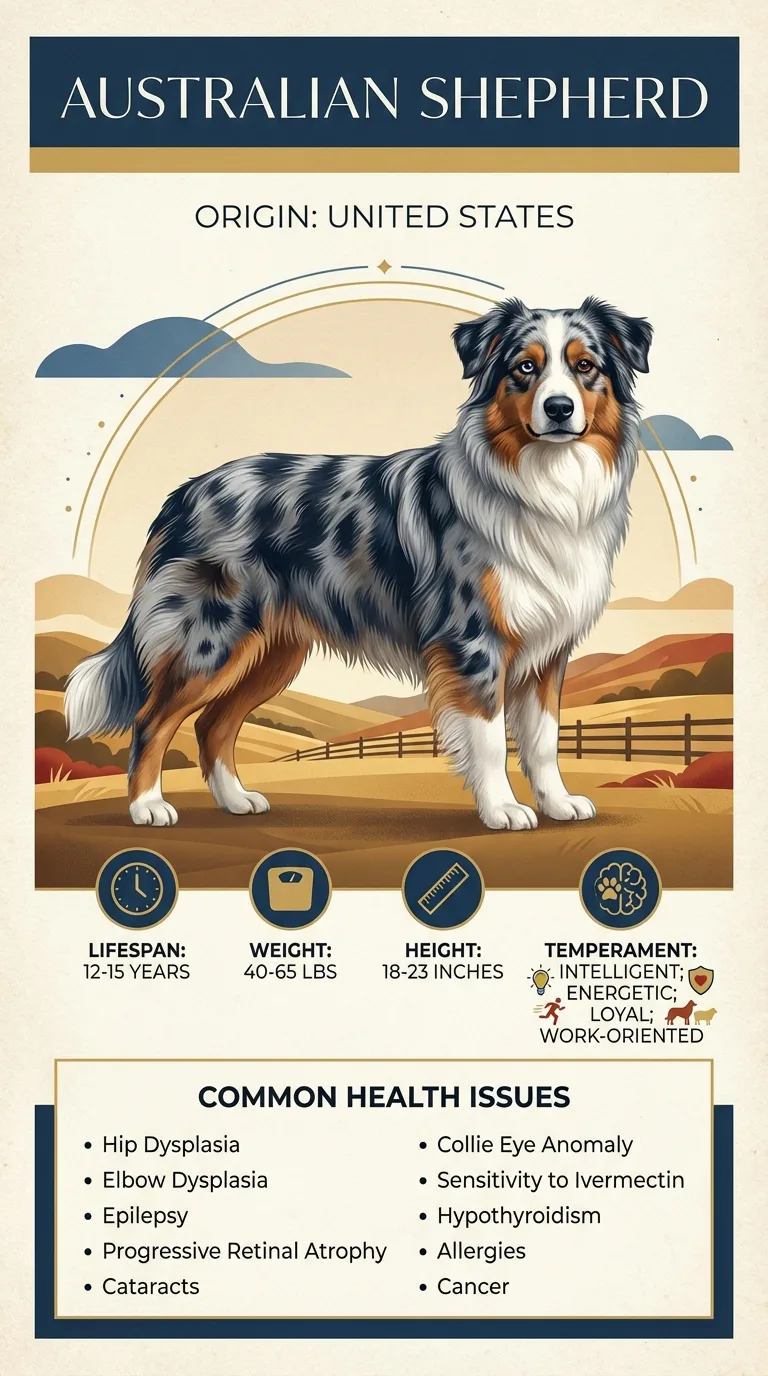
Owners in hot or humid climates face the steepest challenge, since this breed's heavy double coat traps heat more than a short-coated dog's would, and a work-driven Aussie often won't self-limit the way a more laid-back breed might.
This guide is not medical advice. If your dog shows pain, sudden behavior change, or worsening symptoms, consult a licensed veterinarian.
Some links may be affiliate links. We may earn a commission at no extra cost to you. We only suggest products we believe are helpful for dog owners.
We research and check what we publish, but we do not warrant that any figure, date, price, or statement is accurate, complete, or current, and we accept no liability for any loss, cost, injury, or other harm arising from the use of this site. Use it as one reference among several. You remain responsible for your own decisions and for your dog's care - confirm anything that matters with a licensed veterinarian or another qualified professional before you act on it. Full disclaimer.
Exercise intolerance in this breed reflects a mismatch between a very high work drive and the physical limits of a heavily double-coated dog, especially in hot or humid weather. Because the dog often won't self-limit, owners need to proactively manage exercise intensity, timing, and hydration to prevent normal exertion from crossing into dangerous overheating.
Exercise intolerance and overheating risk are a common practical concern for owners of this breed given its documented very high energy level and heavy seasonal-shedding double coat, particularly in warmer climates or during peak summer months.
This breed's documented very high energy level and drive to work mean many dogs continue exerting themselves well past the point where a lower-drive breed would naturally slow down or stop, and the heavy double coat compounds this by trapping heat rather than helping dissipate it.
Hot, humid weather, extended activity duration, and limited access to shade or water during exercise are the main environmental factors that turn this breed's natural exercise intolerance into a genuine overheating risk.
Talk to your vet if your dog shows repeated exercise intolerance even in mild weather, since that could point to an underlying health issue. Seek emergency care immediately for excessive drooling, bright red or purple gums, vomiting, or collapse during or after exercise.
This breed's drive to keep going is precisely why owners have to manage exercise proactively rather than waiting for the dog to signal it's had enough.
See all Australian Shepherd health problems, which breeds are prone to exercise intolerance, or the full Australian Shepherd breed guide for temperament, exercise needs and ownership costs.
Managing this is an ongoing, season-by-season practice rather than a one-time fix, with extra vigilance needed during the hottest months of the year.
Success means a dog that gets its high exercise needs met safely through well-timed, well-hydrated sessions, not a dog that exercises less overall, since this breed genuinely needs substantial daily activity for its wellbeing.
A normally tired dog pants, slows down, and recovers within a few minutes of rest and water. A dog crossing into dangerous overheating shows excessive drooling, bright red or purple gums, uncoordinated movement, or vomiting, and doesn't recover quickly even after stopping activity.
This breed's heavy double coat, built for variable outdoor working conditions, insulates against cold better than it dissipates heat, meaning a hot, humid day poses more risk than the coat's presence might suggest. Combined with a dog that's mentally driven to keep working, this is a real and somewhat underappreciated risk specific to high-drive, heavily coated working breeds.

Tank's owner, Beau, ran herding practice at noon through most of the summer until Tank started showing heavy drooling and a wobbly gait partway through a session on an especially hot day. A quick move to shade and water brought him back to normal within twenty minutes, but the scare prompted Beau to shift all practice to early mornings going forward. A year later, Tank works just as hard as ever, simply on a schedule that keeps the heat from stacking on top of his natural drive to keep going.
Key takeaway: The fix wasn't reducing Tank's work, it was matching the timing to conditions his body could actually handle safely, which let his natural drive stay an asset instead of becoming a liability.
This breed combines a very high work drive with a heavy double coat, meaning the dog often won't self-limit exercise even as heat and exertion build to a dangerous level.
Normal tiredness resolves with a few minutes of rest and water, while overheating shows excessive drooling, bright red or purple gums, uncoordinated movement, or vomiting that doesn't quickly improve with rest.
Yes, this breed's heavy coat is built for variable outdoor conditions and insulates against cold effectively, but it traps heat against the body more than a short coat would in hot weather.
Early morning or evening, avoiding the midday heat, is generally safest, especially for extended high-intensity activity like herding practice or agility.
Frequent small breaks with access to water throughout a long session are better than a single large drink at the end, especially during hot weather.
Stop activity immediately, move to shade or a cool area, offer water, and contact your vet or an emergency clinic right away if symptoms don't improve quickly, since heatstroke can progress rapidly.
A very high work drive combined with a heavy double coat means the dog often keeps pushing past safe exertion limits.
Quick recovery with rest and water means tired; drooling, bright gums, or vomiting that persists means overheating.
Early morning or evening, avoiding the hottest midday hours, is safest for extended activity.
No, offer water regularly during any extended activity, even if the session seems short enough to skip it.
Yes, suspected heatstroke needs immediate action and prompt veterinary attention if symptoms don't quickly resolve.
A one-page prep sheet for this condition: the signs, the questions to ask, what to get priced. Unlocks here.
You get: Vet visit prep sheet
No spam. One-click unsubscribe. See our privacy policy.
Preview page 1 before you decide.