Health
Is this a common Pug diagnosis?
No, it's more classically associated with larger, faster-growing breeds; uncommon but possible in Pugs.

Quick answer
Is this a common Pug diagnosis?
No, it's more classically associated with larger, faster-growing breeds; uncommon but possible in Pugs.
Unlike a ligament tear from one bad jump, this joint problem was set in motion back when your puppy was still growing.
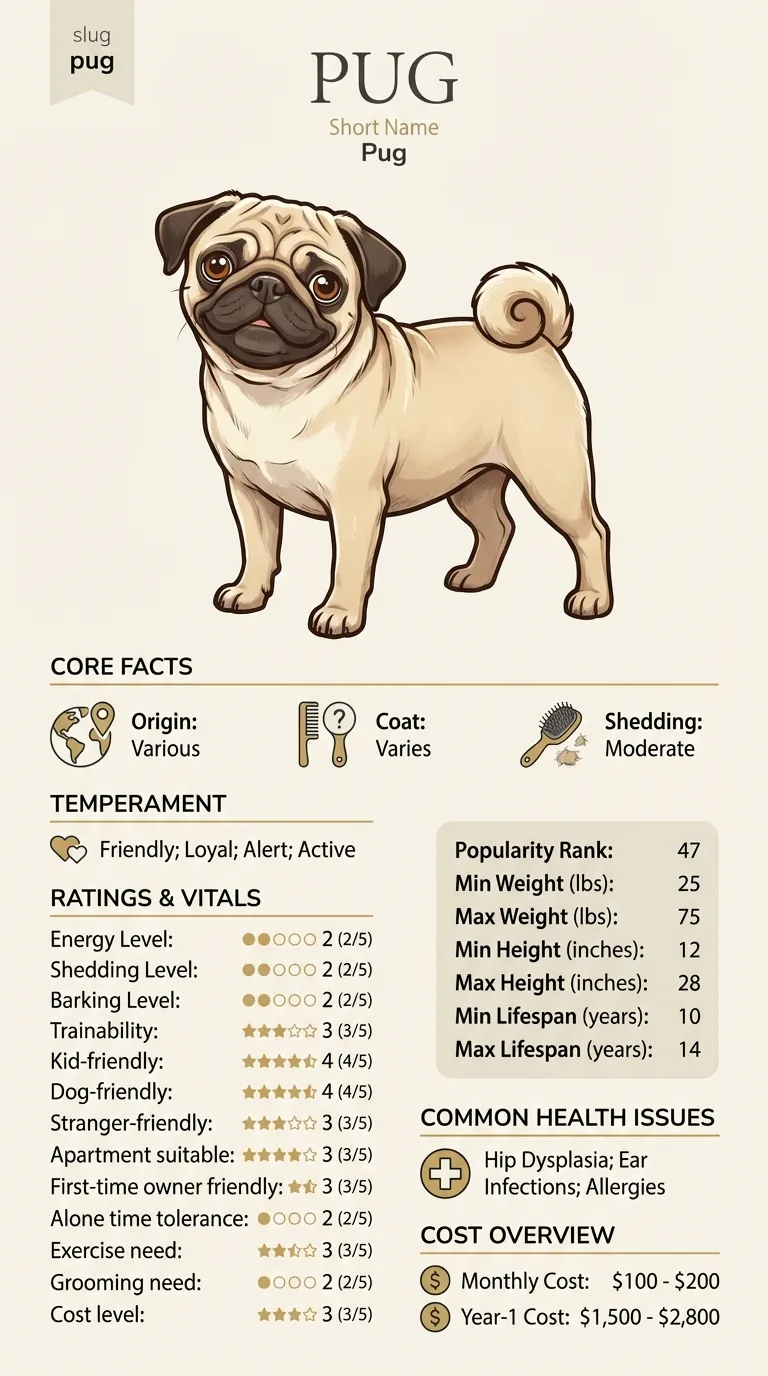
This is most relevant for owners of Pug puppies showing front-leg lameness or stiffness during the growth period, roughly four to twelve months old, rather than something to screen for in an adult dog with no history of early symptoms.
This guide is not medical advice. If your dog shows pain, sudden behavior change, or worsening symptoms, consult a licensed veterinarian.
Some links may be affiliate links. We may earn a commission at no extra cost to you. We only suggest products we believe are helpful for dog owners.
Elbow dysplasia is a developmental joint malformation occurring during a puppy's growth period, where mismatched bone growth rates create joint surface irregularities. It's most classically documented in large, fast-growing breeds and is a less typical, though possible, diagnosis in a small breed like the Pug.
This is an uncommon diagnosis in Pugs specifically. It's included here because it appears on general joint health checklists, but its real documented prevalence is concentrated in larger breeds experiencing faster growth.
There's no strong documented breed-specific driver connecting Pugs to elbow dysplasia the way there is for larger, faster-growing breeds. Any occurrence here is better understood as an individual developmental finding than a breed-wide risk.
Excess weight during the growth period could theoretically add strain to developing joints, though this breed's small size and slower relative growth compared to large breeds make this a smaller factor here than it would be in a large-breed puppy.
Bring a puppy in for evaluation if you notice persistent front-leg lameness, stiffness, or reluctance to use a leg fully during the growth period. This is worth investigating with X-rays rather than assuming it's a phase, since early management improves long-term joint outcomes.
Start here: Pug Most Common Genetic Disorders: What to Screen For
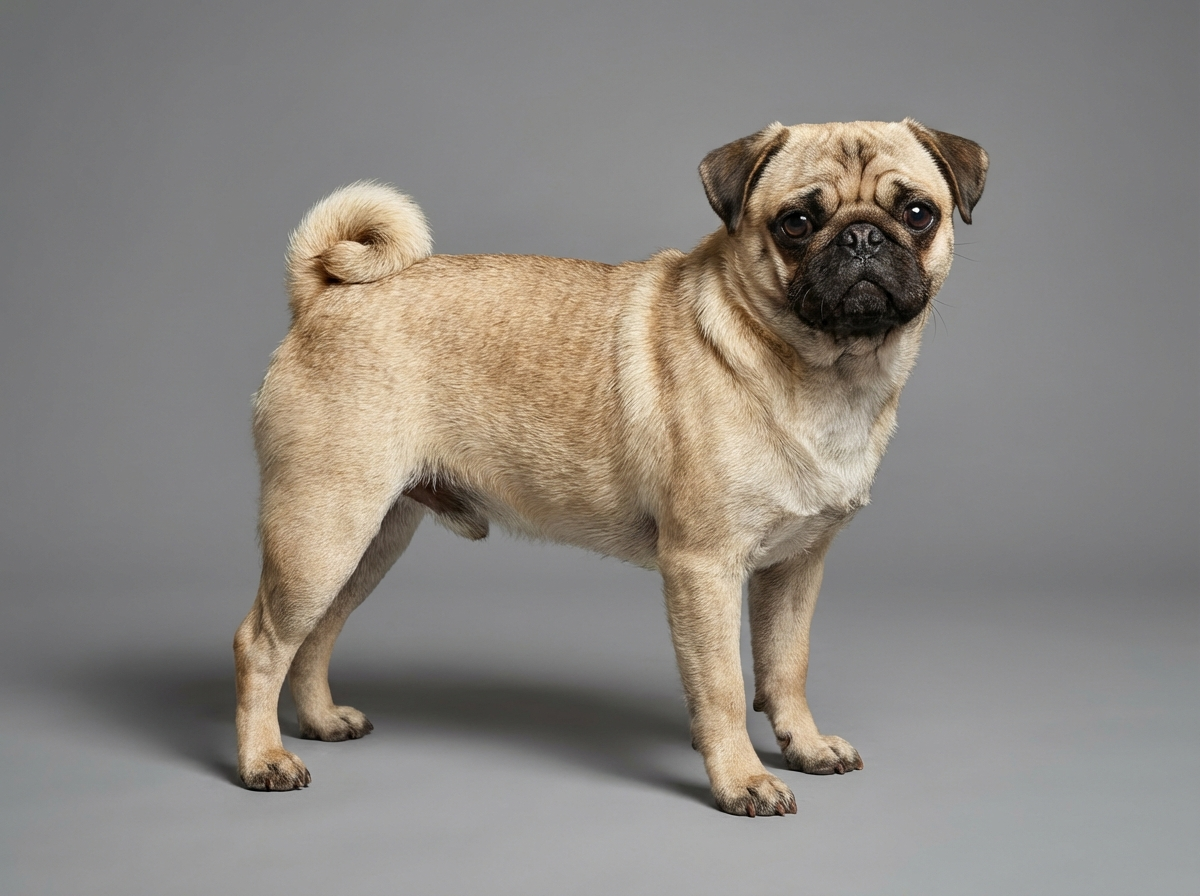
See all PUG health problems, which breeds are prone to elbow dysplasia, or the full PUG breed guide for temperament, exercise needs and ownership costs.
Diagnosis through X-ray typically happens within a visit or two of symptoms appearing. Conservative management shows improvement over four to eight weeks; surgical recovery typically spans six to eight weeks of restricted activity.
Success means a comfortable, functional joint through the growth period and beyond, with slowed progression toward arthritis, rather than a complete reversal of the joint's developmental irregularities.
Elbow dysplasia results from the three bones that form the elbow joint growing at slightly mismatched rates during a puppy's development, creating abnormal pressure points and joint surface irregularities rather than a smooth, evenly matched joint. This process happens during the growth period itself, meaning the foundation for the condition is set well before a dog reaches adult size, unlike a cruciate ligament tear, which is an acute adult injury. This is also why it's classically more associated with large and giant breeds growing quickly to a big adult size, a growth dynamic that doesn't really apply to a small, compact breed like the Pug, making this a less typical, though not impossible, diagnosis here.
A puppy with elbow dysplasia typically shows front-leg lameness or stiffness, often worse after rest and improving somewhat with movement, though the reverse pattern occurs too. X-rays are the primary diagnostic tool, sometimes supplemented with a CT scan for a more detailed view of the joint surfaces. Treatment ranges from conservative management, weight control, joint-supportive supplements, and controlled exercise, to surgical correction for more significant joint irregularities, decided based on the specific type and severity found on imaging. Without appropriate management, elbow dysplasia typically progresses to early arthritis in that joint.

If you think your Pug has elbow dysplasia, the plan is three steps: write down what you have seen and when it started, book a veterinary appointment rather than waiting for the next flare, and take video of the behaviour or symptom before you go — the thing you are worried about rarely happens in the consulting room. Screening in the parents covers brachycephalic airway syndrome (boas), pug dog encephalitis, corneal ulcers.
What the vet visit should produce is a diagnosis and a written plan, not just reassurance: what is being ruled out, what the monitoring interval is, and which signs mean you come back sooner. Ask what the treatment costs across a year rather than per visit, because that is the number that decides whether you are managing this condition or reacting to it.
Between appointments, keep a short log — dates, what you saw, what changed. It is the single most useful thing an owner brings to a follow-up, and for elbow dysplasia it is often what separates a clear pattern from a guess.
At six months old, a Pug puppy named Bean started favoring his front-right leg after naps, loosening up somewhat during play but never fully resolving. His owner, surprised this wasn't a more typical Pug issue, brought him in for X-rays, which confirmed mild elbow dysplasia, an uncommon finding for the breed. Given the mild severity, his vet recommended conservative management: weight control, a joint-supportive supplement, and controlled exercise avoiding high-impact jumping. Bean's lameness resolved within about six weeks, and follow-up X-rays a year later showed only minimal arthritic change.
Key takeaway: Even though this diagnosis is atypical for the breed, persistent puppy lameness deserves the same thorough workup it would get in any breed, since catching it during the growth period allows for less invasive management.
No, it's most classically documented in larger and giant breeds experiencing rapid growth, a dynamic that doesn't apply to this small, compact breed. It can still occur, but it's a less typical diagnosis here than in breeds like Labradors or German Shepherds.
Front-leg lameness or stiffness, often noticeable after rest, reluctance to fully extend the affected leg, or a change in gait during the growth period, roughly four to twelve months old, are the signs that typically prompt an X-ray workup.
X-rays are the primary diagnostic tool, sometimes followed by a CT scan for a more detailed look at the joint surfaces if the X-ray findings are unclear or surgery is being considered.
Milder cases are often managed conservatively with weight control, joint-supportive supplements, and controlled exercise. More significant joint irregularities typically benefit more from surgical correction to address the joint surface problem directly.
Yes, if not appropriately managed, the joint irregularities involved typically progress to early arthritis in that elbow, which is one reason catching and addressing it during the growth period matters.
Elbow dysplasia is a developmental joint malformation that begins during puppy growth, while a cruciate ligament injury is typically an acute adult injury from a specific movement. They involve different joints and different underlying mechanisms entirely.
No, it's more classically associated with larger, faster-growing breeds; uncommon but possible in Pugs.
During the growth period, roughly four to twelve months old.
Front-leg lameness or stiffness, often worse after rest.
No, milder cases are often managed conservatively; more significant cases may benefit from surgery.
Imaging and any needed surgery add up; ask your vet for an estimate specific to the severity found.
A one-page prep sheet for this condition: the signs, the questions to ask, what to get priced. Unlocks here.
You get: Vet visit prep sheet
No spam. One-click unsubscribe. See our privacy policy.
Preview page 1 before you decide.