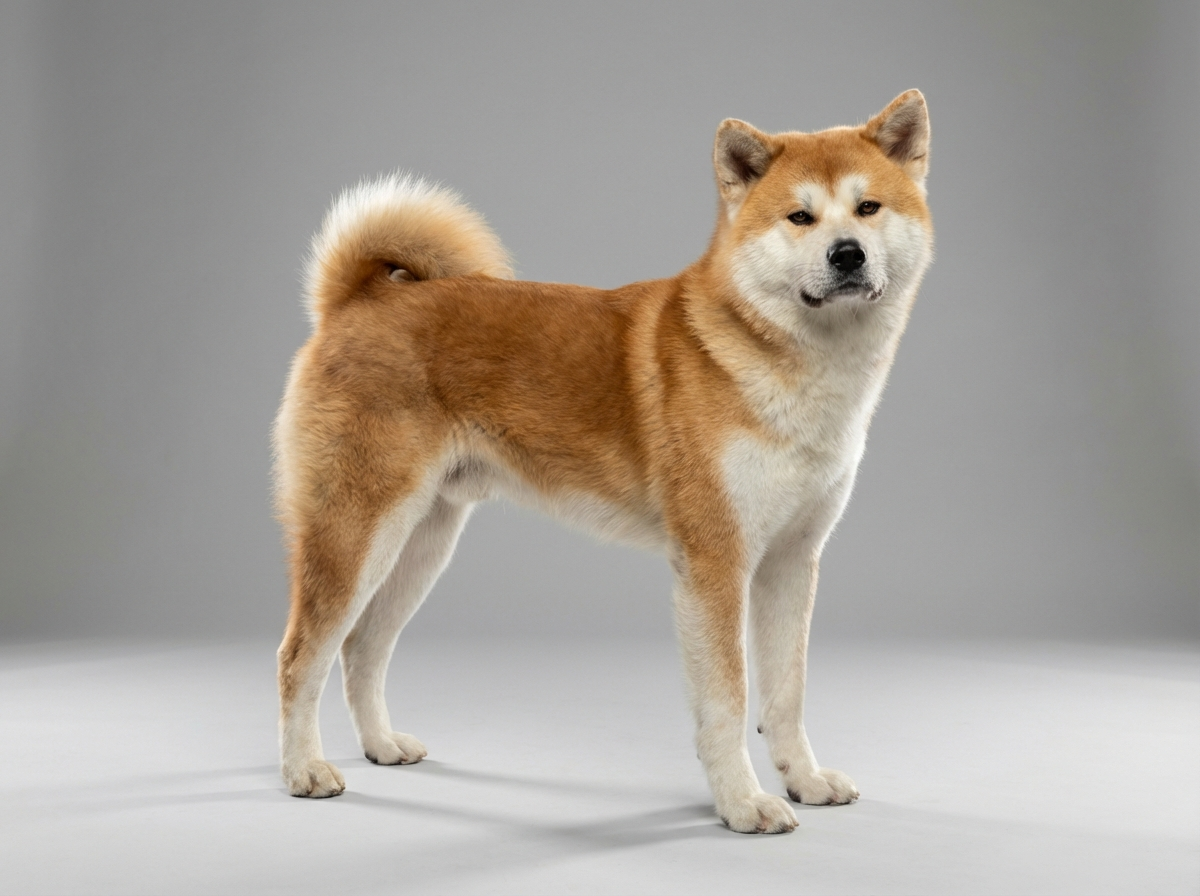
Health
What age does elbow dysplasia usually show up?
Most commonly between four and twelve months, during the fastest part of the growth phase.

Quick answer
What age does elbow dysplasia usually show up?
Most commonly between four and twelve months, during the fastest part of the growth phase.
A young Akita that seems stiff after naps, or that turns a front foot slightly outward when it walks, may be showing the first signs of elbow dysplasia rather than simple puppy clumsiness.
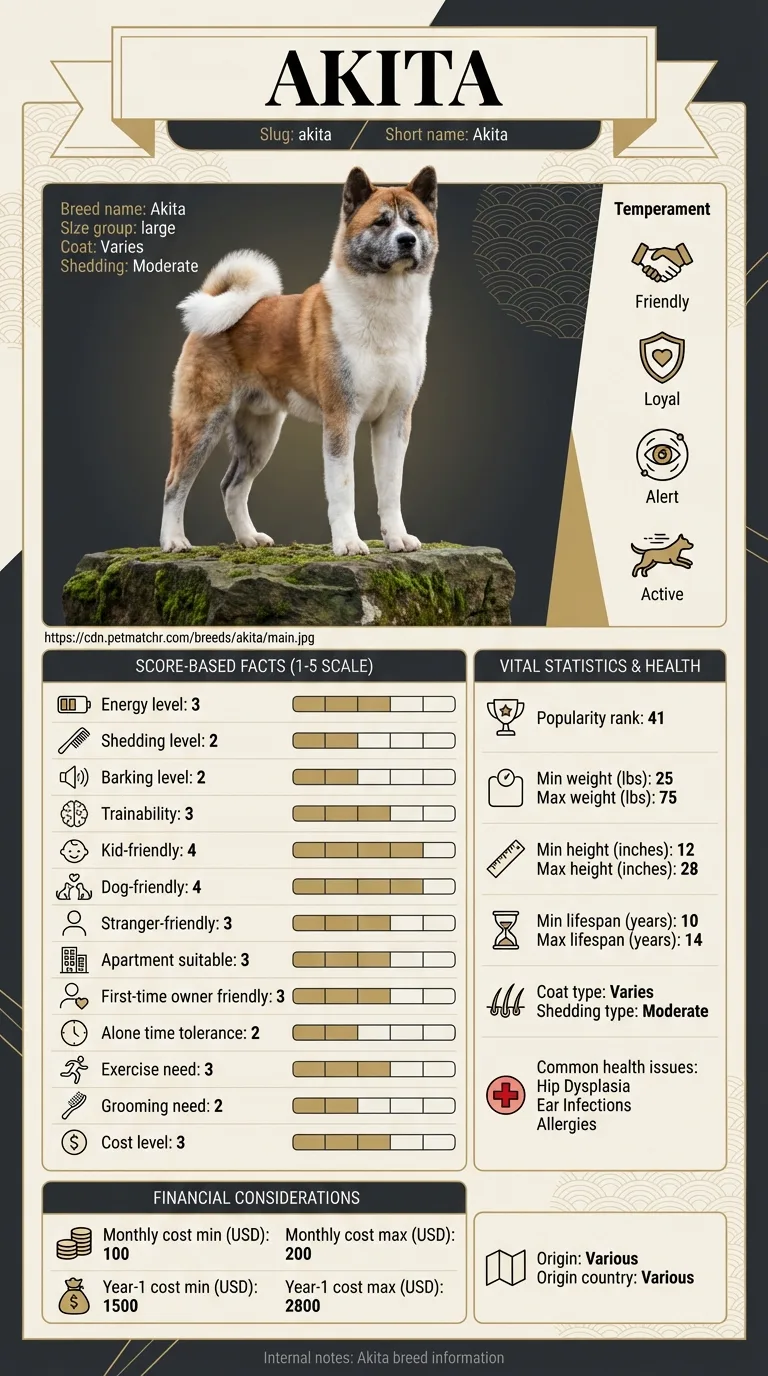
Owners of Akita puppies between four and twelve months old are the ones most likely to first notice this, often mistaking the early front-leg stiffness for normal growing pains.
This guide is not medical advice. If your dog shows pain, sudden behavior change, or worsening symptoms, consult a licensed veterinarian.
Some links may be affiliate links. We may earn a commission at no extra cost to you. We only suggest products we believe are helpful for dog owners.
We research and check what we publish, but we do not warrant that any figure, date, price, or statement is accurate, complete, or current, and we accept no liability for any loss, cost, injury, or other harm arising from the use of this site. Use it as one reference among several. You remain responsible for your own decisions and for your dog's care - confirm anything that matters with a licensed veterinarian or another qualified professional before you act on it. Full disclaimer.
Check this first
A puppy that suddenly can't bear weight on a front leg, or that yelps sharply when the elbow is touched or extended, should be seen quickly. While elbow dysplasia itself is a developmental condition rather than a sudden injury, an acute flare or an accompanying injury can cause sudden, significant pain that benefits from prompt evaluation.
More typical is a subtler pattern: mild front-leg stiffness after rest that loosens up with movement, a front foot that turns slightly outward, or reduced willingness to jump or play as vigorously as before. These signs warrant a scheduled vet visit for an orthopedic exam and likely X-rays, rather than an emergency trip.
The distinction that matters is severity and progression. Stiffness that's mild and stable can usually wait for a routine appointment; stiffness that's rapidly worsening or accompanied by obvious pain on handling should be seen sooner.
If any of these apply, call your vet or an emergency clinic now. The rest of this page is for the cases that are not an emergency.
Elbow dysplasia is a developmental joint condition where the bones of the elbow don't fit together properly as a puppy grows, leading to pain, lameness, and eventually arthritis in the affected joint. It's one of the more common orthopedic conditions seen in large, fast-growing breeds.
Elbow dysplasia is diagnosed regularly in large-breed dogs during their first two years, and while exact rates vary by bloodline, it's common enough that many breeders screen breeding dogs' elbows before producing a litter.
As a large breed reaching up to 130 pounds, the Akita's front legs carry a substantial share of its body weight, and the elbow is a complex joint made of three bones that must align precisely as the puppy grows. Any small developmental irregularity in that alignment is put under much greater mechanical stress in a heavy breed than it would be in a small dog.
Overfeeding, too-rapid weight gain, and high-impact exercise during the growth window all add mechanical stress to a joint that may already be forming imperfectly. A controlled-growth diet and appropriately limited exercise during puppyhood reduce how much additional strain is placed on a developing elbow.
Schedule an exam if your puppy shows recurring front-leg stiffness, especially after rest, or an outward-turning front paw. See a vet the same day if a leg becomes suddenly non-weight-bearing or your puppy yelps sharply when the elbow is handled.
Because early elbow dysplasia can look subtle, it's easy to make choices that accelerate joint damage without realizing it. Avoid these.
See all Akita health problems, which breeds are prone to elbow dysplasia, or the full Akita breed guide for temperament, exercise needs and ownership costs.
Mild cases managed with weight control and activity modification may show steady improvement over several months as the dog matures. Surgically treated cases often show meaningful improvement within 8 to 12 weeks post-surgery, though some lifelong joint management is typically needed.
Success is a dog that moves through daily life — walks, play, stairs — without a persistent limp, even if some long-term activity moderation and joint support remain part of its routine.
Owen adopted Duke, an Akita puppy, in Minneapolis and noticed by seven months that Duke was slow to get going after naps, favoring his left front leg for the first few steps before loosening up. Owen initially chalked it up to normal puppy stiffness, but it kept recurring. X-rays at the vet confirmed mild elbow dysplasia in both front legs. Owen switched Duke to a large-breed-specific diet, cut back on the off-leash sprinting Duke loved, and started a joint-support plan under the vet's guidance. Duke didn't need surgery, and by eighteen months his gait had become steady and confident.
Key takeaway: Front-leg stiffness in a growing Akita puppy is worth investigating early — catching elbow dysplasia before significant arthritis sets in gives far more treatment options.
It's an umbrella term for several developmental abnormalities in the elbow joint — including fragmented bone chips, an ununited process, or joint incongruity — that keep the three bones of the elbow from articulating smoothly, leading to abnormal wear and arthritis over time.
A vet typically starts with a physical exam checking for pain on flexion and extension, then confirms with X-rays of both elbows; some cases need a CT scan for a more precise diagnosis.
Not fully cured in the sense of restoring a perfectly normal joint, but it can be effectively managed, and some specific forms respond well to surgery performed early, before significant arthritis develops.
Diagnostic imaging alone can run several hundred dollars, and surgical treatment for confirmed elbow dysplasia commonly runs from roughly $2,500 to $6,000 per elbow depending on the specific procedure and region.
Some degree of secondary arthritis in the affected elbow is common over time, even with good treatment, which is why long-term joint management — weight control, appropriate exercise, and sometimes joint supplements under vet guidance — matters.
It's commonly bilateral, meaning both elbows are often affected to some degree even if one side shows symptoms first, which is why vets usually X-ray both elbows when investigating a front-leg lameness.
A controlled-growth, large-breed puppy formula that avoids excess calories and calcium can reduce the mechanical stress on a developing elbow joint, though it can't eliminate a genetic predisposition entirely.
Most commonly between four and twelve months, during the fastest part of the growth phase.
No — they're separate joints with different mechanics, though both are developmental conditions that can occur together in the same dog.
Typically $2,500 to $6,000 per elbow depending on the procedure, with imaging as an additional upfront cost.
Yes — switch to short, controlled leash walks and avoid jumping or rough play until your vet has evaluated the joint.
Teaching calm behavior around stairs, cars, and greetings reduces the sudden jarring movements that aggravate an affected elbow.
A one-page prep sheet for this condition: the signs, the questions to ask, what to get priced. Unlocks here.
You get: Vet visit prep sheet
No spam. One-click unsubscribe. See our privacy policy.
Preview page 1 before you decide.