Health
What's the classic sign of a torn cruciate ligament?
Sudden, significant hind-leg lameness, often holding the leg up rather than just limping.

Quick answer
What's the classic sign of a torn cruciate ligament?
Sudden, significant hind-leg lameness, often holding the leg up rather than just limping.
One awkward jump off the couch, and a knee that worked fine yesterday suddenly can't bear weight today.
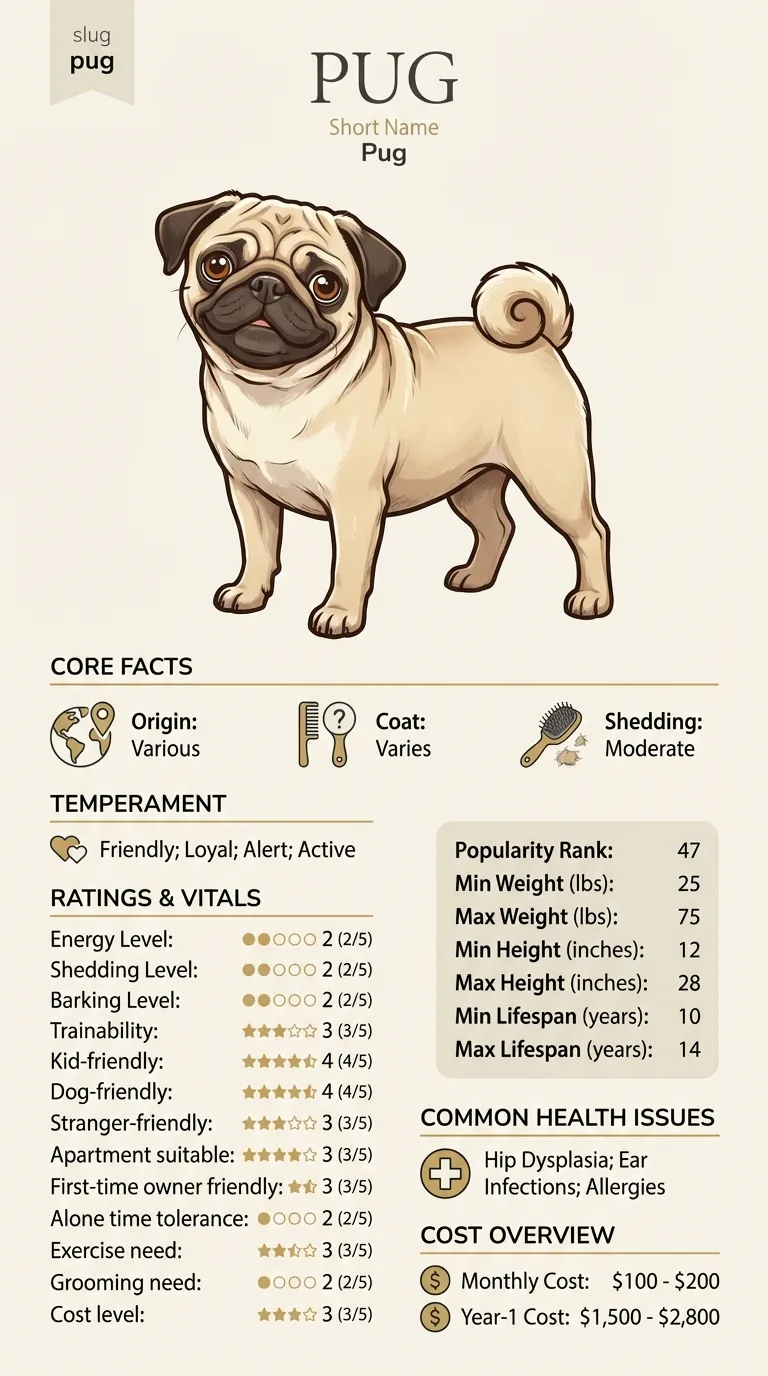
This affects owners of active or overweight Pugs of any age, though middle-aged and heavier dogs carry somewhat higher risk since extra weight and years of joint wear both add strain to the ligament over time before that one unlucky movement finally causes it to give.
This guide is not medical advice. If your dog shows pain, sudden behavior change, or worsening symptoms, consult a licensed veterinarian.
Some links may be affiliate links. We may earn a commission at no extra cost to you. We only suggest products we believe are helpful for dog owners.
We research and check what we publish, but we do not warrant that any figure, date, price, or statement is accurate, complete, or current, and we accept no liability for any loss, cost, injury, or other harm arising from the use of this site. Use it as one reference among several. You remain responsible for your own decisions and for your dog's care - confirm anything that matters with a licensed veterinarian or another qualified professional before you act on it. Full disclaimer.
A cruciate ligament injury is an acute tear or partial tear of one of the knee's stabilizing ligaments, typically causing sudden, significant lameness rather than gradual stiffness. Excess weight and this breed's compact leg structure can both add strain that raises the odds of a tear, though it fundamentally remains a mechanical injury rather than a slow-developing condition.
Cruciate ligament injuries are among the more commonly diagnosed orthopedic injuries in dogs generally, and this breed's tendency toward weight gain adds a real, controllable contributing risk factor on top of the baseline injury risk any dog faces.
This breed's documented tendency toward obesity adds direct mechanical strain to the knee joint, while its compact, short-legged structure changes the loading angles involved in everyday jumping compared to a longer-legged dog.
Repeated high-impact activity, like regularly jumping on and off furniture, and a sedentary lifestyle that allows weight gain both contribute to the cumulative joint strain that can precede a sudden tear.
See a vet promptly for any sudden hind-leg lameness that doesn't improve within a day, especially if your dog is holding the leg up entirely or refusing to bear weight on it. Early diagnosis and treatment decisions lead to better long-term joint outcomes than waiting to see if it resolves on its own.
Start here: Pug Most Common Genetic Disorders: What to Screen For
See all PUG health problems, which breeds are prone to cruciate ligament injuries, or the full PUG breed guide for temperament, exercise needs and ownership costs.
Conservative management typically requires four to eight weeks of restricted activity before reassessment. Surgical recovery typically spans eight to twelve weeks of restricted activity and rehabilitation before a return to normal activity.
Success means a stable, functional knee with minimal long-term arthritis, achieved most reliably through prompt diagnosis and an appropriate treatment decision rather than waiting to see if the lameness resolves on its own.
A torn cruciate ligament can happen in any dog, but a few factors common in this breed raise the odds somewhat. Extra body weight, common in a breed prone to obesity, adds direct mechanical load to the knee with every step and every jump. This breed's short, compact leg structure also changes the angles and forces involved in everyday movements like jumping off furniture compared to a longer-legged dog, and repeated high-impact landings over the years can gradually weaken a ligament before it finally tears during one ordinary jump that looks no different from hundreds of others.
A dog with a torn cruciate ligament typically shows sudden, significant lameness on one hind leg, often holding the leg up entirely rather than just favoring it. A vet exam, sometimes combined with X-rays and a specific manipulation test that checks for abnormal joint movement, usually confirms the diagnosis. Treatment ranges from conservative management, rest, weight control, and physical therapy, for smaller or lighter dogs with partial tears, to surgical stabilization for more complete tears or larger dogs, since an unrepaired torn ligament typically leads to progressive arthritis in that joint over time regardless of body size.

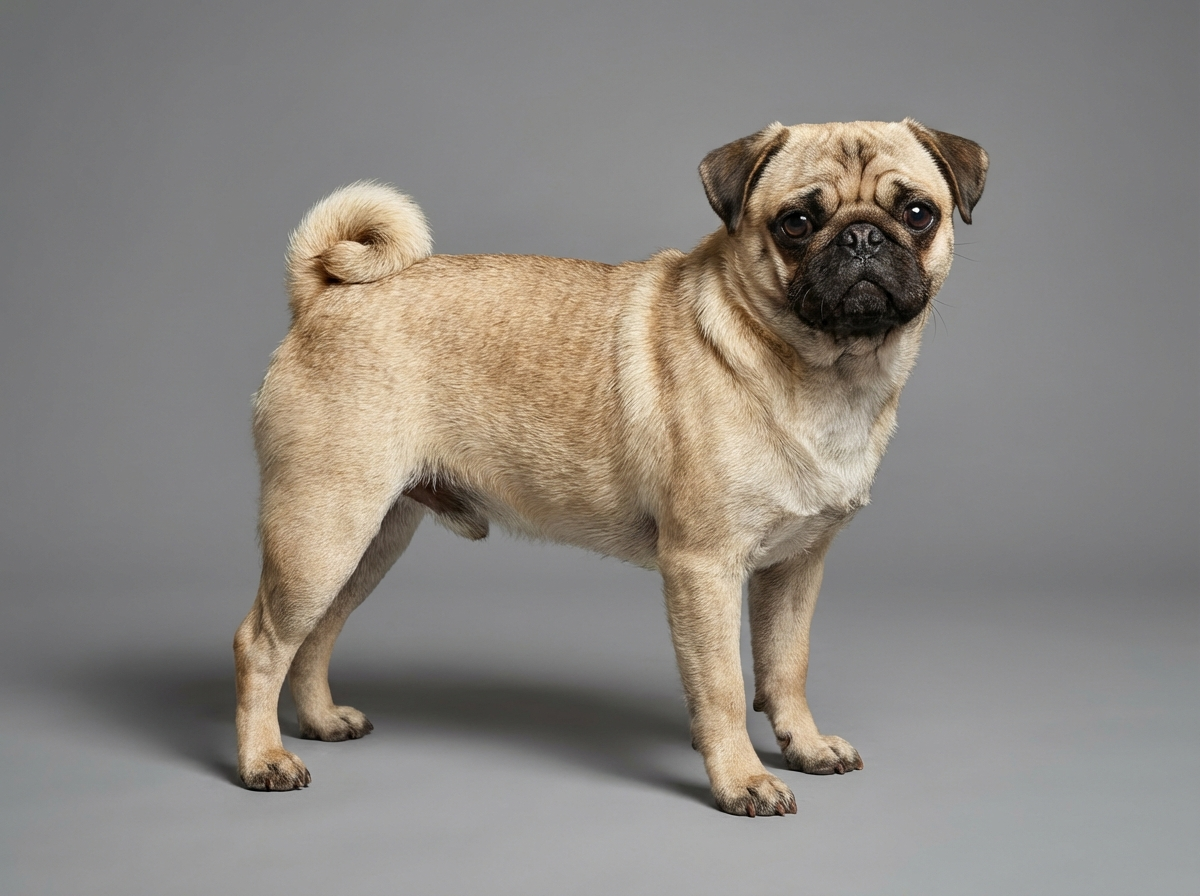
If you think your Pug has cruciate ligament injuries, the plan is three steps: write down what you have seen and when it started, book a veterinary appointment rather than waiting for the next flare, and take video of the behaviour or symptom before you go — the thing you are worried about rarely happens in the consulting room. Screening in the parents covers brachycephalic airway syndrome (boas), pug dog encephalitis, corneal ulcers.
What the vet visit should produce is a diagnosis and a written plan, not just reassurance: what is being ruled out, what the monitoring interval is, and which signs mean you come back sooner. Ask what the treatment costs across a year rather than per visit, because that is the number that decides whether you are managing this condition or reacting to it.
Between appointments, keep a short log — dates, what you saw, what changed. It is the single most useful thing an owner brings to a follow-up, and for cruciate ligament injuries it is often what separates a clear pattern from a guess.
Six-year-old Gizmo yelped and immediately held up his back leg after jumping down from the couch, something he'd done thousands of times before without issue. His owner assumed it was a minor sprain, but when Gizmo still wouldn't bear weight the next morning, a vet exam and X-rays confirmed a torn cruciate ligament. Given Gizmo's weight and the tear's severity, his vet recommended surgical stabilization. Ten weeks of restricted activity and rehabilitation later, Gizmo was back to his normal walks, and his owner committed to a stricter weight-management routine to help protect his other knee going forward.
Key takeaway: A sudden, non-improving limp after an ordinary movement is worth a prompt vet visit rather than a wait-and-see approach, since early diagnosis shapes both the treatment options and the long-term joint outcome.
A torn ligament typically causes sudden, significant lameness that doesn't improve with a day or two of rest, often with the dog barely putting weight on the leg. A minor strain usually improves noticeably within a few days; persistent lameness warrants a vet exam.
It depends on the severity of the tear and the individual dog. Smaller, lighter dogs with partial tears sometimes do well with conservative management, while more complete tears or larger, heavier dogs generally benefit more from surgical stabilization.
An untreated torn ligament typically leads to ongoing joint instability and progressively worsening arthritis in that knee over time, even if the initial lameness seems to partially improve on its own.
Most dogs need eight to twelve weeks of restricted activity and gradual, supervised rehabilitation after surgery before returning to a normal activity level, with some dogs continuing physical therapy for additional strength building.
Yes, a meaningful number of dogs who tear one cruciate ligament go on to tear the other within a couple of years, partly because the same underlying risk factors, weight and joint strain, affect both legs.
Yes, weight management is a core part of both recovery and prevention of a second tear, since excess weight directly increases the mechanical load on the joint during healing and afterward.
Costs vary by surgical technique and region, but this is one of the more significant orthopedic expenses a dog owner may face, making pet insurance with orthopedic coverage worth considering before an injury happens.
Sudden, significant hind-leg lameness, often holding the leg up rather than just limping.
Not always; smaller dogs with partial tears sometimes do well with conservative management, but many benefit from surgery.
Typically eight to twelve weeks of restricted activity and gradual rehabilitation.
Yes, excess weight adds mechanical strain to the knee, raising both initial injury and re-injury risk.
Yes, it's one of the more significant orthopedic expenses; insurance with orthopedic coverage helps offset it.
A one-page prep sheet for this condition: the signs, the questions to ask, what to get priced. Unlocks here.
You get: Vet visit prep sheet
No spam. One-click unsubscribe. See our privacy policy.
Preview page 1 before you decide.