Behavior
What are Rottweiler elbow dysplasia quick tips?
Keep your Rottweiler at a healthy weight and provide low-impact exercise. Regular vet check-ups can help catch problems early.

Quick answer
What are Rottweiler elbow dysplasia quick tips?
Keep your Rottweiler at a healthy weight and provide low-impact exercise. Regular vet check-ups can help catch problems early.
Rottweiler elbow dysplasia is a painful joint condition that can affect your dog's mobility and quality of life.
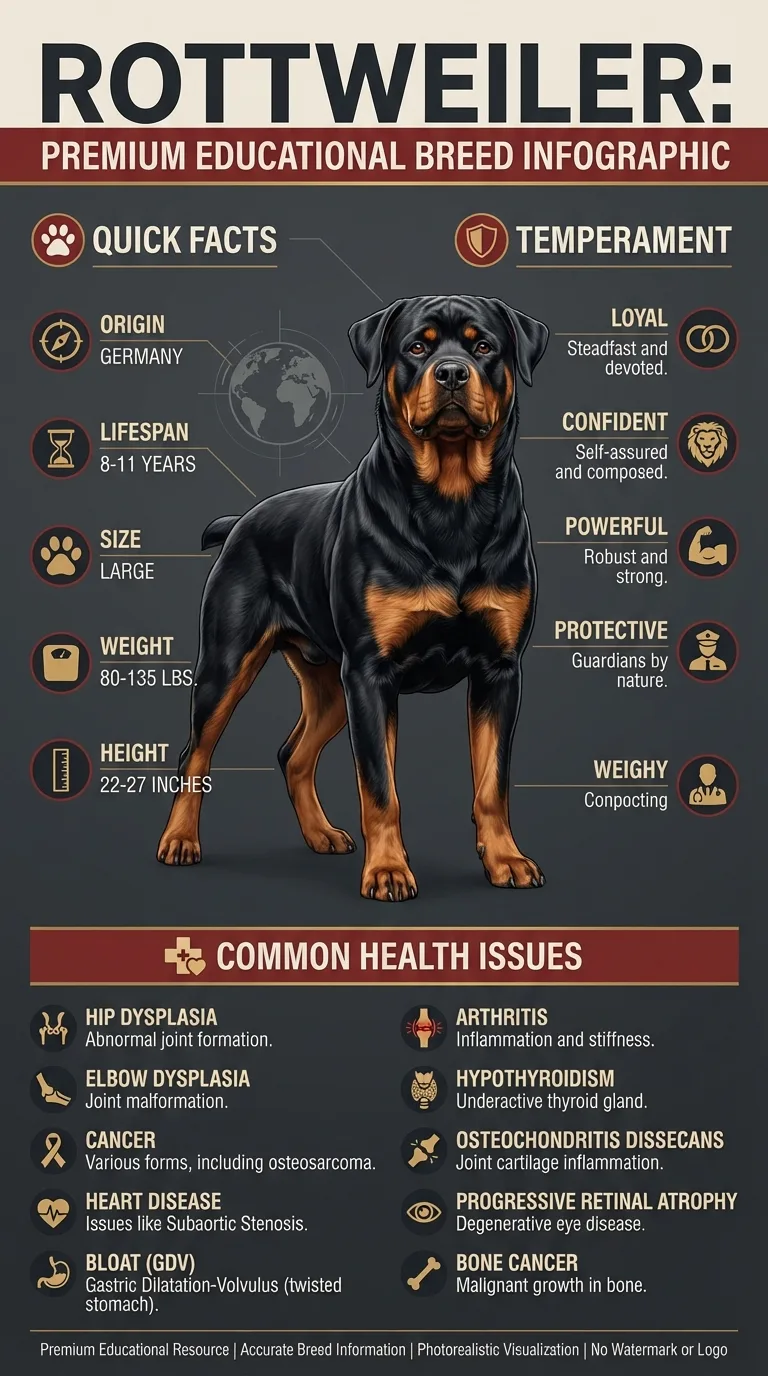
Owners of Rottweilers, especially first-time dog parents or those unaware of breed-specific health issues, often find themselves struggling with this diagnosis. Many are concerned about their dog's pain and activity levels as they navigate treatment options.
This guide is not medical advice. If your dog shows pain, sudden behavior change, or worsening symptoms, consult a licensed veterinarian.
Some links may be affiliate links. We may earn a commission at no extra cost to you. We only suggest products we believe are helpful for dog owners.
We research and check what we publish, but we do not warrant that any figure, date, price, or statement is accurate, complete, or current, and we accept no liability for any loss, cost, injury, or other harm arising from the use of this site. Use it as one reference among several. You remain responsible for your own decisions and for your dog's care - confirm anything that matters with a licensed veterinarian or another qualified professional before you act on it. Full disclaimer.
Check this first
Recognizing when Rottweiler elbow dysplasia is an emergency is crucial for your dog's health. Some signs indicate that you need to call your vet immediately. These include severe swelling, inability to bear weight on the affected leg, or extreme pain when moving.
If your Rottweiler seems lethargic or has lost appetite, these are also red flags that require prompt attention.
On the other hand, some cases can be monitored at home. If your Rottweiler shows mild limping, occasional stiffness after exercise, or slight swelling without severe discomfort, you may not need to rush to the vet. Instead, you can create a plan to manage their exercise and possibly introduce joint supplements.
Keeping an eye on their behavior can help you determine if their condition worsens, requiring further veterinary evaluation.
If any of these apply, call your vet or an emergency clinic now. The rest of this page is for the cases that are not an emergency.
Rottweiler elbow dysplasia is a common joint issue that affects many dogs of this breed. It manifests as stiffness, limping, or reluctance to play and exercise. This condition can significantly impact a Rottweiler's quality of life, making it essential for owners to recognize the signs early.
Elbow dysplasia is relatively common in Rottweilers, with studies indicating that a notable percentage may be affected, especially if their lineage has a history of joint issues. Being aware of this risk can help owners take preventative measures.
Rottweilers are predisposed to elbow dysplasia due to their large size and rapid growth. Genetic factors play a significant role, as certain lines may have a history of joint issues. These dogs often carry extra weight, which can put additional strain on their elbow joints.
Environmental factors can also contribute to elbow dysplasia. Poor diet during growth can lead to excessive weight gain, increasing the risk of joint problems. Additionally, lack of appropriate exercise can weaken the muscles around the joints, making them more susceptible to dysplasia.
If you notice limping, swelling, or signs of pain in your Rottweiler, schedule a vet appointment. Early diagnosis is key to managing elbow dysplasia effectively and can lead to better outcomes.
Many Rottweiler owners unintentionally reinforce elbow dysplasia issues. Here are some common mistakes and safer alternatives.
See all Rottweiler health problems, which breeds are prone to elbow dysplasia, or the full Rottweiler breed guide for temperament, exercise needs and ownership costs.
Expect to see improvements in your Rottweiler's elbow dysplasia within 3 to 6 months of consistent treatment and care.
Success means your Rottweiler can move comfortably, enjoy daily activities, and show reduced signs of pain or discomfort.
Maggie, a dedicated Rottweiler owner, noticed her 4-year-old Rottweiler, Bruno, limping after playtime. After a vet visit, she learned that he had elbow dysplasia. Determined to help him, she followed a treatment plan that included weight management, joint supplements, and physical therapy. Over several months, Maggie also worked on gentle training exercises to strengthen his legs. Soon, Bruno was running around the yard again, much to Maggie's relief.
Key takeaway: With proper care and a tailored approach, Rottweilers with elbow dysplasia can lead active and happy lives.
Rottweiler elbow dysplasia is often caused by genetic factors, improper growth rates, or environmental influences. It can be inherited or develop due to rapid weight gain during puppyhood. Regular vet check-ups can help catch this issue early.
To manage Rottweiler elbow dysplasia, maintain a healthy weight to reduce stress on the joints. Regular, low-impact exercise can keep your dog active without overexerting them. Consult your vet for tailored advice and possible supplements.
Training your Rottweiler with elbow dysplasia should focus on gentle obedience exercises and avoiding activities that strain their joints. Positive reinforcement methods are best, and keeping sessions short but consistent will help. Always adapt training based on their comfort level.
Signs of elbow dysplasia in Rottweilers include limping, reluctance to exercise, or difficulty rising from a resting position. You might also notice swelling around the elbow joints. If you see these signs, consult your vet for an evaluation.
Treatment for Rottweiler elbow dysplasia may include weight management, physical therapy, and anti-inflammatory medications. In severe cases, surgery may be recommended. Always discuss the best treatment plan with your veterinarian.
While genetic predisposition cannot be changed, you can prevent elbow dysplasia by ensuring proper nutrition and avoiding excessive exercise during growth periods. Regular vet visits for early detection are also essential.
Yes, Rottweiler elbow dysplasia can worsen over time, especially if not managed properly. Regular check-ups with your vet can help monitor the condition and adjust treatment as needed.
Signs that elbow dysplasia may be worsening include increased limping, difficulty getting up, or reluctance to engage in activities they once enjoyed. If you notice these changes, consult your vet promptly.
For older Rottweilers with elbow dysplasia, consider low-impact exercises and a comfortable resting space. Your vet may recommend joint supplements or pain management options to improve their quality of life.
Common treatments for Rottweiler elbow dysplasia include weight management, physical therapy, and medication for pain relief. In severe cases, surgery might be necessary, so it's essential to discuss options with your vet.
Keep your Rottweiler at a healthy weight and provide low-impact exercise. Regular vet check-ups can help catch problems early.
Surgery is not always necessary and is usually considered for severe cases. Consult your vet for the right approach based on your dog's condition.
Treatment costs can range from $1,000 to $5,000 depending on the severity and treatment options like surgery or therapy.
Provide a soft bed, avoid slippery floors, and help them with stairs. Keeping their environment safe and comfortable is key.
A one-page prep sheet for this condition: the signs, the questions to ask, what to get priced. Unlocks here.
You get: Vet visit prep sheet
No spam. One-click unsubscribe. See our privacy policy.
Preview page 1 before you decide.