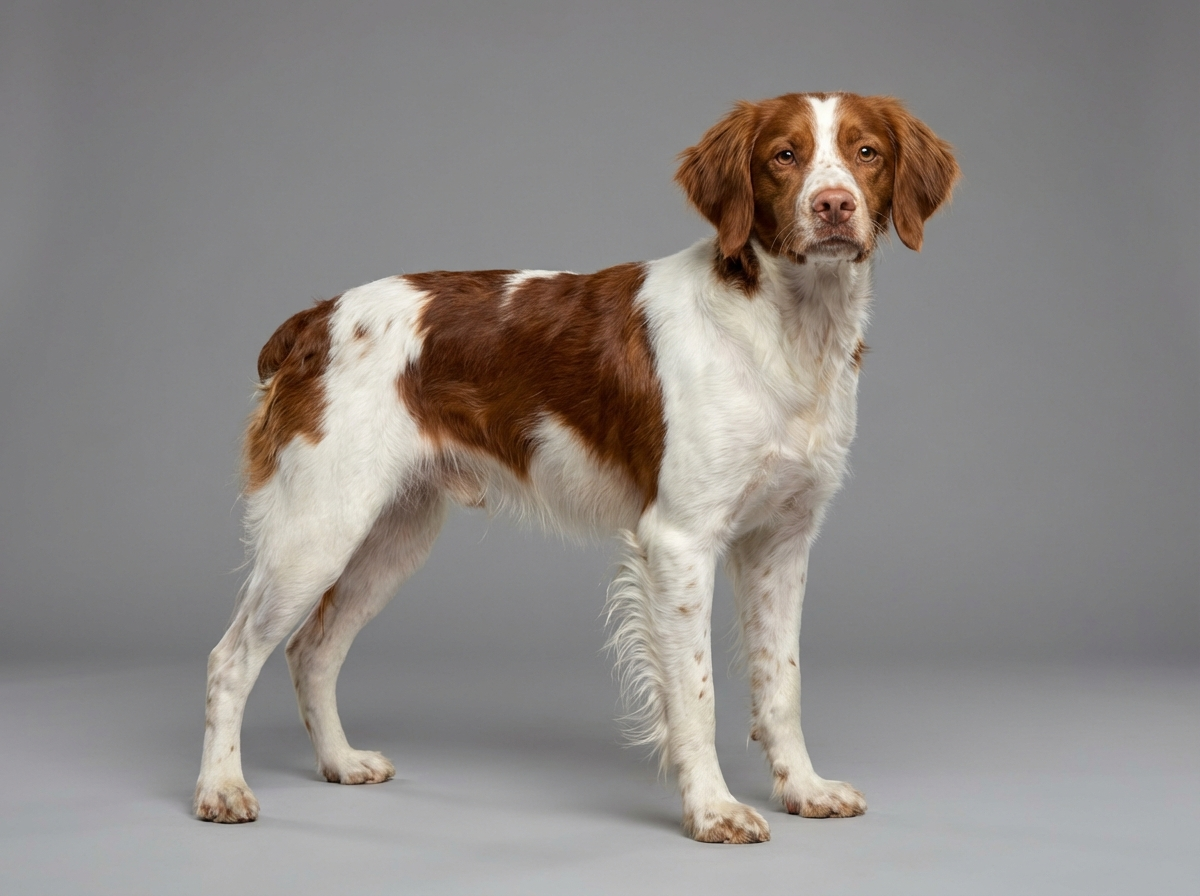
Health
What is the fastest sign of a serious allergic reaction in a Brittany?
Swelling around the face or muzzle appearing within an hour of a sting, meal, or vaccine, especially paired with drooling or pawing at the face.

Quick answer
What is the fastest sign of a serious allergic reaction in a Brittany?
Swelling around the face or muzzle appearing within an hour of a sting, meal, or vaccine, especially paired with drooling or pawing at the face.
One minute your Brittany is fine, the next their face is swollen and they are pawing at their muzzle. Knowing what to do in that window matters more than knowing the long-term allergy plan.
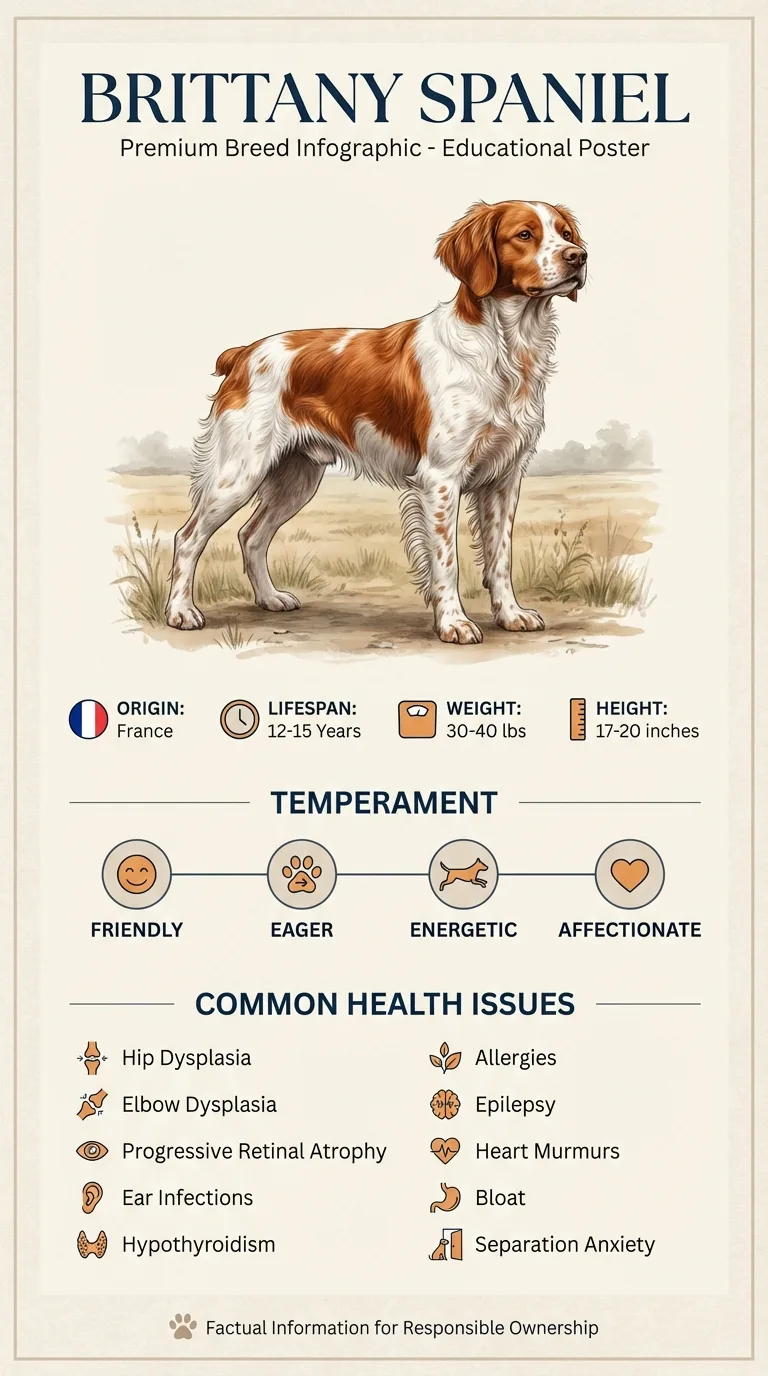
This hits hardest for owners whose Brittany spends real time in fields, brush, and tall grass, since that is where insect stings and unfamiliar plant contact happen. Owners of a dog already flagged for general allergy sensitivity are also more likely to see an acute reaction show up alongside the everyday itching.
This guide is not medical advice. If your dog shows pain, sudden behavior change, or worsening symptoms, consult a licensed veterinarian.
Some links may be affiliate links. We may earn a commission at no extra cost to you. We only suggest products we believe are helpful for dog owners.
We research and check what we publish, but we do not warrant that any figure, date, price, or statement is accurate, complete, or current, and we accept no liability for any loss, cost, injury, or other harm arising from the use of this site. Use it as one reference among several. You remain responsible for your own decisions and for your dog's care - confirm anything that matters with a licensed veterinarian or another qualified professional before you act on it. Full disclaimer.
Check this first
Not every allergic response needs a frantic drive to the emergency clinic, but the ones that involve breathing or the face moving fast do.
If any of these apply, call your vet or an emergency clinic now. The rest of this page is for the cases that are not an emergency.
An acute allergic reaction in a Brittany is a sudden immune response to something encountered within hours, not the slow-building itch of chronic allergies. It can range from a handful of hives that fade on their own to facial swelling or breathing trouble that needs emergency treatment. Because Brittanys already carry a documented tendency toward allergic disease, and because their field work puts them in regular contact with stinging insects, this breed sees acute reactions more often than a low-activity, indoor companion breed.
Most Brittanys will never have a severe reaction, but mild reactions such as localized hives after a sting are common enough that owners of field-active dogs should expect to see one at some point. Severe, breathing-affecting reactions are uncommon but not rare enough to ignore, which is why quick recognition matters.
Allergies are listed among the documented health concerns for this breed, and an immune system already prone to overreacting to everyday allergens is the same system that can overreact sharply to a sting, a vaccine, or a new protein source. This does not mean every Brittany will have an acute reaction, but the baseline immune sensitivity is part of the picture.
A working sporting dog spends far more time nose-down in brush, hedgerows, and tall grass than a breed kept mostly on leash and pavement, which multiplies the number of chances to disturb a nest or brush against an irritant. Warm months and active hunting or field trial seasons are when exposure, and therefore reaction risk, peaks.
Call same-day for any facial swelling, hives that keep spreading, vomiting after a new exposure, or a dog that seems unusually lethargic after a sting or injection. Difficulty breathing, collapse, pale or blue-tinged gums, or swelling that is visibly worsening is a true emergency: go to the nearest open vet immediately rather than waiting for a callback.
See all Brittany health problems, which breeds are prone to allergic reactions, or the full Brittany breed guide for temperament, exercise needs and ownership costs.
A mild reaction typically resolves within a few hours with or without an antihistamine, once the trigger is no longer in contact with the dog. A treated moderate-to-severe reaction is usually stable within 24 hours of treatment, though your vet may recommend a follow-up visit to confirm full resolution.
Success is not eliminating every possible trigger, since that is not realistic for a working field dog. It's recognizing your own dog's reaction pattern quickly enough to act before a mild event becomes a severe one, and having a plan in place before the next field season starts.
Brittanys are documented as a breed with an elevated background rate of allergic disease generally, which means the immune system in a lot of these dogs already runs a little trigger-happy. That same tendency toward overreaction is what turns an ordinary bee sting into facial swelling instead of a quick yelp and a shake of the head.
Field work adds exposure on top of that predisposition. A Brittany bred and used for pointing and flushing spends its outdoor time nose-down in brush, tall grass, and hedgerows, which is exactly where wasps, hornets, and ground-nesting bees live. A dog that mostly does yard laps and sidewalk walks simply encounters far fewer stinging insects across a season than one that works a field.
Dana had taken Scout, her three-year-old Brittany, out for an afternoon of bird work along a fence line thick with goldenrod. About twenty minutes in, Scout yelped, pawed at his muzzle, and within ten minutes his face had visibly puffed up around the eyes. Dana had seen him get stung once before with no real reaction, so the swelling caught her off guard. She called her vet's after-hours line while driving, was told the swelling alone without breathing changes could likely wait for a same-day appointment, and Scout was seen within the hour. An antihistamine injection brought the swelling down within thirty minutes, and he was back to normal by evening. What stuck with Dana afterward was how differently her vet described the two stings: the first was a localized irritation, the second was a genuine allergic response, and there was no way to have predicted which sting would trigger it. She now keeps her vet's after-hours number saved under a name she can find fast.
Key takeaway: A prior sting with no reaction does not predict how the next one will go. What matters is recognizing facial swelling quickly and having a same-day plan ready before you need it.
Reactions to insect stings or injected substances like vaccines typically show up within minutes to an hour. Food-related reactions can take longer, sometimes several hours, since digestion has to happen first.
Not always life-threatening, but it always warrants a same-day vet visit. Facial swelling can progress to throat swelling that affects breathing, so it should never be watched-and-waited on overnight.
Yes. Most vaccine reactions happen within a few hours, but mild facial puffiness or hives can occasionally appear later the same day. Vets typically ask owners to watch a dog closely for the rest of the day after any vaccination.
There is no breed-specific sting allergy documented for Brittanys, but their general predisposition toward allergic disease combined with heavy field and brush exposure means they encounter more stinging insects and may react more visibly than a lower-drive, indoor-oriented breed.
A phone number for the nearest emergency vet along your route, and awareness of what a normal versus swelling face looks like on your specific dog. Do not give any human antihistamine or medication without your vet's prior guidance on dose and product.
Usually yes, sensitization tends to persist or worsen with repeat exposure. If you can identify what caused a reaction, your vet can advise on avoidance and on whether pre-treatment before a similar exposure is worth discussing.
Acute reactions are handled as urgent events, sometimes needing injectable medication at a clinic, while chronic allergies are managed over months with diet, bathing routines, and environmental control. The two can overlap in the same dog but are treated on very different timelines.
Physical exertion and heat can make it harder to spot early warning signs like lethargy, since a working dog is already breathing hard and moving slowly by the end of a session. Check your dog over calmly once activity stops.
Swelling around the face or muzzle appearing within an hour of a sting, meal, or vaccine, especially paired with drooling or pawing at the face.
No. Facial swelling should get a same-day call to your vet or an emergency clinic, since it can progress to affect breathing.
It is exposure, not a special vulnerability. Brittanys work fields and brush where stinging insects live, so they simply encounter more of them.
A straightforward reaction treated with an antihistamine injection and an hour of monitoring is typically far less than a workup for a collapse or breathing emergency, so cost scales with severity.
A reliable recall and a 'leave it' cue reduce how long your dog investigates a nest or hive once it is noticed, which lowers repeat-sting risk during a single outing.
A one-page prep sheet for this condition: the signs, the questions to ask, what to get priced. Unlocks here.
You get: Vet visit prep sheet
No spam. One-click unsubscribe. See our privacy policy.
Preview page 1 before you decide.