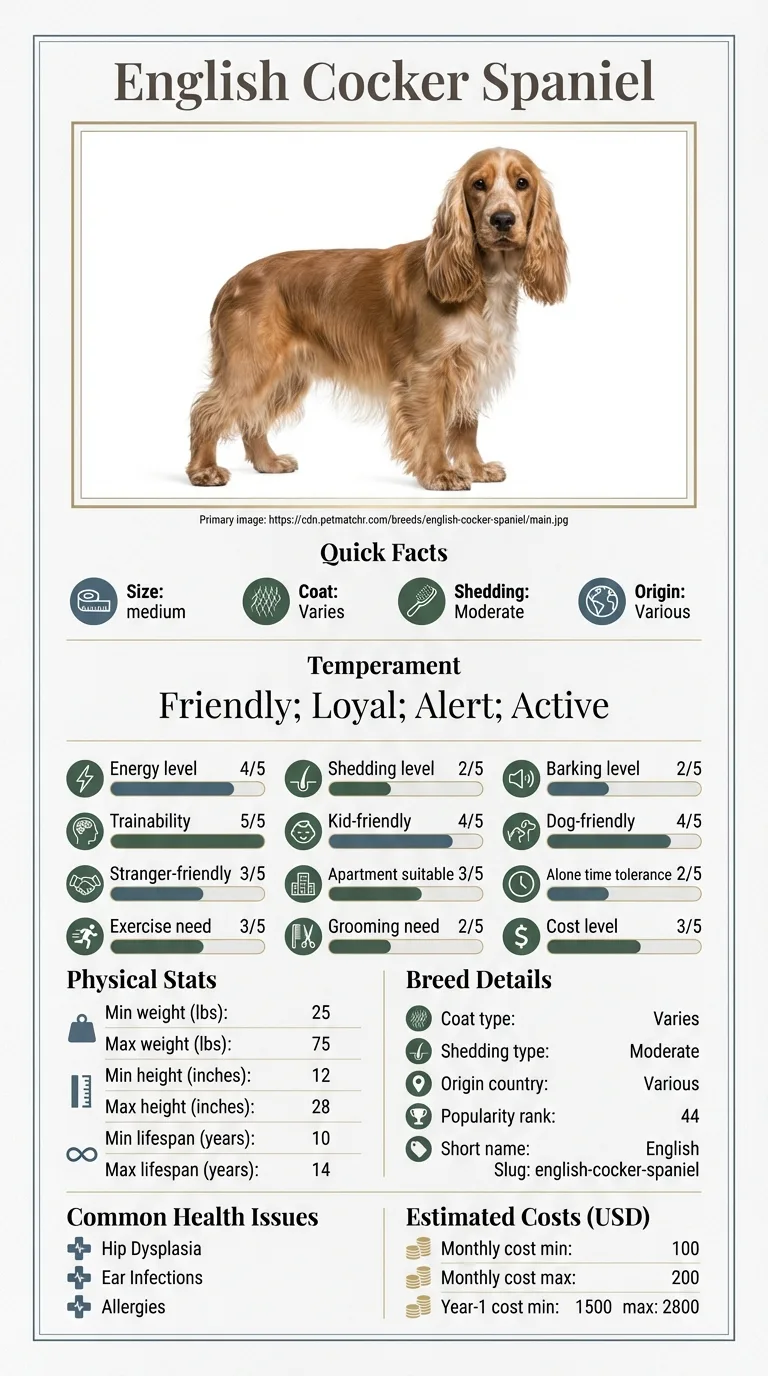
Why does my English Cocker Spaniel have allergic reactions?
English Cocker Spaniel allergic reactions can arise from various sources, including food, pollen, or fleas. Their skin may react to allergens, leading to itching and discomfort. Identifying the specific trigger often requires careful observation and sometimes veterinary testing.
How can I stop English Cocker Spaniel allergic reactions?
To manage allergic reactions in your English Cocker Spaniel, start by eliminating potential allergens from their environment. This might include switching to a hypoallergenic diet, using flea prevention, or minimizing exposure to pollen. Consult your vet for tailored advice and possible allergy testing.
What are the signs of allergic reactions in English Cocker Spaniels?
Common signs of allergic reactions include excessive scratching, redness on the skin, and ear infections. Some dogs may also experience gastrointestinal upset or respiratory issues. If you notice any unusual behavior, it's best to consult your veterinarian.
Can training help with my English Cocker Spaniel's allergic reactions?
While training won't directly stop allergic reactions, it can help you manage your dog's behavior when they experience discomfort. Training can also aid in desensitization to certain triggers under professional guidance. Always pair behavior training with medical management.
Are certain foods more likely to cause allergic reactions in English Cocker Spaniels?
Yes, some foods can trigger allergic reactions in English Cocker Spaniels, including common proteins like chicken or beef. A vet may recommend a limited ingredient diet to identify specific food allergies. Keep track of any reactions to food changes.
What should I do if my English Cocker Spaniel has a severe allergic reaction?
If your English Cocker Spaniel shows signs of a severe allergic reaction, such as swelling or difficulty breathing, seek emergency veterinary care immediately. Quick action is crucial to ensure their safety. Always have a plan for such emergencies.
What are the long-term management options for allergic reactions in English Cocker Spaniels?
Long-term management of allergic reactions may involve regular veterinary check-ups, medication, and lifestyle adjustments. Regular grooming helps reduce allergens in the home. Your vet can guide you through effective management strategies tailored for your dog.
What are common allergens for English Cocker Spaniels?
Common allergens for English Cocker Spaniels include pollen, dust mites, certain foods, and flea saliva. Identifying the specific allergen can help manage your dog's allergic reactions.
When should I take my English Cocker Spaniel to the vet for allergic reactions?
If your English Cocker Spaniel experiences severe symptoms such as swelling, difficulty breathing, or persistent itching, it's crucial to see a vet immediately. Even mild reactions that don't improve with home care should be evaluated.
Can allergic reactions in English Cocker Spaniels worsen over time?
Yes, allergic reactions can become more severe as your English Cocker Spaniel ages. Regular check-ups with your vet can help monitor any changes in their allergies and adjust treatment as needed.
Are there any natural remedies for English Cocker Spaniel allergic reactions?
Some owners find relief for their English Cocker Spaniels through natural remedies like oatmeal baths or coconut oil. However, it's essential to consult your vet before trying any new treatments.
How can I help my English Cocker Spaniel avoid allergic reactions?
To help prevent allergic reactions, keep your English Cocker Spaniel's environment clean by vacuuming regularly and using air purifiers. Additionally, a balanced diet and avoiding known allergens can make a significant difference.