DogBreedCompass
← Back to breed profile

Australian Shepherd Allergic Reactions: What Owners Need to Watch For

Quick answer

What does an allergic reaction look like in an Australian Shepherd?

Hives across the body, a swollen muzzle or eyelids, and pawing at the face are the classic signs, usually appearing within a couple of hours of exposure to a sting, food, or vaccine.

One minute your Aussie is fine after a hike or a vaccine visit, and the next their muzzle looks twice its size. Reactions in this breed move fast and need a clear-headed response.

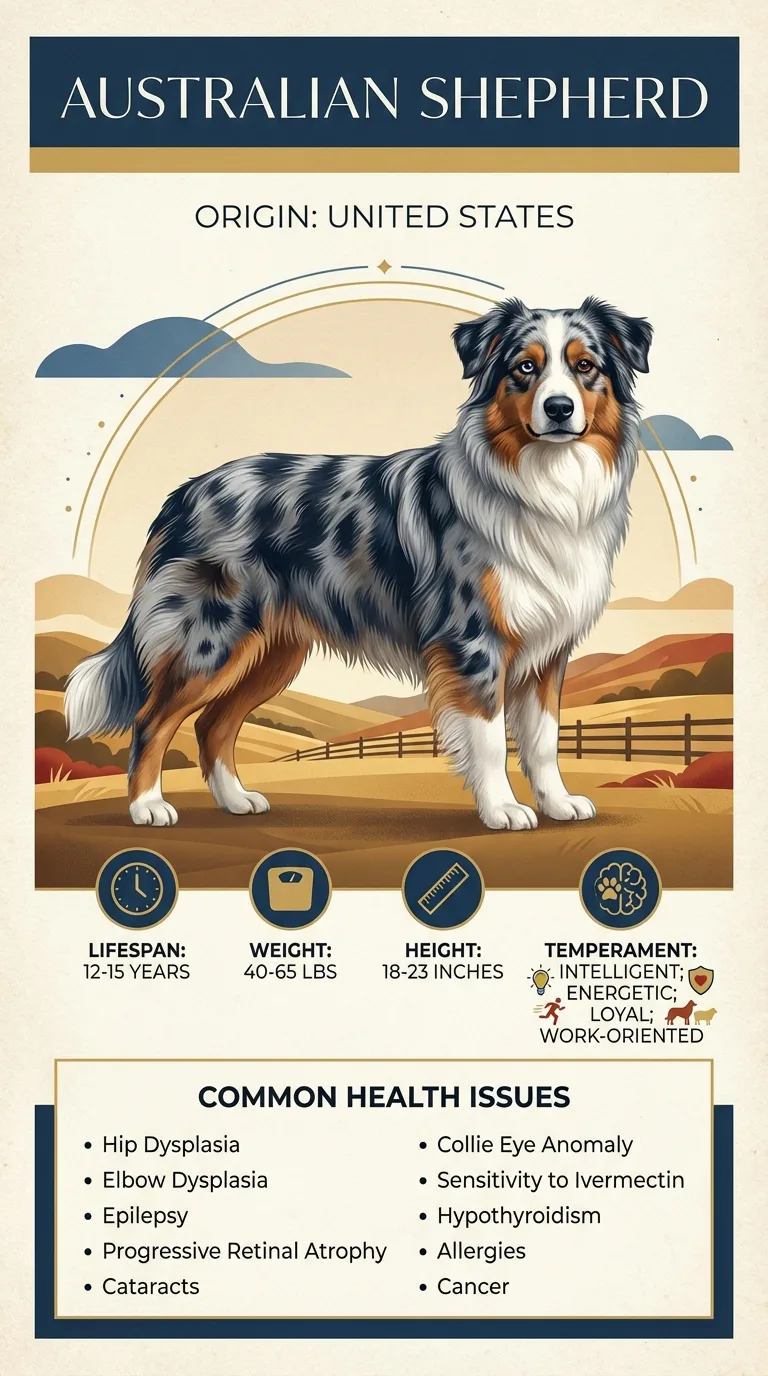
Australian Shepherd Allergic Reactions: What Owners Need to Watch For infographic

This hits owners of working and sport Aussies hardest, since those dogs spend more time in tall grass and brush where stings and plant allergens are common. It also catches new owners off guard right after a puppy's early vaccine series.

Important reminder

This guide is not medical advice. If your dog shows pain, sudden behavior change, or worsening symptoms, consult a licensed veterinarian.

Some links may be affiliate links. We may earn a commission at no extra cost to you. We only suggest products we believe are helpful for dog owners.

What this problem looks like

Acute allergic reactions in Australian Shepherds show up fast and look dramatic: hives spreading across the body, a swollen muzzle or eyelids, or in rare cases the whole-body collapse of anaphylaxis. This breed carries a documented sensitivity to allergens generally, and that same immune reactivity is what drives the sharp spike in acute reaction risk compared to the average dog.

Common triggers

  • Insect stings and bites picked up during outdoor work or play
  • Vaccines, particularly combination shots or a puppy's first full series
  • New foods, treats, or something scavenged off the ground mid-activity
  • Contact with unfamiliar plants, cleaning products, or bedding materials
  • Repeat exposure to a trigger the dog has already reacted to once

Veterinary data puts Australian Shepherds at a substantially elevated risk of acute allergic reactions relative to the general dog population — reported figures run over triple the baseline rate. That does not mean most Aussies will have a severe reaction, but it does mean owners of this breed see hives, facial swelling, or a post-vaccine flare more often than owners of lower-risk breeds.

Why this happens

Breed factors

Allergies are already a documented issue for this breed, and an acute reaction is the fast, dramatic end of that same immune overreactivity spectrum. Once a dog's immune system has flagged a substance as a threat, repeat exposure tends to produce a quicker, sometimes stronger response — which is part of why reaction risk compounds over a dog's lifetime rather than staying flat.

Environment factors

This is a breed built for hours of outdoor work, and that lifestyle multiplies exposure opportunities: more insect contact in fields and brush, more unfamiliar plants on hikes, more chances to eat something scavenged mid-run. Reaction risk also clusters around the puppy vaccine series and the spring-through-fall outdoor season, when both vaccine load and insect activity peak at the same time an active Aussie is outside the most.

What you can do at home (once it is not an emergency)

When to talk to your vet

Call same-day for any facial swelling, spreading hives, or vomiting after a known exposure, even if your dog otherwise seems alert. Go to an emergency vet immediately for pale or white gums, labored breathing, staggering, or collapse — those are signs of anaphylaxis and this is a genuine emergency, not something to monitor at home.

At home, alongside your vet's plan

  • Keep a simple log of anything new your Aussie ate, touched, or was exposed to in the hours before any reaction, so you and your vet can spot the pattern faster next time.
  • Do a quick face and paw check after hikes, herding sessions, or time in tall grass, since early swelling is easiest to catch before it spreads.
  • Ask your vet in advance about spacing out combination vaccines for future boosters if your Aussie reacted to a past round.
  • Keep your vet's after-hours or emergency clinic number saved and easy to find, since acute reactions do not wait for business hours.
  • Avoid re-exposing your dog to a known trigger, whether that's a specific treat ingredient, a lawn treatment, or a bedding material, even after symptoms clear.

See all Australian Shepherd health problems, which breeds are prone to allergic reactions, or the full Australian Shepherd breed guide for temperament, exercise needs and ownership costs.

What to expect, and how you know it is working

A typical mild-to-moderate reaction resolves within a few hours of veterinary treatment, with swelling fully gone within a day. Anaphylaxis is treated as a true emergency and, with prompt care, most dogs recover within 24 to 48 hours, though it requires immediate intervention rather than home monitoring.

Success isn't guaranteeing zero future reactions — insect stings especially aren't fully preventable outdoors. It's identifying triggers you can control, reacting fast when something new does appear, and having a clear plan with your vet for what to do if it happens again.

The five reaction patterns Aussie owners actually see

Not every allergic reaction looks the same, and knowing which pattern you're looking at changes how urgently you need to act.

  • Insect sting or bite: swelling and hives after time in fields or brush — the most common trigger for this breed's outdoor lifestyle.
  • Vaccine-associated reaction: facial swelling or hives within a few hours of a vaccine visit, most likely after a puppy's first combination round.
  • Contact reaction: localized redness or hives where skin touched a plant, cleaner, or new bedding, often on the belly or muzzle.
  • Food-triggered reaction: hives within an hour or two of something new — distinct from slower chronic food allergies.
  • Anaphylaxis: pale gums, weak pulse, staggering, or collapse. This is drive-to-the-ER now, not wait-and-see.

Why Australian Shepherds react more than average

Allergies are already a documented issue in this breed, and an acute reaction is essentially the immune system's fastest, most dramatic version of the same overreaction pattern that causes chronic itching in other Aussies. Once a dog has had one hive or swelling episode, later exposure to the same trigger tends to provoke a faster, sometimes stronger response.

Lifestyle compounds the genetics. This is a breed built to work outdoors for hours — herding, hiking, agility — which means more exposure to stinging insects, unfamiliar plants, and things scavenged off the ground mid-run than a low-energy, indoor-only breed ever racks up. Reactions also cluster around two moments: the puppy vaccine series, and the spring-through-fall season when insects and plant allergens peak alongside outdoor time.

Australian Shepherd Allergic Reactions: What Owners Need to Watch For - Why Australian Shepherds react more than average

The Sting That Showed Up at a Herding Trial

Priya's three-year-old Aussie, Scout, had never reacted to anything until a herding trial in late June. Twenty minutes into the run, Scout started pawing at his face, and by the time they reached the truck his muzzle had swollen and hives were spreading down his neck. The trial's on-site vet confirmed a reaction, likely from a sting picked up in the field, and treated and monitored Scout for an hour until the swelling eased. Priya later found a sting mark near his lip. She now keeps the nearest emergency vet's number in her trial bag and checks Scout's face every time he comes off the field.

Key takeaway: A first-time reaction can come out of nowhere in a dog with no prior history, and outdoor work is exactly the setting where it's most likely. Knowing where the nearest emergency vet is before you need one matters as much as anything you can do at home.

Frequently asked questions

Why do Australian Shepherds have a higher rate of allergic reactions?

Allergies are already a documented issue in this breed, and acute reactions track alongside that same immune overreactivity. Active lifestyles that put working and sport Aussies in more contact with insects and plants add to the risk.

How fast does an allergic reaction happen after exposure?

Most reactions appear within 20 minutes to 2 hours of a sting, food, vaccine, or contact allergen. Swelling that shows up a day later is more likely a slower chronic allergy.

Is a swollen face always an emergency?

Facial swelling alone still needs same-day vet attention since it can progress. Breathing trouble, pale gums, or collapse means go to an emergency vet immediately.

Can vaccines cause an allergic reaction in Australian Shepherds?

Yes, some dogs react with facial swelling, hives, or vomiting within a few hours of a vaccine visit, most often after a combination round. Your vet may space out future boosters.

What should I do the moment I notice hives on my Aussie?

Stop the activity, check breathing and gum color, and call your vet right away. Do not give any medication on your own — dosing needs to match your dog's weight and history.

Will my Aussie react the same way every time?

Repeat exposure to the same trigger often produces a faster or more intense reaction than the first time, which is why identifying the trigger matters.

Are working and sport Aussies really more at risk than pet Aussies?

They face more exposure from spending more hours outdoors in grass and brush, raising the odds of a sting or contact reaction. The underlying immune sensitivity itself doesn't differ by lifestyle.

Can I prevent future allergic reactions once my Aussie has had one?

You can reduce odds by avoiding the known trigger, but insect stings especially aren't fully predictable outdoors. Ask your vet for an action plan for what to watch.

Quick answers

View more answers
Health

What does an allergic reaction look like in an Australian Shepherd?

Hives across the body, a swollen muzzle or eyelids, and pawing at the face are the classic signs, usually appearing within a couple of hours of exposure to a sting, food, or vaccine.

Health

How urgent is a swollen face on my Aussie?

Treat it as same-day vet territory even if your dog seems otherwise fine, since swelling can progress. Breathing trouble, pale gums, or collapse means go to an emergency vet immediately.

Behavior

What triggers most allergic reactions in this breed?

Insect stings and bites top the list given how much time active Aussies spend outdoors, followed by vaccine reactions and contact with unfamiliar plants or products.

Health

Should I give my Aussie an antihistamine at home?

Only if your vet has already told you the specific product and dose to use for your dog's weight. Call first rather than guessing, especially the first time a reaction happens.

Health

Does one allergic reaction mean my Aussie will have more?

It raises the odds that a repeat exposure to the same trigger causes another reaction, sometimes faster than the first time. Identifying what caused it is the best way to lower that risk going forward.

Related DogBreedCompass guides

Bring the right questions to the vet

A one-page prep sheet for this condition: the signs, the questions to ask, what to get priced. Unlocks here.

You get: Vet visit prep sheet

No spam. One-click unsubscribe. See our privacy policy.

Preview page 1 before you decide.

Related guides