Health
What does CDDY stand for?
Chondrodystrophy, a genetic variant causing mild limb shortening and, crucially, early calcification of the intervertebral discs, which is what drives sudden disc herniation in predisposed breeds.

Quick answer
What does CDDY stand for?
Chondrodystrophy, a genetic variant causing mild limb shortening and, crucially, early calcification of the intervertebral discs, which is what drives sudden disc herniation in predisposed breeds.
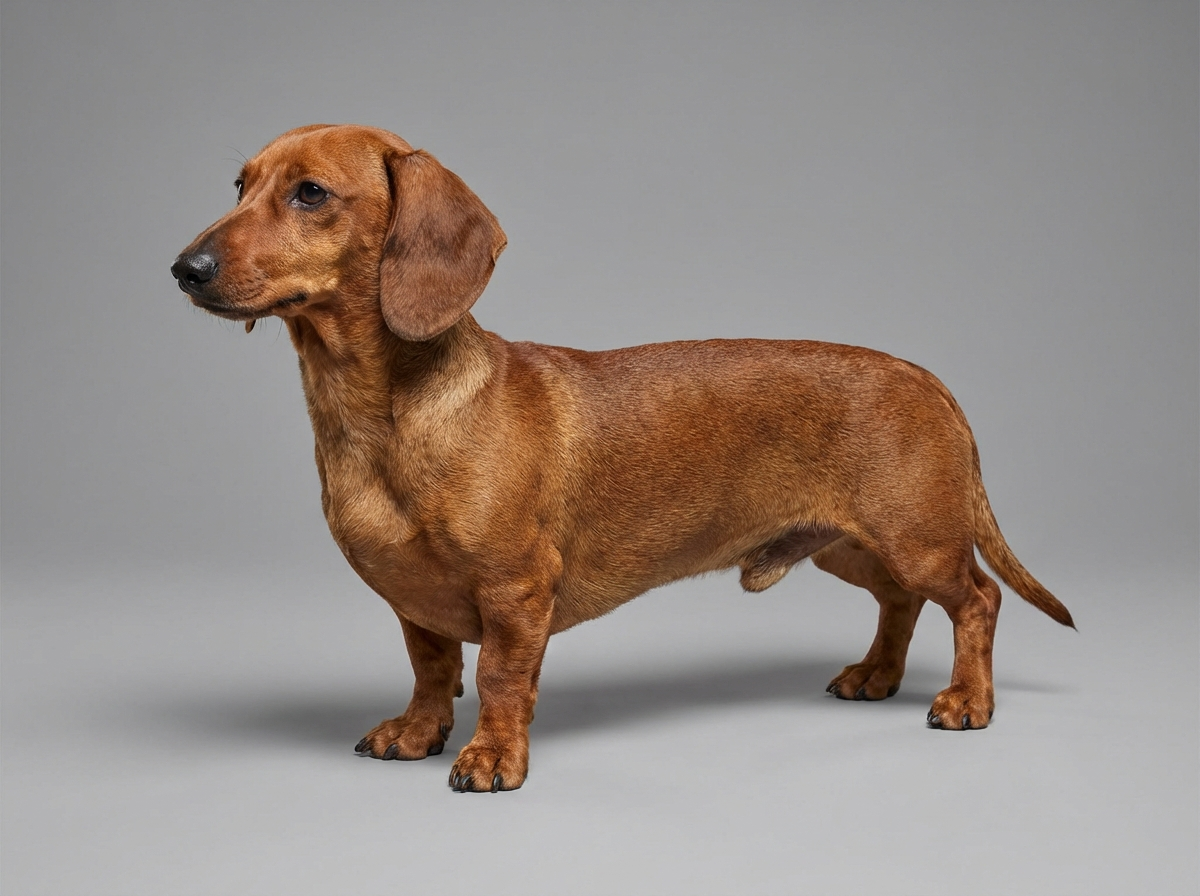
A Dachshund and a Papillon are both small. Only one of them is short-legged in the genetic sense, and only one of them carries the disc consequence that goes with it.
Owners who have come across DNA panel results listing CDDY and CDPA and want to know what those letters mean for a Papillon, and breeders trying to decide which tests are worth paying for in this breed.
This guide is not medical advice. If your dog shows pain, sudden behavior change, or worsening symptoms, consult a licensed veterinarian.
Some links may be affiliate links. We may earn a commission at no extra cost to you. We only suggest products we believe are helpful for dog owners.
We research and check what we publish, but we do not warrant that any figure, date, price, or statement is accurate, complete, or current, and we accept no liability for any loss, cost, injury, or other harm arising from the use of this site. Use it as one reference among several. You remain responsible for your own decisions and for your dog's care - confirm anything that matters with a licensed veterinarian or another qualified professional before you act on it. Full disclaimer.
Chondrodystrophy is a genetically determined abnormality of cartilage development that shortens the limbs and causes intervertebral discs to calcify and degenerate abnormally early. It is the single best predictor of catastrophic disc herniation in dogs. The trait is defined by specific genetic variants that can be tested for directly, and the Papillon is not among the breeds in which they are found.
Near-universal in Dachshunds, French Bulldogs, Basset Hounds and several other short-legged breeds, and effectively absent in normally proportioned toy breeds like the Papillon. The clinical consequence follows the same distribution: disc herniation is a defining veterinary problem for one group of small dogs and a rarity in the other.
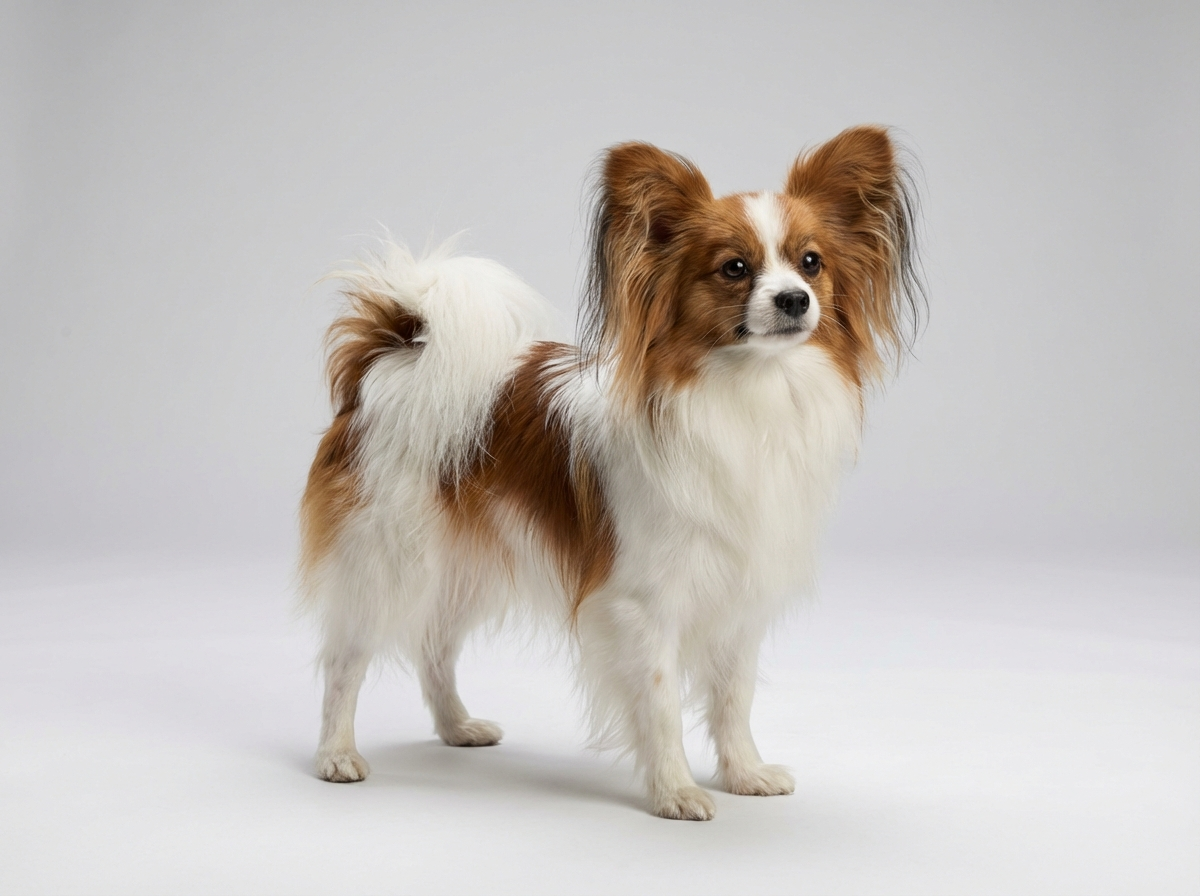
The Papillon descends from continental toy spaniels bred for size reduction across the whole animal rather than for altered limb proportions. Its legs are straight and fine, its height is eight to eleven inches, and its body is close to square in outline. That construction means no chondrodystrophic variant was ever selected for or fixed in the breed. The breed's genuine skeletal issues sit elsewhere: an open fontanel on the skull and a kneecap groove that may develop too shallow, both documented on its health list.
Nothing environmental creates or removes a genetic variant. Environment does, however, determine how a spine of any construction fares over a fourteen to sixteen year life. Jumping down from furniture onto hard floors, carrying extra weight, and lead pressure applied to the neck all load the spine unhelpfully. Those are worth managing in a Papillon for the sake of its bones and joints, rather than because of a disc risk it does not carry.
Seek emergency attention for sudden inability to walk, dragging of the hind legs, loss of bladder control, or severe back pain with a hunched posture and repeated crying out. Those signs indicate possible spinal cord compression, and the window for preserving function is measured in hours. Book a prompt appointment for a young Papillon whose forelegs appear to be developing a curve, for a persistent limp with no obvious cause, or for reluctance to jump that has appeared suddenly. A routine appointment is fine for interpreting DNA panel results and for asking which screening tests genuinely apply to your breed.
See all Papillon health problems, which breeds are prone to chondrodystrophy cddy, or the full Papillon breed guide for temperament, exercise needs and ownership costs.
A DNA panel takes two to four weeks to return results. Assessing your dog's proportions takes one photograph. There is no timeline of disease to expect here, because the trait is absent from the breed. If a genuine spinal problem is suspected in an individual Papillon, expect a neurological examination and imaging over the following one to two weeks rather than a genetic answer.
Understanding what the test measures and why your dog is not the patient it was designed for. Success is an owner who can explain the difference between a small dog and a short-legged dog, who has redirected their attention and their budget to the knees, eyes and teeth that this breed genuinely needs watched, and who has put a ramp by the sofa anyway.
Two related genetic findings sit behind this subject. One, usually abbreviated CDPA, produces the shortened, curved legs that define breeds like the Dachshund, the Basset Hound and the Corgi. The other, abbreviated CDDY, produces a milder shortening of the legs and, more importantly, changes how the intervertebral discs develop.
In a dog carrying CDDY the gel-like centre of each disc degenerates and calcifies far earlier than it should, often within the first two years of life. A calcified disc centre is brittle rather than cushioning, and when enough pressure builds it can burst upward through the outer ring into the spinal canal in a single event.
That is why disc herniation in short-legged breeds is a young to middle-aged dog's catastrophe rather than an old dog's slow decline. The trait explains both the silhouette and the disease in one mechanism.
A commercial DNA test reports whether a dog carries none, one or two copies, and risk rises with copy number.

Look at the profile of a Papillon standing square. Height at the shoulder is eight to eleven inches, and the body length from point of shoulder to point of buttock is only slightly greater than that height. The forelegs are straight, fine and vertical. There is no forward bowing of the forearm, no outward turn at the pastern, and no chest that hangs low between short bent legs.
That set of features describes a normally proportioned small dog rather than a chondrodystrophic one. The breed is small because everything about it is scaled down together, not because its limbs were selectively shortened.
The practical consequence follows directly. A Papillon's discs mature normally, so they do not calcify early, so the explosive herniation that dominates Dachshund veterinary care is not a feature of this breed's life. Nothing spinal appears on the Papillon's documented health list, which runs to the kneecaps, retina, teeth, skull fontanel and windpipe.
DNA panels that include CDDY will still report a result, and in this breed it is almost always negative.
Bea ran a broad DNA panel on her Papillon, Coco, mainly out of curiosity about ancestry. The report ran to forty conditions, and one line about chondrodystrophy and disc herniation risk had a link to an article full of images of paralysed Dachshunds. Coco's result on that line was clear, but Bea had read the article before she read the result properly, and spent three weeks quietly bracing for something. At Coco's next check her vet stood the dog on the table, ran a hand down two straight vertical forelegs and pointed out the near-square outline. The conversation lasted two minutes. He added that the things worth Bea's attention were Coco's kneecaps, which he had graded as mildly loose, and her teeth. Coco is now on a physiotherapy programme for her knees and gets her teeth brushed nightly.
Key takeaway: A genetic panel reports everything it can measure, not everything that matters for your dog. Read the result before the article, and ask which lines are relevant to the breed in front of you.
No. They are a normally proportioned toy breed with straight legs and a body length close to their height. The chondrodystrophic variants are concentrated in breeds selected for short curved limbs, and the Papillon was never bred for that outline.
CDPA produces the dramatic leg shortening that defines Dachshunds and Corgis. CDDY produces milder shortening but is the variant associated with early disc calcification and herniation risk. A dog can carry either, both or neither.
Not for its own sake. It is standard on many multi-breed panels and will usually return a negative result. If you are already running a panel for other reasons the information comes free, but paying for it alone in this breed buys very little.
Size alone does not. The risk tracks the genetic variant and the resulting disc chemistry rather than body weight. A ten pound Papillon and a ten pound Dachshund have very different spinal outlooks despite weighing the same.
Have it examined, because a bowed forearm in a toy breed more often reflects an old growth-plate injury than a chondrodystrophic gene. An injury to the growth plate of one forearm bone can stop it growing while its partner continues, bending the limb.
Any dog can, but in a non-chondrodystrophic breed it is far more likely to be the slow bulging type seen in older dogs than the sudden explosive kind. It remains uncommon and is not part of the breed's documented health profile.
Chondrodystrophy, a genetic variant causing mild limb shortening and, crucially, early calcification of the intervertebral discs, which is what drives sudden disc herniation in predisposed breeds.
It is not a feature of the breed. Papillon limbs are straight and proportionate, the discs mature normally, and nothing spinal appears on the breed's documented health list.
A multi-condition panel with breed ancestry typically runs one to two hundred dollars. CDDY is usually one line item among dozens and is not worth commissioning on its own for this breed.
Yes, but for fracture and joint reasons rather than disc reasons. Repeated hard landings from furniture stress fine toy-breed bones and unstable kneecaps regardless of what the discs are doing.
It complements one. Teach a wait at the sofa edge and reward using the ramp, and a Papillon will adopt the new route within a fortnight given how quickly this breed learns household routines.
A one-page prep sheet for this condition: the signs, the questions to ask, what to get priced. Unlocks here.
You get: Vet visit prep sheet
No spam. One-click unsubscribe. See our privacy policy.
Preview page 1 before you decide.