Health
What is thyroglobulin autoantibody testing?
A blood test detecting antibodies against thyroid tissue. It flags an ongoing immune attack years before hormone levels drop and symptoms appear.

Quick answer
What is thyroglobulin autoantibody testing?
A blood test detecting antibodies against thyroid tissue. It flags an ongoing immune attack years before hormone levels drop and symptoms appear.
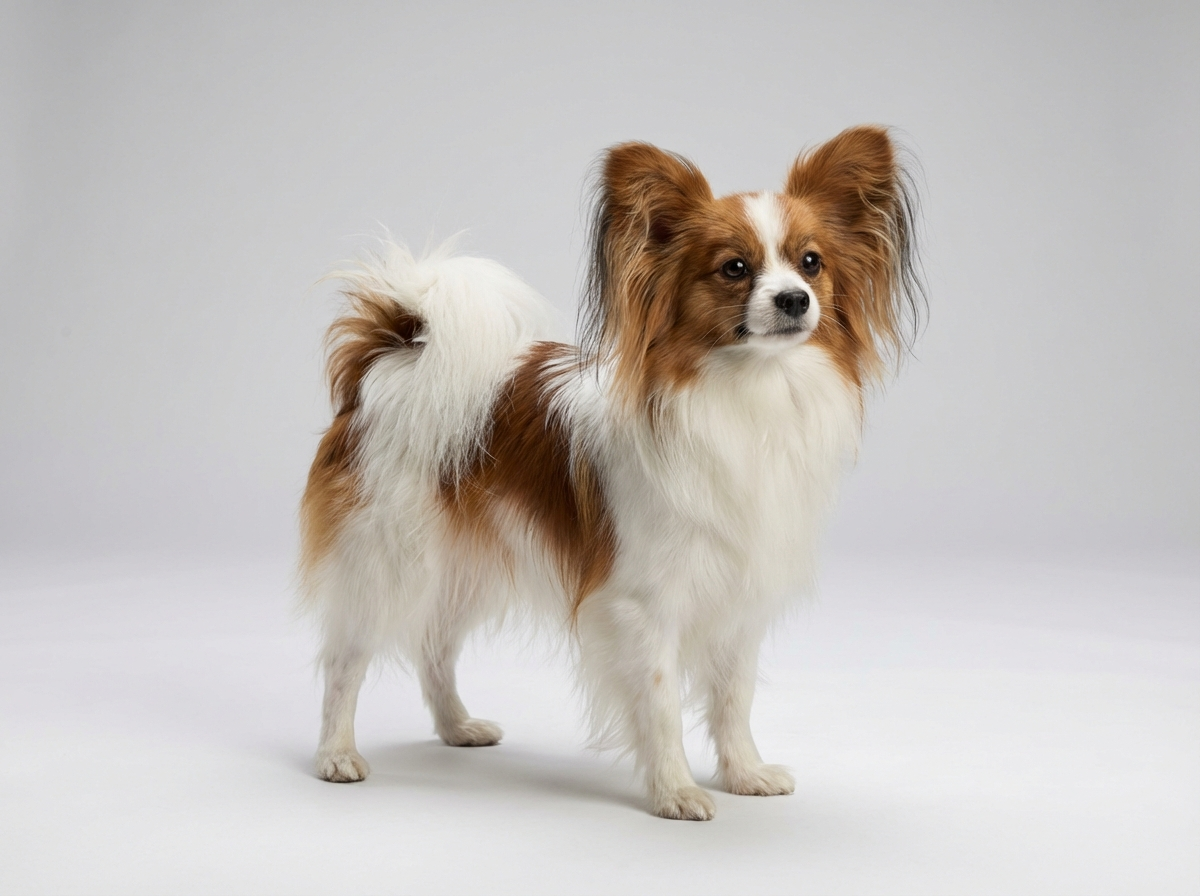
By the time a Papillon looks hypothyroid, the immune damage is mostly done. The interesting window is the one before that.
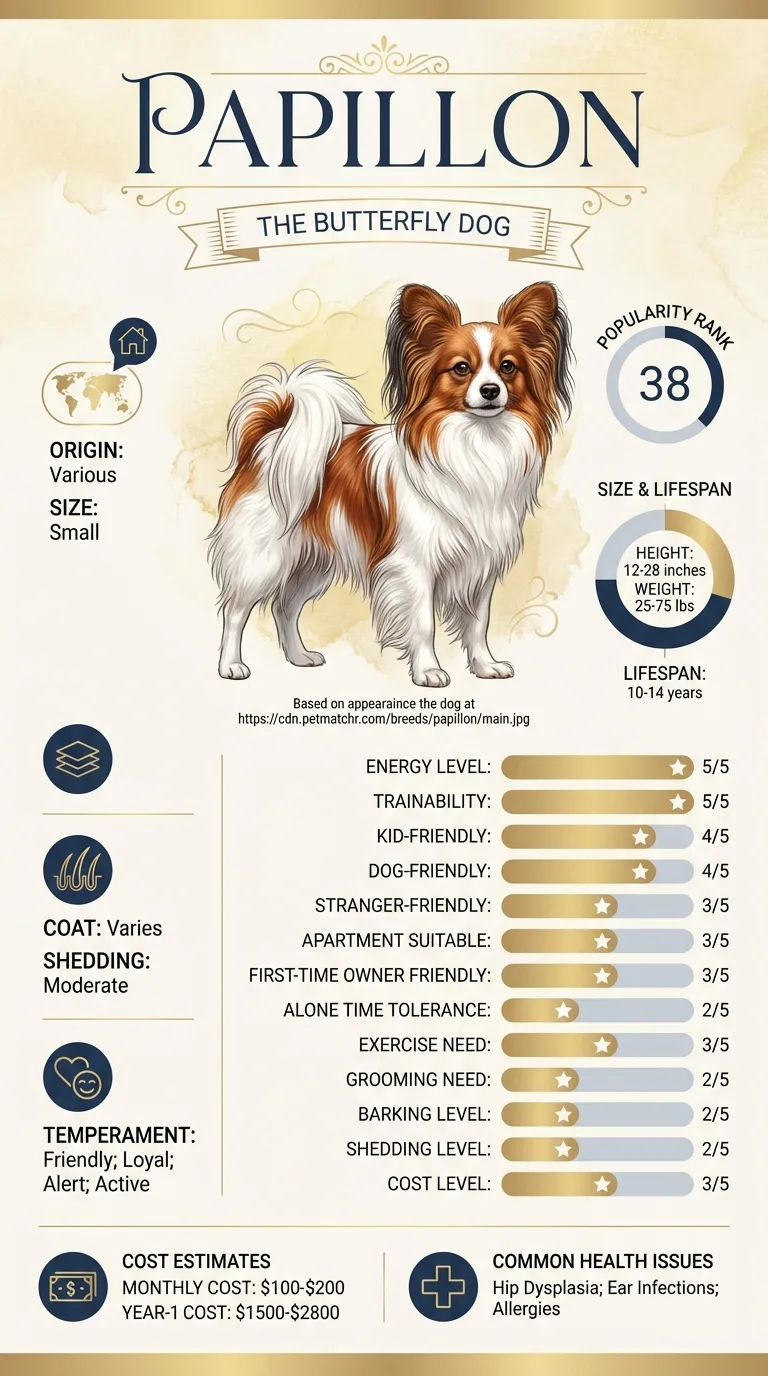
Breeders deciding whether a young Papillon belongs in a programme, and owners who have been handed a result showing thyroid autoantibodies in a dog that appears perfectly well.
This guide is not medical advice. If your dog shows pain, sudden behavior change, or worsening symptoms, consult a licensed veterinarian.
Some links may be affiliate links. We may earn a commission at no extra cost to you. We only suggest products we believe are helpful for dog owners.
We research and check what we publish, but we do not warrant that any figure, date, price, or statement is accurate, complete, or current, and we accept no liability for any loss, cost, injury, or other harm arising from the use of this site. Use it as one reference among several. You remain responsible for your own decisions and for your dog's care - confirm anything that matters with a licensed veterinarian or another qualified professional before you act on it. Full disclaimer.
Immune mediated thyroiditis is an autoimmune attack on the thyroid gland, and it is the leading cause of hypothyroidism in dogs. Its defining feature is a long silent phase: the gland loses tissue steadily while compensating well enough that hormone levels and the dog both look normal. Detection during that phase requires a specific autoantibody test, which is why the condition matters far more to breeders than to owners of pet Papillons.
Autoimmune thyroiditis is documented across a wide range of breeds and is not a signature Papillon problem. It appears on breed lists partly because thyroid screening has become common practice in serious breeding programmes generally. For a pet Papillon the practical relevance is small unless hormone levels actually change.
Susceptibility is inherited, involving genes that govern how the immune system distinguishes the body's own proteins from foreign ones. That is why the condition clusters in lines rather than appearing at random, and why breeding decisions are the main lever anyone has. Nothing about the Papillon's small stature, single silky coat or long lifespan drives the immune attack itself, though the breed's fourteen to sixteen year span means an affected dog may live a very long time after diagnosis.
No dietary factor, vaccine schedule or household exposure has been established as a cause in dogs, and owners should be sceptical of products marketed on that premise. Where environment genuinely intervenes is at the testing bench: recent illness, stress and certain medications alter thyroid results, so a panel run at the wrong moment can suggest a problem that does not exist or mask one that does.
Book a routine appointment to discuss testing if your Papillon is a breeding animal reaching two years, or if a relative has been diagnosed. Book sooner if the dog has begun gaining weight without a change in food, losing coat from the fringes, or becoming reluctant to do things it enjoyed. Seek urgent care rather than a scheduled test if a dog with these signs becomes markedly weak, unsteady, unusually cold to the touch or collapses, because that combination needs assessment straight away.
See all Papillon health problems, which breeds are prone to immune mediated thyroiditis, or the full Papillon breed guide for temperament, exercise needs and ownership costs.
Progression from a first positive antibody result to clinical hypothyroidism is measured in years, sometimes many of them, and sometimes it never happens. Expect a monitoring schedule of six to twelve months and expect the honest answer to be uncertain for a long time. Once hormone levels do fall, treatment response is quick and reliable.
For a breeder, success is knowing a dog's thyroid trajectory before making pairing decisions. For an owner, it is a dog whose hypothyroidism was caught at the first abnormal panel rather than after a year of being told it was just getting older.
Stage one is the attack. Immune cells infiltrate the thyroid and antibodies form against thyroglobulin, the protein the gland uses to build its hormone. Tissue is destroyed slowly. Meanwhile the surviving gland compensates, so circulating hormone stays inside the normal range and the dog shows nothing at all. A routine screening hormone level taken during this stage typically comes back fine.
Stage two begins when destruction outruns compensation. Hormone output falls, the pituitary pushes harder and its own signal rises, and the familiar picture appears: weight gain, lethargy, a thinning fringe and plume, cold seeking, dull skin. This is the point at which most dogs are diagnosed and treated.
The test that distinguishes the stages is the thyroglobulin autoantibody assay. A positive result in a dog with normal hormone levels says the process is under way. It does not say when, or whether, the dog will become clinically hypothyroid, and some antibody positive dogs never do.
For an owner that ambiguity is frustrating. For a breeder it is genuinely useful information, because a two year old Papillon with autoantibodies is a dog whose thyroid status will change, and that is a fact worth knowing before pairing decisions are made rather than four years afterwards.

This test is a surveillance tool, not a diagnosis. Used properly it maps a trajectory; used once and out of context it mostly creates worry.
Ines screened her three year old Papillon bitch Vive as part of a routine pre breeding workup. Hormone levels were squarely normal. The thyroglobulin autoantibody result came back positive. Her vet explained that Vive was healthy today and might stay that way for years, but that the finding was heritable and would very likely progress. Ines had already reserved a stud. She cancelled. Vive stayed clinically normal for another four years. At seven her weight began creeping up on unchanged food, and the panel that Ines requested that month showed hormone levels below range for the first time. Because the file already held five years of results, the diagnosis took one appointment instead of six months of guessing.
Key takeaway: A positive antibody test is not a diagnosis and not an emergency. It is a heads up that changes breeding decisions immediately and monitoring decisions permanently, and it turns a future diagnosis into a short conversation instead of a long puzzle.
Nothing changes today. A positive antibody result in a dog with normal hormone levels means the process exists, not that treatment is due. Your vet will most likely put a recheck in the calendar, usually in six to twelve months, and monitor hormone levels alongside how the dog looks and what it weighs.
No. A proportion progress, a proportion stay stable for years, and some never develop clinical disease at all. Because the pace of destruction varies so much between individuals, the honest answer to how long do I have is that nobody can tell you, which is precisely why monitoring replaces prediction.
No, and this is the central point. During the compensating stage the gland maintains normal output despite ongoing damage, so a screening hormone level looks fine. Only the autoantibody assay detects the process at that stage. This is why breeders test antibodies rather than relying on a routine panel.
This is a breeder's decision made with their veterinarian, and practice varies. The broad principle used in many programmes is that autoimmune thyroiditis has a heritable component, so an antibody positive dog is generally not used, and close relatives are screened more attentively. Removing every relative from a small gene pool carries its own costs, which is why the decision needs a professional conversation rather than a rule from a website.
It is the most common cause of it, not a separate disease. Think of thyroiditis as the mechanism and hypothyroidism as the result. A dog can have thyroiditis without hypothyroidism, and a dog can be hypothyroid from other causes such as simple gland atrophy without any autoimmune component.
There is no established treatment that halts the process in dogs. What is treatable is the consequence, with hormone replacement once levels actually fall. Starting replacement in a dog with normal hormone levels purely because antibodies exist is not standard practice and should not be requested casually.
A blood test detecting antibodies against thyroid tissue. It flags an ongoing immune attack years before hormone levels drop and symptoms appear.
Usually from around two years, then repeated periodically, because autoantibodies most often develop between two and five.
No. Treatment starts when hormone levels actually fall. A positive result with normal hormones means monitoring, not prescribing.
A full panel with antibody testing is a modest one off cost compared with breed running costs of eighty to one hundred fifty dollars a month, though repeat testing adds up over a breeding career.
A one-page prep sheet for this condition: the signs, the questions to ask, what to get priced. Unlocks here.
You get: Vet visit prep sheet
No spam. One-click unsubscribe. See our privacy policy.
Preview page 1 before you decide.