Health
What does cherry eye look like?
A smooth, dome-shaped pink or red swelling appearing suddenly at the inner corner of the eye, usually in a dog under two years old, often without much pain at first.

Quick answer
What does cherry eye look like?
A smooth, dome-shaped pink or red swelling appearing suddenly at the inner corner of the eye, usually in a dog under two years old, often without much pain at first.
The single most consequential fact about cherry eye is that the lump is a working tear gland. Cutting it off solves the appearance and creates a lifetime of dry eye.
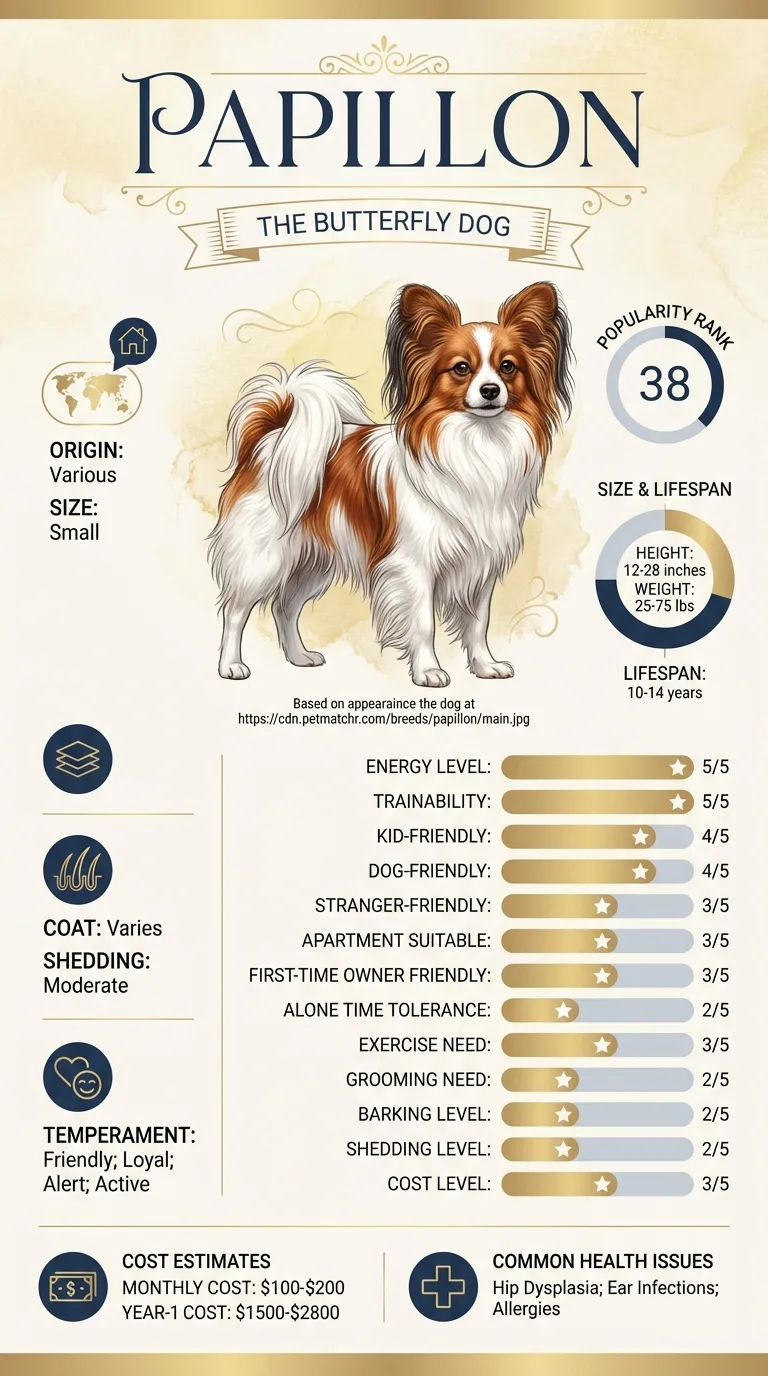
Owners who have just seen a red lump appear at the inner corner of a Papillon's eye overnight, and anyone who has been offered removal as the cheap option and wants to know what the trade actually is.
This guide is not medical advice. If your dog shows pain, sudden behavior change, or worsening symptoms, consult a licensed veterinarian.
Some links may be affiliate links. We may earn a commission at no extra cost to you. We only suggest products we believe are helpful for dog owners.
We research and check what we publish, but we do not warrant that any figure, date, price, or statement is accurate, complete, or current, and we accept no liability for any loss, cost, injury, or other harm arising from the use of this site. Use it as one reference among several. You remain responsible for your own decisions and for your dog's care - confirm anything that matters with a licensed veterinarian or another qualified professional before you act on it. Full disclaimer.
Cherry eye is the prolapse of the tear-producing gland at the base of the third eyelid, which flips out of position and sits as a visible dome at the inner corner of the eye. It is a young dog's condition, concentrated in a handful of predisposed breeds, and the whole of its management turns on preserving the gland's function rather than removing the bulge.
Common enough in the predisposed breeds that many practices see it weekly, and not a recognised problem in Papillons. In this breed a red lump at the inner corner of the eye should prompt a proper examination rather than an assumption, since conjunctivitis, a lodged grass seed and, in older dogs, a third eyelid mass are all more likely.
The predisposition is a weakness in the fibrous attachment that normally tethers the gland to the bony rim of the orbit, and it clusters in specific breeds rather than in specific body types. The Papillon carries no documented connection to it. What the breed's eye anatomy does offer is a well-set, moderately sized eye without the shallow orbit and prominent globe of flat-faced breeds, which removes several of the mechanical stresses that predispose other small dogs to eyelid and third-eyelid problems.
Environment rarely causes a prolapse outright, but it can precipitate one in a dog whose attachment is already weak. Anything that inflames the third eyelid raises the risk: dust, wind, a grass seed working its way behind the lid, or a bout of conjunctivitis. Persistent rubbing at an itchy eye, whether from allergy or irritation, adds mechanical force in exactly the wrong direction.
Book within a day or two for any new lump at the inner corner of the eye, even if the dog seems untroubled by it, because an exposed gland dries and inflames quickly. Seek same-day or urgent attention if the eye is being held shut, is watering heavily, has become cloudy, is bleeding, or if your Papillon is pawing at it repeatedly. Sudden severe eye pain in any dog is an emergency, since a corneal ulcer or a rise in pressure inside the eye can cost sight within a day. Ask specifically whether the plan is to reposition the gland rather than remove it.
See all Papillon health problems, which breeds are prone to cherry eye, or the full Papillon breed guide for temperament, exercise needs and ownership costs.
Surgery is usually done within days to a couple of weeks of diagnosis. Expect a soft collar and topical medication for ten to fourteen days, with the eye looking swollen and red for the first week. Most dogs are comfortable within a few days. Recurrence, when it happens, tends to occur in the first few months and may need a second procedure.
A gland sitting back where it belongs, an eye that is comfortable and normally moist, and a dog with a full tear film for the rest of its fourteen to sixteen year life. Success emphatically does not mean an eye that merely looks normal, since removing the gland achieves that appearance at a cost paid every day thereafter.
The nictitans gland produces a large fraction of a dog's aqueous tear film. Historically prolapsed glands were simply excised, because it is quick and the eye looks normal afterwards. Long-term follow-up showed the consequence clearly: a substantial proportion of those dogs went on to develop keratoconjunctivitis sicca, dry eye, in that eye.
Dry eye is not a cosmetic problem. Without an adequate tear film the cornea becomes inflamed, pigmented and scarred, the dog is uncomfortable much of the time, and treatment means lifelong medicated drops several times a day.
Modern surgery repositions the gland instead. The two common approaches either bury it in a pocket of conjunctiva or anchor it with a suture to the orbital rim, both of which preserve its function.
Recurrence happens in a minority of cases and may need a second procedure, which is a far better problem to have than a permanently dry eye. If a vet offers excision as a first-line option, it is entirely reasonable to ask about replacement or a referral instead.

Cherry eye is a young dog's condition and belongs largely to Cocker Spaniels, Beagles, Bulldogs, Shih Tzus and Lhasa Apsos. It is not documented in Papillons, whose recorded eye problem is progressive retinal atrophy.
So in this breed the differential list matters. Conjunctivitis produces generalised redness and swelling of the pink tissue around the eye rather than a discrete dome. A foreign body, such as a grass seed lodged behind the third eyelid, produces sudden pain, squinting and pawing, and is a same-day problem. An everted third eyelid cartilage causes the whole eyelid to curl rather than a gland to bulge. In an older dog, a mass on the third eyelid itself has to be considered.
The distinguishing features of a true cherry eye are that it is smooth, dome-shaped, pink, arises specifically at the inner corner, and typically appears suddenly in a dog under two years old without much pain.
Whichever it is, an eye that is red, painful or being held shut needs seeing rather than watching.
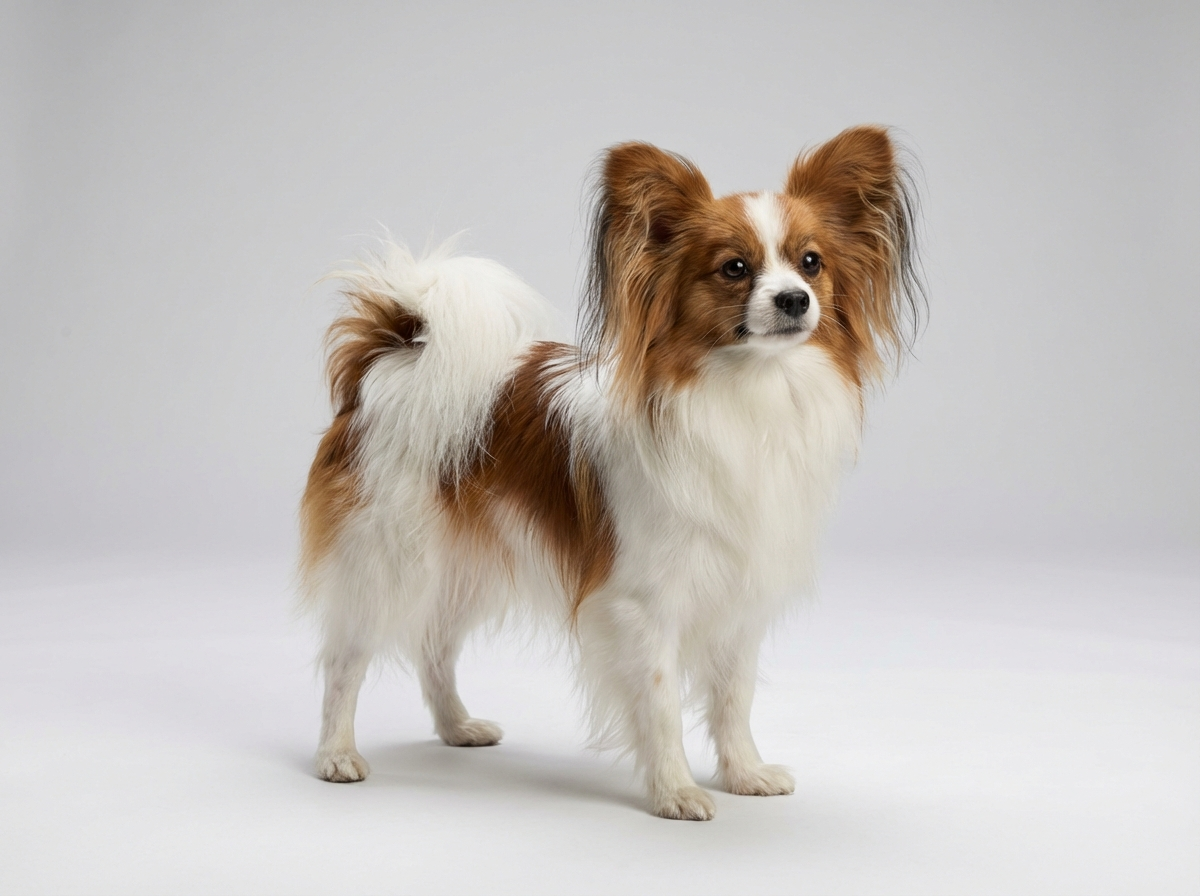
Nour's fourteen-month-old Papillon, Sami, developed a smooth pink dome at the inner corner of his right eye over a weekend. He was not rubbing it and seemed unbothered. The first practice she called offered removal as a quick, inexpensive fix. Nour asked what the gland did. When she was told it produced tears, she asked whether it could be put back instead, and was told that would mean a referral. She took the referral. The gland was repositioned in a conjunctival pocket, Sami wore a soft collar for twelve days and had drops four times daily, and the eye settled completely. He is six now with a normal tear test in both eyes. Nour's vet mentioned at his last check that dogs whose glands were excised in that era are the ones now on lifelong dry-eye medication.
Key takeaway: Ask one question when a lump is going to be operated on: what does this tissue do? A gland that makes tears is worth an extra procedure to keep.
It is not a documented problem in the breed, whose recorded issues are patellar luxation, progressive retinal atrophy, dental disease, an open fontanel and a collapsing trachea. Any individual dog can develop it, but a red lump in a Papillon's eye has other more likely explanations.
No. Manipulating it risks damaging the gland and introducing infection, and any temporary success does not fix the failed anchoring underneath. A warm compress to keep it moist on the way to the clinic is as far as home care should go.
The prolapse itself is often surprisingly untroubling at first, which is why owners sometimes wait. It becomes uncomfortable as the exposed gland dries out and becomes inflamed, and the eye can develop secondary conjunctivitis or corneal irritation. It should be treated promptly rather than urgently.
In predisposed breeds, often yes, sometimes within months. In a breed where the condition is not typical, a single prolapse is more likely to stay single, though the second eye is worth watching.
The exposed gland dries, swells and becomes chronically inflamed, and its tear production falls anyway. The eye develops discharge and may ulcerate. Leaving it is not a way of avoiding the dry-eye consequence, only of arriving at it more slowly.
No. The gland sits at the inner corner and does not obstruct the visual axis, and repositioning it does not touch the cornea, lens or retina. The purpose of the surgery is preserving tear production and comfort rather than sight.
A smooth, dome-shaped pink or red swelling appearing suddenly at the inner corner of the eye, usually in a dog under two years old, often without much pain at first.
No. It produces a large share of the eye's tears, and removal carries a real risk of lifelong dry eye needing medicated drops several times daily. Modern surgery repositions it instead.
Repositioning one gland typically runs several hundred to around a thousand dollars including anaesthesia, with referral to an ophthalmologist costing more. A second eye later usually costs a similar amount again.
Keep it moist with a clean warm damp cloth held gently against the closed lid, stop the dog rubbing it with a soft collar if necessary, and avoid dusty or windy environments.
Yes, and it is worth doing before you need it. Papillons learn cooperative-care routines fast, and a dog that will hold still for its lids to be lifted makes both examination and post-operative drops straightforward.
A one-page prep sheet for this condition: the signs, the questions to ask, what to get priced. Unlocks here.
You get: Vet visit prep sheet
No spam. One-click unsubscribe. See our privacy policy.
Preview page 1 before you decide.