DogBreedCompass
← Back to breed profile

Papillon Allergies: Chronic Itching in a Breed That Is Not Famous For It

Quick answer

What is the first thing to rule out when a Papillon itches?

Fleas. Comb the rump and tail base with a fine metal comb onto a damp white cloth and look for specks that smear rust-red. Flea allergy needs only a handful of bites to cause weeks of itching.

A Papillon that scratches is not automatically an allergic Papillon. In a breed where itch is not a signature complaint, the differential list stays open longer.

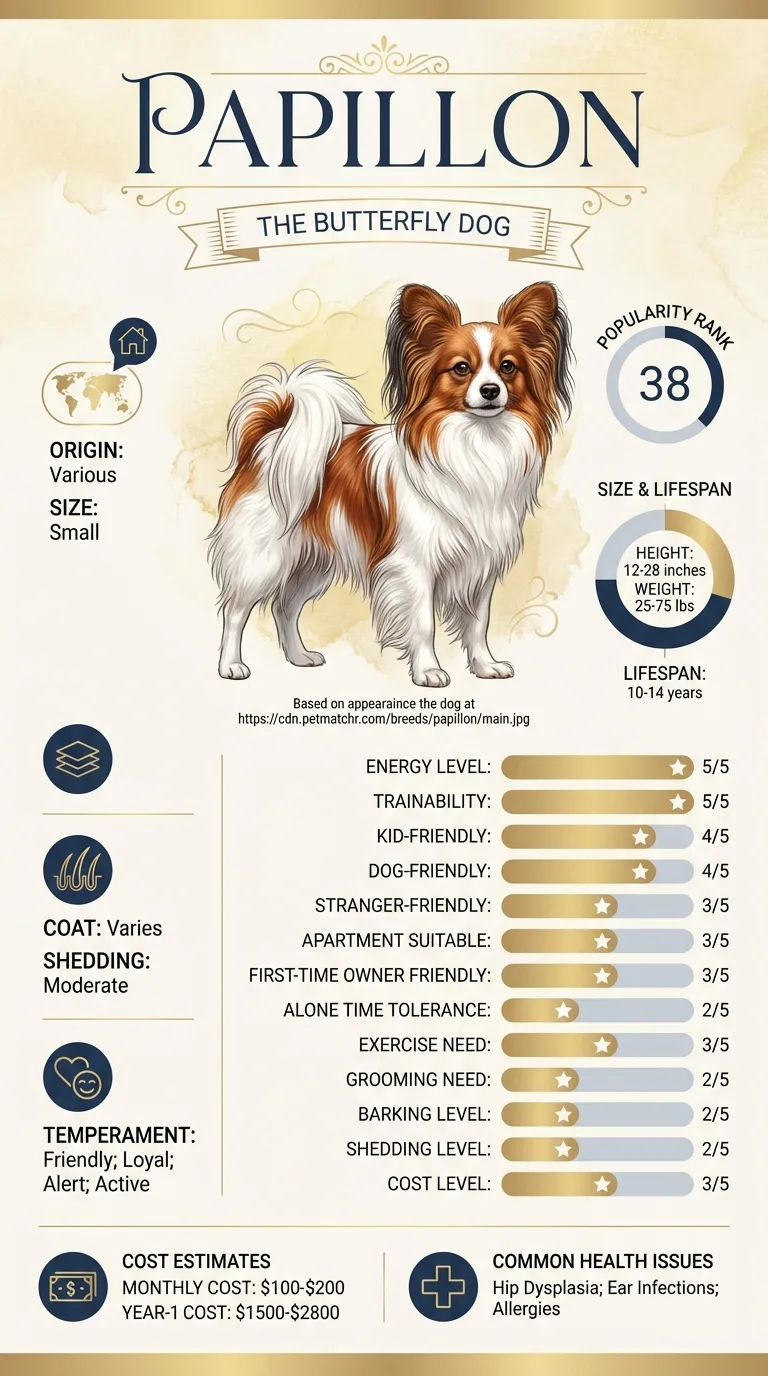
Papillon Allergies: Chronic Itching in a Breed That Is Not Famous For It infographic

Owners of a dog that licks its front feet until they stain rusty, chews at the flanks after every summer walk, or comes back to the same red patch behind an ear no matter how many baths it gets.

Important reminder

This guide is not medical advice. If your dog shows pain, sudden behavior change, or worsening symptoms, consult a licensed veterinarian.

Some links may be affiliate links. We may earn a commission at no extra cost to you. We only suggest products we believe are helpful for dog owners.

What this problem looks like

Chronic allergy in a Papillon shows up as itching that outlasts any single cause: feet worried at in the evening, rubbing the face along furniture, a rusty stain spreading through white leg feathering, and skin that goes pink then thickened in the armpits and groin. The scratching is the symptom people notice; the skin barrier failing underneath is the actual problem.

Common triggers

  • Tree, grass and weed pollen collected on a coat that sits inches above the lawn
  • House dust mite, which keeps a dog itching indoors through winter
  • Storage mites in bulk-bought kibble left open in a warm kitchen
  • Common dietary proteins, most often beef, chicken or dairy rather than grains
  • Flea saliva, where a handful of bites can drive weeks of rump-centred itching

Allergic skin disease is common across all dogs but is not a breed signature here. Vets do see atopic Papillons, and with a lifespan of fourteen to sixteen years there is plenty of time for a dog to develop it in middle age. Because it is not the expected diagnosis in this breed, a persistently itchy Papillon should be worked up properly rather than simply labelled.

Why this happens

Breed factors

Atopy is an inherited tendency for the skin barrier to leak and for the immune system to overreact to what gets through. The Papillon's contribution is mostly incidental rather than genetic: a dog that stands eight to eleven inches tall carries its whole body through the exact layer of grass where pollen sits, and a long single coat with only low to moderate shedding holds that pollen against the skin until it is washed out. The breed's low grooming requirement means many owners bathe rarely, which suits a healthy Papillon and works against an allergic one.

Environment factors

Season is the loudest driver: itch that begins each spring and eases by December points outdoors. Indoor drivers are quieter and more constant, with dust mite and stored-food mite keeping a dog scratching through winter. Central heating dries the skin further, and Papillons, being small and cold-sensitive, tend to sleep closest to the radiator and on the soft furnishings that hold the most dust.

What you can do at home (once it is not an emergency)

When to talk to your vet

Book a same-day appointment if the skin is broken, weeping, smells sour or yeasty, or if your Papillon is so uncomfortable it cannot settle or sleep. Ear pain that makes a normally confident dog flinch when its head is touched, a head tilt, or discharge from one canal also needs seeing quickly. Book a routine appointment for any itch that has run more than three or four weeks, for repeated ear infections, or for hair loss in a defined pattern. Sudden facial swelling with breathing changes is a different emergency entirely and cannot wait.

At home, alongside your vet's plan

  • Keep a simple itch diary scored out of ten each evening alongside the weather, the walk and the food. Patterns show up in six weeks that no single consultation would reveal.
  • Rinse the legs and belly after walks in pollen season. Plain lukewarm water on a cloth removes most of what a low-slung dog picks up.
  • Wash bedding weekly at a hot temperature and keep the dog off the fabric sofa during a flare, since both are dust mite reservoirs.
  • Store kibble in the original bag inside a sealed container and buy smaller bags, which limits storage mite growth in a warm kitchen.
  • Keep flea prevention running year-round, not just in summer, because a flea-allergic dog reacts to bites you will never find.

See all Papillon health problems, which breeds are prone to allergies, or the full Papillon breed guide for temperament, exercise needs and ownership costs.

What to expect, and how you know it is working

Expect a slow build rather than a fix. A secondary skin infection typically improves inside two to three weeks of treatment. A properly run food trial takes eight to twelve weeks before it answers anything. Finding a stable long-term plan for environmental allergy usually takes a full year, because you need to see the dog through one complete pollen cycle.

A dog that sleeps through the night without waking to scratch, feathering that stays cream rather than rust, ears that need checking rather than treating, and flares that are short and predictable instead of constant. Some seasonal itching may remain, and that is an acceptable outcome rather than a failure.

Where the itch lands tells you a lot

Allergic itch in dogs is not scattered randomly. Environmental allergy concentrates on the parts of the body that meet the world: feet, armpits, groin, the muzzle and the skin around the eyes. Watch a Papillon's front paws in particular. The feathering on the toes hides staining, so run a light-coloured cloth between the pads and look at the colour it comes back.

Food-driven itch behaves differently. It runs all year with no seasonal dip, frequently involves the ears, and often comes with a soft stool or an unusually gassy dog.

Flea allergy is a third pattern entirely and lands over the rump and the base of the tail. Because a Papillon carries a long, silky single coat rather than a woolly undercoat, fleas and their dirt are easier to find here than on most breeds. If you have not combed the base of the tail with a fine metal comb over a damp white cloth, do that before assuming anything more complicated.

Papillon Allergies - Where the itch lands tells you a lot

The ear question, and why the breed has an advantage

Chronic ear infection is the classic companion of canine allergy, and it is where many owners first realise something systemic is going on. Papillons start with an anatomical head start: the large, erect, fringed ears the breed is named for sit open to the air, so the canal stays drier than in a drop-eared spaniel. The phalene variety carries the same ear dropped, and those dogs sit somewhere in between.

That advantage means a Papillon with genuinely recurrent ear infections is telling you something. Two or three episodes in a year in a breed built for ventilation points at an underlying driver rather than at bad luck or bathwater.

What you can usefully do is keep the fringe trimmed back from the canal opening in a phalene, dry the ears properly after any bath, and photograph the inside of both ears once a month so you have a baseline to compare against.

Rusty feathering on a dog with clean ears

Bram's nine pound Papillon, Zola, spent two summers licking her front feet each evening. Her ears were spotless, which Bram took as proof it was not allergies. His vet pointed out that upright, fringed ears are exactly why this breed can be allergic without ear disease. Zola came up clear for fleas and mites, and her itch stopped every November. A pollen-season routine was built around her: a rinse of the legs after every walk, weekly bathing from April to September, bedding washed hot, and a medication used only during flares rather than year-round. Her third summer was the first she did not chew her toes bald. The feathering grew back cream instead of rust, and Bram now knows the season is starting when she starts working at one foot in the evening.

Key takeaway: Clean ears do not rule out allergy in a breed built to keep its ears dry. Judge a Papillon by its feet, its calendar and its sleep, not by the state of its canals.

Frequently asked questions

Are Papillons an allergy-prone breed?

They are not usually described that way, and allergies do not sit on the breed's documented health list. Individual Papillons certainly develop atopic dermatitis, but the breed as a whole is not flagged for it the way several terrier and bulldog breeds are.

How do I tell food allergy from environmental allergy?

Mainly by calendar. Environmental itch usually has a season and eases in the cold months, at least in the first years. Food-driven itch does not take a winter break and often comes with digestive signs. A supervised elimination diet is the only reliable way to confirm it.

How long does a food trial actually take?

Eight to twelve weeks of a single prescribed diet with absolutely nothing else, then a deliberate challenge with the old food. Toothpaste, flavoured medication and a crumb from a toddler's hand all count as breaking the trial, which is why so many trials give a useless answer.

Does the long coat make itching worse?

It makes it harder to see rather than worse. A single silky coat with no dense undercoat traps less moisture against the skin than a double coat does, but the feathering on the legs, chest and ears hides redness and staining until you part the hair deliberately.

Could constant licking be something other than allergy?

Yes, and in this breed that is worth taking seriously. Persistent licking at one hind leg can accompany a slipping kneecap, which is the breed's best-documented orthopaedic problem. Pain and itch look similar from across a room, so a lameness check belongs in any workup.

Can allergies be cured?

Environmental allergy is managed, not cured. It is a lifelong condition with better and worse years, and the realistic aim is a comfortable dog on the smallest effective plan. A true food allergy can be effectively silenced, but only by permanently avoiding the ingredient.

Quick answers

View more answers
Health

What is the first thing to rule out when a Papillon itches?

Fleas. Comb the rump and tail base with a fine metal comb onto a damp white cloth and look for specks that smear rust-red. Flea allergy needs only a handful of bites to cause weeks of itching.

Living

How often should I bathe an itchy Papillon?

More often than a healthy one, usually weekly during a flare with a soothing shampoo your vet has chosen. Bathing physically removes pollen from a coat that sits low to the grass all day.

Costs

What does managing allergies cost each year?

A mild seasonal dog may only need shampoo and the odd consult. A dog needing prescription diets, repeated ear treatment and specialist medication can multiply the breed's usual eighty to one hundred and fifty dollar monthly running cost.

Health

Do grain-free foods help?

Rarely. The proteins dogs most often react to are meats such as beef, chicken and dairy rather than grain. Swapping to a grain-free supermarket food is one of the commonest wasted months in allergy management.

Training

Can I teach my dog to stop licking?

You can interrupt the habit loop that outlasts a flare. Papillons train easily, so redirecting to a chew or a short trick session breaks the cycle, but training alone will not fix skin that is genuinely inflamed.

Related DogBreedCompass guides

  • acute allergic reactions in PapillonsSudden hives and swelling are a different event with a different urgency than chronic itch.
  • Papillon ear infectionsRecurrent ear infection is the most common visible consequence of underlying allergy.
  • luxating patellas in PapillonsPersistent licking of a hind leg can be orthopaedic rather than dermatological.
  • Papillon skin infectionsSkin infection is the usual complication when an allergic dog breaks its own skin barrier.
  • Papillon breed profileCoat type, size and documented health issues frame what is and is not typical for the breed.

Bring the right questions to the vet

A one-page prep sheet for this condition: the signs, the questions to ask, what to get priced. Unlocks here.

You get: Vet visit prep sheet

No spam. One-click unsubscribe. See our privacy policy.

Preview page 1 before you decide.

Related guides