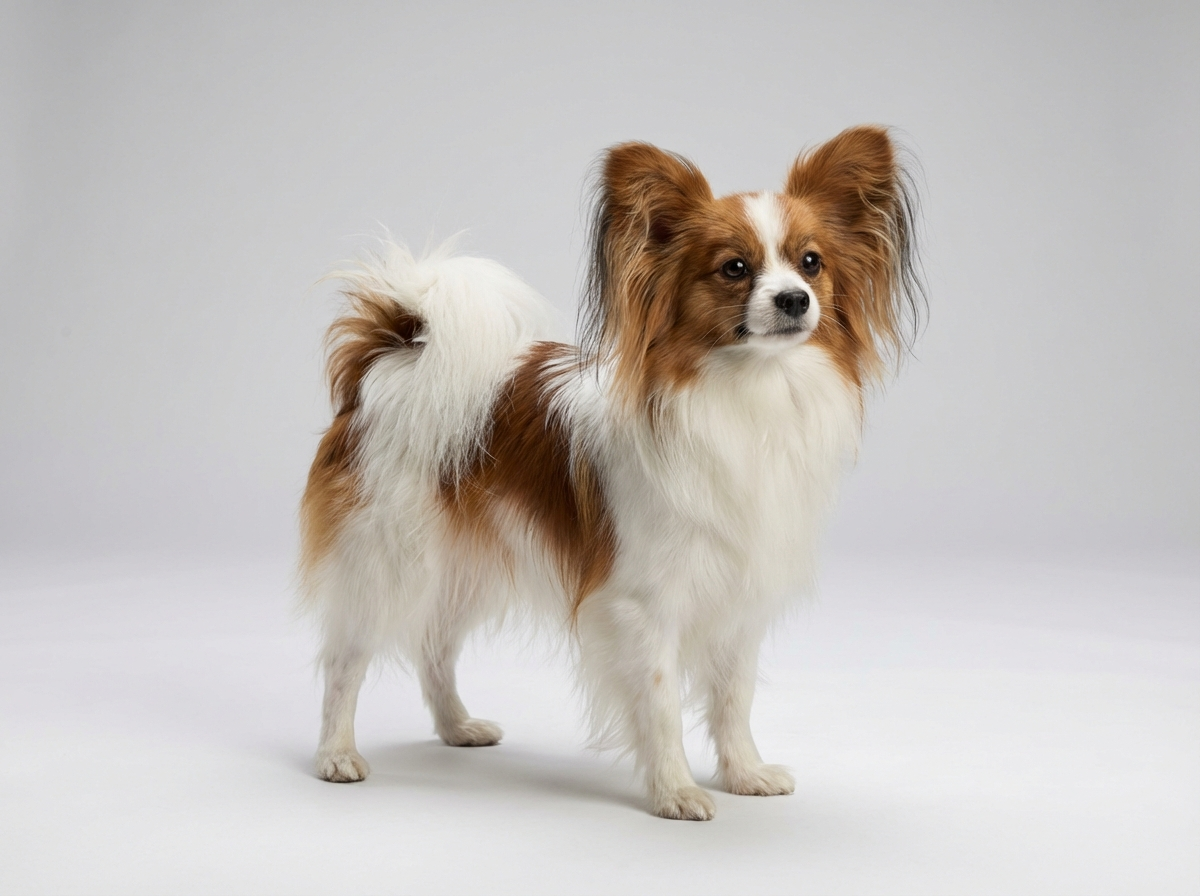
Health
Do Papillons have facial folds that trap infection?
No, the breed has a fine, unwrinkled face; skin infection risk in Papillons comes from the coat, not the face.

Quick answer
Do Papillons have facial folds that trap infection?
No, the breed has a fine, unwrinkled face; skin infection risk in Papillons comes from the coat, not the face.
The Papillon's face has nothing to do with its skin infection risk. Its coat does.
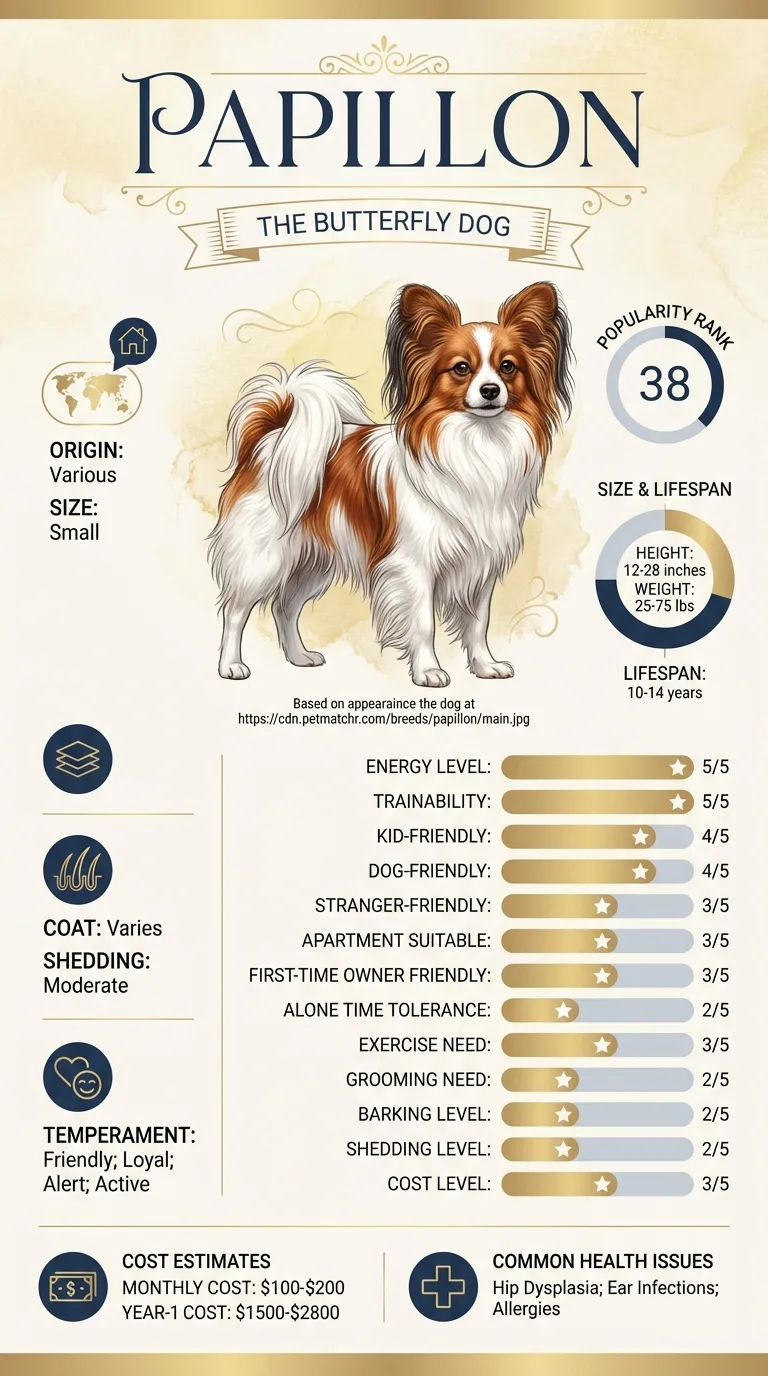
This affects owners of a well-coated Papillon who assume regular bathing alone is enough grooming, and who then find a warm, damp, foul-smelling patch of skin somewhere the coat is thickest, often well after it has already become uncomfortable for the dog.
This guide is not medical advice. If your dog shows pain, sudden behavior change, or worsening symptoms, consult a licensed veterinarian.
Some links may be affiliate links. We may earn a commission at no extra cost to you. We only suggest products we believe are helpful for dog owners.
We research and check what we publish, but we do not warrant that any figure, date, price, or statement is accurate, complete, or current, and we accept no liability for any loss, cost, injury, or other harm arising from the use of this site. Use it as one reference among several. You remain responsible for your own decisions and for your dog's care - confirm anything that matters with a licensed veterinarian or another qualified professional before you act on it. Full disclaimer.
Skin infections in a Papillon are almost always tied to the coat rather than the face, since the breed has no facial folds to trap moisture the way flat-faced or heavily wrinkled breeds do. The typical mechanism is moisture and matting trapped under the long, silky single coat in specific trap spots, the armpits, groin, ear bases, and between the toes, letting bacteria and yeast that are normally present multiply well beyond their usual numbers.
Localized moisture-related skin infections, commonly called hot spots, are a frequently reported issue across coated breeds generally. Papillon-specific prevalence data is limited, but the breed's long single coat creates the same trap-spot conditions that make hot spots a recognized risk in other similarly coated breeds.
The Papillon's long, silky single coat is the primary structural driver here, not any facial conformation. Dense feathering behind the ears, in the armpits and groin, and between the toes holds moisture against the skin far longer than a short coat would, creating conditions for localized overgrowth of normally present bacteria and yeast.
Bathing, swimming, and walks on wet grass or in humid weather are the main environmental contributors, since each introduces moisture into the coat that needs active drying rather than being left to resolve on its own.
See a vet if you find a red, moist, or foul-smelling patch of skin anywhere on your Papillon, especially if it appears to be growing or your dog is licking or biting at it persistently, since hot spots can expand quickly under the coat and are more extensive than they appear from the surface.
See all Papillon health problems, which breeds are prone to skin infections, or the full Papillon breed guide for temperament, exercise needs and ownership costs.
A caught-early hot spot typically clears within a week to ten days of clipping, cleaning, and appropriate medication. Recurring infections in the same trap spot usually mean the underlying grooming gap needs to change, not just the current infection treated.
Success looks like the same trap spots staying dry and mat-free through a normal routine of bathing, walking, and brushing, rather than a pattern of recurring hot spots in the same location every few months.
A bacterial or yeast skin infection needs two ingredients: broken or compromised skin barrier, and a warm, moist environment for organisms that are normally present in small numbers to multiply out of control. A Papillon's long, silky single coat, one of the breed's defining features, creates exactly that environment in specific, predictable places rather than uniformly across the body.
The armpits and groin trap moisture after a bath, a swim, or simply a humid day, especially if the coat there is not fully dried. The area behind the ears and along the neck ruff can mat if brushing lapses even briefly, and matted hair holds moisture against the skin the same way a damp bandage does. The feathering between the toes, longer and denser than most people expect on a small dog, collects moisture after every walk on wet grass and can go unnoticed because it is the last place most owners think to check.
This is a mechanical problem before it is a medical one. Matting or trapped moisture holds warmth and damp against the skin for hours, softening the surface barrier and giving bacteria and yeast, both normally present on healthy skin, room to multiply well beyond their usual numbers. The result is a localized hot spot: red, moist, often malodorous, and intensely itchy, appearing suddenly and expanding within a day or two if untreated.
This is a different mechanism from allergic skin disease, where the immune system itself is overreacting to a substance and the itching pattern follows exposure to that allergen. A moisture-driven infection follows the coat's own geography instead, showing up in the same handful of trap spots again and again on a given dog, often the exact same armpit or the exact same patch behind an ear each time, because the underlying grooming gap that let moisture sit there is the same each time too.
None of this requires professional grooming skill. It requires checking the same small number of trap spots regularly enough that a mat or damp patch never gets the hours it needs to become an infection.

Liesel's Papillon, Otto, had always seemed to have healthy skin, and she assumed his regular baths were sufficient grooming on their own. One evening she noticed him licking obsessively at one armpit, and lifting his foreleg revealed a red, weeping, distinctly smelly patch of skin that had clearly been there for at least a day or two before she found it. Her first thought was an allergy, since she had read that itchy skin in dogs was usually allergy-related. The vet's exam told a different story: the coat under that armpit was matted just enough to trap moisture from Otto's bath two days earlier, which had never fully dried against the skin underneath the mat. Treatment involved clipping the matted hair away, cleaning the area, and a short course of topical medication. The vet's more useful advice was about prevention rather than the current infection: Liesel had been thorough about washing Otto but had never developed a habit of drying and checking his armpits, groin, and ear bases specifically afterward. She now towel-dries those specific spots after every bath and brushes through them twice a week regardless of whether a bath happened recently. Otto has not had another hot spot since, in that armpit or anywhere else.
Key takeaway: A Papillon's skin infection risk comes from moisture trapped in specific coat trap spots, not from the face, and drying and checking those exact spots after baths and wet walks prevents most cases before they start.
No. Papillons have a fine, unwrinkled face with no facial folds, so that specific mechanism does not apply to this breed. Skin infections in Papillons are much more commonly related to moisture trapped under the long coat, particularly in the armpits, groin, ear bases, and between the toes.
Typically a localized patch of red, moist, often malodorous skin that appears suddenly and is intensely itchy, most often found in the armpits, groin, behind the ears, or between the toes rather than spread across the whole body.
No. Allergic skin disease is an immune reaction to an allergen and tends to follow exposure patterns. A moisture-driven skin infection follows the coat's own trap spots instead, showing up repeatedly in the same physical location on a given dog because the grooming gap that lets moisture sit there is the same each time.
Fully dry the coat after baths or swims, brush through the feathering behind the ears and between the toes at least twice a week, and check the same trap spots after any walk on wet grass. Removing mats promptly is one of the single most effective habits.
Treatment usually involves clipping the hair away from the affected area, cleaning it, and a topical or oral medication depending on severity and whether bacteria or yeast is the primary organism involved. A vet visit is needed to identify which.
A small, very early hot spot sometimes responds to careful clipping and cleaning at home, but most benefit from a vet assessment, since an infection that has already spread under the coat is often larger than it appears from the surface.
A straightforward vet visit with clipping, cleaning, and medication is a modest cost. Recurring infections that need repeated visits or a deeper workup for an underlying cause add up considerably more over time.
No, the breed has a fine, unwrinkled face; skin infection risk in Papillons comes from the coat, not the face.
The armpits, groin, ear bases, and between the toes, wherever the long coat traps moisture against the skin.
At least twice a week, focusing on the feathering behind the ears and between the toes where mats form first.
A red, moist, often smelly patch of skin that appears suddenly and is intensely itchy, usually confined to a small area.
A single straightforward vet visit with clipping and medication is a modest cost; recurring infections cost considerably more over time.
A one-page prep sheet for this condition: the signs, the questions to ask, what to get priced. Unlocks here.
You get: Vet visit prep sheet
No spam. One-click unsubscribe. See our privacy policy.
Preview page 1 before you decide.