Health
What is the first sign of kidney disease in a Papillon?
Increased drinking and urinating, usually gradual. Measure the water bowl with a jug rather than trusting your impression of how fast it empties.

Quick answer
What is the first sign of kidney disease in a Papillon?
Increased drinking and urinating, usually gradual. Measure the water bowl with a jug rather than trusting your impression of how fast it empties.
A Papillon that lives to fifteen has fifteen years of kidney wear behind it. The question is whether anyone was measuring during years ten to twelve.
Owners of senior Papillons who have noticed the water bowl emptying faster, and owners handed a routine bloodwork result with a kidney marker flagged in a dog that looks perfectly well.
This guide is not medical advice. If your dog shows pain, sudden behavior change, or worsening symptoms, consult a licensed veterinarian.
Some links may be affiliate links. We may earn a commission at no extra cost to you. We only suggest products we believe are helpful for dog owners.
We research and check what we publish, but we do not warrant that any figure, date, price, or statement is accurate, complete, or current, and we accept no liability for any loss, cost, injury, or other harm arising from the use of this site. Use it as one reference among several. You remain responsible for your own decisions and for your dog's care - confirm anything that matters with a licensed veterinarian or another qualified professional before you act on it. Full disclaimer.
Chronic kidney disease is the progressive, irreversible loss of functioning filtration units in the kidneys. Because the organ carries large reserve capacity, dogs remain outwardly normal until much of that reserve is gone, and the first thing owners usually notice is increased thirst. In Papillons the condition is not breed specific but is strongly age related, and this is a breed that reaches ages many dogs never see.
Kidney disease is among the most frequently diagnosed chronic illnesses in older dogs and older cats, and prevalence climbs steeply with age. Because the Papillon's expected span of fourteen to sixteen years is at the upper end for any breed, a higher share of the population lives long enough to reach it than in shorter lived breeds.
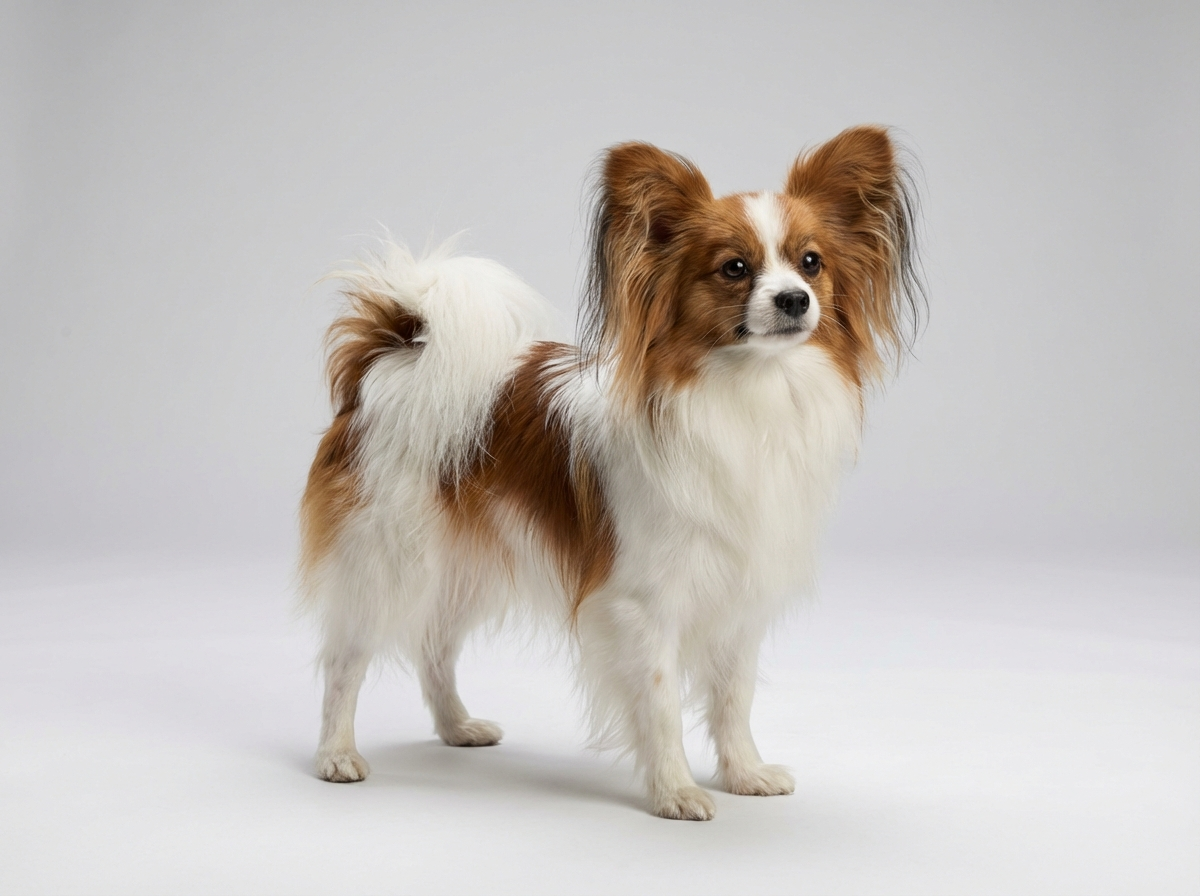
Nothing about the Papillon's fine build, single silky coat or temperament predisposes it to kidney failure. What the breed contributes is time. Filtration units are lost gradually across a lifetime and are never replaced, so total years lived is the dominant risk factor. A Papillon at fifteen has been filtering blood for half again as long as a large breed that reached ten, and the cumulative loss is correspondingly greater.
Hydration status over a lifetime matters. A small dog that regularly goes long stretches without water access, or that has had episodes of severe dehydration through heat exposure or gastrointestinal illness, has taken repeated hits to the kidneys. Household toxins are the other major factor: antifreeze, grapes and raisins, certain lilies and human anti inflammatory medications all cause kidney injury, and a five to ten pound dog needs a far smaller exposure than a large one.
Book an appointment if your Papillon has started drinking or urinating noticeably more, is losing weight without a diet change, has become fussy about food it used to like, or seems flat. Seek same day emergency care if the dog stops urinating altogether, is vomiting repeatedly, will not drink, seems weak or unsteady, or has had access to antifreeze, grapes, raisins or human anti inflammatory medication. Acute kidney injury can be reversible if treated quickly and is often not if it is not.
See all Papillon health problems, which breeds are prone to kidney disease, or the full Papillon breed guide for temperament, exercise needs and ownership costs.
Chronic kidney disease progresses over months to years rather than days. Dogs diagnosed at an early stage and managed with diet, blood pressure control and monitoring commonly do well for a considerable time. Expect rechecks every three to six months once diagnosed, and expect the plan to change as staging changes.
Success is a Papillon that reaches its fifteenth year eating well, holding weight, and living an ordinary life on a managed plan, with the disease found on a screening panel at eleven rather than in an emergency room at thirteen.
Veterinary medicine stages chronic kidney disease across four levels, based primarily on a blood waste product measured when the dog is stable and well hydrated, then refined by blood pressure and by how much protein is leaking into the urine. Stage one is the earliest, where the dog is clinically normal. Stage four is advanced.
The traditional marker, creatinine, has a frustrating property: it does not rise above the reference range until a substantial proportion of kidney function has already been lost. That is a very late alarm.
A newer marker, symmetric dimethylarginine, usually shortened to SDMA, rises earlier in the process. It is not a perfect test and it can be elevated for reasons unrelated to kidneys, but it gives clinicians a signal at a point when there is still meaningful function to protect. For a breed that routinely reaches fourteen to sixteen, that earlier signal is worth having, because it buys years rather than months.
The other half of staging is urine. A concentrated sample tells you the kidneys are still doing their water conserving job. Dilute urine in a dog drinking heavily points the other way. Protein in the urine is separately important, because protein loss both indicates damage and accelerates it.
This is why a senior wellness panel for a Papillon should include urine, not just blood. Blood alone tells half the story.

Owners are far better placed than clinics to detect gradual change, because they see the dog every day. These five habits turn impressions into data.
Wilhelmina was eleven and her owner Petra had a habit of filling her water bowl from a marked jug, purely because it was easier than carrying the bowl to the tap. Over one autumn she noticed she was refilling it a second time most days. At Wilhelmina's annual check Petra mentioned it. The blood panel came back with creatinine comfortably in range and SDMA slightly above it. Urine collected that morning was more dilute than it should have been. The diagnosis was early stage chronic kidney disease. Wilhelmina moved onto a therapeutic diet, had her blood pressure checked, and was rechecked every four months. She lived to a little past fifteen. Her vet's view was that the jug bought two extra years, because it turned a vague impression into a date and a number.
Key takeaway: Kidney disease is silent until it is not, and the silence is exactly when treatment does the most good. In a breed built to reach fifteen, senior screening from eight and a measured water bowl are the two cheapest interventions available.
It is not one of the breed's signature conditions, which are the kneecaps, the eyes, the teeth, the fontanel and the windpipe. Chronic kidney disease is a disease of ageing across all dogs. The Papillon's relevance is arithmetic: at fourteen to sixteen years of expected life, a large proportion of the breed reaches the age band where kidney function has measurably declined.
Drinking more and urinating more, usually before anything else. Then gradual weight loss, a duller coat, reduced appetite or fussiness about food the dog previously liked, and lower energy. Vomiting and bad breath tend to appear later. None of these is specific to kidneys, which is why bloodwork rather than observation makes the diagnosis.
No. Nephrons that have been lost do not regenerate, so the goal is to slow progression and keep the dog comfortable rather than to restore function. That is a genuinely achievable goal, and many dogs diagnosed in the earlier stages live well for years afterwards. Acute kidney injury, which is a different event, can sometimes be reversed if treated fast.
Therapeutic kidney diets are among the better evidenced interventions in the field, with controlled phosphorus and adjusted protein designed to reduce the workload on remaining tissue. They are prescribed by stage, not applied to every dog with a flagged result, and putting a healthy dog on one is not helpful. Follow your vet's timing rather than starting early on your own.
Discuss it with your vet, but annual screening from around seven or eight, moving to twice yearly in the double digits, is a common pattern for a long lived breed. The value comes from the trend. A single result within range tells you little; three years of results showing a steady drift tells you a great deal.
Chronic infection anywhere places a burden on the body, and dental disease is documented in this breed. More directly relevant is the anesthesia question: a dog with reduced kidney function needs careful fluid and blood pressure management during dental procedures, so your vet needs current bloodwork before booking one.
Increased drinking and urinating, usually gradual. Measure the water bowl with a jug rather than trusting your impression of how fast it empties.
A blood marker that rises earlier in kidney disease than creatinine does, giving vets a signal while there is still function worth protecting.
Commonly around seven or eight, moving to twice yearly past ten. In a breed living fourteen to sixteen years, the trend across results is the valuable part.
It can, but many dogs diagnosed at an early stage live for years with diet and monitoring. Stage at diagnosis matters far more than the diagnosis itself.
A one-page prep sheet for this condition: the signs, the questions to ask, what to get priced. Unlocks here.
You get: Vet visit prep sheet
No spam. One-click unsubscribe. See our privacy policy.
Preview page 1 before you decide.