Behavior
What are quick tips for managing German Shepherd skin allergies?
Regularly bathe your dog with hypoallergenic shampoo, maintain a clean living environment, and minimize exposure to known allergens.

Quick answer
What are quick tips for managing German Shepherd skin allergies?
Regularly bathe your dog with hypoallergenic shampoo, maintain a clean living environment, and minimize exposure to known allergens.
German Shepherd skin allergies can lead to persistent itching and discomfort for your dog. Understanding this issue is crucial for their well-being.
Owners of German Shepherds often face this challenge, especially those living in allergy-prone areas or who have pets with sensitive skin. If you’ve noticed your GSD scratching or developing rashes, you’re not alone.
This guide is not medical advice. If your dog shows pain, sudden behavior change, or worsening symptoms, consult a licensed veterinarian.
Some links may be affiliate links. We may earn a commission at no extra cost to you. We only suggest products we believe are helpful for dog owners.
We research and check what we publish, but we do not warrant that any figure, date, price, or statement is accurate, complete, or current, and we accept no liability for any loss, cost, injury, or other harm arising from the use of this site. Use it as one reference among several. You remain responsible for your own decisions and for your dog's care - confirm anything that matters with a licensed veterinarian or another qualified professional before you act on it. Full disclaimer.
Check this first
If your German Shepherd shows excessive itching, open sores, or swelling, these are signs that you must contact your vet right away. Other emergencies include signs of infection, like pus or a foul odor, or if your dog is lethargic and refuses to eat. These symptoms may indicate a severe allergic reaction or secondary infections that need immediate treatment.
On the other hand, mild skin irritations, such as slight itching or occasional scratching, can often be monitored from home. You can keep an eye on your dog’s behavior and try to identify triggers, like certain foods or environmental allergens. If the symptoms don’t worsen and your dog remains active and healthy, you can manage these cases with at-home remedies and adjustments to their diet or environment.
In summary, if any severe symptoms arise, don't hesitate to seek veterinary help. However, if the symptoms are mild and your dog is otherwise healthy, you can observe and make adjustments as needed.
If any of these apply, call your vet or an emergency clinic now. The rest of this page is for the cases that are not an emergency.
German Shepherd skin allergies can make daily life uncomfortable for your dog. Symptoms often include excessive scratching, redness, and hot spots. These allergies can stem from various triggers, leading to irritation that affects their overall happiness and well-being.
Skin allergies are quite common in German Shepherds, affecting many dogs at some point in their lives. It's essential for owners to recognize the signs early, as untreated allergies can lead to more severe skin infections.
German Shepherds are prone to skin allergies due to their dense double coat. This breed can have sensitivities to environmental allergens, such as pollen, dust, and certain chemicals. Additionally, their skin may react negatively to specific food ingredients.
Environmental factors can also contribute to skin allergies in German Shepherds. Changes in weather, exposure to certain plants, and even household cleaning products can irritate their skin. If your home has high humidity or allergens, your dog might be more likely to develop skin issues.
Talk to your vet if your dog's skin allergies persist, worsen, or lead to secondary infections. If you notice excessive scratching, redness, or hair loss, a vet can provide a proper diagnosis and treatment plan.
Avoiding these common mistakes can help your German Shepherd manage skin allergies more effectively.
Start here: German Shepherd Most Common Genetic Disorders: Screening
See all German Shepherd health problems, which breeds are prone to skin allergies, or the full German Shepherd breed guide for temperament, exercise needs and ownership costs.
It can take around 4 to 12 weeks to see improvement in your German Shepherd's skin allergies after implementing a treatment plan.
Success looks like reduced itching, less inflammation, and a healthier coat. Your dog should be more comfortable and show fewer signs of distress.
Sarah, a busy nurse in Atlanta, noticed her German Shepherd, Max, scratching excessively. After some research, she learned about German Shepherd skin allergies and decided to consult her vet. Together, they developed a treatment plan that included a special diet and medicated baths. After a few weeks of dedication, Max's skin improved significantly, and he was finally able to enjoy his favorite outdoor activities without constant discomfort.
Key takeaway: With the right guidance and commitment, you can manage your German Shepherd's skin allergies effectively.
German Shepherd skin allergies can be caused by various factors, including environmental allergens like pollen, dust mites, or mold. They can also be triggered by food ingredients or flea bites. Identifying the specific trigger is crucial for effective treatment.
To stop German Shepherd skin allergies, start by consulting your vet for allergy testing. Based on the results, you may need to adjust their diet, minimize exposure to allergens, or use prescribed medications. Regular grooming can also help reduce irritants on their coat.
Common signs of German Shepherd skin allergies include excessive itching, redness, inflammation, and hair loss. You might also notice your dog biting or licking at their skin more than usual. If you see these symptoms persist, it's best to consult with a vet.
Yes, diet can significantly impact skin allergies in German Shepherds. Some dogs may have food sensitivities, so switching to a hypoallergenic diet or eliminating certain ingredients can be beneficial. Always consult your vet before making dietary changes.
Home remedies, such as oatmeal baths or aloe vera, can provide temporary relief for itching and irritation. However, these should not replace veterinary advice. It's essential to identify the underlying cause of the allergies for lasting solutions.
Yes, German Shepherds can develop skin allergies at any age, including as they get older. Changes in their immune system or exposure to new allergens can trigger these reactions. Regular vet check-ups can help monitor any changes in their skin health.
If you suspect that your German Shepherd has developed a secondary infection due to skin allergies, it's important to see a veterinarian immediately. They may prescribe medications or topical treatments to help manage the infection and relieve your dog's discomfort.
German Shepherds can be sensitive to various allergens, including pollen, dust mites, and certain foods. Identifying and avoiding these allergens is crucial in managing their skin allergies. Keeping a log of your dog's symptoms and potential triggers can help your vet provide a tailored treatment plan.
You can help manage your German Shepherd's skin allergies by maintaining a clean environment, using hypoallergenic shampoos, and ensuring a balanced diet. Regular grooming can also reduce allergens in their coat. Consult your vet for additional home care strategies tailored to your dog's needs.
Regularly bathe your dog with hypoallergenic shampoo, maintain a clean living environment, and minimize exposure to known allergens.
Grooming your German Shepherd at least once a week can help remove allergens from their coat and reduce irritation.
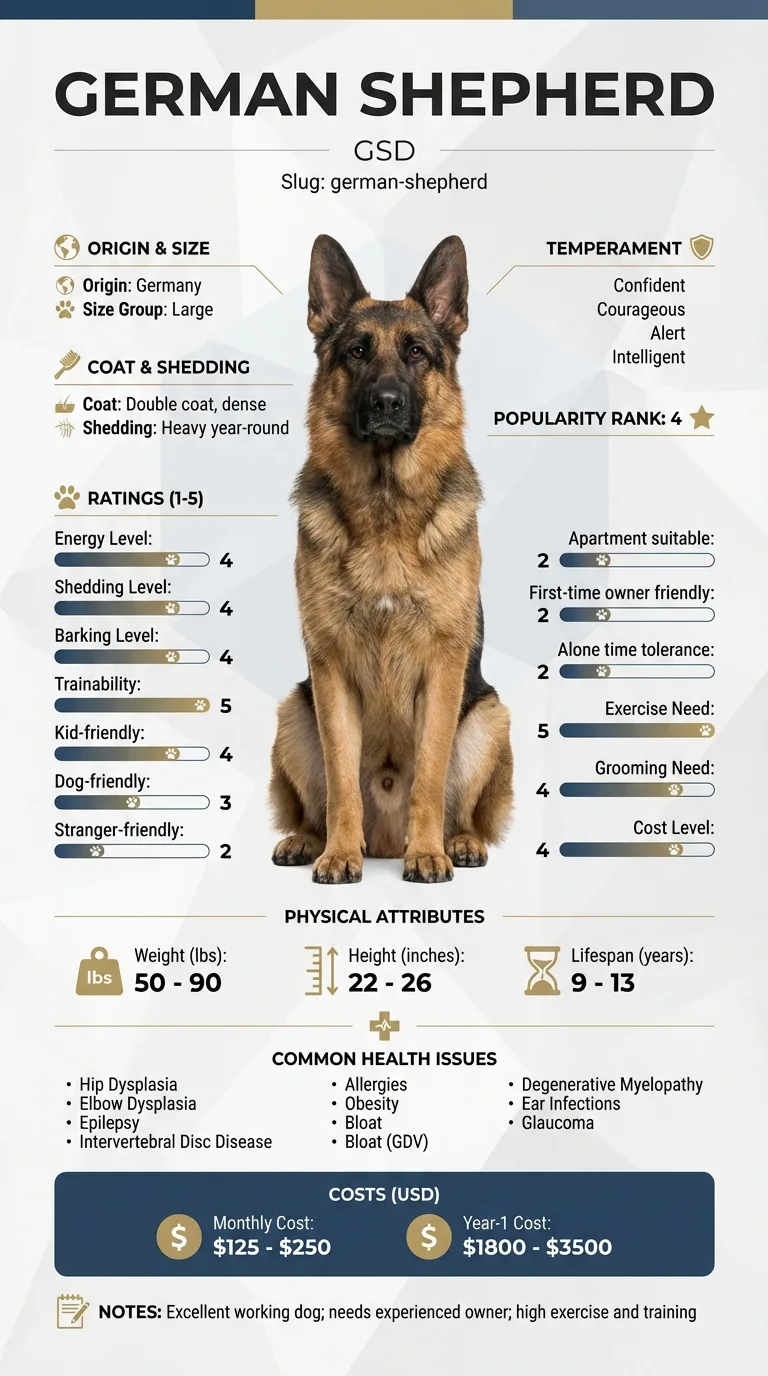
Costs can vary widely, but expect to spend between $125 to $250 monthly on treatments, including vet visits and medications.
While you can't train away skin allergies, positive reinforcement can help redirect their behavior when they start scratching excessively.
A one-page prep sheet for this condition: the signs, the questions to ask, what to get priced. Unlocks here.
You get: Vet visit prep sheet
No spam. One-click unsubscribe. See our privacy policy.
See a sample page before you decide.
Early access list
The free prep sheet covers the same-day warning signs, a symptom log and the questions to ask. We are considering a fuller kit that adds a cost worksheet for the usual tests and treatments (US price ranges with their sources) and a plain-English guide to ways of covering the bill. It is not built yet; this list tells us whether it is worth building.
One email, no spam, unsubscribe anytime. Information only, not veterinary advice.