Behavior
What are some quick tips for Miniature Schnauzer skin allergies?
Regular grooming and hypoallergenic shampoos can significantly help your Miniature Schnauzer's skin allergies. Keeping their environment clean also reduces allergens.

Quick answer
What are some quick tips for Miniature Schnauzer skin allergies?
Regular grooming and hypoallergenic shampoos can significantly help your Miniature Schnauzer's skin allergies. Keeping their environment clean also reduces allergens.
Miniature Schnauzer skin allergies can lead to itching and irritation, affecting your dog's comfort and happiness.
Owners of Miniature Schnauzers may find themselves battling skin allergies, especially if their dog shows signs of itching, redness, or hair loss. This issue can be particularly challenging for first-time dog owners who are unsure how to manage these symptoms.
This guide is not medical advice. If your dog shows pain, sudden behavior change, or worsening symptoms, consult a licensed veterinarian.
Some links may be affiliate links. We may earn a commission at no extra cost to you. We only suggest products we believe are helpful for dog owners.
We research and check what we publish, but we do not warrant that any figure, date, price, or statement is accurate, complete, or current, and we accept no liability for any loss, cost, injury, or other harm arising from the use of this site. Use it as one reference among several. You remain responsible for your own decisions and for your dog's care - confirm anything that matters with a licensed veterinarian or another qualified professional before you act on it. Full disclaimer.
Check this first
Not all skin allergy issues require immediate vet attention. However, certain signs can indicate that your Miniature Schnauzer needs urgent care. Look for symptoms like severe itching that leads to constant scratching, open sores, or significant swelling. These situations can quickly escalate and may lead to infections if not treated promptly.
If any of these apply, call your vet or an emergency clinic now. The rest of this page is for the cases that are not an emergency.
Miniature Schnauzer skin allergies can be a daily struggle for both the dog and its owner. Symptoms often include persistent itching, redness, and inflammation, which may lead to secondary infections if not addressed. Owners might notice their Mini Schnauzer scratching excessively, chewing on their paws, or developing hot spots, making it a common issue among this breed.
Skin allergies are fairly common in Miniature Schnauzers, affecting a significant number of them at some point in their lives. Many owners find themselves dealing with this issue, especially during allergy season.
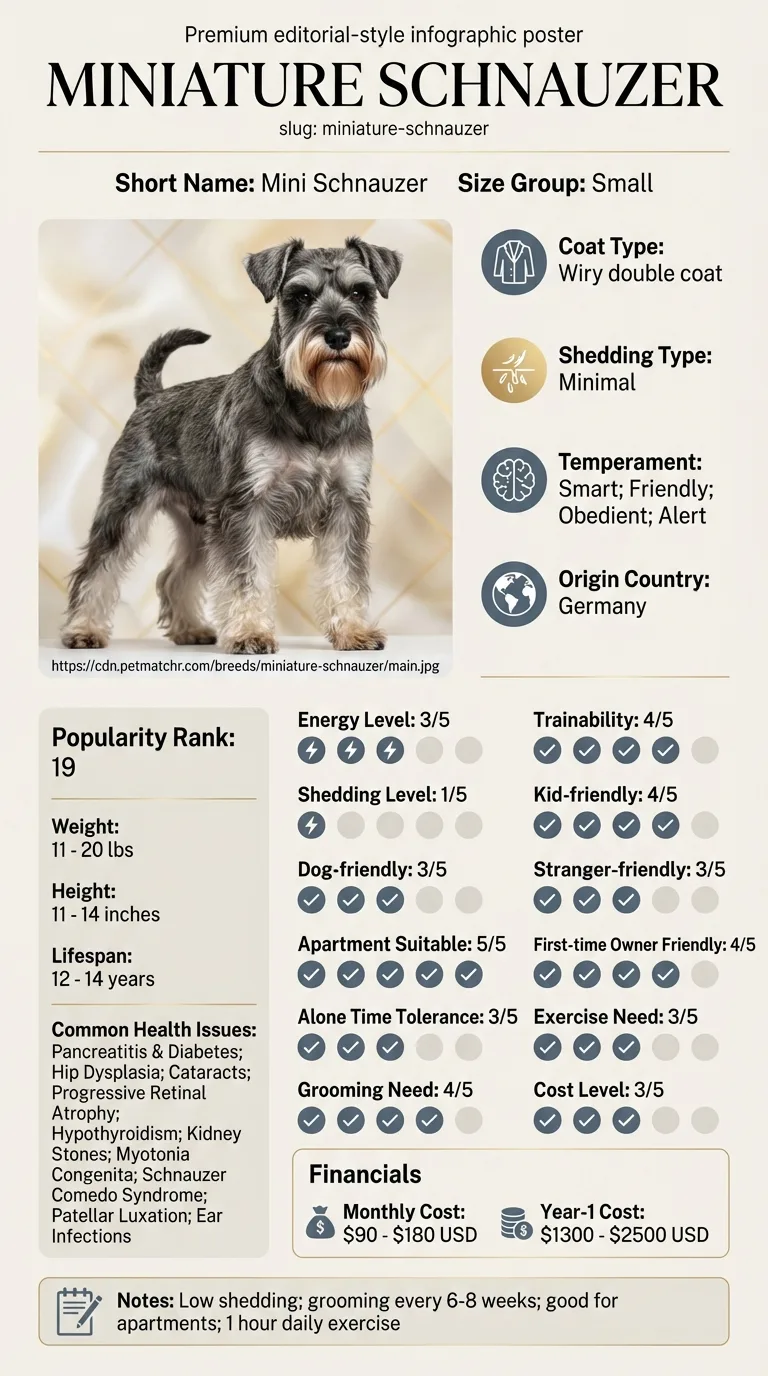
Miniature Schnauzers are prone to skin allergies due to their wiry double coat, which can trap allergens. Their genetic predisposition to certain health issues, like Schnauzer Comedo Syndrome, can also lead to skin sensitivities.
Environmental factors like pollen, dust mites, and even certain foods can trigger skin allergies. Additionally, improper grooming or bathing routines may exacerbate irritation and lead to itching or infections.
Consult your vet if home remedies don’t alleviate the symptoms. They can recommend allergy testing or prescribe medication if needed. Persistent itching or skin infections require professional evaluation.
Avoiding these common mistakes can help manage your Miniature Schnauzer's skin allergies more effectively.
Start here: Miniature Schnauzer Most Common Genetic Disorders: Screening
See all Miniature Schnauzer health problems, which breeds are prone to skin allergies, or the full Miniature Schnauzer breed guide for temperament, exercise needs and ownership costs.
You should expect to see some improvement in your Miniature Schnauzer's skin allergies within 4 to 6 weeks after starting a new treatment plan. However, finding the right solution may take longer, sometimes up to a few months.
Success looks like your Miniature Schnauzer experiencing reduced itching and irritation, leading to better overall comfort and fewer skin infections. You'll know you're on the right track when your dog is happier and more relaxed.
If your Miniature Schnauzer has mild itching or redness without other severe symptoms, you can monitor the situation at home. Try to maintain a clean environment and observe any patterns in their scratching. Common triggers may include certain foods, pollen, or flea bites, which can often be managed with simple changes.

Max, a spirited Miniature Schnauzer, was constantly scratching and chewing at his skin, leaving his owner, Sarah, worried. After a few trips to the vet, they discovered Max had skin allergies primarily triggered by environmental factors. With the vet's guidance, Sarah switched Max to a hypoallergenic diet and began a consistent grooming routine to reduce allergens. Over the next few months, Max showed significant improvement, and Sarah felt relieved watching her pup play without constant discomfort.
Key takeaway: Identifying the triggers for Miniature Schnauzer skin allergies can take time, but a dedicated approach to diet and grooming can lead to a happier, healthier dog.
Miniature Schnauzer skin allergies can stem from various sources, including environmental factors, food sensitivities, or parasites. Common allergens include pollen, dust mites, and certain ingredients in dog food. If your Mini Schnauzer is scratching excessively or has red, inflamed skin, it's best to consult a vet for a proper diagnosis.
To help alleviate itching, start by ensuring your Miniature Schnauzer has a balanced diet free from common allergens. Regular baths with hypoallergenic shampoo can soothe the skin. Additionally, keeping the living environment clean and free of dust can help reduce exposure to irritants.
Treatments for Miniature Schnauzer skin allergies often include antihistamines, corticosteroids, or medicated shampoos recommended by your vet. In some cases, allergy testing may be necessary to pinpoint the exact cause. Follow your vet’s advice for the best results.
Yes, diet plays a crucial role in skin health. Some Miniature Schnauzers may have food allergies to specific proteins or grains. Switching to a limited-ingredient or hypoallergenic dog food can help reduce allergic reactions.
Preventive measures include regular grooming to remove allergens from the coat and skin. Bathing your Mini Schnauzer every few weeks with a gentle shampoo can also help. Additionally, consider using air purifiers to reduce indoor allergens.
Common triggers for Miniature Schnauzer skin allergies include environmental factors like pollen, dust mites, and mold. Certain foods can also cause allergic reactions. Identifying the specific trigger may require some trial and error.
If your Miniature Schnauzer is excessively scratching, biting at their skin, or has open sores, it may indicate a severe allergy. Other signs include swelling, redness, or hair loss. Consult your vet if you notice these symptoms.
Yes, Miniature Schnauzers can develop skin allergies later in life, even if they had no issues as puppies. Allergies can change over time due to various factors, including changes in diet or environment. Regular vet check-ups can help catch these issues early.
You should seek veterinary help if your Miniature Schnauzer's skin allergies do not improve with basic home care or if they show signs of infection. If you notice persistent itching or skin changes, it's best to consult a vet for a proper diagnosis and treatment plan.
Yes, some diets can help manage Miniature Schnauzer skin allergies. Hypoallergenic diets or those with limited ingredients are often recommended. Always consult your vet before making any significant changes to your dog's diet.
Regular grooming and hypoallergenic shampoos can significantly help your Miniature Schnauzer's skin allergies. Keeping their environment clean also reduces allergens.
Bathing your Miniature Schnauzer every 4-6 weeks is usually recommended to keep their skin healthy and free of allergens. Always use a gentle, hypoallergenic shampoo.
No, many human products can be harmful to dogs. Always opt for veterinarian-approved treatments and shampoos designed specifically for dogs.
Yes, untreated skin allergies can lead to secondary infections and other health problems. It's essential to address any skin issues promptly with your vet.
A one-page prep sheet for this condition: the signs, the questions to ask, what to get priced. Unlocks here.
You get: Vet visit prep sheet
No spam. One-click unsubscribe. See our privacy policy.
Preview page 1 before you decide.