What are some quick tips for Schnauzer (Standard) skin allergies?
Keep your Schnauzer's coat clean with regular grooming, and consider hypoallergenic food to minimize allergic reactions. Maintain a clean living environment to reduce allergens.
Schnauzer (Standard) skin allergies can cause discomfort and irritation for your furry friend. This issue is common among many Schnauzers, leading to itching and even infections.

Owners of Schnauzer (Standards) often face challenges with skin allergies, especially those living in areas with high pollen or dust. First-time dog owners may feel overwhelmed, unsure about how to address their dog's discomfort effectively.
This guide is not medical advice. If your dog shows pain, sudden behavior change, or worsening symptoms, consult a licensed veterinarian.
Some links may be affiliate links. We may earn a commission at no extra cost to you. We only suggest products we believe are helpful for dog owners.
Schnauzer (Standard) skin allergies can be a frustrating issue for both dogs and their owners. These allergies often manifest as itching, redness, and irritation on the skin, leading to excessive scratching and discomfort. If left untreated, secondary infections can occur, complicating the problem further.
Skin allergies are quite common in Schnauzers (Standard), with many experiencing some level of allergic reaction during their lives. This breed is particularly susceptible due to their coat type and skin sensitivity.
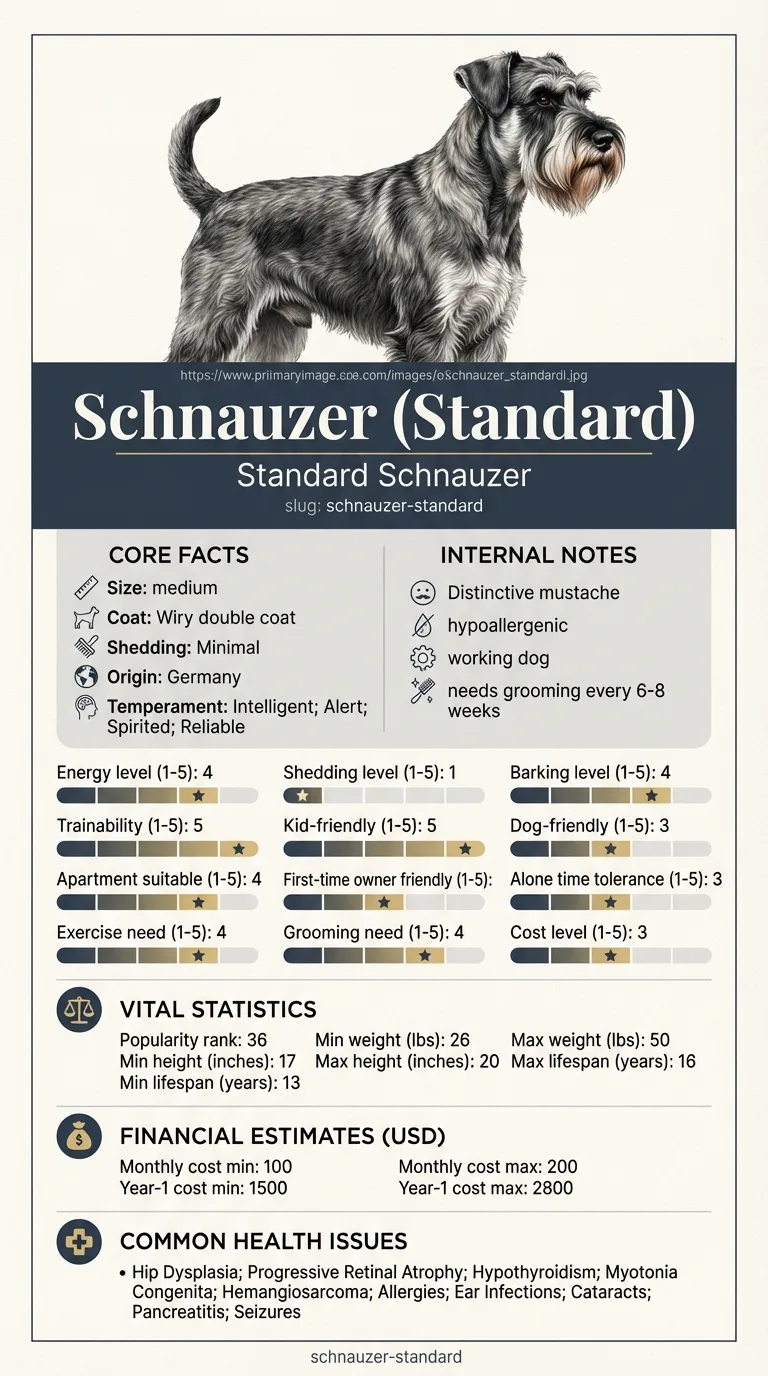
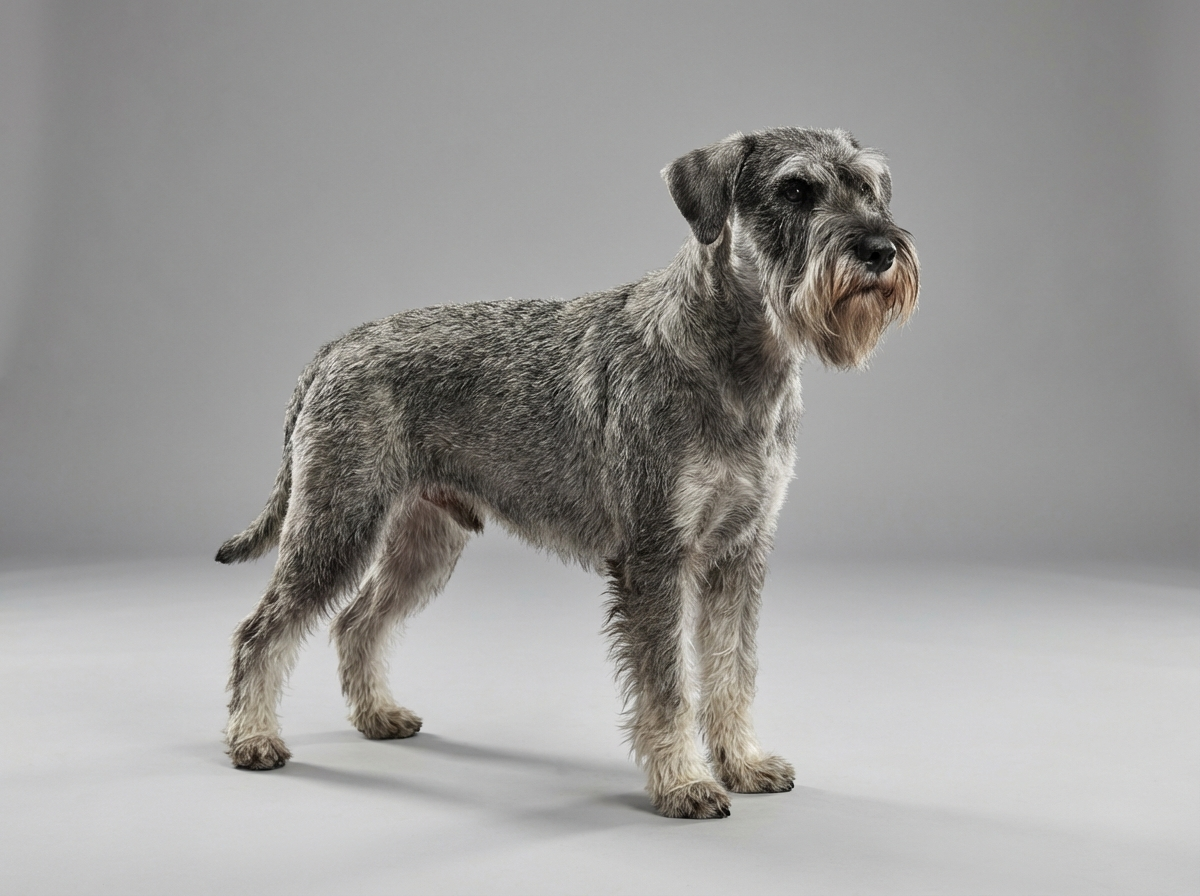
Schnauzers (Standard) may be prone to skin allergies due to their wiry double coat, which can trap allergens and irritants against their skin. Their genetic predisposition also makes them susceptible to certain environmental sensitivities, leading to itching and irritation.
Environmental factors, such as pollen, dust mites, and mold, can trigger skin allergies in Schnauzers. Additionally, diet changes or exposure to harsh chemicals in cleaning products may contribute to skin irritation and allergic reactions.
If your Schnauzer's skin allergies lead to anxiety or behavioral changes, such as excessive scratching or biting, consider working with a trainer. They can help address coping strategies and reinforce positive behaviors.
If your Schnauzer shows persistent symptoms like severe itching, redness, or signs of infection, it's important to consult a vet. They can provide a proper diagnosis and recommend treatments, such as medications or allergy testing.
You can expect to see improvements in your Schnauzer's skin allergies within 4 to 8 weeks of implementing a new care routine. Consistency is key, and ongoing management may be needed.
Success means your Schnauzer has reduced itching and irritation, with fewer flare-ups. You'll notice a happier, more comfortable dog, and their coat will appear healthier.
Avoiding these common mistakes can help improve your Schnauzer's skin allergies and promote better health.
Red flags indicating an emergency include severe swelling, hot spots that are rapidly worsening, or signs of infection such as pus or an unpleasant odor. If your Schnauzer is excessively scratching, biting, or licking their skin to the point of causing wounds, you should seek immediate veterinary care. Additionally, if you notice difficulty breathing or swelling around the face and throat, this is a potential allergic reaction that requires urgent intervention.
On the other hand, if your Schnauzer has mild itching or skin irritation without other severe symptoms, this may not be an emergency. In these cases, you can monitor their condition at home while implementing a treatment plan. Regular baths with hypoallergenic shampoo, avoiding known allergens, and maintaining a clean living environment can help reduce symptoms. Keep an eye on your dog, and if their condition worsens, don’t hesitate to reach out to your vet for advice.
By knowing the signs of an emergency, you can ensure your Schnauzer gets the right care when they need it most.

Katie, a first-time dog owner, adopted Max, her Standard Schnauzer, only to find him constantly scratching and chewing at his skin. After several trips to the vet, she learned that Max had skin allergies likely triggered by environmental factors. Determined to help her furry friend, Katie adjusted his diet, switched to hypoallergenic shampoo, and started a regular grooming routine. Over the next few months, Max's condition improved significantly. He scratched less, and his coat regained its shine, allowing both of them to enjoy their time together without discomfort.
Key takeaway: With a proactive approach and the right care, you can manage your Schnauzer's skin allergies effectively, leading to a happier and healthier dog.

Schnauzers (Standard) can develop skin allergies due to environmental factors like pollen, dust mites, or certain foods. Common signs include itching, redness, and irritation. Identifying the allergen can help you manage their symptoms effectively.
To stop Schnauzer (Standard) skin allergies, start with an elimination diet to find potential food triggers. Regular grooming helps minimize exposure to allergens in their environment. Consult your vet for antihistamines or topical treatments to relieve itching.
Effective treatments for Schnauzer (Standard) skin allergies include allergy medications, medicated shampoos, and dietary changes. Keeping their living area clean and using air purifiers can also reduce allergens. Always consult your vet to choose the right treatment plan.
Yes, certain proteins like chicken, beef, or dairy can trigger skin allergies in Schnauzers (Standard). Grain allergies are also common. Keeping a food diary can help identify patterns in allergic reactions.
Signs of a secondary infection in a Schnauzer (Standard) include persistent itching, redness, swelling, or discharge from the skin. If your dog seems more uncomfortable than usual, consult your vet for an examination.
Regular grooming is essential for Schnauzers (Standard) with skin allergies. It removes allergens from their coat and skin, reducing irritation. Make sure to use hypoallergenic shampoos recommended by your vet.
Common signs of skin allergies in Schnauzers (Standard) include excessive itching, redness, and inflammation. You may also notice hair loss or scabs on their skin. If your dog is constantly scratching or biting at their skin, it’s time to consult a vet.
Yes, diet can play a significant role in skin allergies. Certain ingredients in dog food can trigger allergic reactions. Consider discussing a hypoallergenic diet with your vet to help identify potential food allergies.
If your Schnauzer (Standard) shows persistent signs of skin allergies, such as severe itching or swelling, it's best to see a vet. A vet can provide proper diagnosis and treatment options. Early intervention can prevent secondary infections.
Yes, skin allergies can be seasonal, particularly in spring and fall when pollen levels are high. If your Schnauzer (Standard) seems to have more issues during these times, it could be related to environmental allergens. Monitoring their symptoms can help you identify patterns.
Absolutely, older Schnauzers (Standard) can develop skin allergies even if they never had issues before. Allergies may develop as their immune system changes over time. Regular vet check-ups are essential to address any new symptoms.
Keep your Schnauzer's coat clean with regular grooming, and consider hypoallergenic food to minimize allergic reactions. Maintain a clean living environment to reduce allergens.
Prevention includes regular grooming, bathing with allergy-friendly shampoos, and avoiding known allergens. You can also discuss preventive medications with your vet.
Treatment costs can vary, but expect to spend between $100 to $200 monthly for medications, special diets, and vet visits. Budget for additional grooming expenses.