Health
What is the first sign of hypothyroidism in a German Shorthaired Pointer?
Usually reduced stamina and slower recovery after exercise, appearing well before the classic weight gain and coat thinning that textbooks describe.

Quick answer
What is the first sign of hypothyroidism in a German Shorthaired Pointer?
Usually reduced stamina and slower recovery after exercise, appearing well before the classic weight gain and coat thinning that textbooks describe.
The textbook picture is a fat, lazy, balding dog. The GSP version is a dog that is still keen but somehow finishes last, months before anything visible changes.
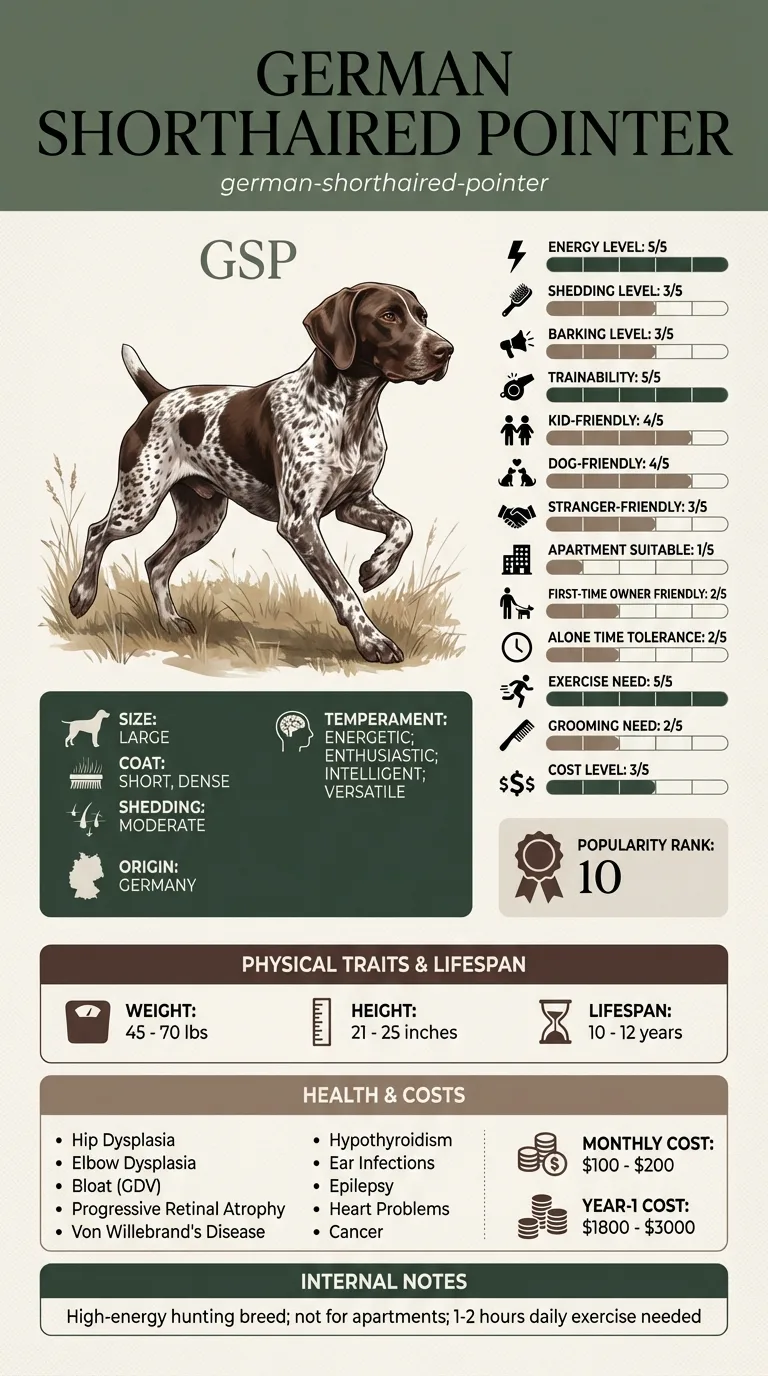
Owners whose four to seven year old dog has quietly lost its edge, people whose GSP has developed recurring skin or ear problems that keep coming back after treatment, and anyone weighing a borderline lab result against a dog that seems basically fine.
This guide is not medical advice. If your dog shows pain, sudden behavior change, or worsening symptoms, consult a licensed veterinarian.
Some links may be affiliate links. We may earn a commission at no extra cost to you. We only suggest products we believe are helpful for dog owners.
We research and check what we publish, but we do not warrant that any figure, date, price, or statement is accurate, complete, or current, and we accept no liability for any loss, cost, injury, or other harm arising from the use of this site. Use it as one reference among several. You remain responsible for your own decisions and for your dog's care - confirm anything that matters with a licensed veterinarian or another qualified professional before you act on it. Full disclaimer.
Hypothyroidism is an endocrine deficiency in which the thyroid gland produces insufficient hormone, slowing metabolic activity throughout the body. It is named directly on the German Shorthaired Pointer's documented health list. In this breed the presentation is often performance-led: a middle-aged dog that still wants to work but tires early and recovers slowly, with skin, coat and weight changes arriving months later. It is manageable but permanent, requiring daily hormone replacement and periodic monitoring for life.
Hypothyroidism is one of the more common endocrine diagnoses in dogs generally and appears on this breed's documented list, so GSP owners encounter it reasonably often. It is nonetheless over-diagnosed, because the symptom list overlaps with normal ageing, with obesity and with a dozen other conditions, and because a single suppressed hormone value is easy to misread. Careful testing matters as much as awareness.
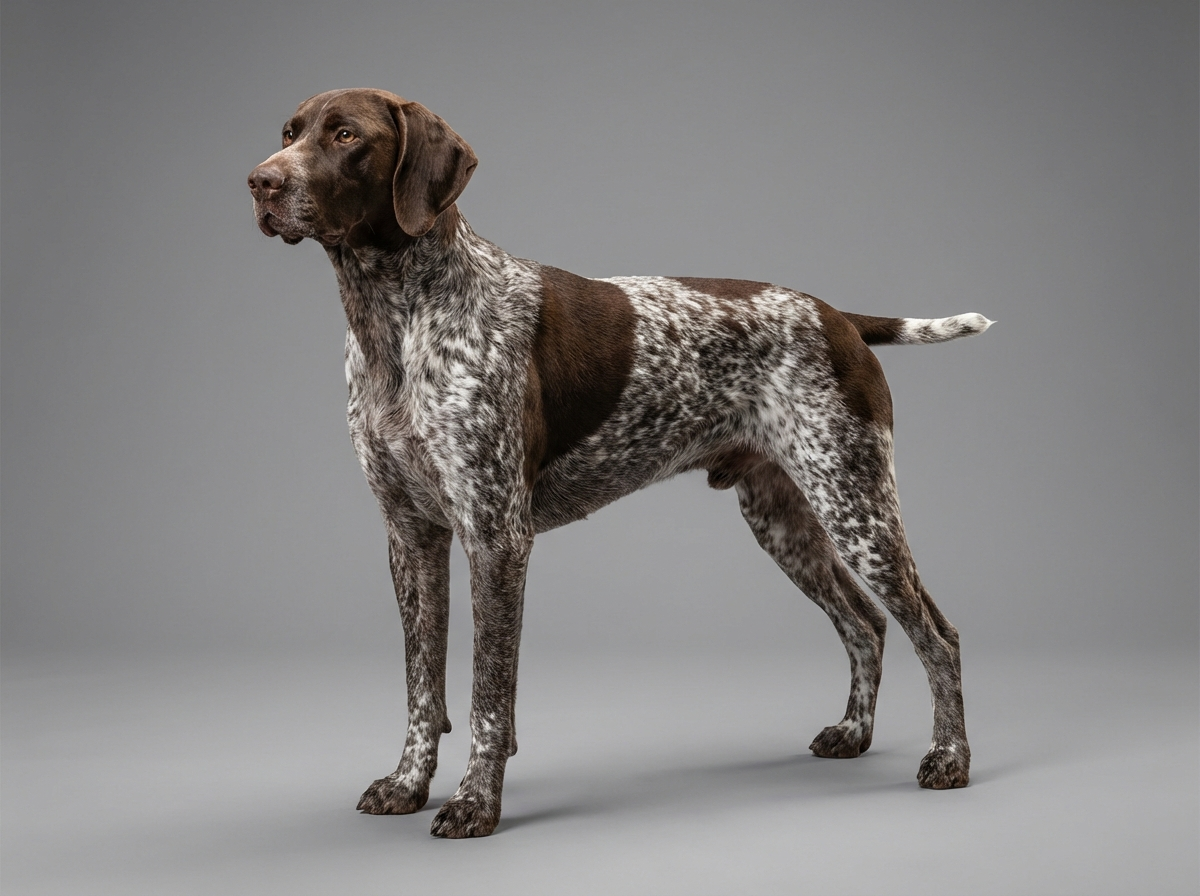
Hypothyroidism is listed among the German Shorthaired Pointer's documented health issues, indicating meaningful representation in the breed and a heritable component in some lines. The way it presents is shaped by the breed's other traits. A dog rated five out of five for energy and exercise need, requiring one to two hours of daily work, is running close enough to its metabolic ceiling that a modest reduction in thyroid drive becomes visible as a performance change first. The short, dense coat also makes hair thinning and skin texture changes easier to see once they arrive, which helps later-stage recognition.
The environment does not cause thyroid failure, but it heavily influences whether the diagnosis is reached correctly. Testing during an unrelated illness, or while a dog is on medications that suppress thyroid values, produces misleading numbers. A sedentary lifestyle can mask the performance signal entirely, so a GSP kept below its exercise needs may lose stamina without anyone noticing. Conversely, owners who track working performance closely often bring the problem to attention a year earlier than owners who do not.
Book a routine appointment and ask specifically about thyroid testing if your German Shorthaired Pointer shows declining stamina over months, unexplained weight gain, symmetrical hair thinning over the flanks or tail, skin that feels cool and thickened, or ear and skin infections that recur promptly after each treatment. None of this is urgent. What is urgent, and rare, is a severely affected dog that becomes profoundly weak, wobbly, cold to the touch and dull in mentation, which needs emergency care. Also seek prompt advice if a dog on replacement medication becomes restless, pants excessively, loses weight rapidly or seems agitated, since these can indicate over-replacement.
See all German Shorthaired Pointer health problems, which breeds are prone to hypothyroidism, or the full German Shorthaired Pointer breed guide for temperament, exercise needs and ownership costs.
Diagnosis often takes two visits, since initial screening frequently leads to a fuller panel. Once treatment starts, expect brighter behaviour within one to three weeks, coat and skin recovery over two to four months, and a dose-checking blood test a few weeks in with a specific timing instruction. Stable dogs then move to monitoring once or twice a year. This is lifelong.
Success is an unremarkable dog: normal energy for its age, a coat that has regrown, stable weight, infections that stop recurring, and monitoring results that stay in range on an unchanged dose. Many owners describe getting back a dog they had not realised they were losing. Success does not mean stopping medication, and it does not mean the gland recovers.
Thyroid hormone regulates how efficiently muscle produces energy and how the heart responds to demand. Reduce it and the first system to notice is the one operating closest to its limit, which in a German Shorthaired Pointer is the working musculature.
So the earliest owner-visible sign in this breed is frequently a change in endurance rather than a change in the mirror. The dog still wants to go, still points, still retrieves, but tires earlier and takes longer to recover. Because the enthusiasm is intact, owners rarely read it as illness.
Coat and skin changes come later because hair follicles cycle slowly. By the time you notice thinning over the flanks and tail, a dull texture, or skin that feels cool and thickened, the deficiency has usually been present for a while. Weight gain despite unchanged food is another late arrival.
The recurring infection pattern is the third clue and often the one that triggers testing. Thyroid deficiency impairs skin barrier function and local immunity, so a GSP with ear infections that resolve on treatment and return within weeks, or with pyoderma that never quite clears, deserves a thyroid panel rather than another round of the same topical.
More dogs are misdiagnosed with thyroid disease than have it, and more genuinely affected dogs are missed than anyone would like. The reasons are mostly in the testing.

If you think your GSP has hypothyroidism, the plan is three steps: write down what you have seen and when it started, book a veterinary appointment rather than waiting for the next flare, and take video of the behaviour or symptom before you go — the thing you are worried about rarely happens in the consulting room. Screening in the parents covers hip dysplasia, elbow dysplasia, bloat (gdv).
What the vet visit should produce is a diagnosis and a written plan, not just reassurance: what is being ruled out, what the monitoring interval is, and which signs mean you come back sooner. Ask what the treatment costs across a year rather than per visit, because that is the number that decides whether you are managing this condition or reacting to it.
Between appointments, keep a short log — dates, what you saw, what changed. It is the single most useful thing an owner brings to a follow-up, and for hypothyroidism it is often what separates a clear pattern from a guess.
Sable was six when her fourth ear infection of the year was diagnosed. Each course of treatment worked. Each time, within about five weeks, the head shaking came back. Her owner, Nils, had also stopped taking her on the long Sunday hikes because she flagged around the halfway point, though he had put that down to her getting older. He mentioned it in passing at the fourth appointment, mostly as small talk. The vet ran a full thyroid panel rather than another ear swab. Sable started replacement therapy. Her energy came back inside a fortnight, her coat filled in over the following winter, and she had one ear infection in the next three years.
Key takeaway: Recurring infections and quietly falling stamina are the same story in this breed. If a problem keeps coming back after successful treatment, the question to ask is what is letting it return.
Most cases are diagnosed in middle age, commonly between about four and eight years, which for a breed with a 10 to 12 year lifespan means a substantial remaining span to manage. Onset in a dog under two is unusual and raises different questions, including whether an autoimmune process is involved.
No. The thyroid tissue that has been lost does not regenerate, so treatment replaces the hormone rather than restoring the gland. That said, replacement therapy is one of the more straightforward long-term treatments in veterinary medicine, and well-managed dogs generally live a normal span with a normal quality of life.
Energy and mental brightness often shift within one to three weeks, which is usually the first thing owners notice. Skin and coat take considerably longer because hair grows on its own schedule, so expect two to four months before the coat looks right. Weight responds over a similar timescale, and only alongside sensible feeding.
Owners frequently report a duller, more withdrawn dog that recovers its personality on treatment, and reduced tolerance for cold is common. Claims linking thyroid disease to aggression are much more contentious and not well supported. A behaviour change in a GSP should prompt a broad medical workup rather than a thyroid assumption.
Yes, though not frequently once stable. Expect a recheck a few weeks after starting or changing a dose, timed relative to when the medication was given, and then periodic monitoring once or twice yearly. Dose requirements can drift with age and body weight, so monitoring is not a formality.
In most cases yes, once hormone levels are stable. Many owners report that the dog they get back on treatment is the dog they had two years earlier. Return to full workload should be gradual rather than immediate, both because conditioning has been lost and because the dose may still need adjusting.
The early signs are set out in the sections above, and they are the reason to book a veterinary appointment rather than wait. Hypothyroidism in GSPs is diagnosed by a vet, not from a symptom list, and the sooner it is on record the more options remain open.
The early signs are set out in the sections above, and they are the reason to book a veterinary appointment rather than wait. Hypothyroidism in German Shorthaired Pointers is diagnosed by a vet, not from a symptom list, and the sooner it is on record the more options remain open.
Usually reduced stamina and slower recovery after exercise, appearing well before the classic weight gain and coat thinning that textbooks describe.
It can. Low thyroid hormone impairs skin barrier function and local immunity, and recurring ear or skin infections that keep returning are a recognised prompt for testing.
Usually not. A single total hormone value is a screen; concurrent illness and several medications suppress it. A full panel gives a far more reliable answer.
Daily replacement medication plus one or two monitoring blood tests a year. It is a modest, predictable addition to typical GSP costs of 100 to 200 dollars monthly.
Rebuild gradually over several weeks rather than returning to the previous workload immediately, since conditioning has been lost while the dog was underactive.
A one-page prep sheet for this condition: the signs, the questions to ask, what to get priced. Unlocks here.
You get: Vet visit prep sheet
No spam. One-click unsubscribe. See our privacy policy.
See a sample page before you decide.
Early access list
The free prep sheet covers the same-day warning signs, a symptom log and the questions to ask. We are considering a fuller kit that adds a cost worksheet for the usual tests and treatments (US price ranges with their sources) and a plain-English guide to ways of covering the bill. It is not built yet; this list tells us whether it is worth building.
One email, no spam, unsubscribe anytime. Information only, not veterinary advice.