Behavior
What are Dachshund skin allergies quick tips?
Keep your Dachshund's environment clean, use hypoallergenic products, and monitor their diet for allergens.

Quick answer
What are Dachshund skin allergies quick tips?
Keep your Dachshund's environment clean, use hypoallergenic products, and monitor their diet for allergens.
Dachshund skin allergies can cause discomfort and irritation for your furry friend. It’s important to address these issues to keep them happy and healthy.
Owners of Dachshunds often face challenges managing skin allergies. This issue can be particularly distressing for first-time dog parents or busy families who want to provide the best care for their pets.
This guide is not medical advice. If your dog shows pain, sudden behavior change, or worsening symptoms, consult a licensed veterinarian.
Some links may be affiliate links. We may earn a commission at no extra cost to you. We only suggest products we believe are helpful for dog owners.
We research and check what we publish, but we do not warrant that any figure, date, price, or statement is accurate, complete, or current, and we accept no liability for any loss, cost, injury, or other harm arising from the use of this site. Use it as one reference among several. You remain responsible for your own decisions and for your dog's care - confirm anything that matters with a licensed veterinarian or another qualified professional before you act on it. Full disclaimer.
Check this first
Dachshund skin allergies can sometimes signal a serious issue. It's essential to know when to call your vet and when to monitor your dog at home. If you notice any of the following signs, it's crucial to seek immediate veterinary care.
If any of these apply, call your vet or an emergency clinic now. The rest of this page is for the cases that are not an emergency.
Dachshund skin allergies can cause persistent itching and irritation, making your dog uncomfortable. You might notice your Doxie scratching, biting, or licking at their skin, leading to red, inflamed areas or even infections. This problem can be frustrating for both you and your pet, as it often disrupts their daily activities and your peace of mind.
Skin allergies are relatively common in Dachshunds, with many owners reporting these issues at some point. Given their sensitive skin, it's essential to keep an eye on any changes in behavior or skin condition.
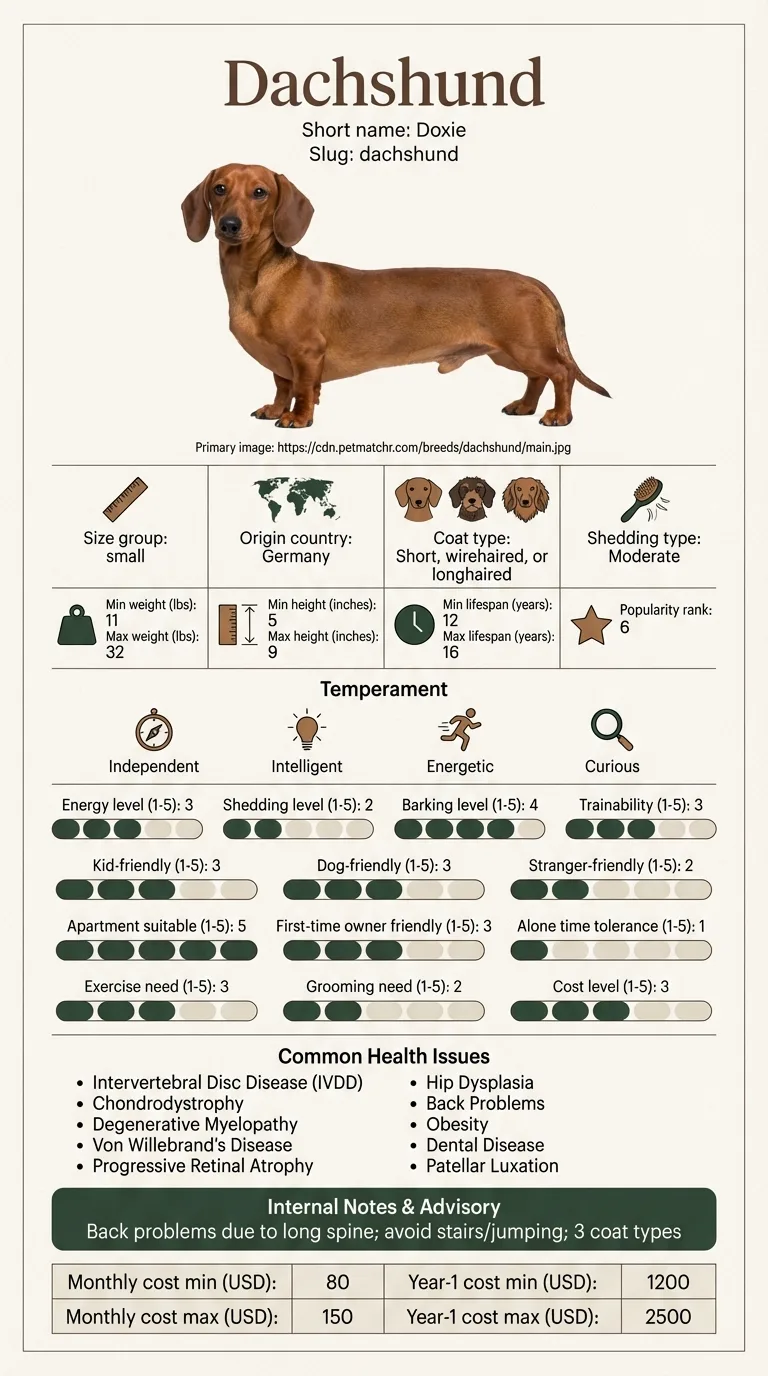
Dachshunds can be prone to skin allergies due to their sensitive skin and specific genetic factors. Their coat type, whether short, wirehaired, or longhaired, can also affect how allergens interact with their skin. This breed may experience allergic reactions to food, pollen, or fleas more than others.
Environmental factors such as dust mites, mold, or pollen can trigger skin allergies in Dachshunds. Changes in climate or exposure to new cleaning products can also contribute to irritation. Additionally, improper grooming can lead to skin issues, as dirt and debris can build up, causing further discomfort.
If your Dachshund shows persistent symptoms like severe itching, redness, or secondary infections, it's time to visit the vet. They can diagnose the specific cause of the allergies and recommend appropriate treatments, including medications or allergy tests.
To effectively manage Dachshund skin allergies, it's crucial to avoid certain common mistakes that can exacerbate the issue. Here are some behaviors to watch out for.
Start here: Dachshund Most Common Genetic Disorders: What to Screen For
See all Dachshund health problems, which breeds are prone to skin allergies, or the full Dachshund breed guide for temperament, exercise needs and ownership costs.
Most Dachshund skin allergies take about 4 to 8 weeks to manage effectively with proper treatment and care.
Success means your Dachshund experiences significantly reduced itching and irritation, leading to healthier skin and improved overall comfort.
In less severe cases, you may not need to rush to the vet. Monitor your Dachshund for symptoms that are mild, such as occasional scratching or slight redness. If your dog is still eating, drinking, and behaving normally, you can manage their allergies with a plan.

Maggie, a first-time dog owner in Austin, discovered that her Dachshund, Max, was constantly scratching and licking at his skin. After a vet visit, she learned that Max had skin allergies likely caused by environmental factors. Determined to help her furry friend, Maggie followed a treatment plan that included switching to hypoallergenic food, regular baths with medicated shampoo, and monitoring for potential allergens in their home. Over the next two months, Max's skin improved dramatically, and he seemed much more comfortable and playful.
Key takeaway: Consistent care and attention to your dog's environment are key to managing Dachshund skin allergies effectively.
Dachshund skin allergies can be caused by various factors, including food sensitivities, environmental allergens, or parasites like fleas. It's essential to monitor your dog for any changes in their diet or surroundings. A visit to the vet can help pinpoint the specific cause.
To stop Dachshund skin allergies, start by identifying and removing potential allergens from their environment. Regular baths with hypoallergenic shampoo and a balanced diet may also help alleviate symptoms. Consult your vet for specific treatments or medications if the problem persists.
Common symptoms include excessive itching, redness, swelling, and hair loss. You might also notice scabs or bumps on their skin. If you observe these signs, it's crucial to address them promptly to avoid secondary infections.
Yes, hypoallergenic or limited ingredient diets can be beneficial for Dachshunds with skin allergies. Look for foods that exclude common allergens like wheat, soy, and corn. Always consult your vet before making significant dietary changes.
You should bathe your Dachshund about once a month with a gentle, hypoallergenic shampoo. More frequent bathing can strip natural oils, so balance is key. If allergies are severe, your vet may recommend a specific bathing schedule.
Dachshund skin allergies can be triggered by various factors, including food ingredients, environmental allergens like pollen, or flea bites. Identifying the specific cause often requires observation and may involve allergy tests.
If your Dachshund is scratching excessively, it may indicate allergies. Look for signs like redness, inflamed skin, or hair loss. If these symptoms persist, consult your vet for a thorough evaluation.
While Dachshund skin allergies can occur at any age, older dogs may develop allergies as their immune systems change. Regular vet check-ups are important to address any emerging skin issues.
Some home remedies, like oatmeal baths or adding fish oil to their diet, may soothe your Dachshund's skin. However, always check with your vet before trying new treatments to ensure they're safe and effective.
If your Dachshund's skin allergies cause severe irritation, swelling, or secondary infections, it's time to see the vet. Also, if over-the-counter treatments aren't helping, professional guidance is essential.
Keep your Dachshund's environment clean, use hypoallergenic products, and monitor their diet for allergens.
Yes, stress can exacerbate skin allergies, leading to increased scratching and irritation. Providing a calm environment can help.
If you suspect an infection, see your vet immediately for appropriate treatment, which may include antibiotics.
Regular grooming, a proper diet, and keeping them flea-free can help prevent skin allergies.
A one-page prep sheet for this condition: the signs, the questions to ask, what to get priced. Unlocks here.
You get: Vet visit prep sheet
No spam. One-click unsubscribe. See our privacy policy.
See a sample page before you decide.
Early access list
The free prep sheet covers the same-day warning signs, a symptom log and the questions to ask. We are considering a fuller kit that adds a cost worksheet for the usual tests and treatments (US price ranges with their sources) and a plain-English guide to ways of covering the bill. It is not built yet; this list tells us whether it is worth building.
One email, no spam, unsubscribe anytime. Information only, not veterinary advice.