Health
Are mixed-breed dogs healthier than purebreds?
For some specific inherited disorders, yes. For many conditions there is no difference, and a few, such as cruciate rupture, are more common in mixed-breed dogs.

Quick answer
Are mixed-breed dogs healthier than purebreds?
For some specific inherited disorders, yes. For many conditions there is no difference, and a few, such as cruciate rupture, are more common in mixed-breed dogs.
Purebred and mixed is not a health ranking. It is a description of how a gene pool is bounded, and the consequences run in both directions.
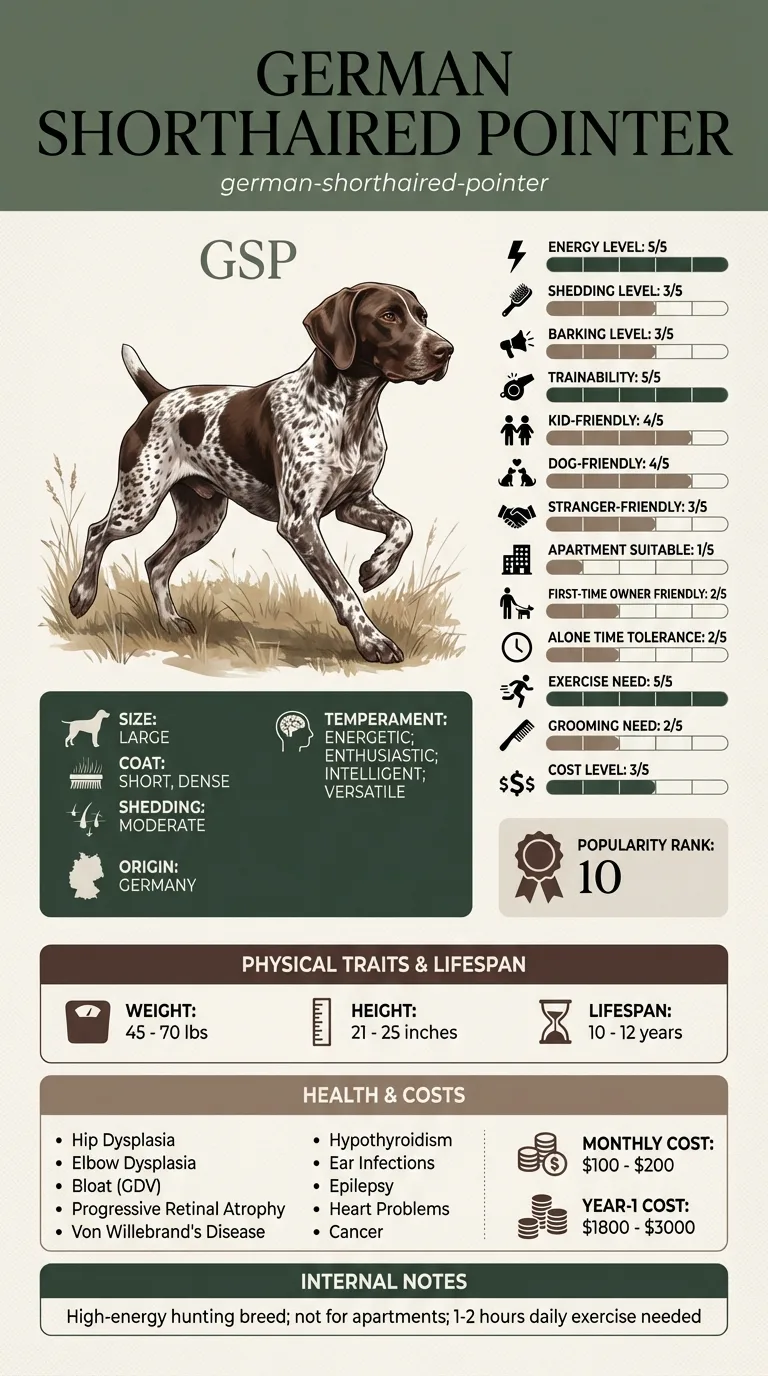
People deciding between a pedigree GSP and a pointer-cross from a shelter, and owners who have read a headline about purebred disease rates and want to know what it means for the dog in front of them.
This guide is not medical advice. If your dog shows pain, sudden behavior change, or worsening symptoms, consult a licensed veterinarian.
Some links may be affiliate links. We may earn a commission at no extra cost to you. We only suggest products we believe are helpful for dog owners.
We research and check what we publish, but we do not warrant that any figure, date, price, or statement is accurate, complete, or current, and we accept no liability for any loss, cost, injury, or other harm arising from the use of this site. Use it as one reference among several. You remain responsible for your own decisions and for your dog's care - confirm anything that matters with a licensed veterinarian or another qualified professional before you act on it. Full disclaimer.
The purebred versus mixed-breed health question is usually posed as though one category were simply safer. The evidence does not support that framing. Closed studbooks concentrate specific inherited conditions, which is why the German Shorthaired Pointer has a documented list including hip and elbow dysplasia, retinal atrophy, von Willebrand's disease and cancer. Closed studbooks also make those risks knowable and screenable, which is an advantage no unknown-parentage dog offers.
Documented breed conditions are, by definition, more common in the breeds that document them, which is why the German Shorthaired Pointer's list exists. What the list does not say is that most individual GSPs are affected; the majority live their 10 to 12 years without developing the conditions named. Meanwhile many mixed-breed dogs carry inherited disease that was never anticipated because nobody knew which ancestry to screen.
The German Shorthaired Pointer is a closed population developed in Germany for versatile hunting, and its documented health list reflects what that closure has concentrated: hip dysplasia, elbow dysplasia, bloat, retinal atrophy, von Willebrand's disease, hypothyroidism, ear infections, epilepsy, heart problems and cancer. Its popularity, around tenth, cuts both ways. A large population supports genetic diversity and meaningful screening programmes, while also generating many untested litters bred for demand. The variation between a health-tested working line and an untested one within the same breed is the difference that actually matters to a buyer.
How a dog is acquired shapes outcomes as much as its genetics. Buyers who ask for certificates and wait for a tested litter get different dogs from buyers who choose on availability. Shelter dogs arrive with unknown history, which removes screening options but says nothing about their likely health. Rearing decisions in the first year, particularly growth rate and body condition, modify the expression of inherited joint disease substantially in either category. And lifelong body weight influences several documented conditions regardless of pedigree.
This is a purchasing question rather than a clinical one, and it generates no emergencies. Book a routine consultation to review a breeder's health paperwork before committing, which most vets are happy to do and which is far cheaper than discovering a problem later. Ask your vet which conditions they see most often in German Shorthaired Pointers locally, since regional patterns exist. Once you own a dog of either category, seek prompt attention for the presenting signs of the conditions on this breed's list, particularly a tight distended abdomen with unproductive retching, which is a surgical emergency.
See all German Shorthaired Pointer health problems, which breeds are prone to purebred vs mixed breeds, or the full German Shorthaired Pointer breed guide for temperament, exercise needs and ownership costs.
Evaluating breeders properly takes weeks and well-bred litters are commonly booked months ahead, so a rushed purchase is itself a risk factor. Shelter adoption can be faster but usually involves an assessment process. Whichever route you take, the health consequences of the choice unfold across a 10 to 12 year lifespan rather than becoming apparent in the first year.
Success is a decision made on specific evidence about specific animals rather than on a category. It looks like a folder of dated certificates, or a clear-eyed acceptance that a rescue dog's history is unknown and insurance is therefore essential. It does not look like certainty, because neither purebred nor mixed-breed status provides it, and any source promising that it does is worth distrusting.
A pedigree breed is a population whose breeding is restricted to registered members of that population. New genetic material cannot enter. That closure is what makes a breed predictable in appearance, temperament and working ability, and it is the same mechanism that concentrates whatever else was present in the founding animals.
If a founder carried a mutation, its descendants inherit it at a rate no outside breeding can dilute. Over generations, popular sires amplify this further: a single widely used stud dog can place his genes into a large share of a generation, spreading any recessive he carries throughout the population.
That is the honest mechanism behind elevated rates of specific inherited conditions in pedigree dogs, and it is why hip dysplasia, retinal atrophy and von Willebrand's disease appear as a named list for the German Shorthaired Pointer at all.
The counterpart is equally real. A closed population is also a knowable one. Because the risks are documented, they can be screened for, and a breeder who tests can reduce the incidence of a specific condition dramatically within their own lines. Nobody can screen a mixed-breed litter of unknown parentage in the same way, because nobody knows what to look for.
The evidence is more mixed than headline statistics suggest, and reading it fairly requires holding several findings at once.

If you think your GSP has purebred vs. mixed breeds, the plan is three steps: write down what you have seen and when it started, book a veterinary appointment rather than waiting for the next flare, and take video of the behaviour or symptom before you go — the thing you are worried about rarely happens in the consulting room. Screening in the parents covers hip dysplasia, elbow dysplasia, bloat (gdv).
What the vet visit should produce is a diagnosis and a written plan, not just reassurance: what is being ruled out, what the monitoring interval is, and which signs mean you come back sooner. Ask what the treatment costs across a year rather than per visit, because that is the number that decides whether you are managing this condition or reacting to it.
Between appointments, keep a short log — dates, what you saw, what changed. It is the single most useful thing an owner brings to a follow-up, and for purebred vs. mixed breeds it is often what separates a clear pattern from a guess.
Naima spent months comparing purebred and mixed-breed health data before choosing her first dog. She found the 1.9 times cancer figure, then found studies showing no difference for other conditions, then found one showing cruciate rupture was more common in mixed-breed dogs. She went to a vet consultation with a printed folder of contradictions and asked which category she should choose. The answer redirected her entirely: the vet said the most useful predictor available to her was not the category but whether the parents of a specific puppy had been screened for the conditions that specific breed is known to carry. That information exists for a GSP litter and does not exist for a dog of unknown parentage. Naima bought a tested GSP puppy. She still thinks the studies were interesting and she no longer thinks they answered her question.
Key takeaway: The purebred versus mixed comparison is a population-level debate being used to make an individual-level decision. Ask what has actually been tested on the two dogs that made the puppy in front of you.
Some analyses report a substantially higher rate in purebred populations, and cancer is listed among the German Shorthaired Pointer's documented health concerns. The figure is a population average across many breeds with very different risks, so it tells you little about any individual dog. Specific breeds and specific lines within them vary enormously.
Genuine outcrossing between unrelated populations does reduce the chance of a puppy inheriting two copies of the same recessive mutation, which is real. But the effect requires actual genetic distance between the parents. A cross between two related breeds, or a repeated designer cross, may deliver very little of it.
The category is the wrong axis for the decision. A well-bred GSP from health-tested parents with documented hip, eye and clotting results carries lower risk of those specific conditions than an untested dog of any description. A shelter cross may be a superb dog. What you cannot do is assume either category is safer as a rule.
At minimum hip scoring, with elbows for a breed where elbow dysplasia is also documented, an ophthalmologist eye examination, thyroid screening and clotting status for von Willebrand's disease. Ask for dated certificates naming the scheme or laboratory, not a general assurance about healthy lines.
Commercial panels will screen a mixed-breed dog for many known variants, and this can be informative. The limitation is that panels test known mutations, and in a dog of uncertain ancestry you do not know which variants are relevant. It is a broad net rather than a targeted screen.
By itself, almost nothing. Registration records ancestry, not soundness. Health information comes from separate testing schemes and examination certificates, and those are the documents worth asking for. Conflating a pedigree with a health guarantee is one of the more common and expensive misunderstandings in dog buying.
For some specific inherited disorders, yes. For many conditions there is no difference, and a few, such as cruciate rupture, are more common in mixed-breed dogs.
A closed studbook means no outside genetic material enters, so whatever the founders carried is concentrated across generations and amplified by widely used sires.
Known risks can be screened for. A breeder testing hips, eyes, thyroid and clotting status can reduce specific conditions within their lines in a way unknown parentage does not allow.
No. It records ancestry only. Health information comes from separate scheme results and examination certificates, which should be requested individually.
Do not count on it. A cross carrying substantial pointer ancestry can inherit the full five out of five exercise requirement without inheriting the predictability that makes it manageable.
A one-page prep sheet for this condition: the signs, the questions to ask, what to get priced. Unlocks here.
You get: Vet visit prep sheet
No spam. One-click unsubscribe. See our privacy policy.
Preview page 1 before you decide.