Health
What is a liver shunt in a dog?
An abnormal blood vessel that carries blood from the intestines past the liver instead of through it, so toxins including ammonia reach the brain unfiltered.

Quick answer
What is a liver shunt in a dog?
An abnormal blood vessel that carries blood from the intestines past the liver instead of through it, so toxins including ammonia reach the brain unfiltered.
Watch a shunted puppy an hour after a large meal and you will see the diagnosis: a normal dog becoming vacant, wobbly and strange, then normal again.
Owners of a puppy that is failing to keep up with its littermates, people whose young dog reacted badly to a routine anaesthetic, and anyone whose dog has intermittent neurological episodes with no obvious trigger.
This guide is not medical advice. If your dog shows pain, sudden behavior change, or worsening symptoms, consult a licensed veterinarian.
Some links may be affiliate links. We may earn a commission at no extra cost to you. We only suggest products we believe are helpful for dog owners.
A portosystemic shunt diverts intestinal blood around the liver, so absorbed compounds including ammonia enter the general circulation unprocessed. The result is episodic neurological dysfunction that characteristically follows meals, alongside poor growth and an underdeveloped liver. It is not a documented German Shorthaired Pointer concern and clusters instead in specific other breeds, but it belongs on the differential for any poorly grown puppy with intermittent neurological signs, because it is treatable and easily missed.
Congenital shunts are uncommon overall and are concentrated in particular breeds that do not include the German Shorthaired Pointer. Most GSP owners will never encounter one. The reason to know about it is that its signs are easy to attribute to something else, being variously mistaken for a picky eater, a slow learner, a clumsy puppy or an isolated seizure, and the diagnosis often arrives late as a result.
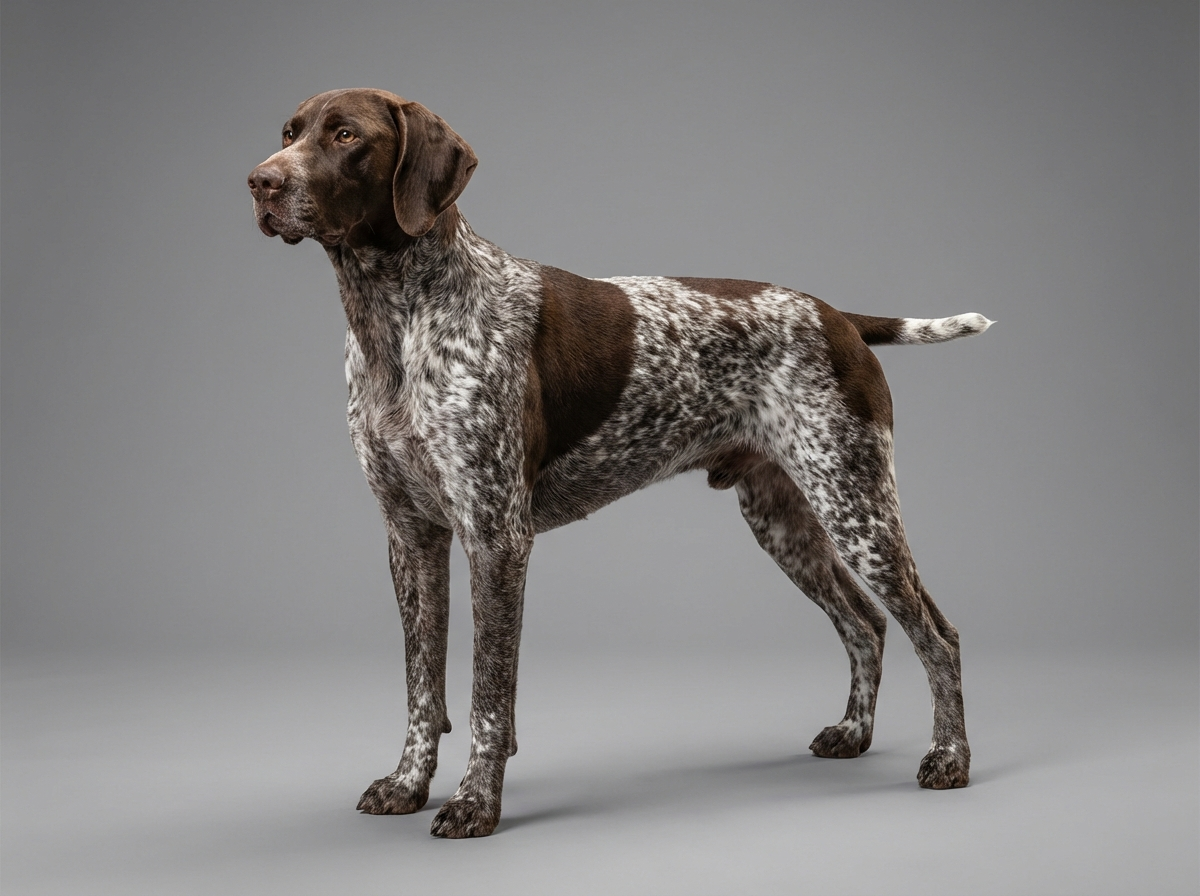
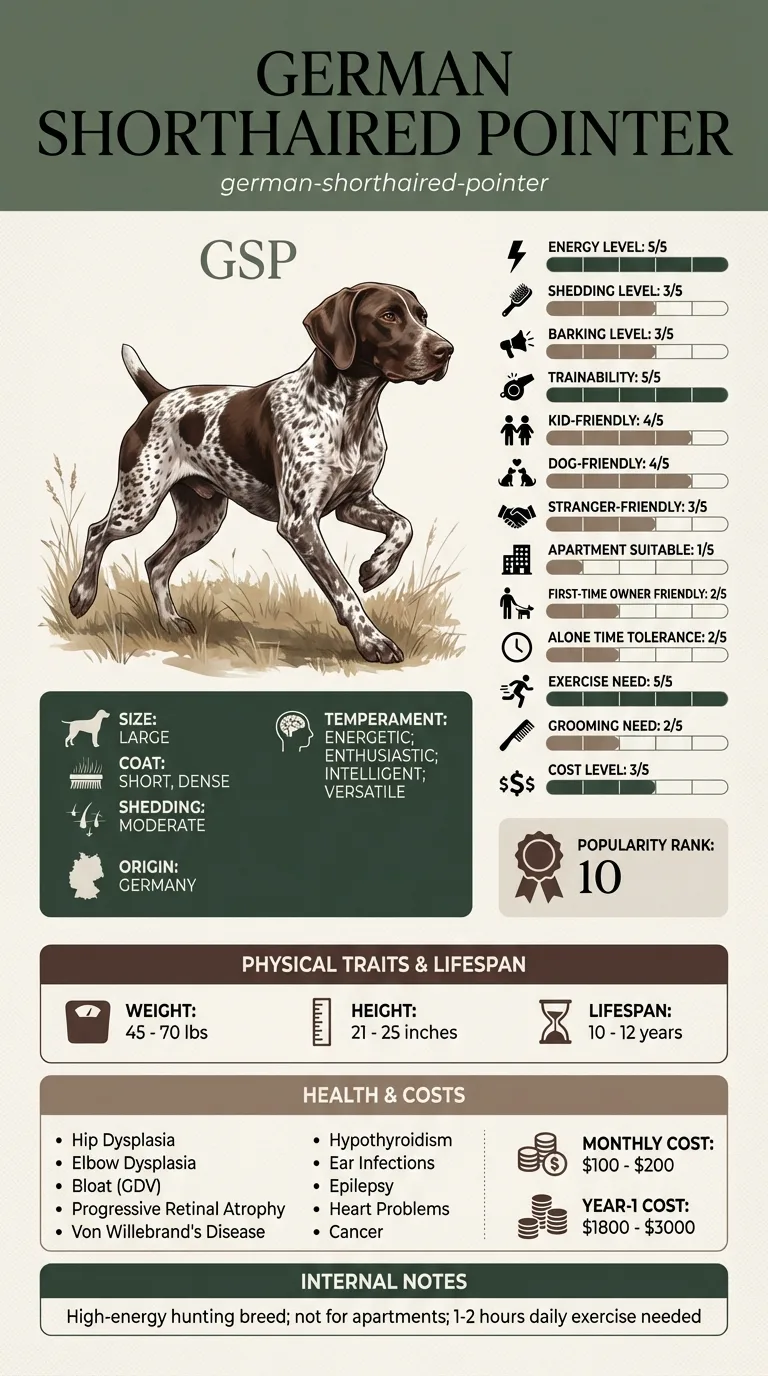
There is no documented predisposition in this breed, and the German Shorthaired Pointer's health list contains no hepatic entry. Where breed traits do matter is in masking and in contrast. This is a breed whose normal puppy is conspicuously energetic, described as enthusiastic and versatile, and destined to be rated five out of five for energy. A GSP puppy that is quiet, small, slow to grow and mentally foggy after eating is markedly out of type, which means an attentive owner comparing against littermates has a genuinely useful early signal that owners of calmer breeds do not.
Nothing in the environment causes a congenital shunt, which is present before birth. Environment governs how severe the episodes are, mostly through diet. Large protein-heavy meals produce bigger ammonia surges than smaller frequent ones. Constipation prolongs absorption. Any intestinal bleeding, including from ulceration, causes a sharp deterioration. In practical terms, once a shunt is diagnosed, feeding pattern and gut regularity become the day-to-day management levers alongside prescribed medication.
Seek emergency care for a seizure, for a dog that becomes unresponsive or persistently disoriented, or for one that is pressing its head into a wall or corner, which is a specific and serious neurological sign. Black, tarry stool in a dog with known liver disease also warrants urgent assessment. Book promptly for a puppy that is failing to grow, is repeatedly dull or wobbly after meals, drinks and urinates excessively, or has recovered unusually slowly from any sedation. Ask specifically about a bile acid stimulation test if the pattern fits, since it is inexpensive and is the standard screening step.
See all German Shorthaired Pointer health problems, which breeds are prone to liver shunts, or the full German Shorthaired Pointer breed guide for temperament, exercise needs and ownership costs.
Screening bloodwork and a bile acid test can be completed within days. Referral imaging typically follows over the next few weeks. Where surgery is chosen, closure is often staged so the liver can adapt to receiving normal blood flow, and full recovery takes several months. Medically managed dogs need lifelong dietary control and monitoring, with review every few months.
After successful surgical correction, many dogs go on to entirely normal lives, catch up in growth, and need no ongoing diet restriction. That is a genuinely good outcome and it is worth pursuing. For medically managed dogs, success is a lower bar: episodes controlled, weight maintained, and a dog that is comfortable and engaged, with the understanding that the abnormal vessel remains.
Protein digestion produces ammonia, which is absorbed from the intestine and would normally be converted by the liver into urea and excreted. With a shunt, a proportion of that ammonia goes straight past the liver and into the bloodstream, where it is directly toxic to the brain.
That is why the classic history is episodic and meal-linked. The puppy is bright and normal, eats, and then thirty minutes to two hours later becomes dull, disoriented, unsteady, or presses its head against a wall. Some circle, some stare, and in more severe cases some seize. Then, as the ammonia clears, the dog returns to normal and the owner starts to doubt what they saw.
Because the liver also fails to receive the growth-promoting factors normally delivered by intestinal blood, it stays small and underdeveloped. Affected puppies are frequently the smallest of the litter, slow to grow, poor at putting on condition, and often described as picky eaters.
A third clue is drug handling. The liver clears most anaesthetics and sedatives. A shunted dog metabolises them slowly, so an unexpectedly prolonged or rough recovery from a routine neuter is one of the ways these cases are discovered.
Diagnosis moves from cheap screening to expensive imaging, and each step narrows the question.

If you think your GSP has liver shunts, the plan is three steps: write down what you have seen and when it started, book a veterinary appointment rather than waiting for the next flare, and take video of the behaviour or symptom before you go — the thing you are worried about rarely happens in the consulting room. Screening in the parents covers hip dysplasia, elbow dysplasia, bloat (gdv).
What the vet visit should produce is a diagnosis and a written plan, not just reassurance: what is being ruled out, what the monitoring interval is, and which signs mean you come back sooner. Ask what the treatment costs across a year rather than per visit, because that is the number that decides whether you are managing this condition or reacting to it.
Between appointments, keep a short log — dates, what you saw, what changed. It is the single most useful thing an owner brings to a follow-up, and for liver shunts it is often what separates a clear pattern from a guess.
Ilse noticed that her GSP puppy, Bo, was the smallest of the litter and stayed that way. Her breeder described him as the thoughtful one. At home Ilse kept a feeding diary because Bo was a reluctant eater. Reading it back after a month she saw something she had not noticed in the moment: the entries describing him as sleepy, staring or unsteady all fell in the late afternoon, roughly ninety minutes after his midday meal. She took the diary to her vet, who ran a bile acid stimulation test that same visit. The result was markedly abnormal, and imaging at a referral centre found a single vessel outside the liver. Bo had surgery at seven months. He is now four, hunts hard, and eats a normal diet.
Key takeaway: The pattern is in the timing. A written record linking meals to behaviour turns a vague sense that something is off into a specific, testable question.
No. Congenital shunts cluster in specific small breeds for vessels outside the liver and in certain large breeds for vessels inside it, and the GSP is not among the commonly cited breeds. Liver disease does not appear on this breed's documented health list. Individual cases occur in any breed, but this should not be a routine worry.
A vessel outside the liver is generally a single abnormal connection and is more often amenable to surgical closure. A vessel inside the liver is typically a fetal channel that failed to close and is technically harder to address. The distinction changes the treatment options and the prognosis substantially, which is why imaging is not optional.
Medical management can control signs, generally through a diet with modified protein quality and medications that reduce ammonia production and absorption in the gut. It does not correct the underlying anatomy, and many dogs eventually do better with surgical closure where that is feasible. This is a specialist decision rather than an owner preference.
Because the liver processes most anaesthetic and sedative drugs, and a dog with reduced liver function clears them slowly. A young dog that took an unusually long time to wake from a routine procedure, or that was strange for a day afterwards, is giving genuine diagnostic information that should be mentioned rather than forgotten.
A heritable basis is recognised in the breeds where these are common, and affected dogs and their close relatives are generally not recommended for breeding. In a breed where the condition is uncommon, an individual case is more likely to be sporadic, though the breeding recommendation is the same.
Yes, but a different kind. Acquired shunts form when pressure builds in the portal system because of chronic liver disease, and the body opens multiple small bypass vessels. These are a consequence of liver failure rather than a birth defect, and they are managed by addressing the underlying disease rather than by surgical closure.
An abnormal blood vessel that carries blood from the intestines past the liver instead of through it, so toxins including ammonia reach the brain unfiltered.
Poor growth, small size relative to littermates, and episodes of dullness, disorientation, head pressing or wobbliness that appear within a couple of hours of eating.
No. They cluster in specific small breeds and some large breeds, and liver disease is not on the GSP's documented health list.
Yes. Any seizure needs prompt veterinary assessment, and one following a meal in a poorly grown puppy is a strong pointer toward a liver problem.
Bile acid testing is inexpensive; advanced imaging and surgical correction at a referral centre are among the larger veterinary expenses an owner can encounter.
A one-page prep sheet for this condition: the signs, the questions to ask, what to get priced. Unlocks here.
You get: Vet visit prep sheet
No spam. One-click unsubscribe. See our privacy policy.
Preview page 1 before you decide.