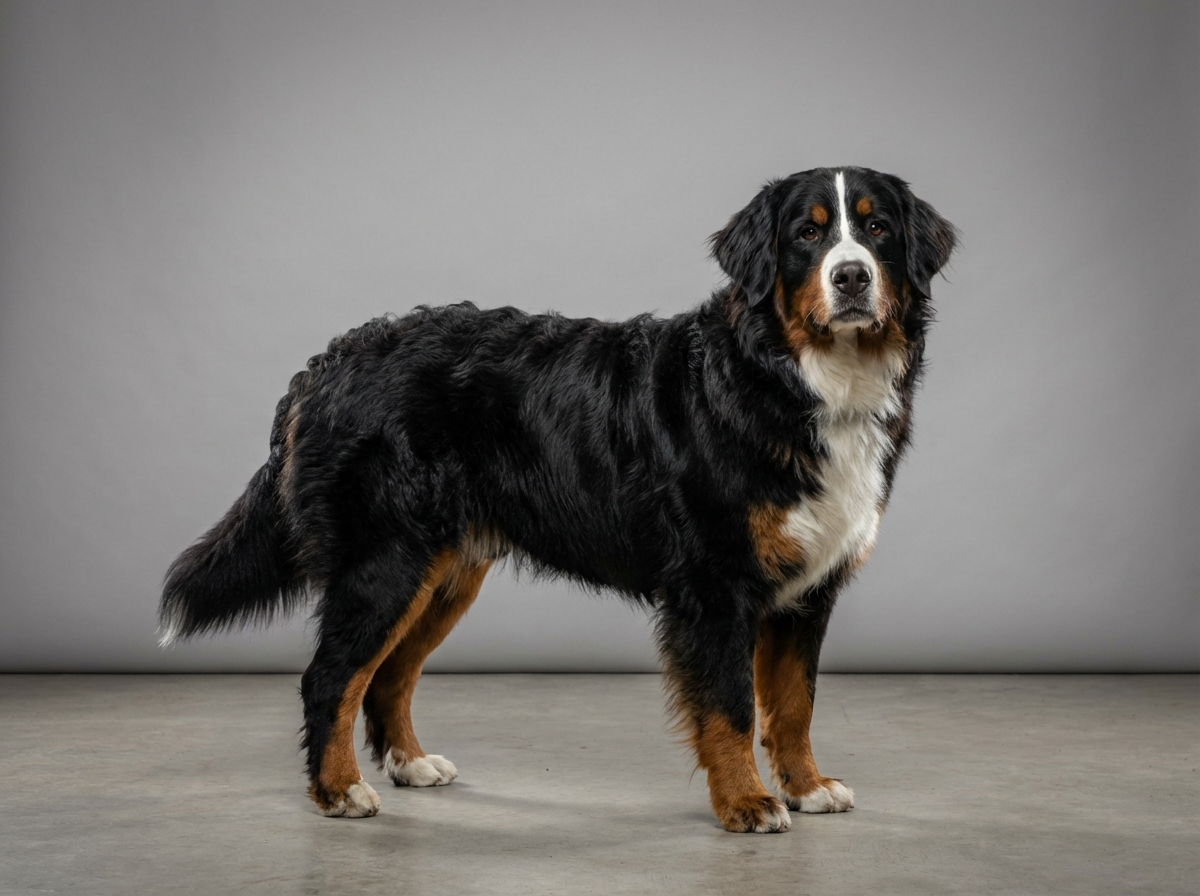
Health
What is the classic timing clue for a liver shunt?
Neurological signs appearing one to three hours after a meal and then easing. That post-meal pattern is the most distinctive feature owners can report.

Quick answer
What is the classic timing clue for a liver shunt?
Neurological signs appearing one to three hours after a meal and then easing. That post-meal pattern is the most distinctive feature owners can report.
The tell is timing. A puppy who becomes dull, disoriented or unsteady an hour or two after eating, then recovers, is describing a liver shunt almost precisely.
Owners of a Bernese puppy who is smaller than his littermates, slow to thrive or behaving oddly after meals, and owners whose dog has had urate crystals or an unexpected blood result flagged.
This guide is not medical advice. If your dog shows pain, sudden behavior change, or worsening symptoms, consult a licensed veterinarian.
Some links may be affiliate links. We may earn a commission at no extra cost to you. We only suggest products we believe are helpful for dog owners.
We research and check what we publish, but we do not warrant that any figure, date, price, or statement is accurate, complete, or current, and we accept no liability for any loss, cost, injury, or other harm arising from the use of this site. Use it as one reference among several. You remain responsible for your own decisions and for your dog's care - confirm anything that matters with a licensed veterinarian or another qualified professional before you act on it. Full disclaimer.
A portosystemic shunt is an abnormal blood vessel that diverts blood from the intestines past the liver and directly into general circulation. Because the liver never processes it, ammonia and other toxins accumulate, producing neurological signs, poor growth, urinary crystals and digestive upset. Congenital shunts in large breeds usually lie within the liver, which makes correction more complex than in small breeds.
Congenital shunts are uncommon overall and are not among the Bernese Mountain Dog's documented health issues, which are dominated by cancer, hip and elbow dysplasia, bloat, degenerative myelopathy, retinal atrophy, histiocytosis, von Willebrand's disease, allergies and arthritis. The condition matters here mainly because a large breed puppy who fails to grow is unmistakable, and because the intrahepatic form large dogs get is the harder one to treat.
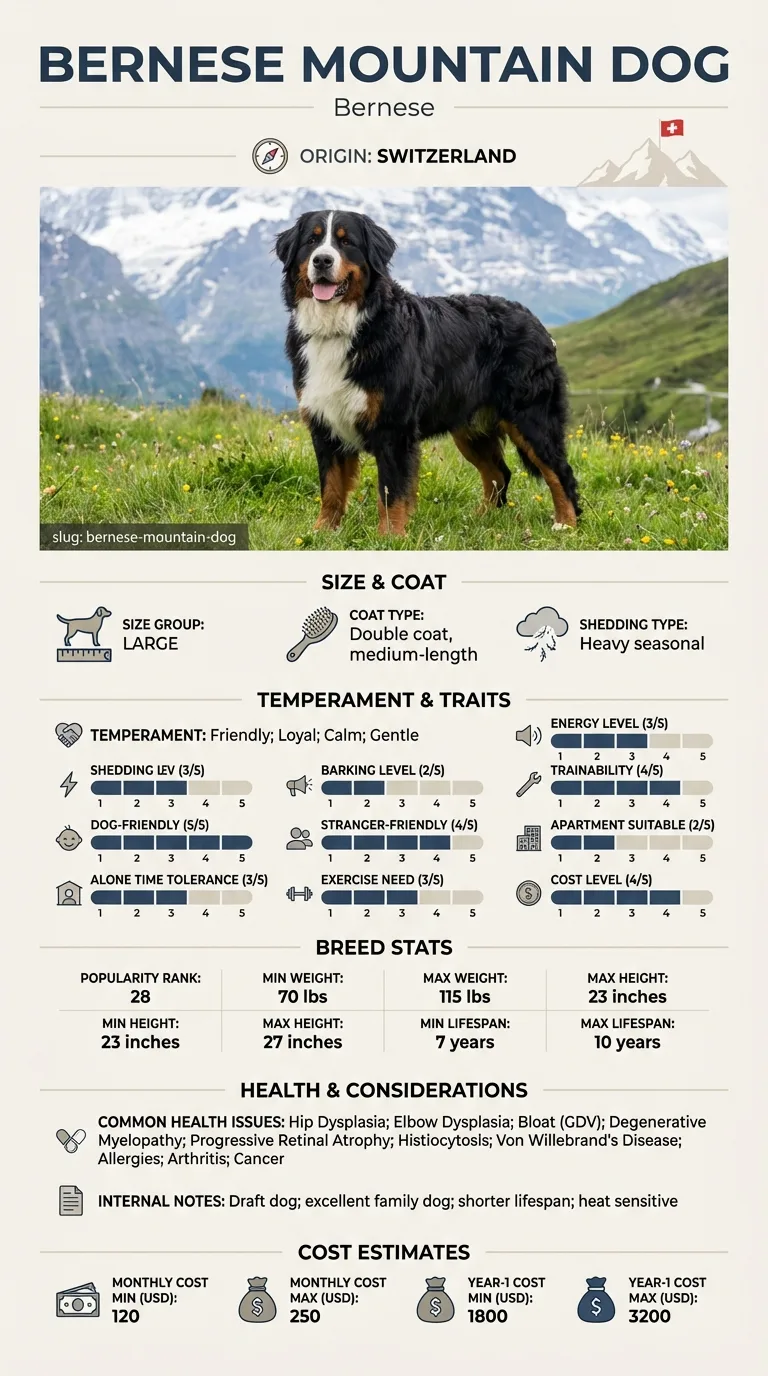
The connection to the Bernese is anatomical rather than genetic. Body size predicts shunt type: dogs destined for 70 to 115 pounds develop the intrahepatic form, in which the persistent foetal vessel lies embedded in liver tissue. That placement is what makes surgery difficult. Growth expectations also make the condition more visible in this breed than in others, because a puppy who should be putting on weight rapidly and is not stands out sharply against littermates.
The shunt itself is congenital and nothing in the household causes it, but diet and gut health strongly influence how sick the dog becomes. High protein loads increase ammonia production in the intestines, so a dog fed a rich diet shows more severe neurological signs than one on a controlled formulation. Constipation and any bleeding into the gut also raise the ammonia burden. Dehydration compounds everything, which matters in a heat-sensitive breed that loses fluid readily in warm weather.
Seek emergency care for a dog who is seizuring, unresponsive, persistently head pressing against a wall, or profoundly disoriented, since these indicate a dangerous level of circulating toxins. Also treat repeated vomiting with collapse as urgent. Book a prompt appointment for a puppy who is failing to gain weight, who has recurrent vague digestive upset, who behaves strangely after meals, or who has urate crystals reported on a urine test. Mention any known shunt before any procedure requiring sedation.
Start here: Bernese Mountain Dog Most Common Genetic Disorders
See all Bernese Mountain DOG health problems, which breeds are prone to liver shunts, or the full Bernese Mountain DOG breed guide for temperament, exercise needs and ownership costs.
Diagnosis usually takes two to four weeks from first suspicion, moving through bloodwork, a bile acid test, then referral imaging. Medical stabilisation with diet and prescribed medication often improves neurological signs within one to two weeks. Surgical or interventional correction of an intrahepatic shunt is a specialist procedure with a recovery measured in months and requires ongoing monitoring afterwards, since liver blood flow changes gradually rather than instantly.
For a corrected congenital shunt, success is a dog who grows normally, eats an ordinary diet and lives a full life, and that outcome is genuinely achievable in the right cases. For a medically managed dog, success is quieter: no neurological episodes, stable weight, no urate stones, and consistent bloodwork on a controlled diet. Owners should expect lifelong dietary discipline in the medical route rather than a return to normal feeding.
Congenital shunts come in two anatomical types, and which one a dog has is largely predicted by his size.
Small breeds typically have extrahepatic shunts, meaning the abnormal vessel lies outside the liver, in the abdomen. It is comparatively accessible to a surgeon, and closure has a good success rate.
Large breeds typically have intrahepatic shunts, where the vessel runs through the substance of the liver itself. This usually reflects a failure of the vessel that bypassed the liver during foetal life to close after birth. Surgically it is a much harder problem, because reaching the vessel means working within the liver, and the correction is more often staged or performed by interventional techniques at a specialist centre rather than by simple ligation.
A Bernese Mountain Dog, at 70 to 115 pounds, falls squarely in the large-breed group, so an owner researching this condition should be reading about intrahepatic shunts rather than the more commonly described small-dog version.
There is a second, quite different scenario worth knowing about. Acquired shunts develop later in life when chronic liver disease raises pressure in the portal circulation and the body opens up multiple small bypass vessels. These are not surgically correctable and are managed medically. The distinction between a single congenital vessel and multiple acquired ones is central to what can be offered.
No single sign is specific. What points strongly to a shunt is the combination, especially neurological changes tied to feeding in a young dog who is not growing as he should.

Nele was the runt of a Bernese litter and stayed the runt. At sixteen weeks she was noticeably behind her siblings, weighing barely two thirds of what they did, with a thin patchy coat and no interest in food some days. Her owners had put it down to being the smallest. What changed their minds was an evening when she wandered into a corner of the kitchen after supper and stood pressing her forehead against the cupboard, unresponsive for several minutes, then walked away as though nothing had happened. Bloodwork showed low urea and low albumin. A bile acid stimulation test was markedly abnormal, and CT angiography at a referral centre found a shunt running through the liver. Nele was stabilised on a hepatic diet and prescribed medication while the specialist team planned an interventional procedure. She is three now, weighs seventy-eight pounds, and still eats a prescription diet.
Key takeaway: A Bernese puppy who does not grow is giving you information. Combined with any episode of post-meal disorientation, poor growth in a large breed should prompt liver testing rather than a change of puppy food.
Portosystemic shunts are not listed among this breed's documented common health issues. Intrahepatic shunts are recognised in several large breeds, so a Bernese is anatomically in the group that gets the intrahepatic form, but this is an uncommon condition rather than a breed hallmark. Cancer, joint disease and bloat remain the dominant Bernese concerns.
Usually in stages. Routine bloodwork may show low urea, low albumin, small red blood cells or mildly raised liver enzymes. A bile acid stimulation test, comparing samples before and after a meal, is the standard screening step. Confirmation and anatomical mapping require imaging, typically ultrasound and often CT angiography at a referral centre.
It measures how well the liver clears bile acids from the blood. Two samples are taken, one after a fast and one about two hours after a small meal. Follow the fasting instructions exactly, because an incorrectly timed sample produces a result that cannot be interpreted and the test has to be repeated.
Yes, and for intrahepatic shunts medical management is sometimes the chosen path rather than a fallback. It involves a modified diet, medication prescribed to reduce ammonia production in the gut, and careful monitoring. It controls signs rather than correcting the anatomy, and dogs on medical management generally need lifelong treatment.
A veterinary-prescribed hepatic diet, which adjusts protein quality and quantity rather than simply removing protein. Do not attempt to formulate this yourself. A growing large-breed puppy still needs protein to build a skeleton that will carry a hundred pounds, and getting the balance wrong causes its own harm.
Congenital shunts are present from birth even if diagnosed later, and some mild cases are not identified until adulthood. Genuinely new shunts in an adult are acquired, arising from chronic liver disease that has raised portal pressure, and these are managed medically because the underlying problem is the liver rather than a single vessel.
Neurological signs appearing one to three hours after a meal and then easing. That post-meal pattern is the most distinctive feature owners can report.
Intrahepatic, where the abnormal vessel runs within the liver. It is surgically harder to address than the extrahepatic type seen in small breeds.
Because the liver is not converting ammonia properly, ammonium urate crystals form in the urine. A young dog with urate stones should be tested for a shunt.
Significantly. The liver clears many anaesthetic drugs, so a shunted dog can recover slowly or unpredictably. Tell any surgical team about a known or suspected shunt.
A one-page prep sheet for this condition: the signs, the questions to ask, what to get priced. Unlocks here.
You get: Vet visit prep sheet
No spam. One-click unsubscribe. See our privacy policy.
Preview page 1 before you decide.