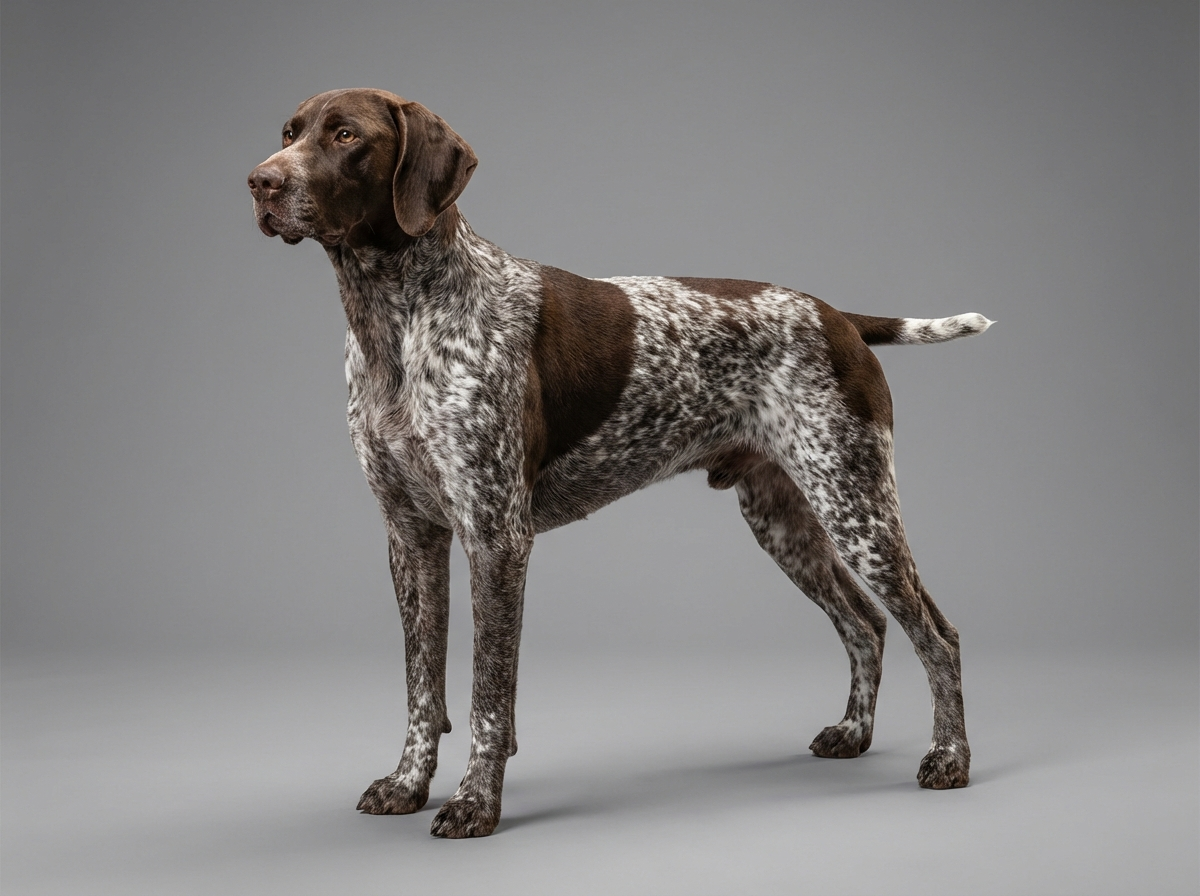
Health
How is early liver disease usually found in a GSP?
On a routine or pre-anaesthetic blood panel in a dog that looks completely well. The liver's spare capacity hides damage for a long time.

Quick answer
How is early liver disease usually found in a GSP?
On a routine or pre-anaesthetic blood panel in a dog that looks completely well. The liver's spare capacity hides damage for a long time.
The commonest way this gets diagnosed is a blood test taken for something else entirely, in a dog that seemed perfectly well. That is the good version of this story.
Owners told after a pre-anaesthetic or senior blood panel that their dog's liver enzymes are up, and owners of a dog that has lost weight, gone off its food or become jaundiced without explanation.
This guide is not medical advice. If your dog shows pain, sudden behavior change, or worsening symptoms, consult a licensed veterinarian.
Some links may be affiliate links. We may earn a commission at no extra cost to you. We only suggest products we believe are helpful for dog owners.
Chronic active hepatitis is persistent inflammation within liver tissue that progressively replaces functioning liver with scar. Because the liver holds a large functional reserve, most dogs show nothing until a great deal of tissue is affected. It is usually picked up as unexplained enzyme elevations on a blood panel taken for another reason.
Not a documented condition of the German Shorthaired Pointer, whose recognised problems are joint, eye, thyroid, bleeding, cardiac, digestive and neoplastic rather than hepatic. Chronic hepatitis occurs across dogs generally and is concentrated in a handful of other breeds. A GSP can develop it, but it should not be an owner's first expectation.
There is no inherited liver disease recorded for the German Shorthaired Pointer, and the honest position is that this condition is not a breed feature. Where the breed's genetics do matter is in how the condition gets investigated. Von Willebrand's disease sits on the breed's documented health list, and impaired clotting substantially raises the risk of a liver biopsy, which is the procedure that determines treatment. Hypothyroidism, also documented in the breed, can produce its own mild enzyme changes and is one of the things a vet will exclude along the way.
The relevant environmental factors are exposures rather than lifestyle. A full history of every medication, supplement and remedy the dog has received matters, since some are hepatotoxic and stopping them is sometimes the whole treatment. Tick-borne infection is a consideration for dogs that work rough cover. Access to unusual water sources, discarded chemicals or spoiled food while hunting is worth mentioning too, since a dog ranging widely encounters far more than one walked on a lead.
Book a follow-up for any unexplained liver enzyme elevation rather than leaving it at one abnormal result, and ask whether a function test such as bile acids should be added. Book promptly for unexplained weight loss, a lasting drop in appetite, or intermittent vomiting over weeks. Go the same day, treating it as urgent, for yellowing of the gums or eyes, a rapidly swelling abdomen, black tarry stools, persistent vomiting, or any disorientation, head-pressing, circling or seizure activity, particularly after a meal. Those neurological signs mean the liver is no longer clearing toxins from the blood and the dog needs immediate care.
See all German Shorthaired Pointer health problems, which breeds are prone to chronic active hepatitis, or the full German Shorthaired Pointer breed guide for temperament, exercise needs and ownership costs.
Expect the investigation itself to take four to eight weeks, allowing for repeat bloods, imaging and, if indicated, a biopsy with laboratory analysis. Once treatment starts, enzyme improvement is usually assessed at one to three month intervals. Copper-associated disease caught early can improve substantially over six to twelve months; established scarring does not reverse and the aim becomes stabilisation.
A specific diagnosis rather than a vague liver problem, a treatment matched to the actual cause, enzyme values that stabilise or fall, and a dog that holds its weight and its energy. For many owners success also means accepting that this becomes a monitored, lifelong condition rather than something that finishes.
A raised liver value is a starting point, not a diagnosis. Several of the numbers on a standard panel say different things, and knowing roughly what each one indicates makes the follow-up conversation far more useful.
Once a dog has persistently abnormal liver values with no obvious external cause, the honest position is that nobody knows what is happening inside the liver without looking at the tissue. Blood tests show that there is damage; imaging shows the size, shape and texture of the organ; only a biopsy shows what kind of process is causing it.
That distinction is not academic, because different causes need opposite treatments. Inflammation driven by copper accumulating in the liver is treated by removing copper. Inflammation driven by an overactive immune response is treated by suppressing the immune system. Give the wrong one and you can make the dog worse. A biopsy also quantifies how much scarring has already occurred, which is the single best guide to prognosis.
For a German Shorthaired Pointer there is a specific practical wrinkle. Von Willebrand's disease is documented in the breed, and a liver biopsy in a dog with impaired clotting is a considerably higher-risk procedure. Anyone facing this decision should make sure their dog's clotting status has been established before the biopsy is scheduled, not discovered afterwards. It is a question worth raising yourself if nobody has raised it with you.

Juniper was five and booked for a dental. The pre-anaesthetic blood panel came back with liver enzymes well above range, in a dog who was hunting, eating and behaving entirely normally. The dental was postponed. A repeat panel a month later showed the same picture. Bile acids were mildly abnormal, and ultrasound showed a liver of irregular texture. Because her breed carries a documented bleeding disorder, her vet ran a clotting screen before scheduling anything invasive, which came back normal. The biopsy showed inflammation with copper accumulation and only early scarring. She went onto a copper-restricted prescription diet and treatment to remove stored copper, with bloods every three months. Her enzymes were near normal within eight months. She had the dental the following year, on a liver that was in much better shape than when it was first cancelled.
Key takeaway: The disease was found by a blood test taken for a tooth, in a dog with no symptoms, and that timing is why the outcome was good. The postponed dental was an inconvenience; the panel that caused it probably added years.
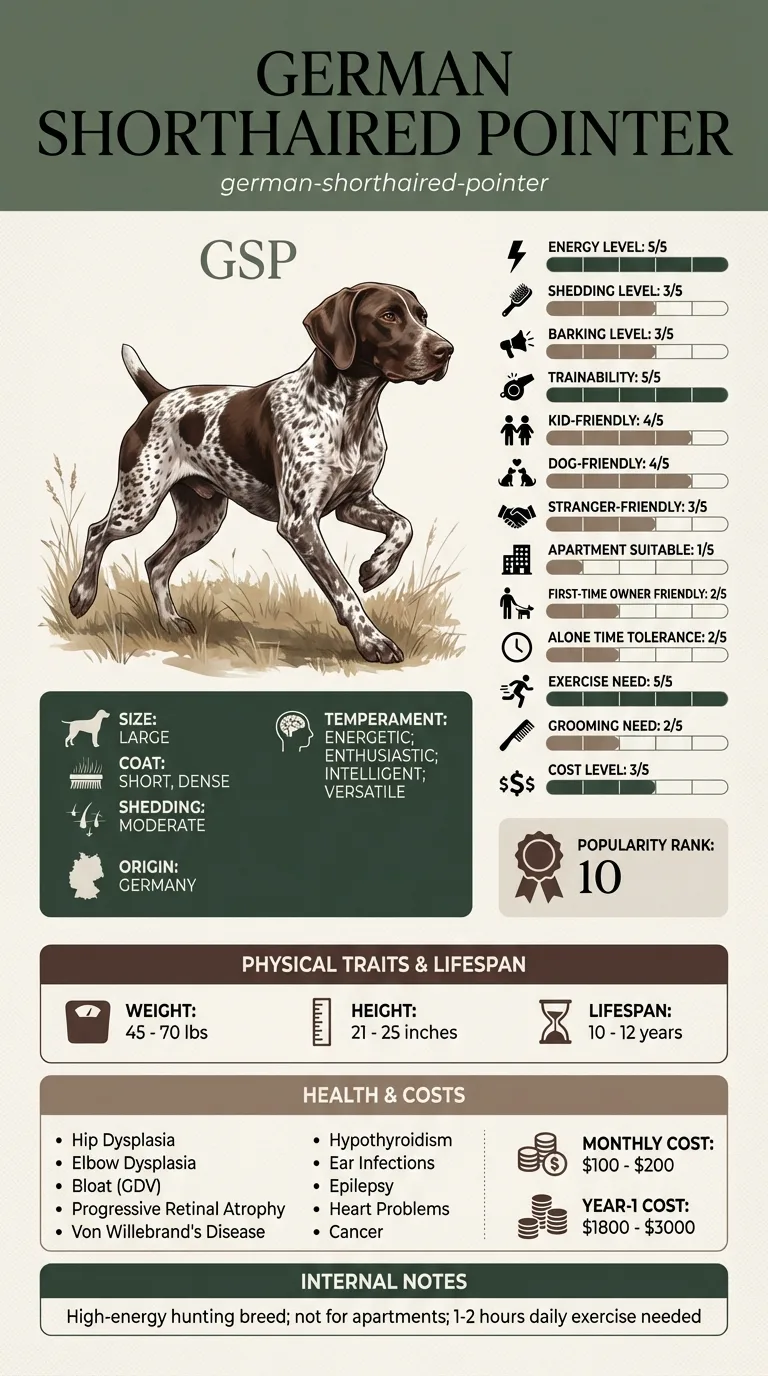
Liver disease does not appear on the breed's documented health list, which covers joint dysplasia, bloat, eye disease, a bleeding disorder, thyroid disease, ear infections, epilepsy, heart problems and cancer. Chronic hepatitis is recognised in several other breeds; a GSP with it is unlucky rather than typical.
It might be nothing and it might be early disease, which is exactly why it needs following up rather than ignoring. Your vet will usually repeat the panel after a few weeks and add a function test. A single abnormal number in a well dog is a reason to look again, not to panic.
Yellowing of the gums, eyes or ear flaps, a swelling abdomen, marked weight loss, persistent vomiting, and confusion, circling or seizures after meals. That last group reflects toxins the liver can no longer clear reaching the brain, and it is a serious finding.
Diet is a genuine part of treatment, not a substitute for it. Depending on the diagnosis a vet may prescribe a diet restricted in copper, or one formulated to reduce the load on a struggling liver. Choosing a diet without a diagnosis is guessing, and copper restriction is wrong for some causes.
Some causes are genuinely reversible if caught early, particularly copper accumulation, which can be treated and the liver largely recovers. Where significant scarring has developed, the aim shifts to halting progression and supporting function, which can still mean years of good life.
Typically repeat bloods every few months once a diagnosis is established, more often at the start while treatment is adjusted. Expect this to become a permanent part of the dog's year rather than a course that finishes.
On a routine or pre-anaesthetic blood panel in a dog that looks completely well. The liver's spare capacity hides damage for a long time.
Jaundice, seen as yellowing in the gums, the whites of the eyes or the ear flaps, especially with vomiting or confusion. That needs same-day veterinary attention.
Yes. Von Willebrand's disease is documented in this breed, and clotting status should be established before any biopsy is scheduled.
Diagnosis with imaging and biopsy is a significant one-off cost. After that it becomes recurring: prescription diet, medication and blood monitoring several times a year.
A one-page prep sheet for this condition: the signs, the questions to ask, what to get priced. Unlocks here.
You get: Vet visit prep sheet
No spam. One-click unsubscribe. See our privacy policy.
Preview page 1 before you decide.