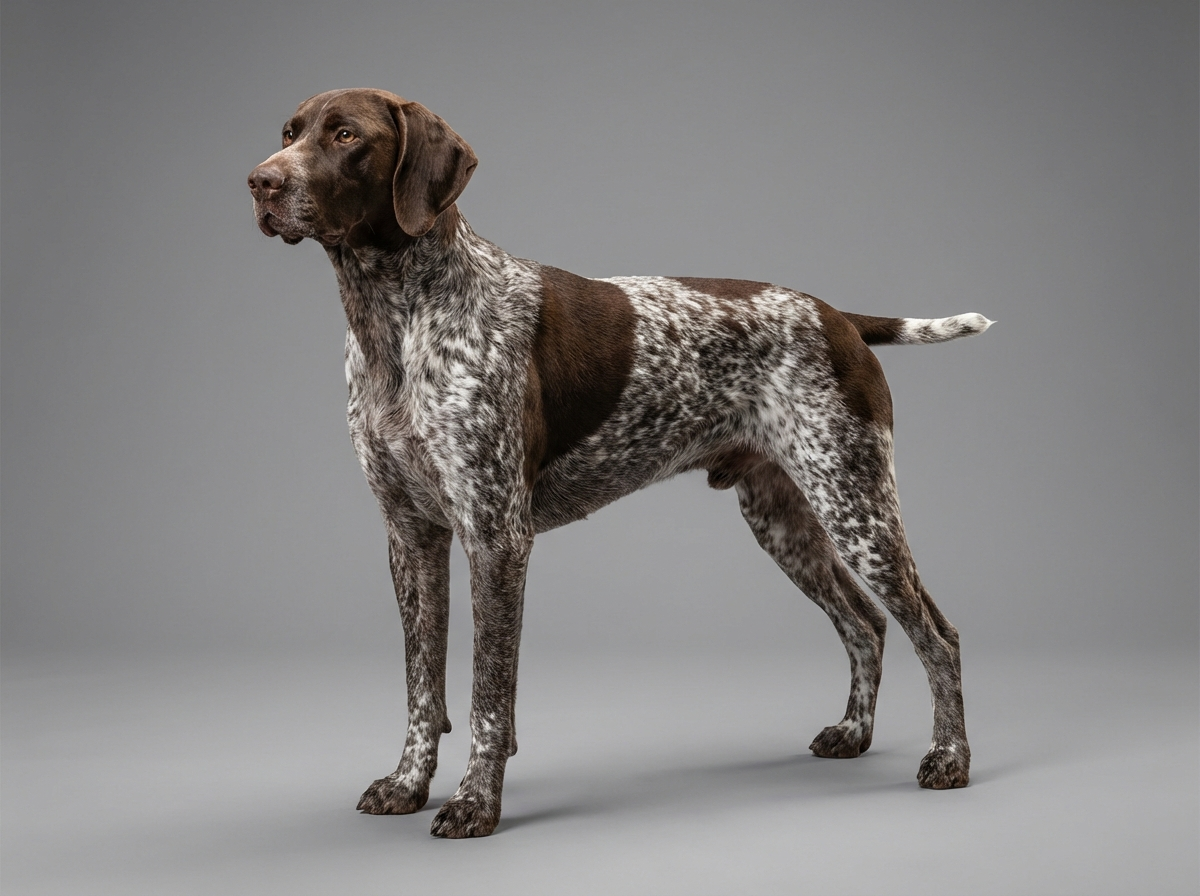
Costs
German Shorthaired Pointer cost in Charlotte
About $105–$210/month, $1,550–$2,650 for year one — below average, in a fast-growing city where genuine open running space is shrinking each year.

See German Shorthaired Pointer price across all cities →
Quick answer
German Shorthaired Pointer cost in Charlotte
About $105–$210/month, $1,550–$2,650 for year one — below average, in a fast-growing city where genuine open running space is shrinking each year.
A German Shorthaired Pointer in Charlotte costs about $105–$210 a month, with the first year around $1,550–$2,650 — below the national average, in a city where rapid new development is steadily converting the kind of open land this breed's real exercise needs depend on.
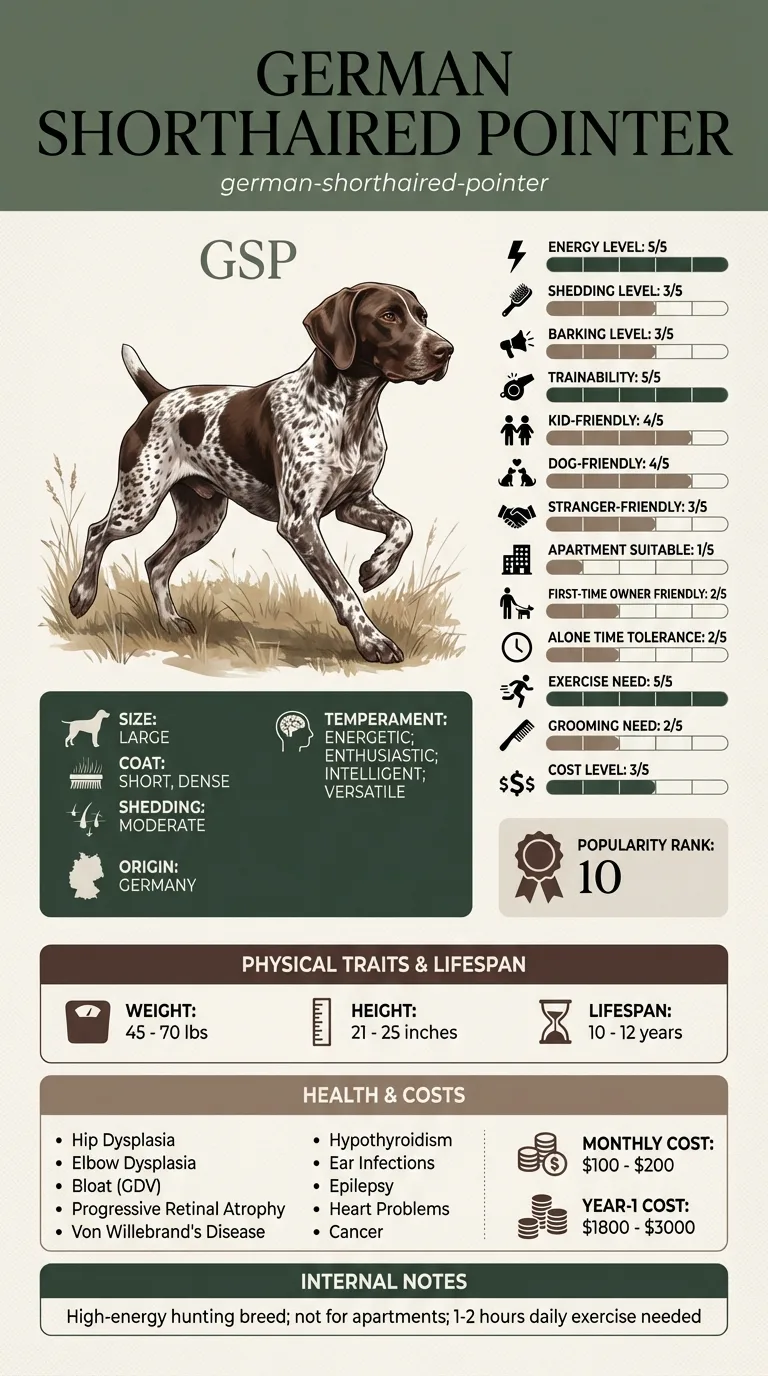
Bloat is a sudden emergency risk given this breed's deep chest — no warning, immediate surgery needed. Hip and elbow dysplasia are the separate, ongoing joint risks worth budgeting real, recurring vet attention for.
These figures reflect Charlotte's below-national-average, fast-growing market, with this breed's genuinely substantial food needs factored in against the metro's shifting open-space landscape.
Estimate · source: estimation · confidence: medium · updated 2026-10-06 · not a quote
| Item | Cost range |
|---|---|
Field or exercise gear A genuinely worthwhile investment given this breed's documented high exercise needs and working heritage. | $50 - $150 |
One-time setup (initial vet visit, spay/neuter, gear) Covers the first exam, vaccinations, spay/neuter if needed, and gear sized for this breed's large adult weight — priced at Charlotte's below-average rates. | $335 - $570 |
| Item | Cost range |
|---|---|
Food Below the national average for a large, highly active breed, consistent with Charlotte's generally lower price level. | $55 - $88 |
Heartworm and flea/tick prevention Close to year-round given Charlotte's long warm season. | $11 - $19 |
Each range starts from a national baseline for this breed's size class and is then adjusted for local cost of living and veterinary pricing. The baselines, and the source each one came from, are listed on our sources page (dataset 2026.09). Two inputs, the purchase price and the emergency reserve, have no published national figure we could verify, so we leave them to you rather than invent them.
These are planning estimates, not quotes. Your own numbers will move with the individual dog, your vet and your insurer. Build a budget with your own figures.
For a German Shorthaired Pointer in Charlotte, insurance is worth taking seriously given the breed's documented bloat and joint risk, independent of the metro's genuinely favorable general cost of living.
This breed's well-documented bloat and joint risk makes insurance worth locking in early — a policy bought before any diagnosis covers costs a self-funded emergency fund alone often can't stretch to match.
Skipping coverage is a reasonable call for an owner who's already set aside a meaningful cash reserve and is comfortable managing a serious diagnosis without monthly premiums.
Charlotte's below-average costs help, but building a routine around protected parks and greenways matters more here than relying on informal open space that may not last.
Charlotte's rapid banking-industry-driven population growth has meant steady, real conversion of former farmland and wooded lots into new subdivisions and commercial development across the metro's expanding edges. For a breed with this documented high exercise need, that's a real, ongoing consideration: the informal open space that might have worked for a quick off-leash run a few years ago is genuinely more likely to be developed now, making Charlotte's protected greenways and established parks, land that isn't going anywhere, worth prioritizing over an assumed nearby field.
Charlotte's general cost of living runs modestly below the national average, a real, welcome offset against this breed's genuinely substantial food needs.
Charlotte's long warm season also keeps parasite prevention close to year-round, and this breed's real heat sensitivity during vigorous exercise means outdoor time is still best scheduled around the cooler morning or evening hours here.

A Charlotte German Shorthaired Pointer owner had spent two years letting their dog run in an undeveloped lot behind their neighborhood, only to arrive one weekend to find survey stakes and construction fencing where the open space used to be. The scramble to find a real replacement led them to a county greenway a bit further away, protected land that turned out to offer better, more reliable terrain than the informal lot ever had. The family now treats permanently protected land as the only real long-term option.
Key takeaway: In Charlotte specifically, this breed's real exercise needs are better served by genuinely protected parkland than by informal open space the city's rapid growth can claim at any time.
About $105–$210, below the national average, consistent with Charlotte's generally lower cost of living.
In a real, measurable way, yes — the metro's rapid growth has steadily converted former farmland and wooded lots into new development, making established parks and greenways more reliable than an informal nearby field.
Roughly $1,550–$2,650, including the initial vet exam, spay/neuter if needed, and gear on top of ongoing monthly costs.
Genuinely affordable — Charlotte's general cost of living runs modestly below the national average, a real, welcome offset given how much food and exercise this breed genuinely needs.
Worth pricing out given the breed's documented bloat and joint risk, bought while the dog is young and before anything is on record.
Around $700 covers a typical significant vet visit in this market, reflecting Charlotte's below-average general pricing.
About $105–$210/month, $1,550–$2,650 for year one — below average, in a fast-growing city where genuine open running space is shrinking each year.
This guide is not medical advice. If your dog shows pain, sudden behavior change, or worsening symptoms, consult a licensed veterinarian.
Some links may be affiliate links. We may earn a commission at no extra cost to you. We only suggest products we believe are helpful for dog owners.
We research and check what we publish, but we do not warrant that any figure, date, price, or statement is accurate, complete, or current, and we accept no liability for any loss, cost, injury, or other harm arising from the use of this site. Use it as one reference among several. You remain responsible for your own decisions and for your dog's care - confirm anything that matters with a licensed veterinarian or another qualified professional before you act on it. Full disclaimer.
One sheet with every line item, the emergency fund and when insurance pays off - unlocks on this page.
You get: 12-month budget sheet
No spam. One-click unsubscribe. See our privacy policy.
See a sample page before you decide.