Health
What is genetic load in simple terms?
The overall amount of disease-linked genetic variation carried within a breed's population, built up over many generations.

Quick answer
What is genetic load in simple terms?
The overall amount of disease-linked genetic variation carried within a breed's population, built up over many generations.
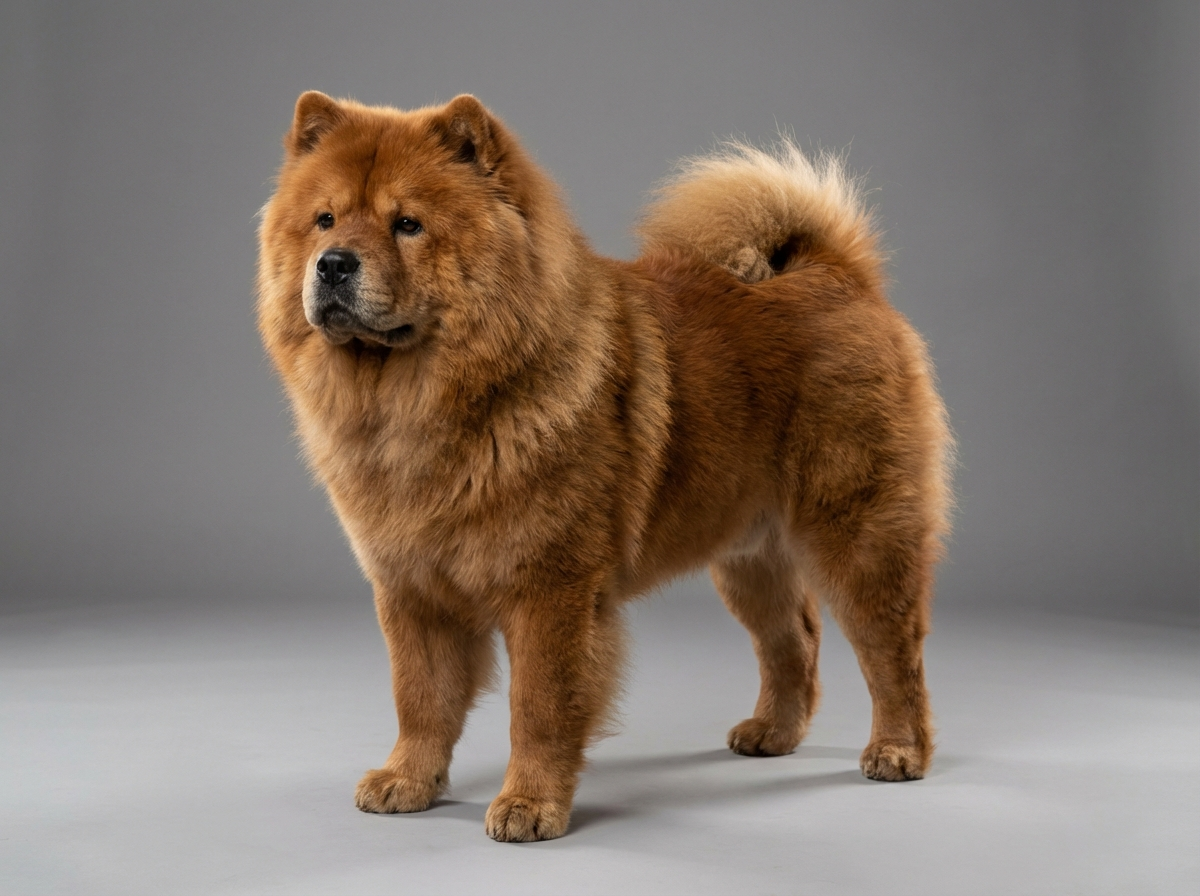
Ask why a Chow Chow seems to show up on so many different health lists, from hip dysplasia to cataracts to thyroid disease to stomach cancer, and genetic load is the closest thing to a unifying answer.
Prospective owners comparing breeds by health risk, current owners trying to understand why their dog seems to accumulate unrelated diagnoses over the years, and breeders trying to reduce risk in future litters.
This guide is not medical advice. If your dog shows pain, sudden behavior change, or worsening symptoms, consult a licensed veterinarian.
Some links may be affiliate links. We may earn a commission at no extra cost to you. We only suggest products we believe are helpful for dog owners.
Genetic load describes the overall concentration of disease-associated variants carried within a breed's population rather than any single illness. Genetic diversity research has placed the Chow Chow among the breeds with a notably high concentration of such variants, which helps explain the sheer breadth of documented conditions attached to this breed rather than any one dominant disease.
This is a population-level pattern documented in genetic diversity studies of purebred dogs generally, with the Chow Chow specifically noted as carrying a higher concentration of such variants than many other studied breeds.
The breed's long history as a distinct, closed-registry population, combined with selection for specific traits such as its dense double coat and broad head, has allowed disease-associated variants to persist and spread across generations without the diluting effect that crossbreeding or a larger founder population would provide.
Modern breeding practices influence how much of this load is passed forward. Breeders who use genetic panel testing, hip and eye screening, and a wider pool of breeding stock rather than a small number of popular sires can gradually reduce the concentration of known harmful variants in future litters.
Bring in a vet for routine annual screening even when your dog seems healthy, and treat any new symptom in a documented category, such as sudden lameness, cloudy eyes, or unexplained weight change, as worth investigating rather than assuming it is unrelated to anything genetic.
See all Chow Chow health problems, which breeds are prone to genetic load, or the full Chow Chow breed guide for temperament, exercise needs and ownership costs.
This is not a condition with a treatment timeline. Genetic load is a lifelong background factor, and the useful response is ongoing proactive screening rather than a single intervention with a defined endpoint.
Success looks like catching whichever documented condition eventually appears early, through routine screening, rather than expecting to prevent all of them outright.
None of these factors is unique to the Chow Chow, but the combination has compounded over a long breed history. The result is not one dominant disease but a wide spread of documented conditions across nearly every body system.
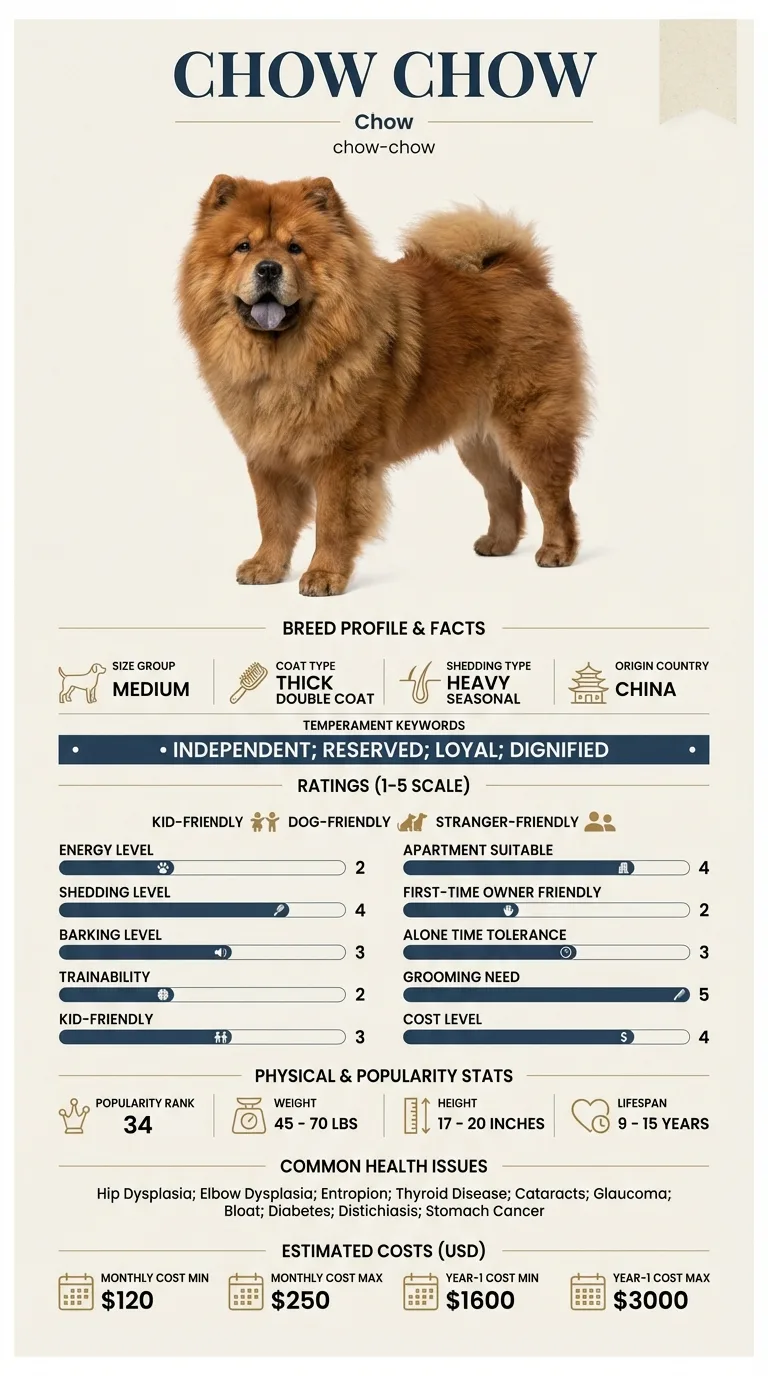
Genetic load is not a reason to expect a specific disease. It is a reason to expect that, statistically, this breed is more likely than many others to eventually show up with something from a long list, including documented hip dysplasia, elbow dysplasia, entropion, thyroid disease, cataracts, glaucoma, bloat, diabetes, distichiasis and stomach cancer.
For a current owner, the practical response is proactive baseline screening rather than waiting for symptoms: routine bloodwork that would catch thyroid disease or early diabetes, and eye exams that catch cataracts or glaucoma before they become emergencies.
For a prospective buyer or breeder, it means asking specifically about the health testing performed on a litter's parents, since genetic panel and hip and eye screening meaningfully reduce, though do not eliminate, the odds of passing on the more serious end of this list.

If you think your Chow has genetic load, the plan is three steps: write down what you have seen and when it started, book a veterinary appointment rather than waiting for the next flare, and take video of the behaviour or symptom before you go — the thing you are worried about rarely happens in the consulting room. Screening in the parents covers hip dysplasia, elbow dysplasia, entropion.
What the vet visit should produce is a diagnosis and a written plan, not just reassurance: what is being ruled out, what the monitoring interval is, and which signs mean you come back sooner. Ask what the treatment costs across a year rather than per visit, because that is the number that decides whether you are managing this condition or reacting to it.
Between appointments, keep a short log — dates, what you saw, what changed. It is the single most useful thing an owner brings to a follow-up, and for genetic load it is often what separates a clear pattern from a guess.
Ingrid had bred Chow Chows for over a decade using a small, trusted group of sires before a genetic panel test on a new breeding female came back showing several disease-associated variants shared with dogs already in her lines. She had not previously used this kind of testing routinely. Rather than retire the female outright, Ingrid worked with a geneticist to pair her with a male tested clear for the same variants, and began testing every dog in her program going forward. The next litter's genetic panel results showed a meaningfully lower combined load than previous litters from her kennel. It did not eliminate every risk, since genetic load is a population-wide pattern built over generations, but it was a concrete, measurable step in the right direction.
Key takeaway: Genetic load accumulated over many generations cannot be fixed in one litter, but informed pairing decisions using modern testing can meaningfully bend the trend for future generations.
It refers to the overall concentration of disease-associated genetic variants carried within a breed's population, accumulated through factors like a closed registry, a small founder population and popular sire effects over many generations.
No. It describes a population-level pattern, not a guarantee for any individual dog. Many Chow Chows live full lives without major health problems, though the odds of encountering something from the documented list are statistically higher than in a more genetically diverse breed.
To some extent. Genetic panel testing, hip and eye screening of breeding stock, and avoiding overuse of a small number of popular sires can gradually reduce the concentration of known harmful variants in future generations.
A high genetic load spreads risk across many unrelated body systems rather than concentrating it in one condition, which is why the breed's list spans joints, eyes, thyroid and stomach rather than a single dominant disease.
Asking the breeder what genetic and health screening was done on the parents is a reasonable and increasingly standard question, and reputable breeders should be able to answer it directly.
Several purebred dog breeds show elevated genetic load from similar historical factors, but the Chow Chow has been specifically flagged in genetic diversity research as sitting toward the higher end among studied breeds.
Annual bloodwork covering thyroid function and blood sugar, along with a periodic eye exam, catches several of the breed's most commonly documented conditions early, when they are far easier to manage.
The overall amount of disease-linked genetic variation carried within a breed's population, built up over many generations.
It raises the statistical odds of developing one of several documented conditions, which can affect lifespan indirectly, but is not itself a diagnosis.
Annual bloodwork and an eye exam commonly run one to a few hundred dollars combined, far less than treating an advanced, undetected condition.
Yes, asking what screening was performed on the parents is a reasonable, increasingly standard question for a breed with documented genetic load.
For an individual dog already born, the useful response is proactive screening and early management, not prevention, since the load itself cannot be changed after the fact.
A one-page prep sheet for this condition: the signs, the questions to ask, what to get priced. Unlocks here.
You get: Vet visit prep sheet
No spam. One-click unsubscribe. See our privacy policy.
Preview page 1 before you decide.