Health
What are quick tips for managing Labradoodle genetic load?
Choose a reputable breeder, schedule regular vet check-ups, and maintain a healthy diet for your Labradoodle.

Quick answer
What are quick tips for managing Labradoodle genetic load?
Choose a reputable breeder, schedule regular vet check-ups, and maintain a healthy diet for your Labradoodle.
The Labradoodle genetic load refers to the presence of harmful genetic variants that can affect your dog’s health.
Many Labradoodle owners, especially first-time dog parents, may struggle with understanding genetic load. Those who are concerned about their dog’s health and well-being will find this information particularly relevant.
This guide is not medical advice. If your dog shows pain, sudden behavior change, or worsening symptoms, consult a licensed veterinarian.
Some links may be affiliate links. We may earn a commission at no extra cost to you. We only suggest products we believe are helpful for dog owners.
We research and check what we publish, but we do not warrant that any figure, date, price, or statement is accurate, complete, or current, and we accept no liability for any loss, cost, injury, or other harm arising from the use of this site. Use it as one reference among several. You remain responsible for your own decisions and for your dog's care - confirm anything that matters with a licensed veterinarian or another qualified professional before you act on it. Full disclaimer.
Check this first
Call your vet immediately if you notice red-flag symptoms. These include sudden changes in behavior, severe lethargy, vomiting, difficulty breathing, or seizures. These could indicate serious health conditions linked to genetic issues that require prompt attention.
On the other hand, if your Labradoodle is experiencing mild symptoms like occasional digestive upset, mild lethargy, or slight changes in appetite, you may not need to panic. These can often be monitored at home. Keep a close eye on their behavior and health, and develop a plan with your vet to address any ongoing concerns.
Being aware of the signs can help you distinguish between a true emergency and a situation that requires careful observation. Regular check-ups with your vet can also help catch any potential problems early. This proactive approach is essential for managing your Labradoodle's health effectively.
If any of these apply, call your vet or an emergency clinic now. The rest of this page is for the cases that are not an emergency.
Labradoodle genetic load refers to the presence of harmful genetic variants that can affect the dog's health and behavior. This can manifest in various ways, such as increased susceptibility to certain health issues, anxiety, or behavioral problems. Owners may notice their Labradoodle struggling with these challenges, which can be frustrating and concerning.
Labradoodles can experience genetic load due to their mixed ancestry, which may include health issues from both the Labrador Retriever and the Poodle. While not every Labradoodle will face severe problems, the likelihood of encountering genetic-related issues is relatively common in this breed.
Labradoodles can inherit genetic traits from both their Labrador and Poodle parents. This breed mix can lead to a higher likelihood of genetic conditions, such as hip dysplasia or allergies. These inherited traits contribute to the overall genetic load, making some Labradoodles more prone to health issues.
Environmental factors like diet, exercise, and living conditions can also influence a Labradoodle's health. For example, poor nutrition or lack of physical activity can exacerbate any genetic predispositions. Stressful environments can heighten anxiety and other behavioral issues, complicating the genetic load.
If you notice any sudden changes in your Labradoodle's health or behavior, such as lethargy, loss of appetite, or unusual reactions, contact your veterinarian immediately. Regular check-ups can also help catch potential genetic issues early.
Avoiding these common mistakes can help you manage your Labradoodle's genetic load effectively.
Start here: Labradoodle Most Common Genetic Disorders: Screening
See all Labradoodle health problems, which breeds are prone to genetic load, or the full Labradoodle breed guide for temperament, exercise needs and ownership costs.
You can expect to see improvements in your Labradoodle's behavior within 4 to 6 weeks of starting a consistent care under your vet's plan program.
Success means your Labradoodle shows fewer behavior issues related to genetic load and becomes more manageable in various situations.
Emily adopted her Labradoodle, Max, thinking he would be the perfect companion for her active lifestyle. However, she quickly noticed that Max had some unexpected challenges, including anxiety and occasional aggression toward other dogs. After researching, Emily learned about Labradoodle genetic load and its potential impact on behavior. Determined to help Max, she enrolled him in a specialized training course focused on genetic load issues. With consistent training and plenty of patience, Max gradually became more relaxed during walks and more sociable with other pets. Emily was thrilled to see her once anxious pup thriving in the park, making new furry friends and enjoying life.
Key takeaway: Understanding and addressing Labradoodle genetic load can significantly improve behavior, leading to a happier and more balanced dog.
Labradoodle genetic load refers to the presence of harmful genetic variants that can affect the dog's health and behavior. These variants may lead to various health issues, making it essential for owners to be aware of their Labradoodle's genetic background.
Signs of genetic load in Labradoodles can include increased health issues such as hip dysplasia, allergies, and joint problems. If your dog is frequently experiencing health complications or shows unusual behavior, it's wise to consult a veterinarian for a thorough evaluation.
To reduce the impact of genetic load, ensure you choose a reputable breeder who screens for health issues. Regular veterinary check-ups and a balanced diet can also help manage and mitigate health concerns.
Common health issues linked to Labradoodle genetic load include hip dysplasia, elbow dysplasia, and allergies. Being aware of these issues can help you monitor your dog's health more effectively.
Training can improve your Labradoodle's behavior, but it may not directly address genetic load. However, implementing consistent training strategies can help manage behaviors that arise from anxiety or stress due to genetic predispositions.
Signs may include lethargy, difficulty in movement, excessive scratching, or unusual behavioral changes. If you notice these signs, consult your vet for a thorough evaluation.
Yes, a higher genetic load can lead to behavioral issues in Labradoodles, such as anxiety or aggression. Training and socialization can help, but it's crucial to address any underlying health concerns first with your vet.
It's best to start monitoring for genetic issues in Labradoodles from a young age, typically around six months. Regular vet check-ups can help catch potential problems early and ensure a healthier life for your dog.
While you can't change a dog's genetic background, responsible breeding practices can reduce genetic load. Consider working with breeders who prioritize health testing and transparency about their breeding practices.
Choose a reputable breeder, schedule regular vet check-ups, and maintain a healthy diet for your Labradoodle.
Yes, genetic load can lead to behavioral issues, but proper training and socialization can help mitigate these effects.
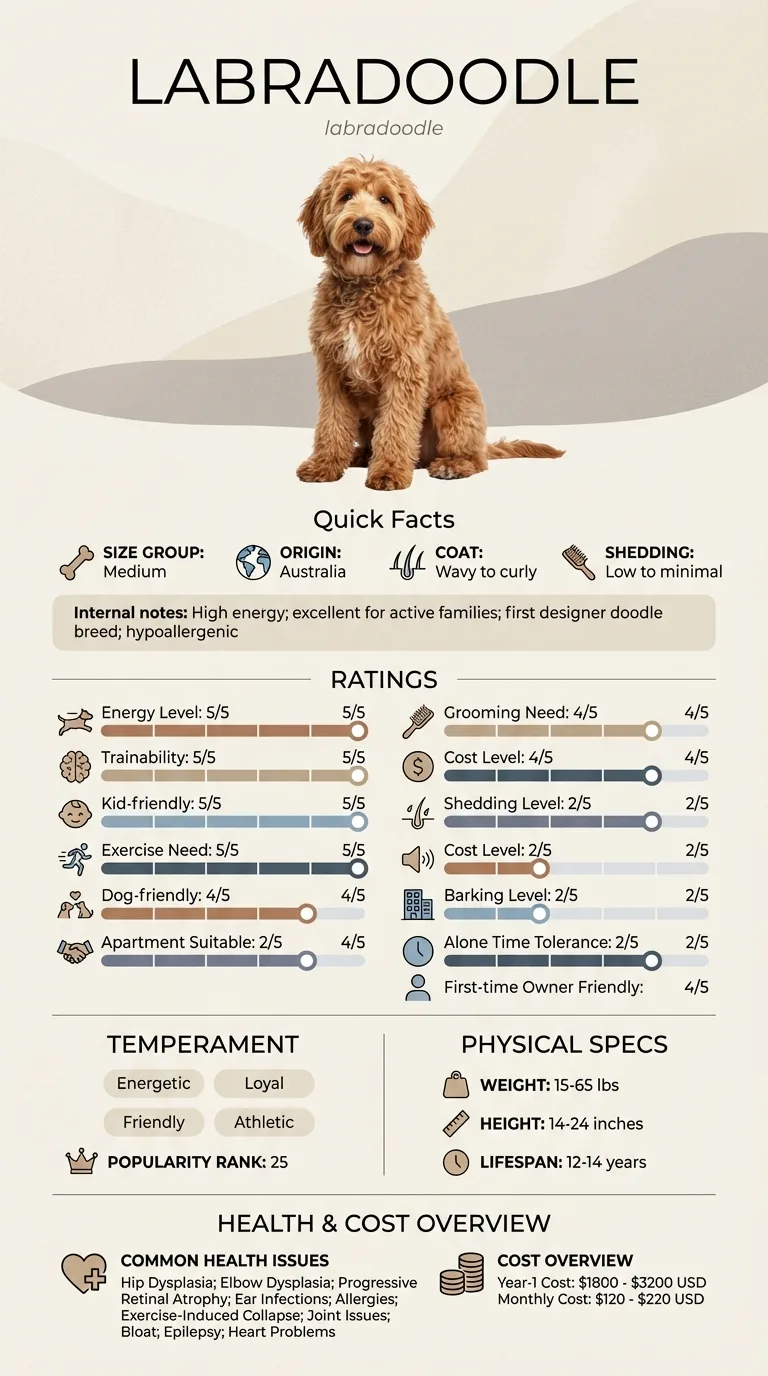
Monthly health care costs for a Labradoodle range from $120 to $220, depending on their needs and any health issues.
Common health issues include hip dysplasia, allergies, and joint problems, which can be exacerbated by genetic load.
Focus on positive reinforcement techniques and consider consulting a professional trainer for behavioral issues linked to anxiety.
A one-page prep sheet for this condition: the signs, the questions to ask, what to get priced. Unlocks here.
You get: Vet visit prep sheet
No spam. One-click unsubscribe. See our privacy policy.
Preview page 1 before you decide.