Behavior
What are quick tips for managing Great Dane genetic load?
Focus on regular vet check-ups and a balanced diet. Consistent exercise and mental stimulation are also key.

Quick answer
What are quick tips for managing Great Dane genetic load?
Focus on regular vet check-ups and a balanced diet. Consistent exercise and mental stimulation are also key.
Great Dane genetic load refers to the concentration of harmful genetic variants in this breed. Understanding it is vital for their long-term health and happiness.
New and experienced Great Dane owners alike may face challenges with genetic load. Those unfamiliar with the breed's specific health needs often find themselves overwhelmed by potential health issues.
This guide is not medical advice. If your dog shows pain, sudden behavior change, or worsening symptoms, consult a licensed veterinarian.
Some links may be affiliate links. We may earn a commission at no extra cost to you. We only suggest products we believe are helpful for dog owners.
We research and check what we publish, but we do not warrant that any figure, date, price, or statement is accurate, complete, or current, and we accept no liability for any loss, cost, injury, or other harm arising from the use of this site. Use it as one reference among several. You remain responsible for your own decisions and for your dog's care - confirm anything that matters with a licensed veterinarian or another qualified professional before you act on it. Full disclaimer.
Check this first
Understanding when your Great Dane's genetic load becomes an emergency is crucial for their health. Some signs indicate that immediate veterinary attention is necessary, while others may just require monitoring at home. Knowing the difference can save your dog's life or help you manage their well-being more effectively.
If any of these apply, call your vet or an emergency clinic now. The rest of this page is for the cases that are not an emergency.
Great Dane genetic load refers to the accumulation of harmful genetic variants within this breed. These genetic issues can lead to serious health problems, including heart disease, bloat, and various cancers. Day-to-day, this means owners may notice their Great Dane suffering from common ailments or showing signs of discomfort, which can be distressing for both the dog and the owner.
Genetic load is quite common in Great Danes due to their breeding history. Many Great Danes exhibit signs of genetic health issues, making it essential for potential owners to be aware of these risks. Regular veterinary check-ups and responsible breeding practices can help mitigate some of these concerns.
Great Danes have a high genetic load due to their size and breeding history. This breed is prone to a variety of inherited health issues, such as bloat, heart disease, and hip dysplasia. These problems arise from selective breeding practices that aimed to enhance desired traits but inadvertently increased the risk of genetic disorders.
Environmental factors can also contribute to genetic load issues. Poor diet, lack of exercise, and inadequate healthcare can exacerbate underlying genetic conditions. Stressful living situations, like cramped spaces or inconsistent routines, may further impact their health and behavior.
If your Great Dane shows symptoms of health problems, such as sudden weight loss, difficulty breathing, or recurring digestive issues, contact your vet immediately. Regular check-ups are also essential to monitor their health and catch any genetic issues early.
Here are some common mistakes that can worsen the genetic load issues in Great Danes, along with safer alternatives.
Start here: Great Dane Most Common Genetic Disorders: What to Screen For
See all Great Dane health problems, which breeds are prone to genetic load, or the full Great Dane breed guide for temperament, exercise needs and ownership costs.
You can expect to see improvements in your Great Dane's behavior within 4 to 6 months of consistent care and follow-up with your vet.
Success means your Great Dane exhibits fewer genetic-related health issues, has improved behavior, and enjoys a better quality of life.
Watch for these urgent signs in your Great Dane that require immediate veterinary care: - Sudden lethargy or weakness - Difficulty breathing or persistent coughing - Signs of severe pain, such as whining or not wanting to move - Vomiting or diarrhea that lasts more than a day - Swollen abdomen, which may indicate bloat - Unexplained weight loss or appetite changes - Neurological signs like seizures or disorientation

In less severe situations, you can monitor your Great Dane at home. Here are some signs to keep an eye on: - Mild lethargy or slight changes in energy - Occasional coughing that doesn't worsen - Minor digestive issues like infrequent vomiting - Repeated but mild itching or skin irritations - Slight changes in appetite without significant weight loss - Behavioral changes that are not extreme

Sarah, a first-time Great Dane owner, adopted Duke, a gentle giant with a tendency for anxiety and some health issues linked to genetic load. Initially overwhelmed, she struggled with Duke's separation anxiety and frequent vet visits. After researching, she connected with a local trainer specializing in Great Danes and followed a structured training plan. Over several months, Duke learned to cope with being alone, and Sarah became more confident in managing his health needs. Together, they formed a strong bond based on trust and understanding.
Key takeaway: With the right support and training, managing a Great Dane's genetic load can lead to a happier, healthier life for both the dog and owner.
Great Danes can have a high genetic load due to selective breeding practices. This has led to a concentration of harmful genetic variants that may affect their health. It's important to understand that this can make them susceptible to various health issues.
Managing a Great Dane's genetic load involves regular veterinary check-ups and health screenings. Early detection of potential health issues can help in managing them effectively. Additionally, providing a balanced diet and appropriate exercise can promote overall health.
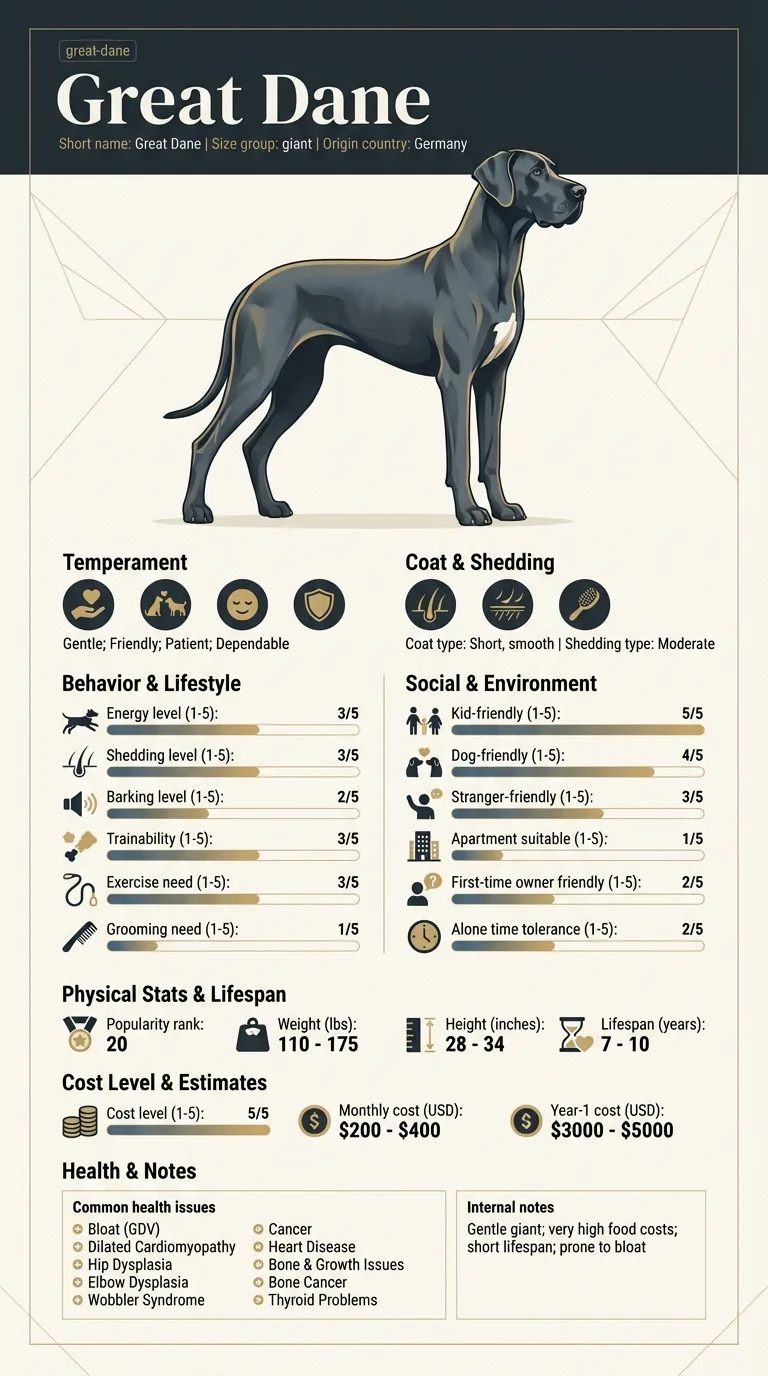
Common health issues include bloat, dilated cardiomyopathy, and hip dysplasia. These conditions are more prevalent due to the genetic load and can significantly impact your dog's quality of life. Regular vet visits and monitoring are crucial.
Training can help address behavioral issues that may arise from a dog's genetic predispositions. Consistent training, socialization, and positive reinforcement can improve your Great Dane's behavior and overall well-being.
Providing a healthy diet, regular exercise, and mental stimulation can help mitigate issues related to genetic load. Creating a stress-free environment and ensuring they have a routine can also contribute positively to their health.
Common signs of a high genetic load in Great Danes include frequent health issues like bloat, heart disease, and hip dysplasia. If your dog seems lethargic, has trouble breathing, or shows signs of pain, it's important to consult a vet. Genetic load can lead to serious conditions, so early detection is key.
While diet alone can't eliminate genetic load, a balanced diet can help support your Great Dane's overall health. Focus on high-quality food that meets their nutritional needs and consult your vet for tailored dietary advice. Proper nutrition can help mitigate some health issues linked to genetic predispositions.
If your Great Dane shows unusual symptoms like excessive panting, sudden weight loss, or joint pain, it’s time to see a vet. Regular check-ups are also important, especially for breeds like Great Danes that are prone to genetic conditions. Early intervention can make a significant difference in treatment options.
A high genetic load can negatively impact a Great Dane's lifespan, often leading to serious health issues that shorten their life. Most Great Danes have a lifespan of 7 to 10 years, but those with significant genetic load may face earlier health complications. Regular vet visits and a healthy lifestyle can help improve their quality of life.
Training methods focusing on positive reinforcement can be particularly effective for Great Danes with genetic issues. Tailored training can help manage anxiety or behavior problems linked to their health. Working with a professional trainer familiar with breed-specific challenges can also make a big difference.
Focus on regular vet check-ups and a balanced diet. Consistent exercise and mental stimulation are also key.
Expect to spend between $200 to $400 monthly for health care, food, and other needs.
Look for online training courses or local classes focusing on large breeds to address specific behaviors.
Feed smaller meals more frequently and avoid vigorous exercise right after eating to help prevent bloat.
A one-page prep sheet for this condition: the signs, the questions to ask, what to get priced. Unlocks here.
You get: Vet visit prep sheet
No spam. One-click unsubscribe. See our privacy policy.
See a sample page before you decide.
Early access list
The free prep sheet covers the same-day warning signs, a symptom log and the questions to ask. We are considering a fuller kit that adds a cost worksheet for the usual tests and treatments (US price ranges with their sources) and a plain-English guide to ways of covering the bill. It is not built yet; this list tells us whether it is worth building.
One email, no spam, unsubscribe anytime. Information only, not veterinary advice.