Health
What are quick tips for managing Maltese genetic load?
Focus on regular vet visits, maintain a healthy diet, and provide adequate exercise to manage Maltese genetic load effectively.

Quick answer
What are quick tips for managing Maltese genetic load?
Focus on regular vet visits, maintain a healthy diet, and provide adequate exercise to manage Maltese genetic load effectively.
Maltese genetic load refers to the accumulation of harmful genetic traits in this beloved breed.
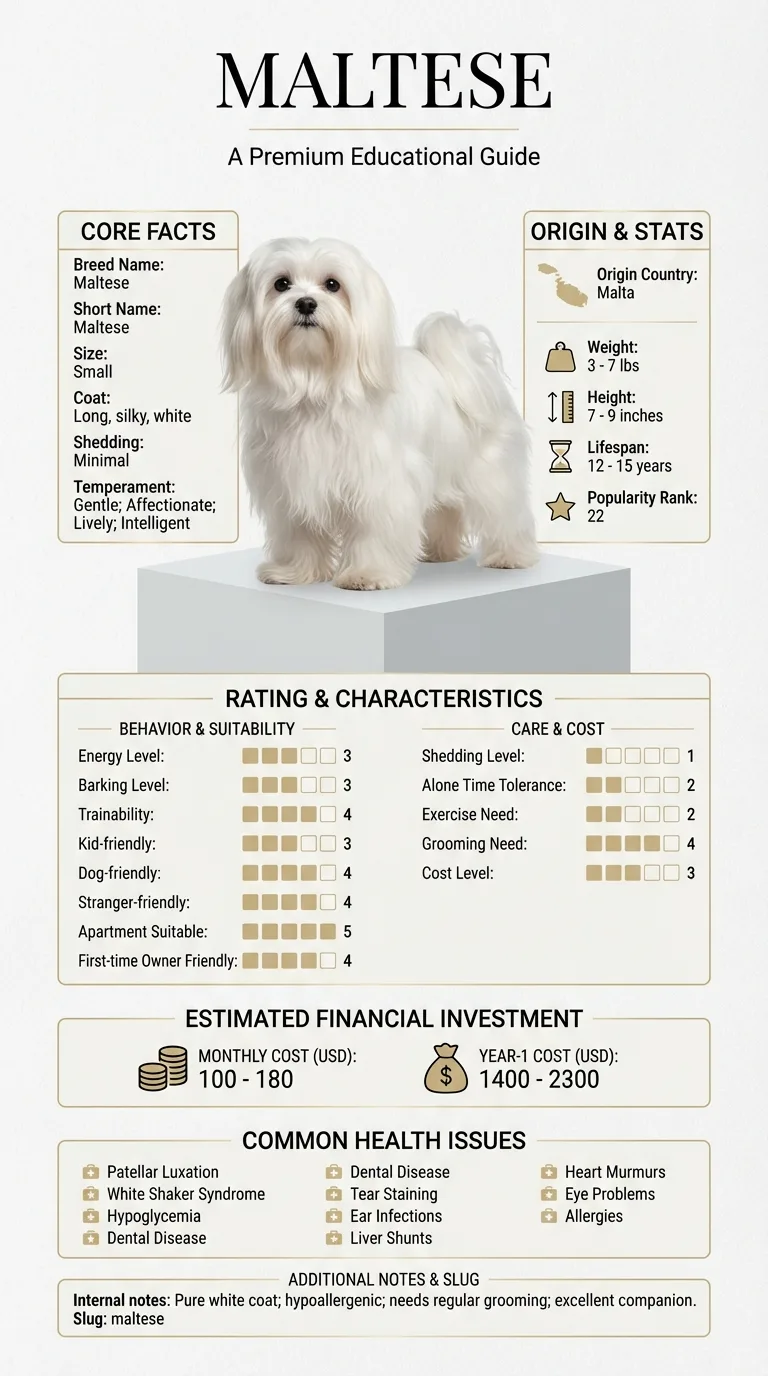
New Maltese owners and those unaware of their dog's genetic background often struggle with this issue. Those with a Maltese may notice health problems or unusual behaviors that stem from these genetic traits.
This guide is not medical advice. If your dog shows pain, sudden behavior change, or worsening symptoms, consult a licensed veterinarian.
Some links may be affiliate links. We may earn a commission at no extra cost to you. We only suggest products we believe are helpful for dog owners.
We research and check what we publish, but we do not warrant that any figure, date, price, or statement is accurate, complete, or current, and we accept no liability for any loss, cost, injury, or other harm arising from the use of this site. Use it as one reference among several. You remain responsible for your own decisions and for your dog's care - confirm anything that matters with a licensed veterinarian or another qualified professional before you act on it. Full disclaimer.
Check this first
Understanding when Maltese genetic load becomes an emergency can save your dog's life. If you notice any severe symptoms, it's crucial to call your vet immediately. Look out for signs like seizures, extreme lethargy, difficulty breathing, or persistent vomiting. These indicate serious health issues that need urgent attention.
On the other hand, if your Maltese shows mild symptoms such as occasional coughing, slight lethargy, or minor digestive upset, you can monitor them at home. Keep track of their behavior and symptoms for a few days. If they don't improve or worsen, contact your vet for advice. Always err on the side of caution if you're unsure about your dog's condition.
If any of these apply, call your vet or an emergency clinic now. The rest of this page is for the cases that are not an emergency.
Maltese genetic load refers to the presence of harmful genetic variants in this breed. These genetic issues can lead to health problems like patellar luxation, dental disease, and heart murmurs. Day-to-day, a Maltese with a high genetic load may show signs of discomfort or health decline, making care and monitoring essential.
Genetic load is a significant concern for Maltese, as they are known to have one of the highest concentrations of harmful genetic variants among dog breeds. This makes them susceptible to various health issues and ensures that owners remain vigilant about their pet's health.
The Maltese breed is known for a higher concentration of certain genetic variants. These genetic factors can lead to various health issues, making them prone to conditions like patellar luxation and dental disease. Additionally, inbreeding practices can exacerbate these genetic loads.
Environmental factors can also contribute to how these genetic issues manifest. Stressful living conditions, lack of proper nutrition, and inadequate exercise can worsen health problems. For example, a Maltese in a noisy, chaotic home may experience heightened anxiety, leading to behavioral issues.
If you notice any signs of health problems, like limping, excessive weight loss, or changes in appetite, consult your vet immediately. They can assess whether these issues are related to the genetic load and recommend appropriate treatment.
Addressing genetic load in Maltese dogs requires careful attention and proactive measures. Here are common mistakes owners make that can exacerbate the issue, along with safer alternatives.
Start here: Maltese Most Common Genetic Disorders: What to Screen For
See all Maltese health problems, which breeds are prone to genetic load, or the full Maltese breed guide for temperament, exercise needs and ownership costs.
Managing Maltese genetic load can take several months to see significant improvement. Consistent care and follow-up with your vet are essential.
Success means your Maltese exhibits fewer health problems associated with genetic load, enjoys a better quality of life, and responds positively to training.
Emily, a first-time dog owner, adopted Bella, a Maltese puppy. Shortly after bringing Bella home, Emily noticed that Bella frequently experienced health issues and anxiety, which made training difficult. After researching, she learned about Maltese genetic load and sought advice from her vet. With a tailored training routine, regular vet check-ups, and careful attention to Bella's diet, Emily saw gradual improvements over six months. Bella became more confident and healthier, showing less anxiety during storms and while left alone.
Key takeaway: Understanding Maltese genetic load helped Emily make informed decisions about Bella's care, leading to a happier, healthier life together.
Genetic load in Maltese dogs often results from selective breeding practices that prioritize certain traits. This can increase the likelihood of inherited health problems, making it crucial to choose a reputable breeder.
To manage Maltese genetic load, focus on regular vet visits, a balanced diet, and exercise. Additionally, consider genetic testing to identify potential health risks early.
While you cannot eliminate genetic load entirely, avoiding inbreeding and selecting healthy breeding pairs can help reduce it. Support responsible breeding practices and educate others about the importance of genetic health.
Positive reinforcement training is effective for Maltese dogs, especially when addressing behavior issues tied to genetic load. Consistent routines and socialization can also aid in managing anxiety and other related behaviors.
Yes, Maltese dogs may face various health issues due to genetic load, including dental disease, patellar luxation, and heart murmurs. Regular health checks and preventive care are essential.
Yes, the presence of genetic load can negatively impact a Maltese's lifespan. By monitoring health and addressing issues promptly, owners can help extend their dog's life.
If your Maltese shows unusual behavior or health issues, consult your vet. They can run tests and provide guidance on managing any genetic conditions. Early intervention can significantly improve your dog's quality of life.
Yes, older Maltese may experience more pronounced effects from genetic load. Aging can exacerbate health issues, making regular vet check-ups essential. Focus on a healthy diet and gentle exercise to support your senior dog's well-being.
To help your Maltese manage anxiety related to genetic load, ensure a stable environment and establish a routine. Positive reinforcement training can build confidence. Consider consulting a trainer or behaviorist for tailored strategies.
Signs of potential genetic health issues in a Maltese include lethargy, unusual behavior, or difficulty with mobility. Keep an eye out for dental problems or eye issues, as these are common in the breed. Regular vet visits are key to early detection.
The genetic load in your Maltese can be influenced by its lineage and breeding practices. If the breeder did not prioritize health screening, the risk of inherited health issues may be higher. Researching breeder backgrounds is crucial for future puppy purchases.
Focus on regular vet visits, maintain a healthy diet, and provide adequate exercise to manage Maltese genetic load effectively.
Use positive reinforcement techniques and establish a consistent routine to help your Maltese cope with anxiety related to genetic load.
Common issues include dental disease, patellar luxation, and allergies, making regular vet check-ups crucial.
The monthly cost for a Maltese typically ranges from $100 to $180, covering food, grooming, and veterinary care.
Socialization and positive reinforcement training can significantly improve behavior problems in Maltese dogs.
A one-page prep sheet for this condition: the signs, the questions to ask, what to get priced. Unlocks here.
You get: Vet visit prep sheet
No spam. One-click unsubscribe. See our privacy policy.
Preview page 1 before you decide.