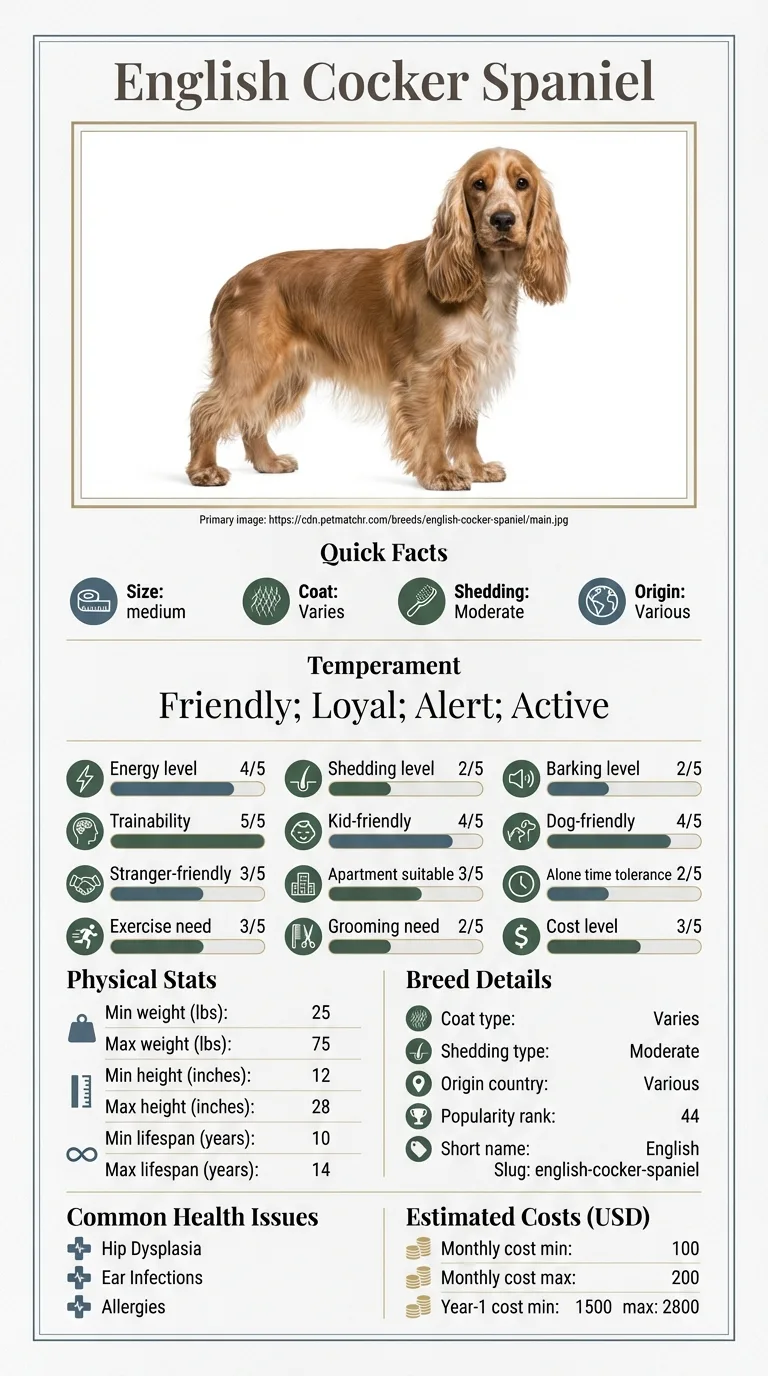
Understanding English Cocker Spaniel Genetic Load
English Cocker Spaniel genetic load can lead to serious health issues due to harmful genetic variants.
What you can try
- Create a consistent daily routine to help your dog feel secure. This includes regular feeding times, exercise, and playtime.
- Engage in positive reinforcement training. Use treats and praise to reward good behavior, which can help mitigate anxiety and improve overall behavior.
- Increase mental stimulation through interactive toys, puzzle feeders, and training exercises. This can help reduce stress and keep your dog engaged.
- Socialize your English Cocker Spaniel gradually with other dogs and people. Start with controlled introductions to foster confidence and reduce anxiety.
Mistakes that make this worse
Avoiding common pitfalls can significantly improve your English Cocker Spaniel's genetic load issues. Here are some mistakes to steer clear of, along with safer alternatives.
- Ignoring symptoms: Overlooking signs of discomfort or health issues can worsen genetic load problems. Instead, monitor your dog closely and consult a vet if you notice anything unusual.
- Skipping regular check-ups: Failing to schedule routine vet visits can delay the identification of genetic issues. Regular check-ups can help catch problems early and keep your dog healthy.
- Inconsistent training: Using different commands or methods can confuse your dog. Stick to consistent training techniques that reinforce positive behaviors to help manage genetic load.
- Neglecting exercise: A lack of physical activity can lead to stress and behavioral issues. Ensure your English Cocker Spaniel gets enough exercise to stay healthy and happy.
- Overfeeding: Giving too many treats or food can lead to obesity, which complicates genetic load problems. Stick to a balanced diet and portion control to maintain a healthy weight.
- Avoiding socialization: Keeping your dog isolated can lead to anxiety and behavioral issues. Gradually introduce your English Cocker Spaniel to new experiences and people to build their confidence.
When English Cocker Spaniel Genetic Load is an Emergency
Recognizing when your English Cocker Spaniel's genetic load presents an emergency is crucial for their health. If you notice signs of severe discomfort, such as difficulty breathing, excessive vomiting, or sudden lethargy, call your vet immediately. These red flags could indicate serious underlying conditions that require urgent care.
On the other hand, if your dog shows mild symptoms like occasional itching, slight changes in appetite, or moderate energy levels, it’s usually okay to monitor them at home. Keep a close eye on their behavior and maintain a detailed log of any symptoms. This information can help your vet when you seek guidance.
It is also important to remember that some genetic issues can develop gradually. Watching for changes over time and consulting with your vet can help you manage your dog's health effectively. However, if you notice any sudden changes in behavior or health, don't hesitate to reach out to a professional. It’s better to be safe and proactive.
Frequently asked questions
Why does my English Cocker Spaniel have genetic load?
Genetic load in English Cocker Spaniels refers to the accumulation of harmful genetic variants that can affect their health. This genetic predisposition can arise from breeding practices that do not prioritize genetic diversity. Understanding this can help you make informed decisions about your dog's health care. This answer relates to English Cocker Spaniel genetic load.
How do I identify genetic load issues in my English Cocker Spaniel?
Look for common health issues like hip dysplasia, ear infections, and allergies, which can indicate genetic load. Regular vet check-ups and genetic testing can also help identify potential problems early on. Keeping an eye on your dog's behavior and health can guide you in seeking appropriate care.
What steps can I take to manage genetic load in my English Cocker Spaniel?
Start by consulting your vet about genetic testing and preventive care. Ensure your dog receives a balanced diet and regular exercise to support overall health. In some cases, working with a professional trainer can help address behavioral issues stemming from genetic predispositions.
Is there a way to reduce the genetic load in my breeding program?
To reduce genetic load, choose breeding pairs with diverse genetic backgrounds and conduct health screenings. Avoid breeding dogs with known genetic issues, and work with a reputable breeder who prioritizes health. This approach can help minimize the risk of passing on harmful traits.
What are the signs of anxiety related to genetic load in my English Cocker Spaniel?
Signs of anxiety can include excessive barking, destructive behavior, or reluctance to engage. If your dog shows these behaviors, it may be linked to underlying genetic issues. Addressing these concerns early with training and socialization can help improve your dog's quality of life.
What can I do if my English Cocker Spaniel shows signs of genetic load?
If your English Cocker Spaniel shows signs of genetic load, it's essential to consult your vet. They can help identify specific issues and recommend a treatment plan. Regular check-ups and a tailored care routine can significantly improve your dog's quality of life.
Is genetic load in English Cocker Spaniels inherited?
Yes, genetic load in English Cocker Spaniels can be inherited from their parents. Breeders often assess genetic health before mating to reduce the risk of passing on harmful traits. If you're concerned about your dog's genetic background, ask the breeder for health clearances.
How can I manage my English Cocker Spaniel's health with a genetic load?
Managing your English Cocker Spaniel's health involves regular vet visits, a balanced diet, and appropriate exercise. Staying informed about potential health issues can help you intervene early. Consider working with a dog trainer familiar with genetic load issues to support your dog's behavior.
What are the signs of genetic load in older English Cocker Spaniels?
In older English Cocker Spaniels, signs of genetic load can include increased lethargy, difficulty moving, or frequent infections. It's crucial to monitor these changes and consult your vet for tailored advice. Early detection can lead to better management of health issues.
Can training help with behavior problems related to genetic load?
Yes, training can help manage behavior problems related to genetic load in English Cocker Spaniels. Consistent training can improve obedience and reduce anxiety-related behaviors. Look for training programs that focus on positive reinforcement and are tailored to your dog's specific needs.