Health
What are quick tips for managing Miniature Schnauzer genetic load?
Focus on regular vet check-ups and genetic testing to catch potential issues early. Ensure a balanced diet and consistent exercise to promote overall health.

Quick answer
What are quick tips for managing Miniature Schnauzer genetic load?
Focus on regular vet check-ups and genetic testing to catch potential issues early. Ensure a balanced diet and consistent exercise to promote overall health.
The Miniature Schnauzer is known for its adorable looks and friendly personality, but it can also carry a significant genetic load. This genetic load means a higher risk of certain health issues, which can impact your dog's well-being.
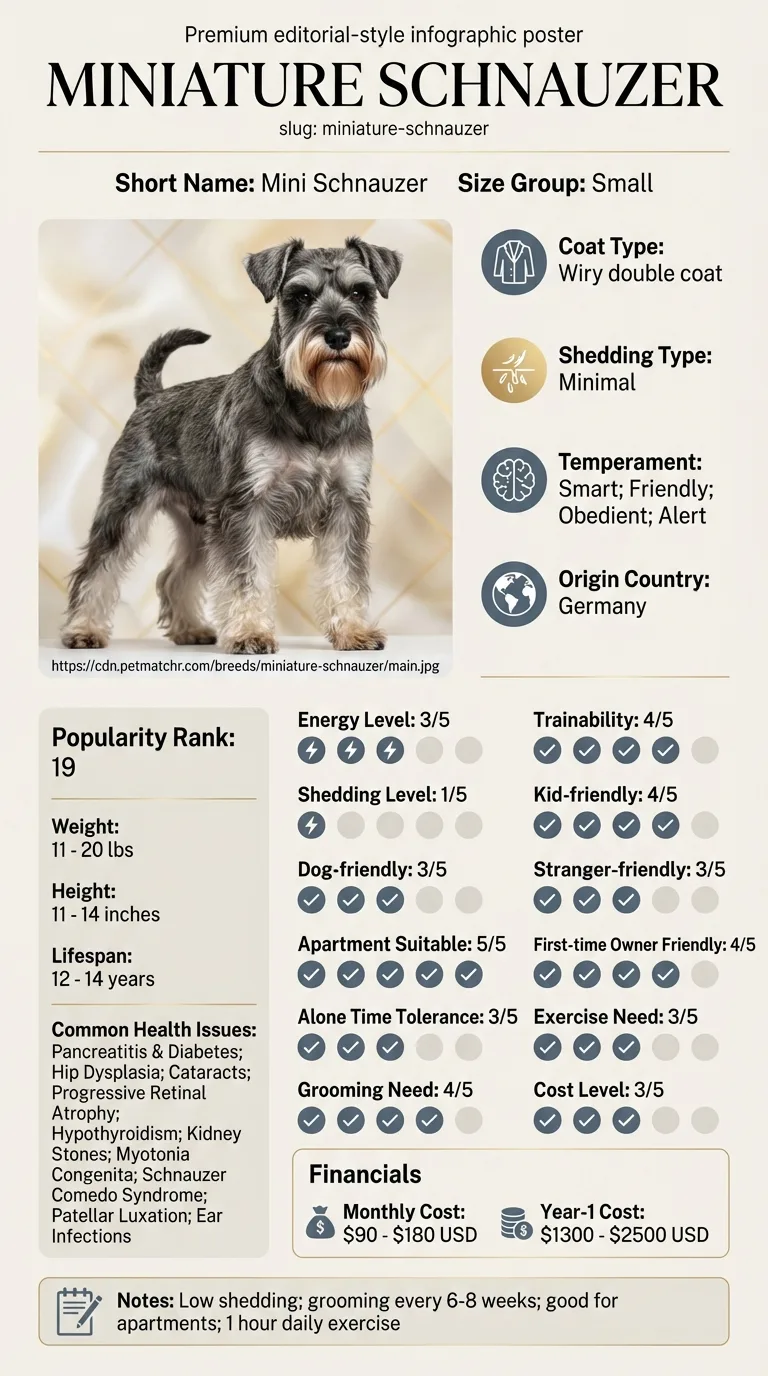
New and experienced Miniature Schnauzer owners alike may struggle with the implications of genetic load. Owners who want to ensure a long, healthy life for their pets often find themselves needing more information on how to manage these risks effectively.
This guide is not medical advice. If your dog shows pain, sudden behavior change, or worsening symptoms, consult a licensed veterinarian.
Some links may be affiliate links. We may earn a commission at no extra cost to you. We only suggest products we believe are helpful for dog owners.
We research and check what we publish, but we do not warrant that any figure, date, price, or statement is accurate, complete, or current, and we accept no liability for any loss, cost, injury, or other harm arising from the use of this site. Use it as one reference among several. You remain responsible for your own decisions and for your dog's care - confirm anything that matters with a licensed veterinarian or another qualified professional before you act on it. Full disclaimer.
Check this first
Recognizing when your Miniature Schnauzer's genetic load becomes an emergency is crucial. If your dog shows severe symptoms like sudden lethargy, vomiting, or difficulty breathing, do not hesitate—call your vet immediately. These can be signs of serious underlying health issues related to genetic load that require prompt attention.
If any of these apply, call your vet or an emergency clinic now. The rest of this page is for the cases that are not an emergency.
The Miniature Schnauzer genetic load refers to the accumulation of harmful genetic variants that can affect the breed's health. Day-to-day, this issue may lead to various health problems, such as pancreatitis, hip dysplasia, and cataracts. Owners might notice their Mini Schnauzer experiencing unusual fatigue, digestive issues, or vision problems, often leading to increased vet visits and care costs.
This genetic load is relatively common in Miniature Schnauzers due to their popularity and selective breeding. Many owners may not even realize their dog could be affected until health issues arise. Regular health screenings and genetic testing can help identify potential problems early.
The Miniature Schnauzer has a history of genetic predispositions that can lead to various health issues. This breed can be more prone to conditions like pancreatitis, diabetes, and hip dysplasia due to their genetic makeup. These inherited traits can create a higher genetic load, impacting their overall health and behavior.
Environmental factors can also contribute to the Miniature Schnauzer's genetic load. Stressful living conditions, lack of proper nutrition, and inadequate exercise can exacerbate genetic weaknesses. Additionally, improper socialization or training can lead to behavioral issues that further highlight these genetic challenges.
If your Miniature Schnauzer shows signs of health issues, such as sudden changes in appetite, energy levels, or behavior, consult your vet. Regular check-ups are essential to monitor genetic health risks and catch any potential problems early.
Avoiding these common mistakes can help improve your Miniature Schnauzer's situation. Here are behaviors that can inadvertently reinforce genetic load issues.
Start here: Miniature Schnauzer Most Common Genetic Disorders: Screening
See all Miniature Schnauzer health problems, which breeds are prone to genetic load, or the full Miniature Schnauzer breed guide for temperament, exercise needs and ownership costs.
Addressing the Miniature Schnauzer genetic load typically takes 6 to 12 months of consistent care and follow-up with your vet.
Success means your Miniature Schnauzer shows improved health, better behavior, and a stable emotional state, resulting in a happier pet and owner.
Sarah, a first-time dog owner in Seattle, adopted Bella, a lively Miniature Schnauzer. Soon, Sarah noticed Bella's anxiety and unpredictable behavior, challenging her training efforts. After doing some research, Sarah learned about the potential genetic load issues in Miniature Schnauzers. She started implementing structured training sessions and regular vet check-ups, focusing on Bella’s health and behavior. Over time, Bella became more relaxed, responding well to commands and enjoying playtime without anxiety.
Key takeaway: Understanding and addressing the Miniature Schnauzer genetic load made a significant difference in Bella's behavior and health, showing that early intervention and proper care are crucial.
The Miniature Schnauzer is known to have a higher genetic load due to selective breeding practices. This means they can carry harmful genetic variants that may lead to health issues. Regular vet check-ups and genetic testing can help identify potential problems early.
Managing your Miniature Schnauzer's genetic load involves a combination of responsible breeding, regular health screenings, and maintaining a healthy lifestyle. Work closely with your vet to understand the specific risks your dog may face and develop a health plan tailored to their needs.
Some common health issues include pancreatitis, hip dysplasia, cataracts, and progressive retinal atrophy. Being aware of these conditions can help you monitor and address any signs of illness early. Regular vet visits are crucial for early detection.
Positive reinforcement training can effectively manage behavior related to genetic load issues. Focus on building a strong bond with your Miniature Schnauzer through consistent training and socialization. This approach helps them feel secure and can reduce anxiety-related behaviors.
While genetic load is a concern, it shouldn't be the sole reason to avoid this breed. Many Miniature Schnauzers lead happy, healthy lives with proper care. If you choose to adopt, work with reputable breeders who prioritize health testing.
Yes, older Miniature Schnauzers can be at a higher risk for genetic issues. As they age, the likelihood of inherited genetic disorders may increase, making regular vet check-ups even more important.
Supporting a Miniature Schnauzer with a genetic load involves regular veterinary care, appropriate diet, and tailored exercise plans. Training focused on behavior management can also help reduce anxiety and stress.
While you can't change the genetic load of an existing Miniature Schnauzer, responsible breeding practices can help reduce it in future generations. Choosing a reputable breeder who screens for genetic health issues is crucial.
Focus on regular vet check-ups and genetic testing to catch potential issues early. Ensure a balanced diet and consistent exercise to promote overall health.
Use positive reinforcement techniques to encourage good behavior and build confidence. Regular socialization can help reduce anxiety and improve overall temperament.
Expect monthly costs to range from $90 to $180. This includes food, vet visits, grooming, and other routine expenses.
Yes, genetic load can lead to health issues that may impact lifespan. Regular veterinary care can help manage risks and improve quality of life.
Identify triggers and consult a vet for advice on training and management. Creating a stable environment with routines can also help ease anxiety.
A one-page prep sheet for this condition: the signs, the questions to ask, what to get priced. Unlocks here.
You get: Vet visit prep sheet
No spam. One-click unsubscribe. See our privacy policy.
Preview page 1 before you decide.