Health
What are quick tips for Jack Russell Terrier genetic load?
Focus on adopting from reputable breeders, keep your dog active, and schedule regular vet check-ups to monitor health.

Quick answer
What are quick tips for Jack Russell Terrier genetic load?
Focus on adopting from reputable breeders, keep your dog active, and schedule regular vet check-ups to monitor health.
Jack Russell Terrier genetic load refers to the accumulation of potentially harmful genetic traits that can affect their health.
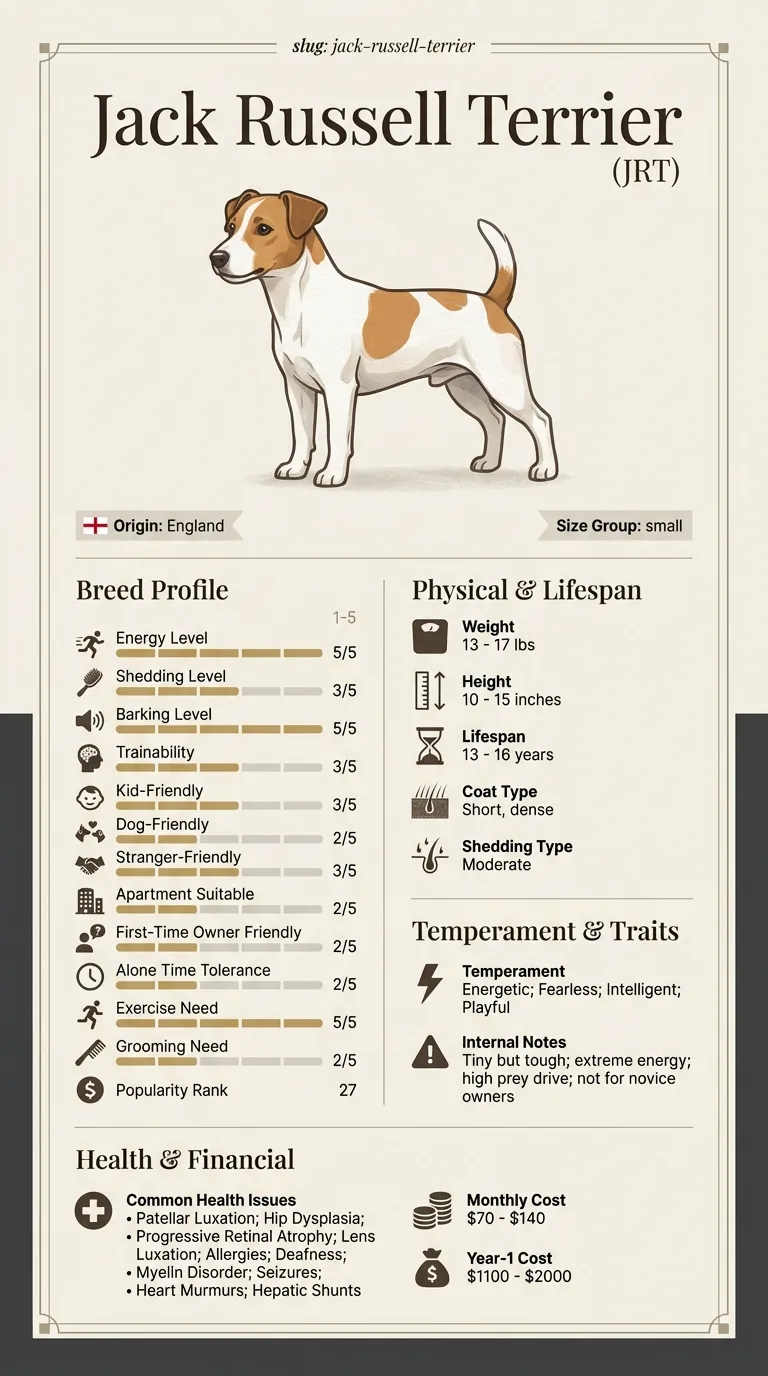
Owners of Jack Russell Terriers, especially first-time pet parents, may find genetic load particularly concerning due to the breed's energetic and playful nature. Those who are new to dog ownership might be overwhelmed by the potential health issues linked to genetic conditions.
This guide is not medical advice. If your dog shows pain, sudden behavior change, or worsening symptoms, consult a licensed veterinarian.
Some links may be affiliate links. We may earn a commission at no extra cost to you. We only suggest products we believe are helpful for dog owners.
We research and check what we publish, but we do not warrant that any figure, date, price, or statement is accurate, complete, or current, and we accept no liability for any loss, cost, injury, or other harm arising from the use of this site. Use it as one reference among several. You remain responsible for your own decisions and for your dog's care - confirm anything that matters with a licensed veterinarian or another qualified professional before you act on it. Full disclaimer.
Check this first
Red flags that mean you should call your vet right away include sudden changes in behavior, severe lethargy, or signs of pain. If your Jack Russell Terrier is experiencing seizures, difficulty breathing, or excessive vomiting, seek help immediately. These symptoms may indicate serious underlying conditions that need prompt treatment.
On the other hand, mild cases can often be monitored. If your dog shows slight changes in appetite or energy levels, keep an eye on them for a few days. Tracking any gradual changes can help you determine if a vet visit is necessary later on. Additionally, if your pup has a history of mild genetic issues but is otherwise acting normally, it may be safe to wait and observe.
In summary, trust your instincts. If something seems off with your Jack Russell Terrier, don’t hesitate to consult your veterinarian. Being proactive can make a significant difference in your dog’s health and well-being.
If any of these apply, call your vet or an emergency clinic now. The rest of this page is for the cases that are not an emergency.
Jack Russell Terriers can face a serious issue known as genetic load. This refers to the accumulation of harmful genetic variants that can lead to various health problems. Day-to-day, you might see your Jack Russell struggling with energy levels, unusual behaviors, or health conditions linked to these genetic factors.
Genetic load is quite common in Jack Russell Terriers due to their breeding history. Many JRTs can experience health issues stemming from genetic load, making it essential for owners to be aware of potential risks and proactive in their care.
The Jack Russell Terrier has a high genetic load, meaning they may carry harmful genetic variants. This breed is known for its energetic and fearless nature, which can sometimes lead to behavior issues stemming from inherited traits. Genetic predispositions can result in challenges such as anxiety or aggression if not managed appropriately.
Environmental factors also play a significant role in how a Jack Russell Terrier's genetic load manifests. A lack of socialization, insufficient exercise, or a stressful home environment can exacerbate genetic tendencies. Additionally, changes in routine or household dynamics might trigger behavioral problems.
If your dog shows signs of distress or health issues, such as changes in eating habits or excessive barking, consult your vet. They can assess if the problems are related to genetic issues or require medical intervention.
Identifying and avoiding common mistakes can help manage your Jack Russell Terrier's genetic load. Here are some behaviors to steer clear of.
Start here: Jack Russell Terrier Most Common Genetic Disorders
See all Jack Russell Terrier health problems, which breeds are prone to genetic load, or the full Jack Russell Terrier breed guide for temperament, exercise needs and ownership costs.
You can expect to see improvements in your Jack Russell Terrier's behavior within 3 to 6 months with consistent care and a steady routine efforts.
Success means your dog shows reduced anxiety, improved behavior during interactions, and a more manageable energy level, making daily life more enjoyable.
Lisa, a busy nurse in a bustling city, adopted a Jack Russell Terrier named Max. Initially, Max struggled with separation anxiety and displayed excessive barking, especially when left alone. Lisa researched how to stop Jack Russell Terrier genetic load issues and began working with a trainer. They focused on positive reinforcement techniques and regular exercise. Over time, Lisa noticed that Max became more relaxed when she left for work and even learned to enjoy solo playtime.
Key takeaway: With consistent training and plenty of exercise, you can manage the challenges of a Jack Russell Terrier's genetic load and create a harmonious home.
Jack Russell Terriers can have a higher genetic load due to selective breeding practices. Breeders may prioritize certain traits without considering the overall genetic health of the breed. This can lead to a concentration of harmful genetic variants, making health issues more common.
Addressing genetic load involves responsible breeding practices. If you're a breeder, conduct health screenings and genetic testing to avoid passing on issues. For pet owners, adopting from reputable breeders who prioritize health can help minimize genetic load.
Jack Russell Terriers can experience health problems such as Patellar Luxation, Hip Dysplasia, and Progressive Retinal Atrophy. Understanding these risks can help you take preventive measures, like regular vet check-ups and a healthy lifestyle.
While training won't eliminate genetic load, it can help manage behavioral issues related to it. Consistent training and socialization can improve your dog's behavior, making them more adaptable and less prone to anxiety.
A higher genetic load can lead to increased health issues, potentially shortening a Jack Russell Terrier's lifespan. Regular veterinary care and a healthy diet can help mitigate some risks and improve overall quality of life.
Signs of a high genetic load in Jack Russell Terriers can include recurring health issues, unusual behavior patterns, and difficulty with training. If your dog shows persistent symptoms like lethargy, extreme anxiety, or frequent illnesses, it's essential to consult your vet.
Older Jack Russell Terriers may struggle more with the effects of genetic load. Focus on regular vet check-ups, a balanced diet, and gentle exercise to help them maintain their quality of life. Tailored training and a calm environment can also ease anxiety and behavioral problems.
Yes, consistent training can help manage behaviors linked to genetic load. Techniques such as positive reinforcement and socialization can mitigate anxiety and improve your dog's responsiveness, making them easier to handle and more adaptable.
Genetic testing can provide insights into potential health risks associated with genetic load. Knowing your dog's genetic predispositions can help you proactively manage their care and make informed decisions about their training and lifestyle.
Focus on adopting from reputable breeders, keep your dog active, and schedule regular vet check-ups to monitor health.
Yes, genetic load can lead to anxiety and other behavioral issues. Proper training and socialization can help manage these behaviors.
The first-year cost for a Jack Russell Terrier typically ranges from $1,100 to $2,000, including initial vet visits and supplies.
Utilize positive reinforcement training and provide a stable environment to reduce anxiety in your Jack Russell Terrier.
Increase exercise, provide mental stimulation, and maintain a balanced diet to help manage the effects of genetic load.
A one-page prep sheet for this condition: the signs, the questions to ask, what to get priced. Unlocks here.
You get: Vet visit prep sheet
No spam. One-click unsubscribe. See our privacy policy.
Preview page 1 before you decide.