Health
What are quick tips for managing Havanese genetic load?
Regular vet visits, a healthy diet, and consistent training are vital. Early detection of health issues can significantly improve your dog's quality of life.

Quick answer
What are quick tips for managing Havanese genetic load?
Regular vet visits, a healthy diet, and consistent training are vital. Early detection of health issues can significantly improve your dog's quality of life.
Havanese genetic load refers to harmful genetic variants in this beloved breed. It can significantly affect their health and well-being.
Owners who may struggle with Havanese genetic load often include first-time dog parents and busy professionals. They might not be fully aware of the genetic health risks associated with their furry friends, leading to unexpected challenges in care and management.
This guide is not medical advice. If your dog shows pain, sudden behavior change, or worsening symptoms, consult a licensed veterinarian.
Some links may be affiliate links. We may earn a commission at no extra cost to you. We only suggest products we believe are helpful for dog owners.
We research and check what we publish, but we do not warrant that any figure, date, price, or statement is accurate, complete, or current, and we accept no liability for any loss, cost, injury, or other harm arising from the use of this site. Use it as one reference among several. You remain responsible for your own decisions and for your dog's care - confirm anything that matters with a licensed veterinarian or another qualified professional before you act on it. Full disclaimer.
Check this first
Call your vet immediately if your Havanese displays severe symptoms such as difficulty breathing, persistent vomiting, or noticeable lethargy. These could indicate serious genetic health issues that require urgent intervention. Additionally, if you observe sudden behavioral changes, like extreme aggression or withdrawal, these may signal underlying health concerns needing professional evaluation.
On the other hand, mild signs can often be monitored. If your Havanese shows slight fatigue or occasional digestive upset, keep an eye on them for a few days. Ensure they are eating, drinking, and playing normally. If these mild symptoms persist or worsen, schedule a vet appointment.
Always trust your instincts. If something feels off, don’t hesitate to consult your vet. It's always better to err on the side of caution when it comes to your Havanese's health.
If any of these apply, call your vet or an emergency clinic now. The rest of this page is for the cases that are not an emergency.
Havanese genetic load refers to the presence of harmful genetic variants that can affect the health and behavior of this breed. Daily life with a Havanese affected by genetic load may involve dealing with health issues like hip dysplasia or cataracts, which can impact their energy levels and overall quality of life. Owners might also notice behavioral issues stemming from these health problems, leading to anxiety or difficulty in training.
Havanese dogs are known to have a higher genetic load compared to some other breeds. This genetic predisposition can lead to various health problems, making it essential for potential owners to be aware of these risks before bringing a Havanese into their home.
Havanese dogs have a genetic predisposition to certain health issues due to a limited gene pool. As a small breed, they often face a higher concentration of harmful genetic variants. This can lead to conditions like hip dysplasia and cataracts, which are common in Havanese.
Living conditions can affect how genetic issues manifest in Havanese dogs. Stressful environments, lack of socialization, or improper care can exacerbate their predisposed conditions. For example, a Havanese that feels isolated may develop anxiety, making existing genetic problems worse.
If you notice any signs of health issues, such as limping or persistent eye problems, consult your vet. Early intervention can help manage the genetic load's effects and improve your dog's quality of life.
Avoid these common mistakes to help manage your Havanese's genetic load effectively.
Start here: Havanese Most Common Genetic Disorders: What to Screen For
See all Havanese health problems, which breeds are prone to genetic load, or the full Havanese breed guide for temperament, exercise needs and ownership costs.
You can expect to see some improvement in your Havanese's behavior within 3 to 6 months of consistent care and follow-up with your vet.
Success means your Havanese will show fewer anxiety-driven behaviors, be more adaptable in new situations, and enjoy a better quality of life.
Maria, a busy nurse living in a small apartment, adopted Bella, a lively Havanese. Soon after bringing her home, Maria noticed Bella was anxious and had trouble settling down. After researching Havanese genetic load, Maria learned that her dog might be predisposed to anxiety. She enrolled Bella in a positive reinforcement training class and gradually introduced calming routines. With patience and consistency, Maria saw Bella becoming more relaxed and confident within a few months.
Key takeaway: Understanding your dog's genetic predispositions can guide effective training strategies and improve their overall well-being.
Havanese dogs can inherit genetic load due to their breeding history. This breed has a higher concentration of harmful genetic variants, which can lead to various health issues. It's essential to choose a reputable breeder who screens for these problems to minimize risks.
While you can't completely eliminate genetic load, you can manage its effects. Regular check-ups with a vet, a balanced diet, and appropriate exercise can help keep your Havanese healthy. Additionally, genetic testing can identify potential issues early.
Havanese are prone to several health problems, including hip dysplasia, cataracts, and patellar luxation. Being aware of these issues allows you to monitor your dog closely and seek veterinary help when needed. Early detection is key to effective treatment.
Genetic load can influence behavior in Havanese, potentially leading to anxiety or other behavior problems. Some dogs may exhibit clinginess or fearfulness. Consistent training and socialization can help mitigate these behavioral effects.
Yes, training can indeed help manage behavioral issues related to genetic load. Positive reinforcement techniques can improve your Havanese's confidence and reduce anxiety. Early training is especially beneficial to instill good habits.
Signs of genetic load in your Havanese may include frequent health issues like skin allergies, joint problems, or eye conditions. If your dog seems more lethargic or has unusual behaviors, it’s worth discussing with your vet.
For older Havanese, regular vet check-ups are essential to monitor health changes related to genetic load. Consider a tailored diet and gentle exercise to help manage their weight and overall health.
Yes, genetic load can be hereditary in Havanese, as it refers to the accumulation of harmful genetic traits passed down from parents. Responsible breeding practices can help reduce the risk of these traits in future litters.
If your Havanese is experiencing anxiety, especially alongside genetic load issues, it’s important to consult with a vet or a pet behaviorist. They can suggest training techniques and possibly medications to help alleviate anxiety.
While you can't change your Havanese's genetic load, you can manage its effects through regular vet visits, a healthy diet, and appropriate training. Early intervention can help reduce the impact of genetic issues on your dog's quality of life.
Regular vet visits, a healthy diet, and consistent training are vital. Early detection of health issues can significantly improve your dog's quality of life.
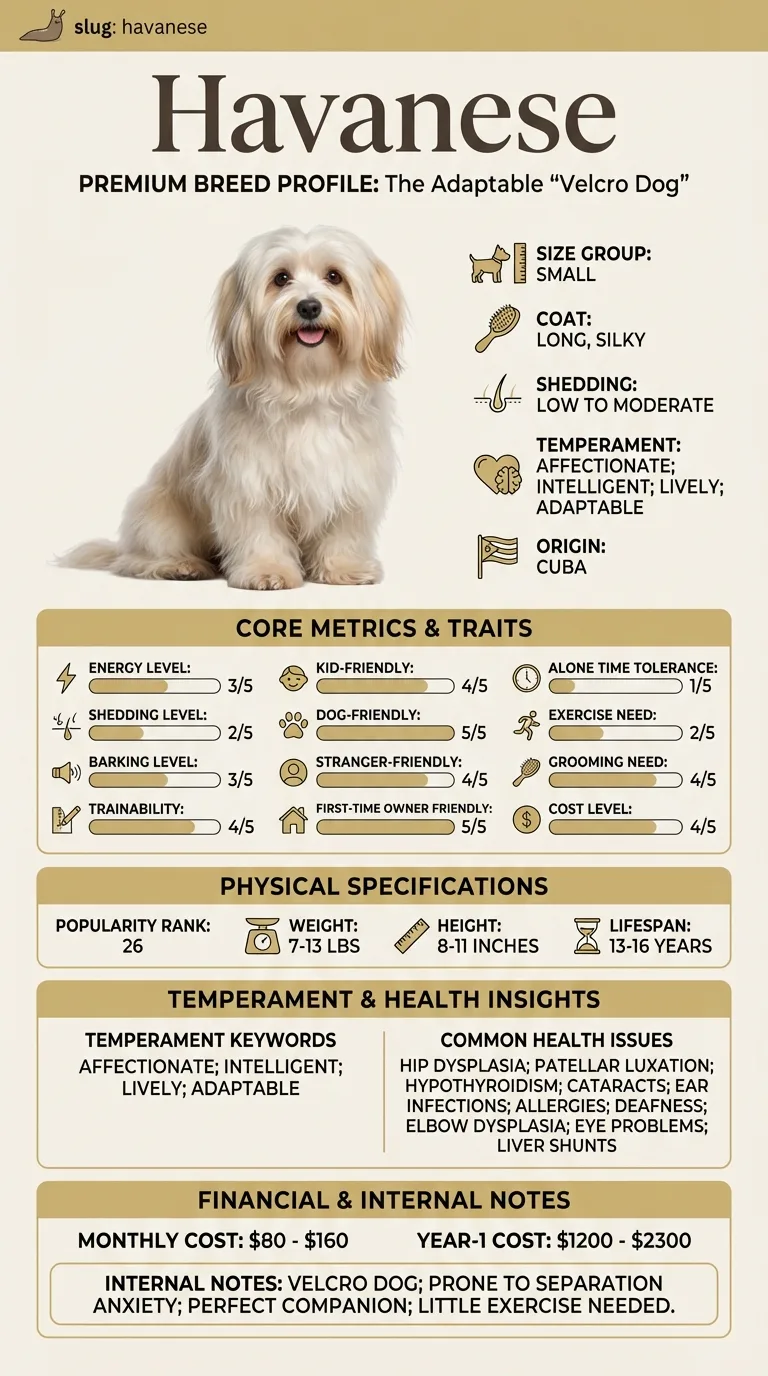
Monthly costs can range from $80 to $160, depending on healthcare needs and care routines. Be prepared for additional expenses related to potential health issues.
Havanese require moderate exercise, about 30 minutes a day. Regular walks and playtime will help keep them happy and healthy.
Yes, Havanese are friendly and adaptable, making them great for first-time owners. They are also small and suitable for apartments.
A one-page prep sheet for this condition: the signs, the questions to ask, what to get priced. Unlocks here.
You get: Vet visit prep sheet
No spam. One-click unsubscribe. See our privacy policy.
Preview page 1 before you decide.