Health
What is a red flag versus a normal digestive upset?
A pattern that repeats over weeks, or any vomiting combined with weight loss, is worth investigating rather than dismissing as a one-off.

Quick answer
What is a red flag versus a normal digestive upset?
A pattern that repeats over weeks, or any vomiting combined with weight loss, is worth investigating rather than dismissing as a one-off.
Soft stool that comes and goes, occasional vomiting that seems unremarkable, a dog who eats fine but stays a little thin: none of it looks urgent on any single day, which is exactly how these conditions go unrecognized for so long.
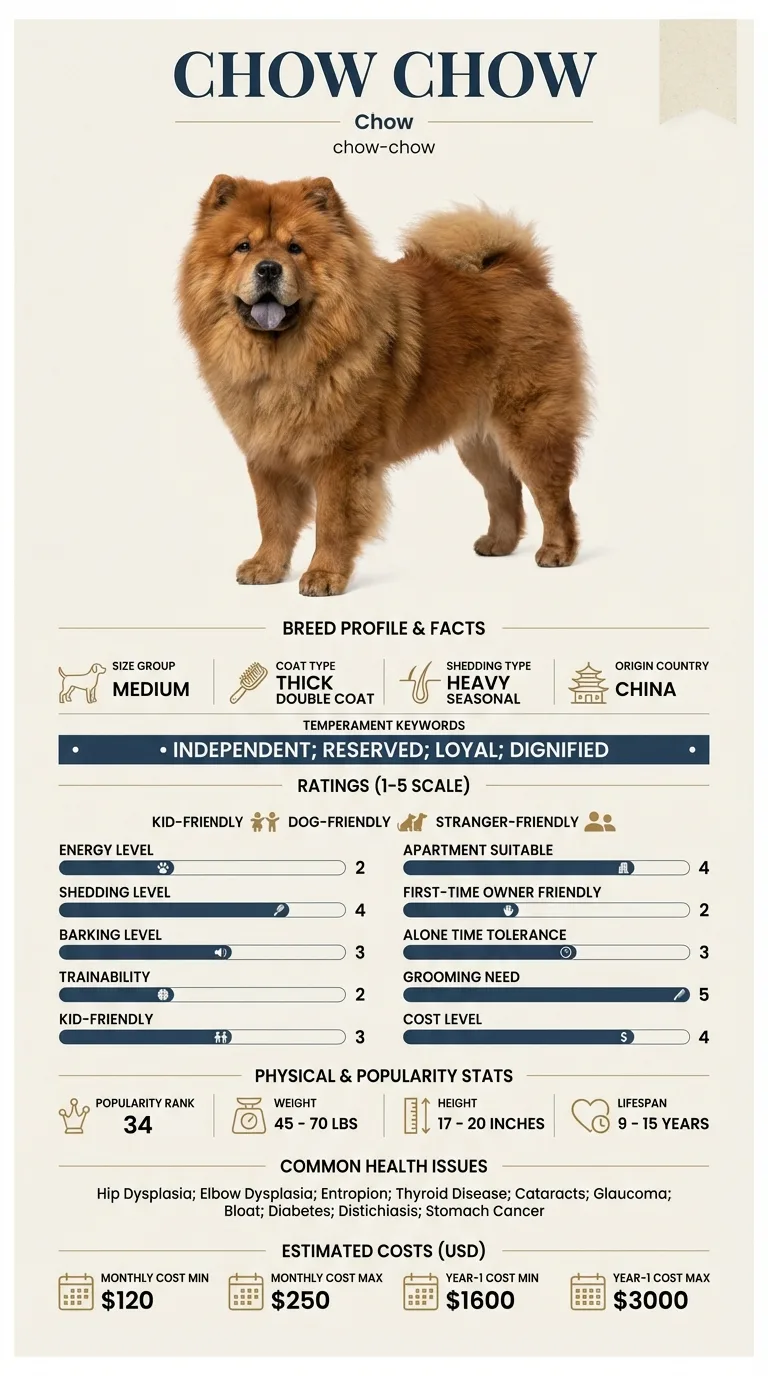
Owners of a Chow with intermittent, low-grade digestive symptoms who have been told repeatedly that a single vet visit found nothing conclusive, and anyone tempted to write off a pattern as just a sensitive stomach.
This guide is not medical advice. If your dog shows pain, sudden behavior change, or worsening symptoms, consult a licensed veterinarian.
Some links may be affiliate links. We may earn a commission at no extra cost to you. We only suggest products we believe are helpful for dog owners.
This covers chronic digestive conditions reported in the Chow Chow that share a slow, intermittent pattern rather than a single dramatic event: inflammatory bowel disease, pyloric stenosis, acid reflux and hiatal hernia. Because none of them force an emergency vet visit on day one, they are commonly under-recognized for months.
Not among the breed's most strongly documented conditions, but reported often enough in Chow Chows with persistent, low-grade digestive symptoms that vets commonly include this cluster in their workup once a pattern rather than a single incident is established.
None of these four conditions has a confirmed strong genetic link specific to the Chow Chow the way hip dysplasia or cataracts do. What connects them to this breed in practice is a reserved, self-contained temperament that tends to mask early discomfort, and an owner base that, because the breed is already known for several documented conditions, may attribute early digestive symptoms to something else before circling back to the gut.
Diet consistency, feeding schedule, and household stress all influence how often symptoms flare, and an inconsistent routine makes it harder to separate a true underlying condition from ordinary dietary sensitivity.
Bring in a vet for any pattern that repeats across more than a couple of weeks, for vomiting combined with weight loss, or for stool changes that do not resolve with a stable diet, and treat sudden repeated vomiting with lethargy or a distended abdomen as same-day urgent rather than something to track further.
See all Chow Chow health problems, which breeds are prone to gastrointestinal disorders, or the full Chow Chow breed guide for temperament, exercise needs and ownership costs.
Reaching an actual diagnosis commonly takes several weeks to a few months of tracking, testing and elimination, since these conditions rarely confirm themselves on a first visit.
Success is a stable, mostly symptom-free pattern maintained through diet and, if needed, medication, not necessarily a single cure, since several of these conditions are managed long term rather than resolved outright.
These are distinct diagnoses with distinct causes, but owners experience them the same way: an intermittent, easy-to-dismiss pattern rather than a single crisis. Untangling which one is present usually needs imaging or endoscopy, not guesswork from symptoms alone.
An acute pancreatic attack or a stomach that has flipped gives a vet something dramatic and immediate to work with. Chronic gastrointestinal disease gives them an intermittent pattern that may look normal on the exam table on any given day, which pushes the process toward elimination diets, repeated fecal testing, imaging and sometimes endoscopic biopsy before a specific diagnosis lands.
This is frustrating for owners expecting a quick answer, but rushing it tends to produce a wrong one. A food trial that runs only a week, or a single bland-diet attempt, rarely settles anything, since these conditions wax and wane on their own regardless of what is being fed.
Keeping a simple log of stool quality, vomiting frequency and appetite across several weeks gives a vet something far more useful to work from than a description of how the dog has seemed lately.

If you think your Chow has gastrointestinal disorders, the plan is three steps: write down what you have seen and when it started, book a veterinary appointment rather than waiting for the next flare, and take video of the behaviour or symptom before you go — the thing you are worried about rarely happens in the consulting room. Screening in the parents covers hip dysplasia, elbow dysplasia, entropion.
What the vet visit should produce is a diagnosis and a written plan, not just reassurance: what is being ruled out, what the monitoring interval is, and which signs mean you come back sooner. Ask what the treatment costs across a year rather than per visit, because that is the number that decides whether you are managing this condition or reacting to it.
Between appointments, keep a short log — dates, what you saw, what changed. It is the single most useful thing an owner brings to a follow-up, and for gastrointestinal disorders it is often what separates a clear pattern from a guess.
Ping had loose stool on and off for four months, always clearing up within a few days before her owner Aisha could get a vet appointment scheduled. Two separate visits found nothing conclusive, since Ping's stool looked normal on both exam days. Aisha started keeping a written log after the second visit, noting every soft stool, every skipped meal and every day Ping seemed a little quieter than usual. The pattern that emerged, roughly one bad week every three or four, was enough for her vet to pursue bloodwork and an ultrasound, which pointed toward inflammatory bowel disease. A diet change and a course of medication brought Ping to a stable, mostly symptom-free routine within about two months.
Key takeaway: A condition that never looks urgent on any single day can still be real and worth tracking. A written record over weeks does more diagnostic work than a description offered from memory.
Look for a pattern rather than a single episode: recurring soft stool, occasional vomiting spaced days or weeks apart, or gradual weight change despite a steady appetite, tracked over several weeks rather than judged from one bad day.
Pyloric stenosis is a physical narrowing where the stomach empties into the small intestine, typically causing vomiting some time after meals. Reflux is stomach contents moving backward into the esophagus and tends to show as lip-licking or regurgitating undigested food.
In some cases yes, since part of the stomach can shift into the chest cavity, though this is not the most common presentation. Most hiatal hernias are picked up because of persistent reflux symptoms rather than breathing changes.
It is generally managed rather than cured, using diet changes and sometimes medication to control inflammation and keep symptoms in remission for long stretches.
Most elimination diet trials need eight to twelve weeks of strict adherence to be meaningful, since shorter trials often miss slower improvements or coincide with an unrelated flare.
Bloodwork, fecal testing and abdominal imaging usually come first, with endoscopy and biopsy reserved for cases where inflammatory bowel disease or a structural issue like pyloric stenosis is suspected and needs direct confirmation.
They are not on the breed's short list of most strongly documented conditions, but they are reported in the breed at a rate that makes them worth ruling out in a dog with a persistent, unexplained digestive pattern.
A pattern that repeats over weeks, or any vomiting combined with weight loss, is worth investigating rather than dismissing as a one-off.
Not immediately. A single change makes it hard to tell what actually worked, so track the pattern first before adjusting diet.
Bloodwork and imaging often run a few hundred dollars, while endoscopy with biopsy can add well over a thousand depending on the clinic.
Yes, stress and routine changes commonly worsen symptoms in dogs with an existing chronic digestive condition, even without a new underlying cause.
Pyloric stenosis and some hiatal hernias may need surgical correction, while inflammatory bowel disease and reflux are usually managed medically first.
A one-page prep sheet for this condition: the signs, the questions to ask, what to get priced. Unlocks here.
You get: Vet visit prep sheet
No spam. One-click unsubscribe. See our privacy policy.
Preview page 1 before you decide.