Health
What does an allergic Chihuahua look like?
Pink belly and armpits, rust-stained hair between the toes from licking, muzzle rubbing on furniture, and ears that flare a few times a year.

Quick answer
What does an allergic Chihuahua look like?
Pink belly and armpits, rust-stained hair between the toes from licking, muzzle rubbing on furniture, and ears that flare a few times a year.
The tell in this breed is rarely dramatic scratching. It is the quiet, rhythmic licking of a front paw at ten o'clock at night, every night, until the hair between the toes turns rust-coloured from saliva.
Owners of a Chihuahua who has cycled through three foods and two ear cleaners without lasting improvement, and owners who have been told to run an elimination diet and cannot see how to do it in a dog that eats less than half a cup a day.
This guide is not medical advice. If your dog shows pain, sudden behavior change, or worsening symptoms, consult a licensed veterinarian.
Some links may be affiliate links. We may earn a commission at no extra cost to you. We only suggest products we believe are helpful for dog owners.
We research and check what we publish, but we do not warrant that any figure, date, price, or statement is accurate, complete, or current, and we accept no liability for any loss, cost, injury, or other harm arising from the use of this site. Use it as one reference among several. You remain responsible for your own decisions and for your dog's care - confirm anything that matters with a licensed veterinarian or another qualified professional before you act on it. Full disclaimer.
Chronic allergy in a Chihuahua is persistent inflammation driven by the immune system overreacting to ordinary things: pollen, dust mite protein, flea saliva or a food protein. It is not one disease. It shows as itch concentrated on the belly, feet, face and ears, and it tends to worsen over the dog's first three years before settling into a pattern. Secondary yeast and bacterial infections then ride on top of the inflamed skin and become the thing owners actually notice.
Chronic allergy is common across all dogs and Chihuahuas are not exempt, though the breed's marquee problems are dental disease, collapsing trachea and heart disease rather than skin. Otitis is not a listed breed problem either, which is precisely the point: repeat ear infections in an upright-eared dog with no conformational excuse are very often allergy wearing a disguise.
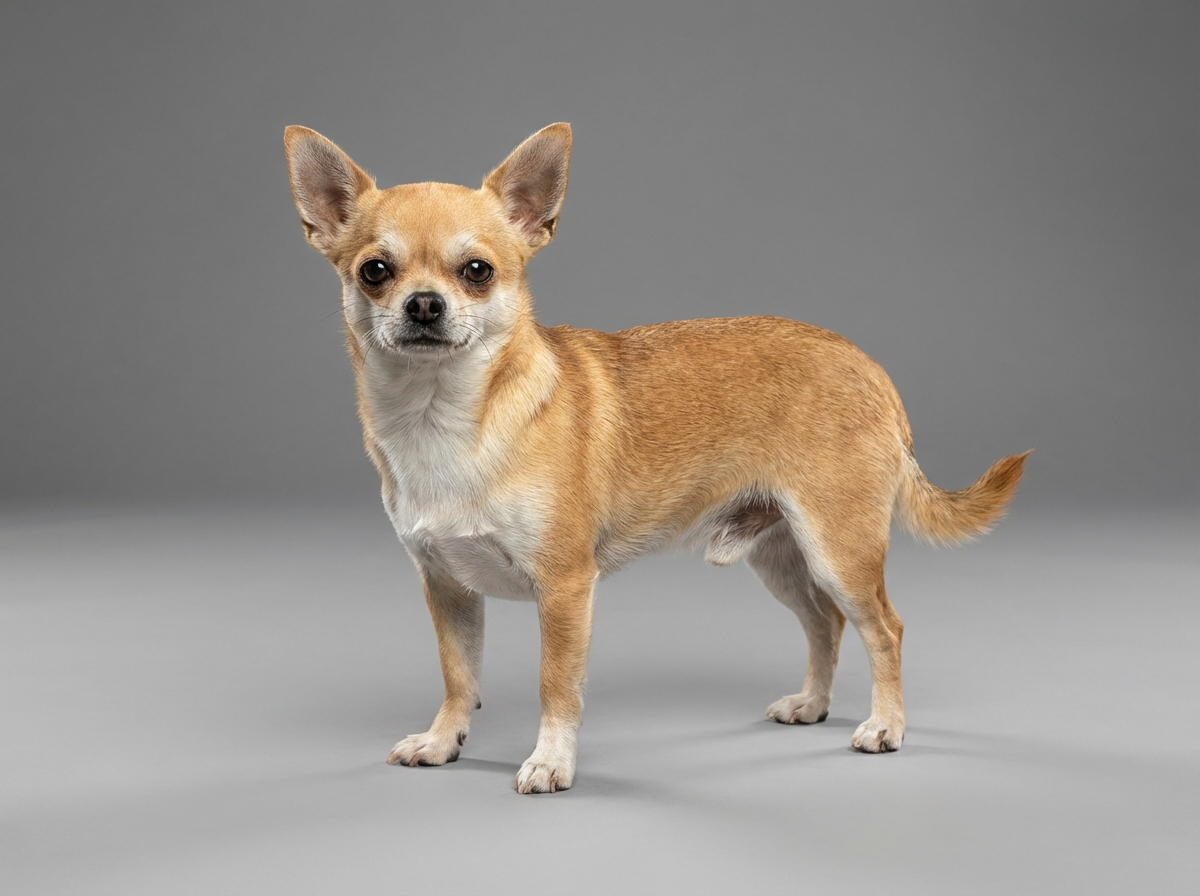
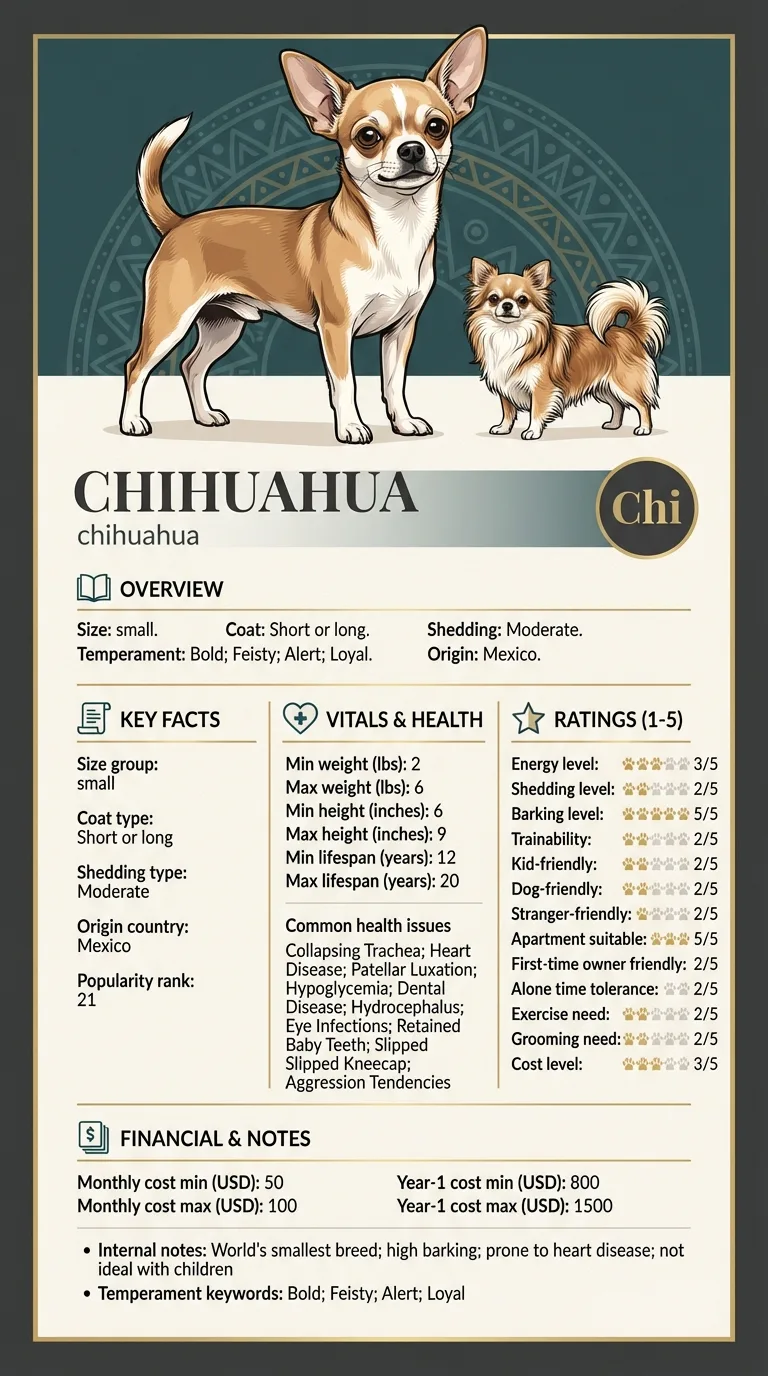
There is no known Chihuahua-specific allergy gene, and honesty matters more here than a tidy story. What the breed does contribute is scale and coat. At 6 to 9 inches tall the Chihuahua's face and belly travel through grass rather than above it, so the exposed skin meets pollen directly. The two coat varieties change detection rather than risk: on a smooth Chihuahua inflammation is obvious weeks earlier than on a long-coated one, where owners often find the problem only when an infection is already established. And because the whole dog weighs 2 to 6 pounds, everything dosed by weight - medication, diet, even a stolen crumb - has an outsized effect.
Bedding is the single most-overlooked driver in this breed, because Chihuahuas burrow. A dog that sleeps buried in a fleece blanket spends eight hours a night with its face in accumulated dust mite protein. Seasonal pollen shows as a spring-and-autumn rhythm, indoor allergens as year-round itch. Inconsistent parasite prevention, scented laundry detergent on dog blankets, and forced-air heating that dries skin in winter all push an already-itchy dog further.
Book promptly if your Chihuahua has an ear that is painful, hot, smelly or held at an angle, if there are open sores or scabs, if skin is thickened or darkened, or if itching is interrupting sleep. Sudden severe pain in one ear with head tilt or loss of balance needs same-day attention. Book routinely to plan a proper diagnostic sequence, because the common failure pattern in this breed is years of ear drops from a series of short appointments with no one ever asking what is driving the ear.
See all Chihuahua health problems, which breeds are prone to allergies, or the full Chihuahua breed guide for temperament, exercise needs and ownership costs.
Secondary infections clear in two to four weeks once treated. A diet trial needs eight to twelve weeks before it means anything. Environmental allergy management is measured in seasons, and desensitisation programmes are judged at six to twelve months. Anyone promising a quick answer is skipping a step, and in a breed that may live twenty years the point of doing it properly is that you are setting up a very long management plan.
Success is a Chihuahua that scratches sometimes rather than constantly, has one mild flare a year instead of four infections, sleeps through the night, and keeps the hair on its feet. It is not a dog that never itches. Owners who measure against that honest bar stay consistent, and consistency is what actually keeps the skin quiet.
Allergic skin disease has favourite territory, and on a Chihuahua that territory is easy to inspect because there is not much dog to check. Turn the dog over on your lap: the armpits, groin and the strip of thin-haired belly skin are where inflammation appears first, and on a smooth-coated Chihuahua it is plainly visible as a wash of pink. On a long-coated one you will find it by parting the coat rather than by looking.
The feet come next. Chewed, saliva-stained hair between the toes is one of the most reliable allergy signs in any breed, and on a foot this small it is hard to miss once you know to look. Then the face - rubbing the muzzle along the sofa edge after meals or after coming in from the grass.
Ears are the third territory and the one owners misread most often. A Chihuahua's ears stand upright and are superbly ventilated; unlike a spaniel, this breed has no conformational reason to get otitis. So a Chihuahua with repeat ear infections is usually telling you about an allergy somewhere else, and treating the ear alone guarantees the ear comes back.

An elimination diet is the only way to confirm a food allergy, and in a Chihuahua the maths works against you in a way it does not for bigger dogs.
Tostada, a 5-pound smooth-coated Chihuahua in Sacramento, had been treated for four ear infections in eighteen months. Each course of drops worked; each ear came back. His owner Marcus assumed the ears were the problem until a vet turned Tostada over and pointed at a pink belly and one front foot stained the colour of weak tea. They started with strict year-round flea prevention and a twelve-week hydrolysed diet. Marcus's hardest job was the household: his father had been feeding Tostada scraps of tortilla, which on a 5-pound dog was a real fraction of the day's food. He wrote a note and taped it to the fridge. At week ten the belly had gone pale and the foot hair was growing back white. A deliberate re-challenge with chicken brought the itch back within four days, which gave them the answer. Tostada still flares mildly each spring, and his ears now need cleaning rather than treating.
Key takeaway: The ear was never the disease. In an upright-eared breed, repeat otitis is a signpost, and the diagnosis lives on the belly and between the toes.
Skin allergy is not one of the breed's headline problems the way dental disease and collapsing trachea are, but Chihuahuas certainly get it, and the small body makes it easy to spot early. Recurring ear infections are the pattern worth watching, because in a dog with upright, well-ventilated ears there is no anatomical reason for them, so they usually point back to an underlying allergy.
Because the ear is a symptom, not the disease. Erect Chihuahua ears drain and ventilate well, so there is no anatomical reason for repeat otitis. When an ear flares two or three times a year, the usual driver is allergic inflammation of the ear canal lining that lets yeast or bacteria overgrow. Treating only the ear resets the clock without changing the cause.
In a flea-allergic dog, yes, and in a 4-pound Chihuahua a very small parasite burden goes a long way. Flea allergy is a reaction to saliva, not to the number of fleas, so a dog can be miserable with no fleas visible at all. Year-round parasite prevention is the cheapest diagnostic step in the whole workup.
Grain-free is a marketing category, not an allergy treatment. When dogs do react to food it is far more often to a protein than to a grain, and swapping between supermarket foods that share protein sources changes nothing. A proper trial needs a diet chosen by your vet with a protein your Chihuahua has genuinely never eaten, or a hydrolysed one.
Skin or blood allergy testing does not diagnose allergy; it identifies which environmental allergens to include in a desensitisation programme once the diagnosis is already made clinically. It is a treatment-planning tool, and it is a reasonable step for a young dog facing a long itchy life rather than a first move.
Food allergy can effectively be switched off by permanently avoiding the trigger, which is realistic in a dog whose entire diet you control. Environmental allergy cannot be cured. It is managed, often for the twelve to twenty years a Chihuahua may live, and owners who go in expecting management rather than cure cope far better.
Pink belly and armpits, rust-stained hair between the toes from licking, muzzle rubbing on furniture, and ears that flare a few times a year.
Eight to twelve weeks of one diet and absolutely nothing else, followed by a re-challenge. Anything shorter produces a result you cannot act on.
In a dog eating half a cup a day, one cheese cube can be a tenth of daily intake. Flavoured medication and dental chews count too.
Ask your vet for a frequency and a product. Bathing physically removes pollen from a coat that spends its life at grass height, but over-washing dries the skin.
Prescription diets, parasite prevention and periodic ear or skin recheck visits add a recurring line to the breed's usual fifty to one hundred dollars a month.
A one-page prep sheet for this condition: the signs, the questions to ask, what to get priced. Unlocks here.
You get: Vet visit prep sheet
No spam. One-click unsubscribe. See our privacy policy.
See a sample page before you decide.
Early access list
The free prep sheet covers the same-day warning signs, a symptom log and the questions to ask. We are considering a fuller kit that adds a cost worksheet for the usual tests and treatments (US price ranges with their sources) and a plain-English guide to ways of covering the bill. It is not built yet; this list tells us whether it is worth building.
One email, no spam, unsubscribe anytime. Information only, not veterinary advice.