Health
Why does one flea bite cause so much itching?
Flea allergy dermatitis is a hypersensitivity to flea saliva, so even a single bite can trigger a disproportionate, prolonged reaction.

Quick answer
Why does one flea bite cause so much itching?
Flea allergy dermatitis is a hypersensitivity to flea saliva, so even a single bite can trigger a disproportionate, prolonged reaction.
A single flea bite can leave a Chihuahua itching at the base of the tail for weeks, long after every flea has been eliminated from the house, because the reaction is to the bite, not the number of fleas.
Owners who have checked thoroughly for fleas, found none, and cannot understand why the itching continues, and anyone who recently changed a carpet cleaner, laundry detergent or lawn treatment right before symptoms began.
This guide is not medical advice. If your dog shows pain, sudden behavior change, or worsening symptoms, consult a licensed veterinarian.
Some links may be affiliate links. We may earn a commission at no extra cost to you. We only suggest products we believe are helpful for dog owners.
We research and check what we publish, but we do not warrant that any figure, date, price, or statement is accurate, complete, or current, and we accept no liability for any loss, cost, injury, or other harm arising from the use of this site. Use it as one reference among several. You remain responsible for your own decisions and for your dog's care - confirm anything that matters with a licensed veterinarian or another qualified professional before you act on it. Full disclaimer.
Skin allergies in this breed are frequently driven by two specific, direct-contact triggers: flea bites and environmental or product-based contact irritants. Both reach the skin more readily through this breed's comparatively thin coat than through a denser double coat, and flea allergy dermatitis in particular can produce an intense, prolonged reaction from a single bite, out of proportion to the actual level of flea exposure.
Flea allergy dermatitis is one of the most common causes of itchy skin in dogs generally and is a frequent presentation in small, thin-coated breeds specifically. Contact irritant reactions are less common but well recognized whenever a clear timeline links symptoms to a new product or material.
This breed's coat, whether short or long, is comparatively thin and offers less of a physical barrier than a dense double coat, allowing both flea bites and direct contact irritants to reach the skin more readily. Once a hypersensitivity to flea saliva is present, this reduced barrier does not change the underlying immune reaction but can make the visible skin response appear more pronounced for a given level of exposure.
Inconsistent or seasonal-only flea prevention leaves a gap during which even one bite can trigger weeks of reaction in a sensitive dog. New cleaning products, lawn treatments, fabrics or grooming products introduced without awareness of their ingredients are the most common source of contact-based reactions, particularly when applied to surfaces the dog has direct, prolonged skin contact with.
Book an appointment for itching that persists beyond a couple of weeks despite flea prevention, for a reaction pattern that does not match the classic tail-base distribution of flea allergy, or if you cannot identify a clear contact trigger through your own timeline review. Seek prompt care if skin becomes broken, oozing or clearly infected, since secondary infection can develop on top of an allergic reaction and needs its own treatment.
See all Chihuahua health problems, which breeds are prone to skin allergies, or the full Chihuahua breed guide for temperament, exercise needs and ownership costs.
Contact-related reactions typically improve within days to about two weeks once the specific irritant is identified and removed. Flea allergy reactions can take two to four weeks to fully settle even after fleas are completely eliminated, since the allergic skin response itself takes time to resolve.
Success is a dog on consistent year-round flea prevention with no further tail-base itching episodes, or a household that has identified and avoided the specific contact irritant that triggered a reaction. It is not necessarily a household that never sees another flea, since occasional exposure is realistic and prevention is what actually manages the allergy.
Flea allergy dermatitis is not a reaction to fleas in general; it is a hypersensitivity to proteins in flea saliva delivered at the moment of a bite. In a dog with this hypersensitivity, a single bite can trigger an intense, disproportionate immune reaction concentrated specifically at the base of the tail, the lower back and the back of the thighs, the classic distribution for this specific allergy regardless of breed. Because this breed's coat provides less physical barrier to begin with, a flea has an easier time reaching the skin, and the resulting bite reaction is often more visibly severe for the same number of bites compared with a heavily coated dog.
The practical trap this creates is that owners search for fleas, find few or none because the itching outlasts the actual infestation by weeks, and conclude fleas are not the cause. The hypersensitivity reaction itself takes time to settle even after every flea is gone, so an itching pattern that persists after a flea treatment does not necessarily mean the treatment failed or that fleas were never the trigger.
Contact irritants work through a related but separate mechanism: something in the environment, a new carpet cleaner, a lawn chemical, a fabric or a topical product, touches the skin directly rather than being inhaled or eaten, and a thin coat again means less buffer between that substance and the skin surface. Reactions tend to appear where contact was most direct: the belly, the paws, or areas with less coat coverage, and they typically resolve once the specific irritant is identified and avoided.

Location and timing are the two most useful clues before any testing is involved.
If you think your Chi has skin allergies, the plan is three steps: write down what you have seen and when it started, book a veterinary appointment rather than waiting for the next flare, and take video of the behaviour or symptom before you go — the thing you are worried about rarely happens in the consulting room. Screening in the parents covers collapsing trachea, heart disease, patellar luxation.
What the vet visit should produce is a diagnosis and a written plan, not just reassurance: what is being ruled out, what the monitoring interval is, and which signs mean you come back sooner. Ask what the treatment costs across a year rather than per visit, because that is the number that decides whether you are managing this condition or reacting to it.
Between appointments, keep a short log — dates, what you saw, what changed. It is the single most useful thing an owner brings to a follow-up, and for skin allergies it is often what separates a clear pattern from a guess.
Chamaco came home from a two-week boarding stay with what his owner Yolanda assumed was a mild flea problem, treated immediately and thoroughly with a vet-recommended product. Three weeks later, Chamaco was still intensely itching at the base of his tail and along his lower back, and Yolanda combed through his coat repeatedly without finding a single live flea, which left her convinced the diagnosis had been wrong. Her vet explained that the pattern, itching concentrated specifically at the tail base and rear thighs continuing well after fleas were eliminated, was actually consistent with the original diagnosis rather than evidence against it. A single bite in a hypersensitive dog can drive weeks of allergic skin inflammation independent of ongoing flea presence, and this breed's thin coat had likely made the initial exposure more direct than it would have been through a denser coat. A short course of vet-directed treatment for the skin inflammation itself, alongside continued year-round flea prevention, resolved the itching within about three weeks from that point. Chamaco has had no recurrence in the two years since, on consistent monthly prevention.
Key takeaway: Finding no fleas does not mean fleas were never the problem. In a sensitive dog, the reaction to a single bite can outlast the flea by weeks, and the tail-base itching pattern is often a more reliable clue than a hands-on search for the insect itself.
Flea allergy dermatitis is a reaction to flea saliva, and the resulting skin inflammation can take weeks to fully settle even after every flea has been eliminated. Continued itching for some time after treatment does not automatically mean the treatment failed.
Yes. A dog with this hypersensitivity can react intensely to a single bite, and fleas are notoriously difficult to find on inspection, especially once they have already bitten and moved on or been groomed away. The classic itching distribution at the tail base and rear is often more telling than a visual flea search.
Flea and contact allergies are triggered by direct physical exposure to a specific substance touching the skin, and tend to have a clearer location pattern and timeline. Broader environmental or food allergies typically involve more year-round or diet-linked patterns and often show more ear involvement.
This breed's coat, whether short or long, is generally thinner than a dense double coat, offering less physical barrier against both flea access to the skin and direct contact irritants, which can make reactions appear more pronounced for the same level of exposure.
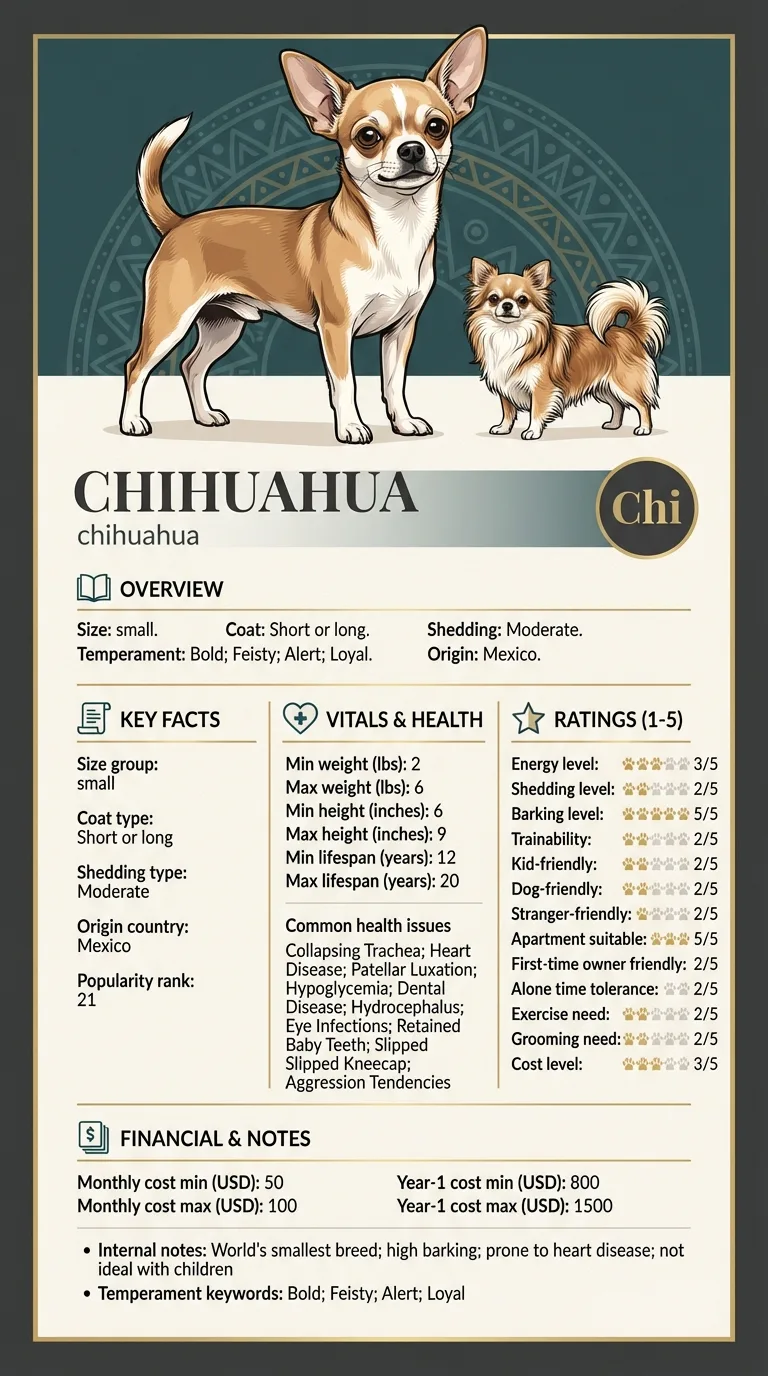
Your vet can recommend a product appropriately dosed for a two to six pound dog, since correct dosing matters enormously at this size. Year-round prevention, not just seasonal use, is usually recommended once a flea allergy has been identified, since a single bite is enough to trigger a reaction.
Walk back through anything new introduced in the weeks before symptoms started: cleaning products, laundry detergent, bedding, lawn treatments or grooming products, and consider temporarily removing the most recent change first before working backward through others.
Flea allergy dermatitis is a hypersensitivity to flea saliva, so even a single bite can trigger a disproportionate, prolonged reaction.
The base of the tail, lower back and rear thighs are the classic distribution for this specific allergy.
A comparatively thin coat offers less barrier between the skin and direct contact irritants like cleaning products or lawn chemicals.
Not immediately. The allergic skin reaction can take weeks to settle even once every flea is gone.
A one-page prep sheet for this condition: the signs, the questions to ask, what to get priced. Unlocks here.
You get: Vet visit prep sheet
No spam. One-click unsubscribe. See our privacy policy.
Preview page 1 before you decide.