Health
How does pancreatitis cause diabetes?
Repeated inflammation destroys pancreatic tissue, including the insulin-producing cells scattered within it, until insulin production is insufficient.

Quick answer
How does pancreatitis cause diabetes?
Repeated inflammation destroys pancreatic tissue, including the insulin-producing cells scattered within it, until insulin production is insufficient.
These two conditions are linked by geography. Damage the organ enough times and you eventually damage both of its jobs, and then you are managing two diseases whose treatments pull against each other.
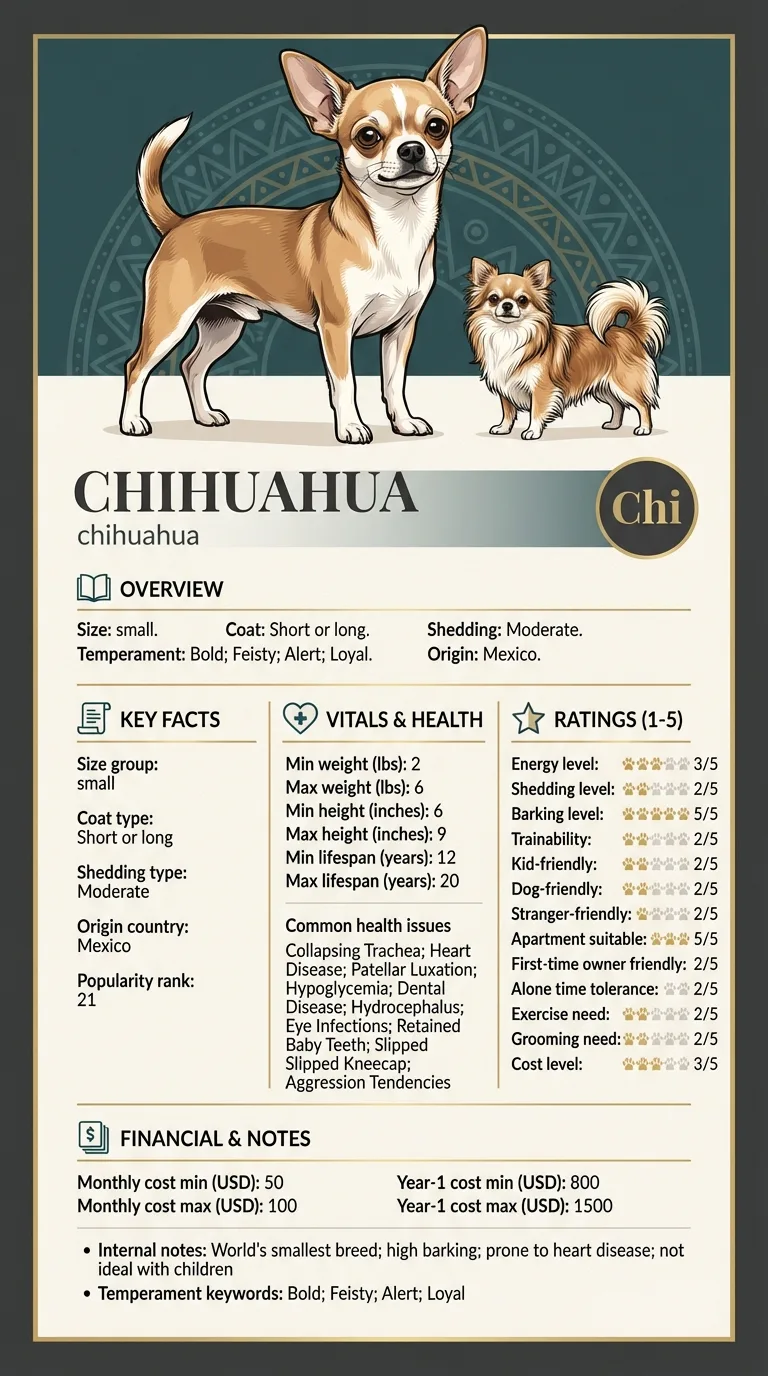
Owners of senior Chihuahuas who have had both diagnoses and are trying to reconcile a low-fat diet with insulin timing, and owners of a dog with recurring pancreatitis who have been warned that diabetes may follow.
This guide is not medical advice. If your dog shows pain, sudden behavior change, or worsening symptoms, consult a licensed veterinarian.
Some links may be affiliate links. We may earn a commission at no extra cost to you. We only suggest products we believe are helpful for dog owners.
We research and check what we publish, but we do not warrant that any figure, date, price, or statement is accurate, complete, or current, and we accept no liability for any loss, cost, injury, or other harm arising from the use of this site. Use it as one reference among several. You remain responsible for your own decisions and for your dog's care - confirm anything that matters with a licensed veterinarian or another qualified professional before you act on it. Full disclaimer.
The pancreas performs both a digestive and a hormonal role, and disease affecting one frequently damages the other. Repeated pancreatitis can destroy enough insulin-producing tissue to cause diabetes, and poorly controlled diabetes raises the risk of further pancreatitis. Managing both together requires a rigid feeding and dosing routine, which is demanding but entirely achievable.
Neither condition is listed among the Chihuahua's ten documented health issues, and the combination is less common than either alone. It becomes relevant in the senior years, which this breed has a great many of. Where it does occur, it is one of the more demanding long-term management situations a small-dog owner can face, and one where clear routines make a very large difference.
There is no Chihuahua-specific mechanism linking these two conditions; the link is anatomical and applies to all dogs. What the breed contributes is longevity and size. A lifespan of 12 to 20 years produces a large population of senior dogs in whom endocrine disease has time to develop. A body weight of 2 to 6 pounds makes insulin dosing unusually precision-dependent and makes any period of instability, whether high or low blood sugar, more consequential than it would be in a larger animal.
Household routine is the dominant environmental factor and it works in both directions. A stable home with fixed mealtimes and one person responsible for insulin produces good control. A household with variable schedules, several people feeding, and occasional scraps produces instability in both conditions simultaneously. Access to other pets' food, unsecured bins and guests who feed the dog undermine a carefully constructed plan in a single afternoon, and at this body weight one incident is enough to matter.
Seek emergency care immediately for weakness, trembling, disorientation, collapse, seizures or unresponsiveness, which can indicate blood sugar that has fallen dangerously low and requires urgent treatment. Also go immediately for repeated vomiting with a hunched or bowing posture and refusal of food, which suggests a pancreatitis episode, and for a dog who is profoundly lethargic, breathing oddly, or has sweet-smelling breath, which can indicate a serious diabetic complication. Contact your vet the same day if she refuses a meal after insulin has been given, if she has vomited more than once, or if her drinking has increased sharply. Never adjust an insulin dose yourself, never skip a recheck because she seems stable, and never give any medication or supplement without checking first.
See all Chihuahua health problems, which breeds are prone to pancreatitis diabetes, or the full Chihuahua breed guide for temperament, exercise needs and ownership costs.
Stabilising a newly diagnosed diabetic dog typically takes several weeks of dose adjustment with repeated rechecks, and it is normal for the first dose not to be the final one. Once stable, rechecks settle to every three to six months. Pancreatitis episodes, if they occur, interrupt that stability and usually require the diabetic plan to be revisited afterwards. Expect the first two to three months to be effortful and the following years to be routine, provided nothing disrupts the schedule.
Success is a dull, uneventful routine. She eats the same food at the same times, receives the same dose, drinks a normal amount, holds her weight, and has no episodes. Vision may still be affected by cataracts and that is not a failure of management. What good management delivers is a comfortable, engaged senior dog with stable numbers, and for a breed that can live to twenty, that may mean several more genuinely good years.
The most straightforward route runs from pancreatitis to diabetes. Each episode of inflammation destroys some pancreatic tissue and replaces it with scar. Most of what is lost is enzyme-producing tissue, but insulin-producing clusters sit within the same organ and are damaged too. A single episode rarely destroys enough to matter. Repeated episodes, over years, can reduce insulin production to the point where blood glucose is no longer controlled.
The link also runs the other way. Poorly controlled diabetes raises the level of fats circulating in the blood, and elevated blood fats are themselves associated with pancreatitis. So a diabetic dog whose glucose is not well controlled is at higher risk of an inflammatory episode, which in turn damages more insulin-producing tissue and makes control harder still. It is a genuine feedback loop and it is the reason vets push for stable glucose control rather than approximate control.
The practical difficulty for the owner is that the two conditions want opposite things from the feeding routine. Diabetes management depends on consistency: the same food, the same amount, at the same times, matched to insulin. Pancreatitis management depends on low fat and on absolute avoidance of dietary indiscretion. Neither is impossible. Together they simply remove all flexibility, and that rigidity is the real burden of the combination.
An additional complication specific to small dogs is dosing. Insulin doses for a four-pound dog are very small, and small absolute errors are large proportional ones. This is a condition where measuring precisely matters more than it would in a larger patient.

Managing both conditions is a schedule problem more than a medical one, and it becomes routine faster than most owners expect.
If you think your Chi has pancreatitis & diabetes, the plan is three steps: write down what you have seen and when it started, book a veterinary appointment rather than waiting for the next flare, and take video of the behaviour or symptom before you go — the thing you are worried about rarely happens in the consulting room. Screening in the parents covers collapsing trachea, heart disease, patellar luxation.
What the vet visit should produce is a diagnosis and a written plan, not just reassurance: what is being ruled out, what the monitoring interval is, and which signs mean you come back sooner. Ask what the treatment costs across a year rather than per visit, because that is the number that decides whether you are managing this condition or reacting to it.
Between appointments, keep a short log — dates, what you saw, what changed. It is the single most useful thing an owner brings to a follow-up, and for pancreatitis & diabetes it is often what separates a clear pattern from a guess.
Tico was thirteen and had had three pancreatitis episodes across four years when he was diagnosed as diabetic. His owner Fenella found the first month overwhelming: two conditions, a prescription diet, injections, and a dose that changed twice. What made it workable was reducing it to two fixed times, seven in the morning and seven in the evening, and building everything around them. She laminated a single page with the food, the amount, the dose, the timing rule if he did not eat, and the clinic's number, and taped it inside a kitchen cupboard. Her neighbour, who looked after him twice, never needed to phone her. Tico stayed stable for two and a half years and had no further pancreatitis episodes, which his vet attributed almost entirely to the fact that nothing outside the prescribed food ever reached him again. He developed cataracts at fourteen and adapted to reduced vision well. Fenella's summary was that the hard part was the first six weeks, and that after that it was simply what seven o'clock meant.
Key takeaway: This combination is a logistics problem more than a medical one. Two fixed times, one written page, one person responsible, and nothing outside the diet is most of the treatment.
No, and most do not. A single episode very rarely causes diabetes. The risk accumulates with repeated or severe episodes over time, which is precisely why preventing recurrence matters so much. A dog who has one episode, recovers, and never has another is unlikely to become diabetic as a result of it.
Canine diabetes is generally permanent and requires lifelong insulin, unlike the situation in cats where remission is sometimes possible. What can change is how well controlled it is, and good control makes an enormous difference to how the dog feels and to the risk of complications.
Cataracts are a common complication of canine diabetes and can develop quite rapidly, sometimes within months of diagnosis. They are not caused by poor management alone, though better glucose control reduces the risk. Surgical treatment is possible in suitable dogs, and this is a conversation to have with your vet early rather than after vision is gone.
The requirement is consistent timing rather than constant presence, so a schedule built around leaving and returning at the same times each day can work well. What does not work is a routine that changes every day. Many owners of diabetic small dogs manage successfully around full-time work; it takes planning rather than availability.
Neither condition appears among the ten health issues documented for this breed. What makes it relevant is that Chihuahuas live 12 to 20 years, so a great many reach the age at which endocrine disease becomes more likely, and small size makes both the dosing and the consequences of instability less forgiving.
This is exactly why insulin timing relative to meals is specified by your vet, and why you should ask what to do in this situation before it happens. Have that instruction written down. Do not improvise, and contact your vet if you are unsure, because a dose given without food can lead to blood sugar dropping too low.
Repeated inflammation destroys pancreatic tissue, including the insulin-producing cells scattered within it, until insulin production is insufficient.
Yes. Poorly controlled diabetes raises circulating blood fats, which are associated with pancreatic inflammation, creating a feedback loop.
The loss of flexibility. Diabetes demands identical meals at identical times; pancreatitis demands strict low fat and zero dietary exceptions.
Yes. Doses for a two to six pound dog are very small, so small absolute errors are large proportional ones and precise measuring matters.
A one-page prep sheet for this condition: the signs, the questions to ask, what to get priced. Unlocks here.
You get: Vet visit prep sheet
No spam. One-click unsubscribe. See our privacy policy.
Preview page 1 before you decide.