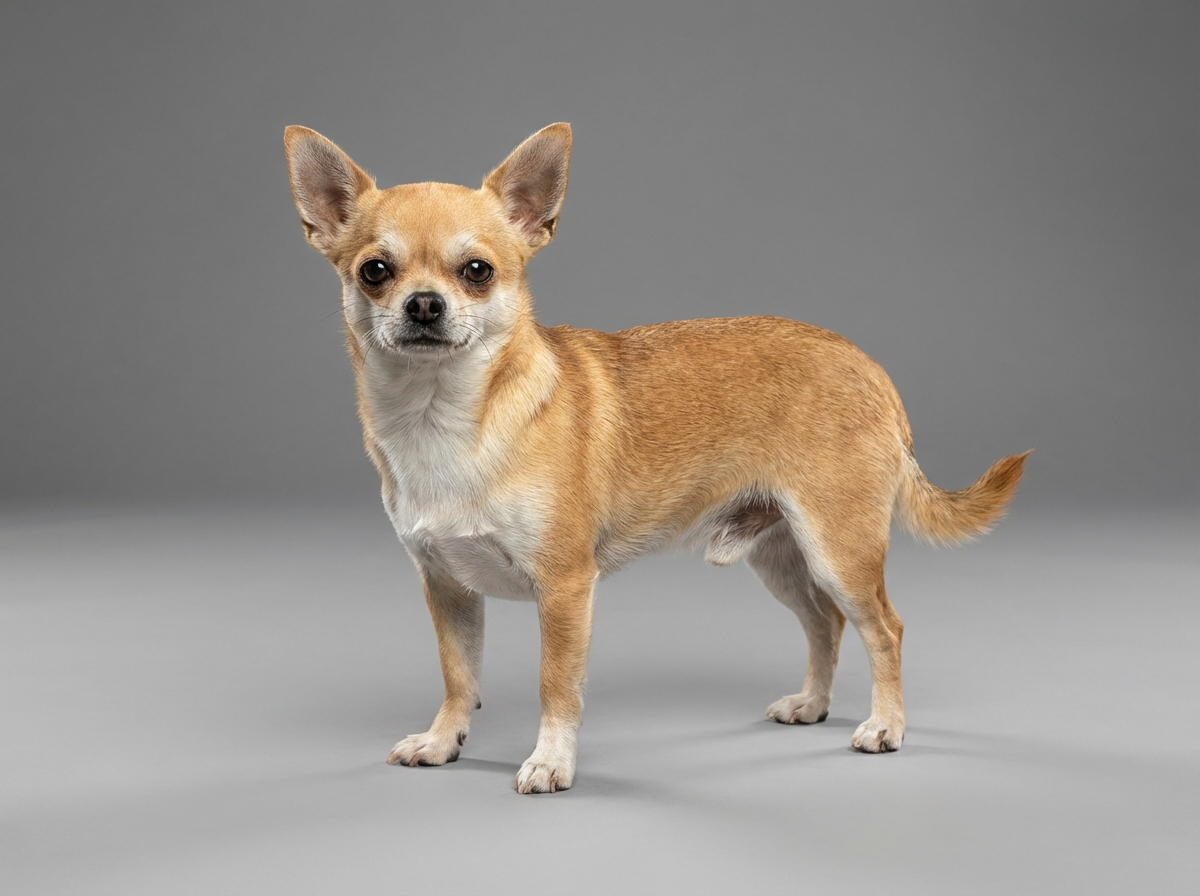
Health
Does every Chihuahua with a luxating patella need surgery?
No. Most are managed conservatively for life. Surgery is for dogs who are lame or painful, or whose grade is climbing despite good management.

Quick answer
Does every Chihuahua with a luxating patella need surgery?
No. Most are managed conservatively for life. Surgery is for dogs who are lame or painful, or whose grade is climbing despite good management.
Surgery does not put the kneecap back. It rebuilds the anatomy so the kneecap has somewhere to stay.
Owners who have been offered surgery and want to understand what is being proposed before agreeing, and owners weighing an operation on a dog who seems, most of the time, perfectly happy.
This guide is not medical advice. If your dog shows pain, sudden behavior change, or worsening symptoms, consult a licensed veterinarian.
Some links may be affiliate links. We may earn a commission at no extra cost to you. We only suggest products we believe are helpful for dog owners.
We research and check what we publish, but we do not warrant that any figure, date, price, or statement is accurate, complete, or current, and we accept no liability for any loss, cost, injury, or other harm arising from the use of this site. Use it as one reference among several. You remain responsible for your own decisions and for your dog's care - confirm anything that matters with a licensed veterinarian or another qualified professional before you act on it. Full disclaimer.
Patellar luxation surgery rebuilds the anatomy that should hold the kneecap in place: the groove it sits in, the alignment of the tendon that pulls it, and the soft tissue that stabilises it. It is indicated by pain and loss of function rather than by the diagnosis itself, and it carries a genuine six to eight week restriction period that determines much of the outcome.
Patellar luxation itself is extremely common in this breed and appears twice in its documented health issues. Surgery is far less common than the diagnosis, because the majority of affected dogs sit at grades that never require it. Among Chihuahuas who do undergo orthopaedic surgery, this is by a wide margin the most frequent procedure.
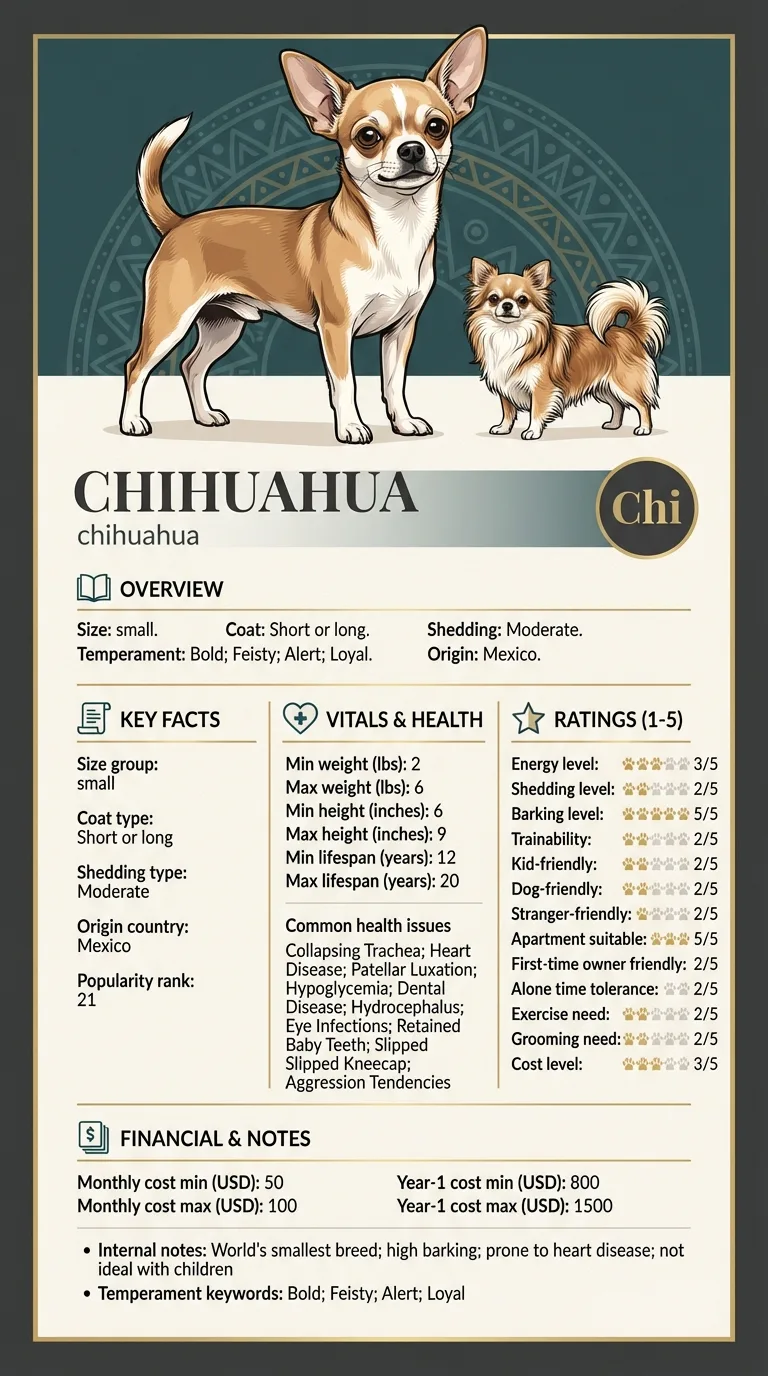
The condition is conformational. In affected dogs the trochlear groove at the end of the femur is too shallow to retain the kneecap, or the attachment point of the patellar tendon on the tibia sits medially, so muscle contraction pulls the kneecap off track. Selection for a 2 to 6 pound dog standing 6 to 9 inches tall has produced very fine limb bones with correspondingly shallow grooves and small margins for alignment error. It is inherited, which is why affected dogs should not be bred.
The household does not cause the malformation but heavily influences whether a dog ever reaches the surgical threshold. Hard slippery floors deliver the lateral forces that dislocate the kneecap. Jumping down from human-height furniture repeatedly loads a poorly tracking joint. Sedentary periods cost the thigh muscle that acts as the joint's active restraint. Excess weight multiplies all three. Two dogs with identical anatomy can end up in very different places depending on the surfaces and furniture they live with.
Book an assessment appointment if the skipping has become a limp, if she is reluctant to walk or rise, if her hind stance has changed, or if the thigh muscle on one side has visibly reduced. Seek same-day care for a leg she will not bear weight on at all, obvious pain or crying out, or a kneecap that has dislocated and has not returned to position by itself. After surgery, contact the clinic promptly for swelling, discharge or heat around the wound, a wound the dog has managed to interfere with, sudden worsening of lameness after a period of improvement, or any fall or escape during the restriction period, since a jump can undo a bone repair. Never give human pain medication, and never stop prescribed pain relief early because she seems comfortable.
See all Chihuahua health problems, which breeds are prone to patellar luxation, or the full Chihuahua breed guide for temperament, exercise needs and ownership costs.
Hospitalisation is usually one to two nights. Strict restriction runs six to eight weeks, with a follow-up radiograph typically around the six to eight week mark to confirm bone healing before activity is increased. A graded return then takes a further four to eight weeks. Most dogs are using the leg reasonably within two to three weeks, which is misleading and dangerous, because the bone is not yet healed. Full functional recovery is realistically three to four months from the date of surgery.
Success is a comfortable dog with a kneecap that stays where it belongs and a hind limb she uses normally. Realistically that may still include some stiffness after rest and a slight difference in stride, particularly in dogs who were operated on late. It does not mean a joint restored to factory condition, and any arthritis already present remains. The clearest sign of success is that the household stops thinking about her knee, which for a dog with fifteen years ahead of her is the outcome worth paying for.
A dislocating kneecap is usually the result of several structural faults acting together, and surgery addresses whichever of them the individual dog has.
The first is a groove that is too shallow. The kneecap should sit in a channel at the end of the thigh bone deep enough to contain it. Where that channel is flat, a surgeon can deepen it, cutting and reshaping the joint surface so the kneecap sits down inside rather than perching on top.
The second is misalignment of the pull. The tendon below the kneecap attaches to a bony prominence at the top of the shin. If that attachment point sits off to one side, every contraction of the thigh muscle drags the kneecap sideways, regardless of how deep the groove is. The correction involves detaching that piece of bone, moving it to the correct position and pinning it there. In a dog whose entire shin bone is a few centimetres long, this is delicate work and is a reason to seek an experienced surgeon.
The third is soft tissue that has adapted to the abnormal position, tight on the side the kneecap dislocates toward and stretched on the other. This is released and tightened respectively to hold the corrected position.
Most operations combine two or three of these. Which combination depends on the specific anatomy, which is why the surgeon will want to examine the dog and image the limb rather than quoting a standard procedure.

Grade alone does not decide this. Function does.
If you think your Chi has patellar luxation, the plan is three steps: write down what you have seen and when it started, book a veterinary appointment rather than waiting for the next flare, and take video of the behaviour or symptom before you go — the thing you are worried about rarely happens in the consulting room. Screening in the parents covers collapsing trachea, heart disease, patellar luxation.
What the vet visit should produce is a diagnosis and a written plan, not just reassurance: what is being ruled out, what the monitoring interval is, and which signs mean you come back sooner. Ask what the treatment costs across a year rather than per visit, because that is the number that decides whether you are managing this condition or reacting to it.
Between appointments, keep a short log — dates, what you saw, what changed. It is the single most useful thing an owner brings to a follow-up, and for patellar luxation it is often what separates a clear pattern from a guess.
Nena was six when her occasional skip turned into a limp she did not shake off. Her grade had moved from two to three across two annual examinations, and the muscle on her left thigh had noticeably reduced. Her owner Callum had been managing her conservatively for years, and had been doing it properly. The surgeon deepened the groove and moved the tibial crest. What Callum credits for the outcome is the fortnight before: he set up the pen, taught her to settle in it with a stuffed chew, put runners down and installed a ramp, all while she was still well. When she came home she went into a space she already liked. She was restricted for seven weeks, radiographed, then walked in five-minute increments for a month. At four months she was trotting normally. Callum's advice to anyone facing the same decision is that the surgery took ninety minutes and the recovery took a season, and the recovery is the part you have to be ready for.
Key takeaway: The operation is the short part. Prepare the house and the dog for eight weeks of confinement before the date, because the restriction period is where the result is actually determined.
Outcomes in small dogs are generally good, with most returning to comfortable function. Complications do occur, including re-dislocation, implant problems and delayed healing, and rates are higher in the more severe grades where more extensive correction is needed. Ask your surgeon for their own outcome figures for dogs of this size and grade, which is a reasonable question and a good one.
Usually not. Operating on both simultaneously leaves a dog with no sound hind limb to weight-bear on during recovery, which is difficult even at four pounds. Most surgeons stage the procedures, treating the worse knee first and reassessing the other after recovery, since some dogs improve on the second side once the first is stable.
Expect strict activity restriction for six to eight weeks, with lead-only toileting and no jumping, running or stairs. Bone healing where the tibial crest has been moved takes that long regardless of how well the dog feels. A structured return to activity follows over several further weeks, and full functional recovery is usually described in terms of three to four months.
It is one of the more significant orthopaedic expenses in small-dog practice, and the figure varies widely by region, surgeon and whether a specialist centre is involved. Bilateral cases double it. Get a written estimate that includes imaging, the procedure, hospitalisation, follow-up radiographs and rechecks, since the headline surgical fee is rarely the total.
Probably some, particularly if the joint has been dislocating for years before correction. Surgery stops further mechanical damage but does not remove damage already done. This is an argument for operating sooner in a dog who genuinely needs it rather than deferring the decision for several more years.
Very often yes, and most Chihuahuas with this condition never have it. Conservative management works well for lower grades and works better the more seriously it is taken. Where it fails is usually in households that installed a ramp and did nothing else. Weight, traction, muscle and consistent daily walking together are the intervention, not any one of them alone.
The early signs are set out in the sections above, and they are the reason to book a veterinary appointment rather than wait. Patellar Luxation in Chis is diagnosed by a vet, not from a symptom list, and the sooner it is on record the more options remain open.
No. Most are managed conservatively for life. Surgery is for dogs who are lame or painful, or whose grade is climbing despite good management.
Deepening the groove the kneecap sits in, repositioning the tendon's attachment on the shin, and rebalancing the soft tissue around the joint.
Six to eight weeks of strict limitation, lead-only toileting and no jumping, followed by a graded return over several more weeks.
Usually not. Staging the procedures leaves the dog a sound leg to stand on during recovery, which matters even at four pounds.
A one-page prep sheet for this condition: the signs, the questions to ask, what to get priced. Unlocks here.
You get: Vet visit prep sheet
No spam. One-click unsubscribe. See our privacy policy.
See a sample page before you decide.
Early access list
The free prep sheet covers the same-day warning signs, a symptom log and the questions to ask. We are considering a fuller kit that adds a cost worksheet for the usual tests and treatments (US price ranges with their sources) and a plain-English guide to ways of covering the bill. It is not built yet; this list tells us whether it is worth building.
One email, no spam, unsubscribe anytime. Information only, not veterinary advice.