Health
Do Bichon Frises have breathing problems?
Not as a breed trait. They have normal airways, so laboured breathing in a Bichon is a symptom that should be investigated.

Quick answer
Do Bichon Frises have breathing problems?
Not as a breed trait. They have normal airways, so laboured breathing in a Bichon is a symptom that should be investigated.
If your Bichon is making a noise when it breathes, the question is where the noise comes from. Throat, windpipe and lungs each produce a different sound and a different level of urgency.
Owners whose Bichon has developed a cough and who have found alarming statistics written for flat-faced breeds, and anyone trying to tell an irritated windpipe from something more serious.
This guide is not medical advice. If your dog shows pain, sudden behavior change, or worsening symptoms, consult a licensed veterinarian.
Some links may be affiliate links. We may earn a commission at no extra cost to you. We only suggest products we believe are helpful for dog owners.
We research and check what we publish, but we do not warrant that any figure, date, price, or statement is accurate, complete, or current, and we accept no liability for any loss, cost, injury, or other harm arising from the use of this site. Use it as one reference among several. You remain responsible for your own decisions and for your dog's care - confirm anything that matters with a licensed veterinarian or another qualified professional before you act on it. Full disclaimer.
Respiratory signs in a Bichon Frise cover coughing, noisy breathing, reverse sneezing and increased effort, and they arise from the windpipe, the lungs, infection or the heart rather than from any structural airway defect. Because this breed is not brachycephalic, noisy or laboured breathing should be treated as an abnormal finding to be explained, not as a breed characteristic to be tolerated.
Coughing is a routine reason small dogs are seen in practice, most often from infection or from windpipe irritation rather than from structural disease. Genuine airway obstruction of the sort seen in flat-faced breeds does not feature in this breed. The most common serious cause of respiratory signs in an older Bichon is cardiac rather than pulmonary.
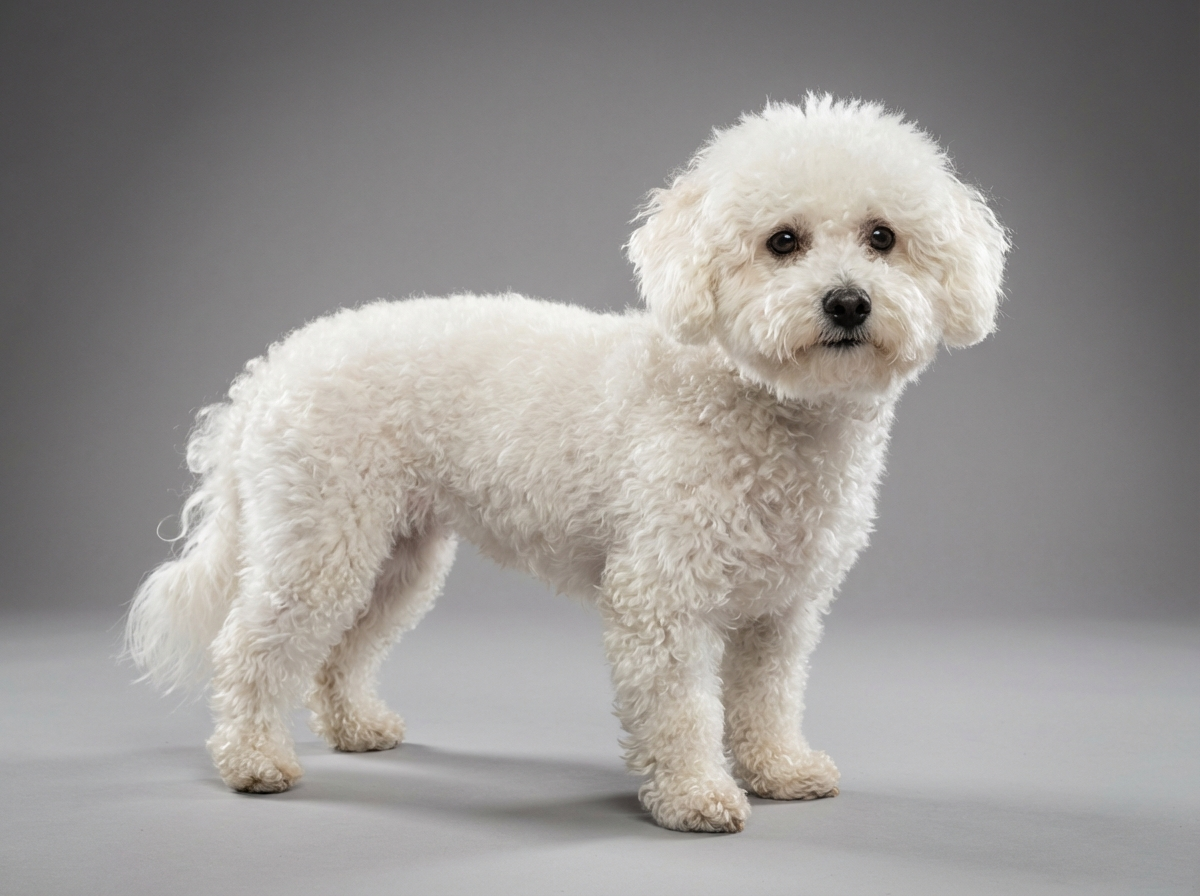
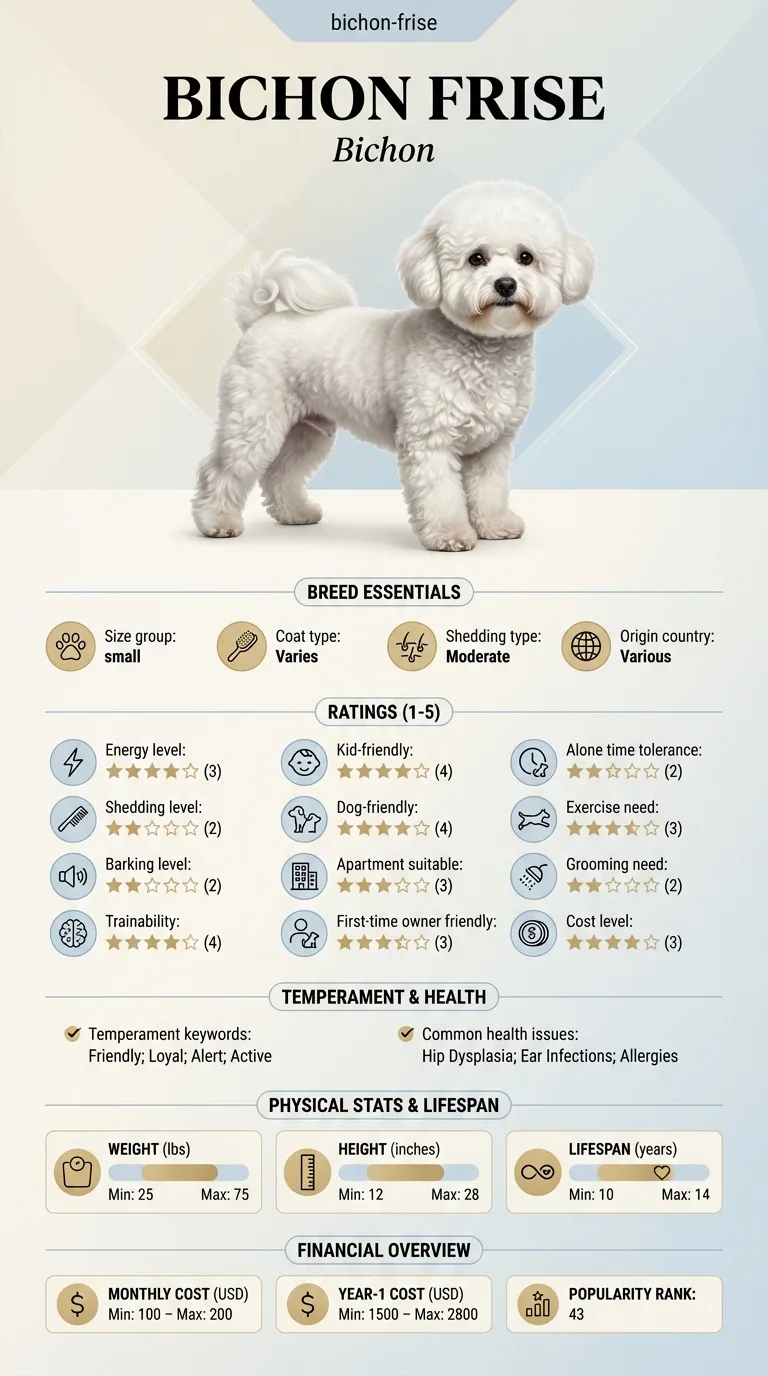
The relevant Bichon feature is the absence of a brachycephalic skull. With a proportionate muzzle and open nostrils, this dog moves air normally, and its documented health list contains no airway condition. What size does contribute is a small-diameter trachea, which is why any pressure applied to the neck by a collar matters more in a 12 to 18 pound dog than in a large one. The breed's barking level, rated at a moderate three, means some Bichons put their airway through prolonged vocal work.
Collar use is the most modifiable factor and is present in most households by default. Beyond that, shared dog environments spread infectious respiratory disease efficiently, and this is a sociable breed that tends to attend classes and daycare. Household irritants matter more than owners expect: aerosol sprays, cleaning products, scented candles and cigarette smoke all sit at nose height for a dog that is under a foot tall.
Go the same day for laboured or open-mouthed breathing at rest, gums that look pale, grey or blue, an inability to settle or lie down, collapse, or a cough producing pink frothy fluid. Any suspicion of a swallowed object causing sudden coughing and distress is also an emergency. Book within a few days for a cough lasting more than a week, a cough that is worsening, a change in the sound of your dog's bark, or coughing accompanied by weight loss or reduced appetite.
See all Bichon Frise health problems, which breeds are prone to respiratory disease, or the full Bichon Frise breed guide for temperament, exercise needs and ownership costs.
Infectious coughs typically settle within one to three weeks. Irritation-related coughing often improves within days of moving to a harness. Chronic windpipe weakness is managed rather than cured and requires permanent adjustments to lead equipment, weight and excitement levels. Cardiac causes follow their own longer trajectory.
Quiet, effortless breathing at rest, a normal sleeping breath rate, and coughing that has either resolved or been explained and attributed to a specific cause with a management plan attached.
Describing the sound accurately is the most useful thing you can do before an appointment, because the location narrows the possibilities immediately.
Brachycephalic obstructive airway syndrome is a mechanical problem created by selective breeding for a shortened skull. The soft tissues of the nose, palate and throat remain roughly the length they would be in a normal-muzzled dog, but the bony framework holding them has been compressed, so the tissue is crowded into a space too small for it. The result is narrowed nostrils, an over-long soft palate and a collapsing throat.
The Bichon Frise has not been bred for a shortened skull. Its muzzle is proportionate, its nostrils are open, and it does not carry the crowded soft tissue that defines the syndrome. Its documented health concerns are skin allergies, patellar luxation, bladder stones, cataracts and dental disease, and airway obstruction is not among them.
This matters practically. An owner who believes their Bichon is inherently a poor breather may accept noisy breathing as normal for the breed, when in a Bichon it is not normal and warrants investigation. The most useful thing to take from the flat-faced literature is not the risk figure but the reverse: in this breed, laboured breathing is a symptom rather than a feature.
Where heat is concerned, the Bichon's constraint is a dense insulating coat rather than a compromised airway, which is a completely different problem with a completely different solution.

If you think your Bichon has respiratory disease, the plan is three steps: write down what you have seen and when it started, book a veterinary appointment rather than waiting for the next flare, and take video of the behaviour or symptom before you go — the thing you are worried about rarely happens in the consulting room. Screening in the parents covers skin allergies, patellar luxation, bladder stones.
What the vet visit should produce is a diagnosis and a written plan, not just reassurance: what is being ruled out, what the monitoring interval is, and which signs mean you come back sooner. Ask what the treatment costs across a year rather than per visit, because that is the number that decides whether you are managing this condition or reacting to it.
Between appointments, keep a short log — dates, what you saw, what changed. It is the single most useful thing an owner brings to a follow-up, and for respiratory disease it is often what separates a clear pattern from a guess.
Milly's owner Ade had been worried for months about a dry honking cough that appeared on almost every walk. He had read about breathing problems in small white dogs and arrived at the practice expecting bad news. His vet watched Milly walk down the corridor on her lead. She pulled steadily, her collar rode up under her jaw, and she honked twice before reaching the consulting room. They fitted a harness and Ade booked two loose-lead sessions with a local trainer. The coughing on walks stopped within a fortnight. A chest radiograph taken at the same visit was clear.
Key takeaway: In a small dog, the equipment on the neck is worth ruling out before anything else. It is the cheapest possible intervention and it fixes a surprising proportion of walking-related coughs.
No. It has a normal muzzle length and a functional airway. Statistics comparing brachycephalic breeds against normal-muzzled dogs are describing Pugs, French Bulldogs and similar breeds, and applying those multipliers to a Bichon misrepresents its actual risk.
A dry honking cough, especially when excited or pulling on a lead, often relates to the windpipe. Small breeds can develop weakness in the cartilage rings supporting the trachea. Switching from a collar to a harness removes one aggravating factor immediately and is worth doing regardless.
It is a sudden rapid inward snorting caused by irritation at the back of the nose. It looks frightening and is usually harmless, resolving in under a minute. Frequent or worsening episodes are worth investigating, since persistent nasal irritation has causes worth identifying.
Yes, and distinguishing them matters. A cardiac cough tends to be soft, worse at night and lying down, and accompanies a rising sleeping breath rate. A dry honking cough during excitement more often points at the airway. Your vet may check both.
Not directly. The coat affects heat tolerance rather than airway function, because it traps warm air against the skin. A hot Bichon pants hard, which owners sometimes interpret as a breathing problem when the underlying issue is thermal.
Many cases are self-limiting over a week or two with rest, and your vet will advise whether treatment is warranted. Keep the dog away from other dogs while coughing, use a harness rather than a collar, and contact the practice if the dog becomes dull, feverish or off its food.
The early signs are set out in the sections above, and they are the reason to book a veterinary appointment rather than wait. Respiratory Disease in Bichons is diagnosed by a vet, not from a symptom list, and the sooner it is on record the more options remain open.
Not as a breed trait. They have normal airways, so laboured breathing in a Bichon is a symptom that should be investigated.
When breathing is laboured at rest, gums look pale or blue, or the dog cannot settle. Go the same day.
Yes for any small dog that coughs. Lead pressure on the throat directly aggravates tracheal irritation.
They are one of the more affordable imaging investigations and often the first useful step in a coughing dog.
Fit a well-designed harness and teach loose-lead walking, which removes the mechanical trigger rather than managing it.
A one-page prep sheet for this condition: the signs, the questions to ask, what to get priced. Unlocks here.
You get: Vet visit prep sheet
No spam. One-click unsubscribe. See our privacy policy.
Preview page 1 before you decide.