Behavior
What are quick tips for Yorkshire Terrier respiratory disease?
Keep your Yorkshire Terrier at a healthy weight and limit exposure to allergens. Regular vet check-ups and a stress-free environment are also crucial.

Quick answer
What are quick tips for Yorkshire Terrier respiratory disease?
Keep your Yorkshire Terrier at a healthy weight and limit exposure to allergens. Regular vet check-ups and a stress-free environment are also crucial.
Yorkshire Terrier respiratory disease can be a serious concern for owners. This condition affects their breathing and overall health.
Owners of Yorkshire Terriers, especially first-time dog parents or those living in urban areas, often struggle with the signs and symptoms of respiratory disease. Many may not realize their dog is at risk until they notice difficulty breathing or coughing.
This guide is not medical advice. If your dog shows pain, sudden behavior change, or worsening symptoms, consult a licensed veterinarian.
Some links may be affiliate links. We may earn a commission at no extra cost to you. We only suggest products we believe are helpful for dog owners.
We research and check what we publish, but we do not warrant that any figure, date, price, or statement is accurate, complete, or current, and we accept no liability for any loss, cost, injury, or other harm arising from the use of this site. Use it as one reference among several. You remain responsible for your own decisions and for your dog's care - confirm anything that matters with a licensed veterinarian or another qualified professional before you act on it. Full disclaimer.
Check this first
Recognizing when Yorkshire Terrier respiratory disease becomes an emergency is crucial. Look for red-flag signs that indicate you should call your vet immediately. These include severe difficulty breathing, persistent coughing or wheezing, bluish gums, or if your Yorkie collapses.
These symptoms suggest your dog may be in serious distress and requires urgent care.
On the other hand, there are milder signs that can be monitored. If your Yorkshire Terrier has occasional coughing or slight labored breathing without other severe symptoms, you may not need immediate vet attention. Instead, keep a close watch and consider scheduling a vet visit if these symptoms persist or worsen.
Always have a plan in place for monitoring your dog's condition.
It's essential to act quickly if you notice any of the emergency signs. Waiting too long can lead to serious complications. Regular check-ups and being aware of your dog's normal behavior can help you identify changes more easily.
If you're ever in doubt, it's better to err on the side of caution and consult your vet.
If any of these apply, call your vet or an emergency clinic now. The rest of this page is for the cases that are not an emergency.
Yorkshire Terrier respiratory disease can manifest as coughing, wheezing, or difficulty breathing. These symptoms are often triggered by stress, exposure to cold air, or physical exertion. For Yorkies, who are already at a higher risk for respiratory issues, these problems can become a part of their daily lives, affecting their overall well-being.
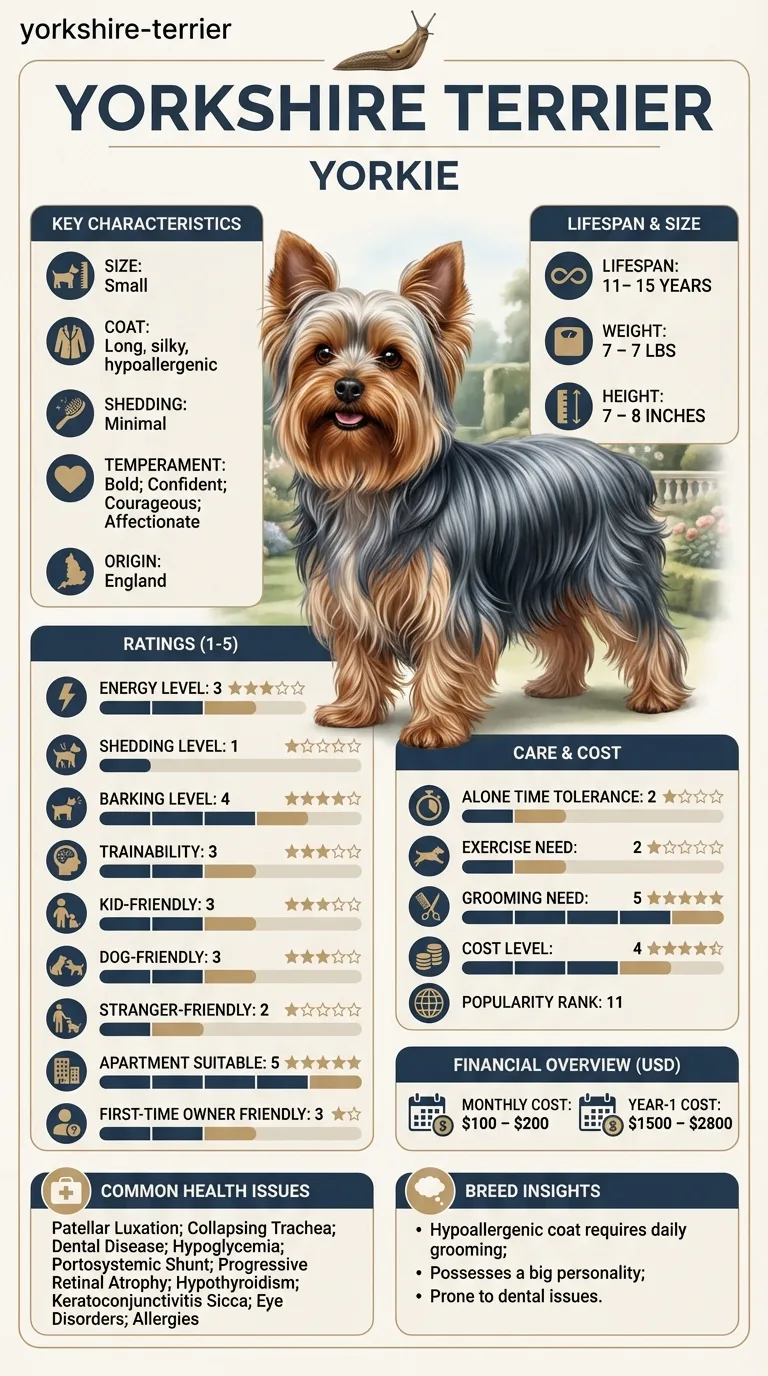
Respiratory disease is quite common in Yorkshire Terriers, with a risk that is 479% higher than in non-brachycephalic breeds. This means many owners may notice respiratory issues at some point in their dog's life, making awareness and early intervention crucial.
Yorkshire Terriers are small dogs with unique respiratory systems. Their flat faces and small windpipes can lead to breathing issues, making them prone to respiratory diseases. Additionally, their tendency to bark frequently can put extra strain on their respiratory health.
Environmental factors like smoke, dust, and allergens can trigger respiratory problems in Yorkshire Terriers. Stressful situations, such as loud noises or being left alone for long periods, can also exacerbate their respiratory issues.
If your Yorkie shows signs of persistent coughing, wheezing, or difficulty breathing, it's time to consult a vet. Early intervention can prevent more serious health issues down the line.
Avoiding these common mistakes can help improve your Yorkshire Terrier's respiratory health and overall well-being.
Start here: Yorkshire Terrier Most Common Genetic Disorders: Screening
See all Yorkshire Terrier health problems, which breeds are prone to respiratory disease, or the full Yorkshire Terrier breed guide for temperament, exercise needs and ownership costs.
It typically takes 2 to 6 months of consistent care and follow-up with your vet to see significant improvements in your Yorkshire Terrier's respiratory health.
Success means your Yorkie breathes more easily, has fewer coughing episodes, and enjoys daily activities without distress.
Maggie, a busy nurse in Chicago, adopted Daisy, a lively Yorkshire Terrier, who soon developed noticeable respiratory issues. Concerned, Maggie learned about the importance of a calm environment and started focusing on Daisy’s training. She implemented short, positive training sessions, keeping Daisy from over-exerting herself during walks, and invested in air purifiers to improve indoor air quality. Over time, Maggie saw Daisy becoming more active and comfortable, reducing her coughing significantly.
Key takeaway: With patience, tailored training, and a focus on environment, you can greatly improve your Yorkshire Terrier's respiratory health.
Yorkshire Terriers are prone to respiratory diseases due to their small size and brachycephalic features. Common causes include genetic predisposition, obesity, and environmental factors like smoke or allergens. Regular vet check-ups can help catch these issues early.
To help prevent respiratory disease in your Yorkshire Terrier, maintain a healthy weight and provide regular exercise. Avoid exposing them to smoke or allergens and schedule routine vet visits for early detection of any health issues. Training techniques that reduce stress can also support respiratory health.
Signs of respiratory disease may include coughing, wheezing, difficulty breathing, or excessive panting. If you notice these symptoms, it’s essential to consult your veterinarian promptly. Early intervention can lead to better outcomes.
While there isn't a training method specifically for respiratory disease, reducing stress through positive reinforcement training can help. Teaching your Yorkie calm behaviors can minimize anxiety, which may alleviate some breathing issues. Consider consulting a professional trainer for tailored strategies.
Creating a calm environment is key. Ensure proper humidity, avoid smoke, and maintain a moderate temperature. Regular grooming can also help by reducing allergens that may irritate their respiratory system.
Common signs include persistent coughing, difficulty breathing, and excessive panting. If your Yorkie shows these symptoms, it's important to consult your vet for a proper diagnosis.
Yes, older Yorkshire Terriers are at a higher risk for respiratory diseases due to age-related health issues. Regular vet check-ups can help monitor their respiratory health.
To assist your Yorkie, ensure they have a calm environment and avoid strenuous activities. Your vet may recommend specific treatments or medications to improve their condition.
If your Yorkie experiences severe breathing difficulties, seek emergency veterinary care immediately. Quick intervention can be crucial in these situations.
Keep your Yorkshire Terrier at a healthy weight and limit exposure to allergens. Regular vet check-ups and a stress-free environment are also crucial.
Managing respiratory disease can cost between $100 to $200 monthly, depending on vet visits and treatments. Yearly expenses may range from $1,500 to $2,800.
Yes, many Yorkshire Terriers live with respiratory issues, especially with proper management and care. Regular veterinary check-ups are essential for monitoring their health.
A one-page prep sheet for this condition: the signs, the questions to ask, what to get priced. Unlocks here.
You get: Vet visit prep sheet
No spam. One-click unsubscribe. See our privacy policy.
See a sample page before you decide.
Early access list
The free prep sheet covers the same-day warning signs, a symptom log and the questions to ask. We are considering a fuller kit that adds a cost worksheet for the usual tests and treatments (US price ranges with their sources) and a plain-English guide to ways of covering the bill. It is not built yet; this list tells us whether it is worth building.
One email, no spam, unsubscribe anytime. Information only, not veterinary advice.