Health
What are Jack Russell Terrier respiratory disease quick tips?
Keep your dog away from smoke and allergens, monitor their breathing closely, and ensure regular vet visits for check-ups.

Quick answer
What are Jack Russell Terrier respiratory disease quick tips?
Keep your dog away from smoke and allergens, monitor their breathing closely, and ensure regular vet visits for check-ups.
Jack Russell Terrier respiratory disease can be a serious concern for owners. This condition affects their ability to breathe properly, which is crucial for their overall health.
Many owners of Jack Russell Terriers grapple with respiratory disease, especially those who may not realize their dog is at risk. First-time dog owners or those living in urban environments with high allergens may find themselves particularly challenged by this issue.
This guide is not medical advice. If your dog shows pain, sudden behavior change, or worsening symptoms, consult a licensed veterinarian.
Some links may be affiliate links. We may earn a commission at no extra cost to you. We only suggest products we believe are helpful for dog owners.
We research and check what we publish, but we do not warrant that any figure, date, price, or statement is accurate, complete, or current, and we accept no liability for any loss, cost, injury, or other harm arising from the use of this site. Use it as one reference among several. You remain responsible for your own decisions and for your dog's care - confirm anything that matters with a licensed veterinarian or another qualified professional before you act on it. Full disclaimer.
Check this first
Recognizing the signs of respiratory distress in your Jack Russell Terrier is crucial. If you see any of the following red flags, call your vet immediately. These include severe difficulty breathing, excessive coughing, blue-tinged gums, or lethargy that seems out of character. These symptoms can indicate a serious condition that requires prompt attention.
On the other hand, some cases of respiratory issues may not be urgent. If your JRT is occasionally coughing or seems slightly wheezy but is still active and eating normally, you can monitor the situation. Keeping an eye on their breathing patterns and noting any changes can help determine if a vet visit becomes necessary later. Always have a plan in place for managing their health, including regular check-ups and a comfortable environment.
Being proactive about your dog’s respiratory health can make a big difference. If you’re unsure, it’s always better to err on the side of caution and consult your vet for guidance.
If any of these apply, call your vet or an emergency clinic now. The rest of this page is for the cases that are not an emergency.
Jack Russell Terriers can experience respiratory disease, which can show up as coughing, wheezing, or difficulty breathing. This issue is often triggered by environmental factors, such as allergens or extreme temperatures, and can be common due to their high energy and activity levels. Owners may notice their JRT struggling during exercise or becoming easily fatigued, which can be concerning.
Respiratory disease in Jack Russell Terriers is notably common, especially when compared to non-brachycephalic breeds. With an increased risk factor of 479%, it's essential for owners to be vigilant and proactive about their dog's respiratory health.
Jack Russell Terriers are generally not brachycephalic, but their high energy and fearless nature can lead to excessive barking or stress, which may aggravate respiratory issues. Their small size combined with an energetic lifestyle can sometimes strain their respiratory system, especially if they engage in rough play or overexert themselves.
Environmental factors like exposure to allergens, pollution, or poor ventilation can contribute to respiratory disease in Jack Russell Terriers. Additionally, living in a stress-filled environment or exposing them to smoke and other irritants can worsen their breathing problems.
If you notice persistent coughing, wheezing, or labored breathing, it’s essential to consult a vet. Early intervention can prevent serious complications related to respiratory disease.
Many owners unintentionally reinforce respiratory issues in their Jack Russell Terriers. Here are some common mistakes to avoid.
Start here: Jack Russell Terrier Most Common Genetic Disorders
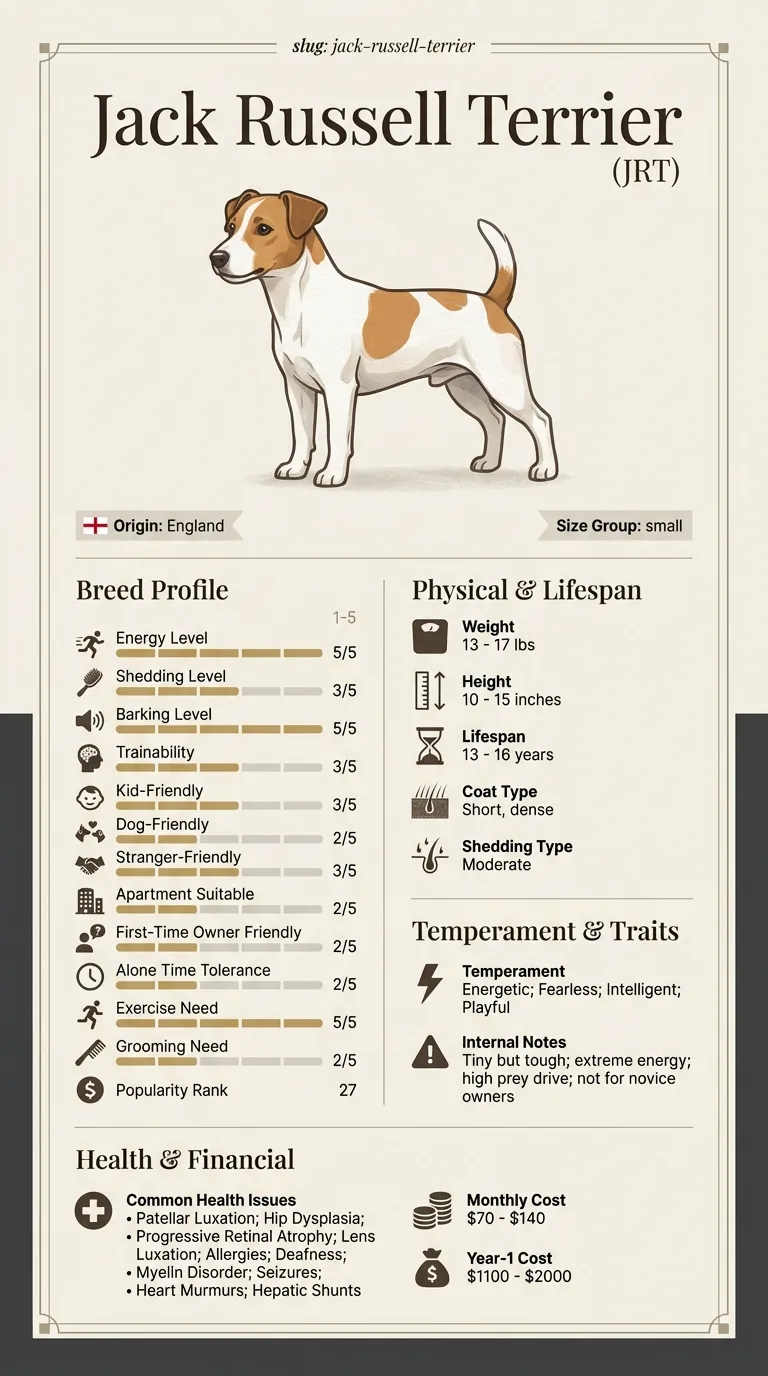
See all Jack Russell Terrier health problems, which breeds are prone to respiratory disease, or the full Jack Russell Terrier breed guide for temperament, exercise needs and ownership costs.
Addressing Jack Russell Terrier respiratory disease can take several weeks to months, depending on the severity. Regular vet check-ups and adjustments in care are essential throughout this process.
Success means your Jack Russell Terrier shows improved breathing, reduced coughing, and increased energy levels. You'll also notice a better response to training and a happier demeanor overall.
Lisa, a busy nurse in Seattle, noticed her Jack Russell Terrier, Max, coughing frequently. At first, she thought it was just allergies, but the cough worsened. After a visit to the vet, Lisa learned that Max had respiratory disease. She followed the vet's advice, which included avoiding smoke and allergens, and began a gentle exercise routine. With time and care, Max’s breathing improved significantly, and he became more playful again. Lisa felt relieved and happy to see her little buddy thriving.
Key takeaway: Consistency in following medical advice and making environmental adjustments are crucial for managing respiratory disease in Jack Russell Terriers.
Jack Russell Terriers can develop respiratory diseases due to a variety of reasons such as genetic predisposition, allergies, or infections. Their high energy level can also lead to overexertion, causing breathing issues. Regular vet check-ups can help catch these problems early. This answer relates to Jack Russell Terrier respiratory disease.
To help prevent respiratory disease, ensure your Jack Russell Terrier has a healthy diet and regular exercise. Avoid exposing them to allergens and smoke, and keep an eye out for any coughing or wheezing. Consulting a vet for a tailored health plan is crucial.
Common signs include coughing, difficulty breathing, rapid breathing, or lethargy. You might also notice changes in appetite or unusual nasal discharge. If you observe any of these symptoms, it's best to consult your veterinarian.
Yes, respiratory diseases can often be managed through medication, lifestyle changes, and sometimes surgery. Your vet will recommend the best course of action based on the specific condition and severity. Early intervention is key for better outcomes.
Jack Russell Terriers are generally healthy but can have a higher risk for respiratory diseases due to their high energy and potential for allergies. Regular vet check-ups can help identify any issues early on. Maintaining a healthy environment is also essential.
Training helps ensure your Jack Russell stays calm and doesn't overexert itself while playing or exercising. Techniques such as positive reinforcement can train them to take breaks during playtime. A well-trained dog is less likely to experience stress-induced respiratory issues.
Early signs of respiratory disease in a Jack Russell Terrier can include coughing, labored breathing, or excessive panting. If your JRT seems more tired than usual or is reluctant to exercise, it might be time to consult your vet.
Yes, older Jack Russell Terriers can be more susceptible to respiratory diseases due to aging lungs and a decreased immune response. Regular vet check-ups can help monitor their respiratory health as they age.
Environmental factors like smoke, dust, or allergens can worsen respiratory issues in Jack Russell Terriers. Ensuring a clean living space and minimizing exposure to irritants can help keep your dog’s breathing clear.
If your Jack Russell Terrier is diagnosed with respiratory disease, follow your vet's treatment plan closely. This may include medication, changes in diet, or modifications to their exercise routine to manage their condition effectively.
Yes, training techniques for a Jack Russell Terrier with respiratory issues should focus on gentle exercises and avoiding strenuous activities. Positive reinforcement during low-impact training can help keep them engaged without overexerting their lungs.
Keep your dog away from smoke and allergens, monitor their breathing closely, and ensure regular vet visits for check-ups.
Watch for signs like coughing, wheezing, or increased effort in breathing. If these occur, consult your vet promptly.
Immediately schedule a vet appointment for an evaluation and follow their recommendations for treatment and care.
Yes, focus on calm training techniques and avoid strenuous activities that could exacerbate their condition.
Aim for at least once a year for a general check-up, but more frequent visits may be necessary if respiratory issues arise.
A one-page prep sheet for this condition: the signs, the questions to ask, what to get priced. Unlocks here.
You get: Vet visit prep sheet
No spam. One-click unsubscribe. See our privacy policy.
Preview page 1 before you decide.