Health
How do I tell regurgitation from vomiting?
Regurgitation is passive with no retching and produces undigested food. Vomiting involves visible abdominal effort and usually bile.

Quick answer
How do I tell regurgitation from vomiting?
Regurgitation is passive with no retching and produces undigested food. Vomiting involves visible abdominal effort and usually bile.
Owners almost always describe regurgitation as vomiting, and that single misdescription sends investigations in the wrong direction more often than any other in small animal practice.
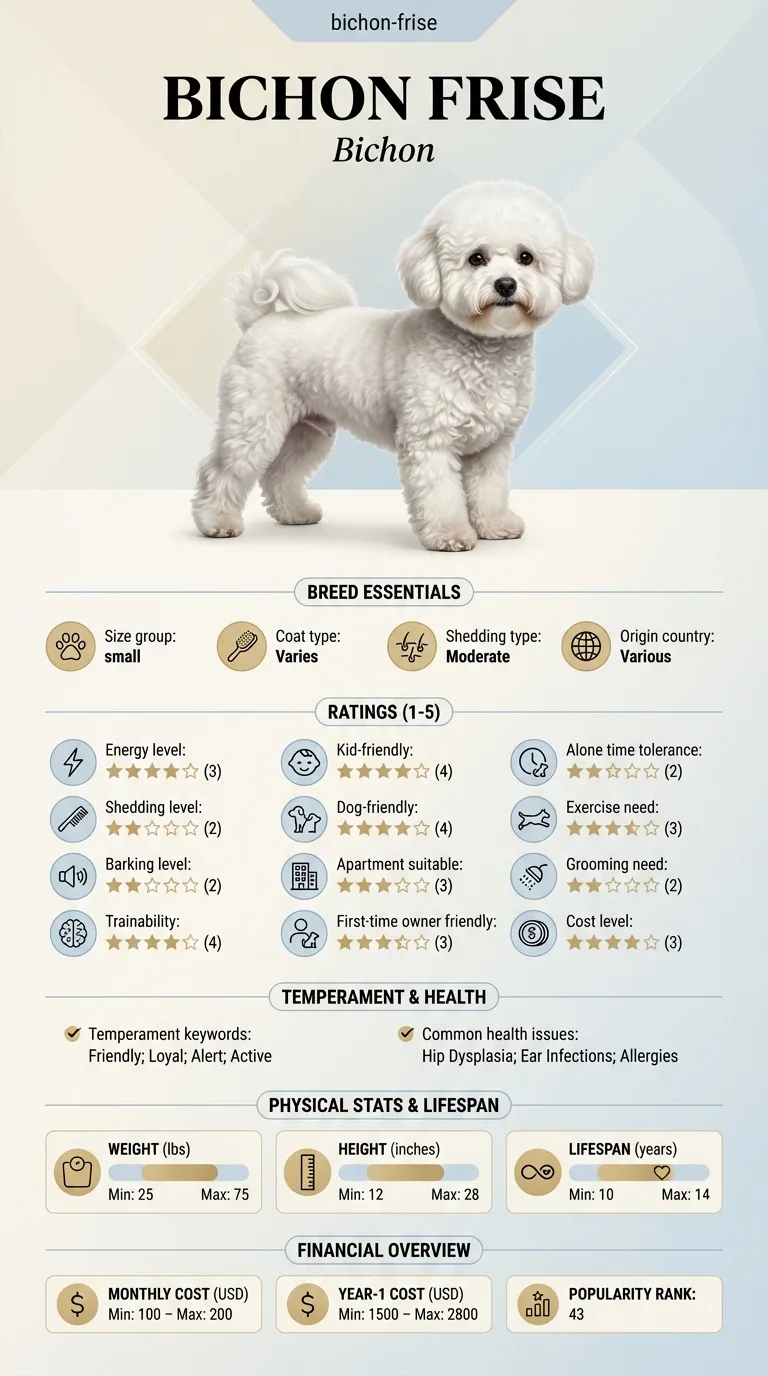
Owners whose Bichon brings food back up regularly and who have been treating what they assume is a sensitive stomach. Also anyone who has been told the word megaoesophagus and wants to understand what it means practically.
This guide is not medical advice. If your dog shows pain, sudden behavior change, or worsening symptoms, consult a licensed veterinarian.
Some links may be affiliate links. We may earn a commission at no extra cost to you. We only suggest products we believe are helpful for dog owners.
We research and check what we publish, but we do not warrant that any figure, date, price, or statement is accurate, complete, or current, and we accept no liability for any loss, cost, injury, or other harm arising from the use of this site. Use it as one reference among several. You remain responsible for your own decisions and for your dog's care - confirm anything that matters with a licensed veterinarian or another qualified professional before you act on it. Full disclaimer.
Oesophageal disease means the tube carrying food to the stomach is not propelling it properly. Food collects and is returned passively as regurgitation rather than vomited. The main risks are inadequate nutrition and, far more seriously, inhalation of material into the lungs causing pneumonia. It is not documented in the Bichon Frise, and simpler explanations such as eating too fast are worth excluding first.
Genuine megaoesophagus is uncommon and is not a recognised Bichon Frise problem. Regurgitation as a symptom, however, is seen frequently in general practice, and in small greedy dogs the commonest reason by far is simply eating too quickly. Distinguishing the benign scenario from the serious one is the practical purpose of an appointment and usually of a radiograph.
The Bichon Frise carries no documented oesophageal condition, and the breed's health list points elsewhere entirely: skin, kneecaps, bladder stones, lenses and teeth. Two of those do touch on swallowing indirectly. Dental disease is documented here, and a dog with a painful mouth alters how it chews and may bolt food it cannot comfortably process, which contributes to regurgitation. Body size matters practically rather than anatomically: a 12 to 18 pound dog that repeatedly loses meals becomes underweight faster than a large dog would, so nutritional consequences appear sooner.
Feeding practice drives most of what owners see. A single large meal given to a food-motivated dog that empties the bowl in under half a minute is a reliable recipe for immediate regurgitation, and multi-dog households with competitive eating make it worse. Bowl height, floor surface and whether the dog is disturbed while eating all influence how fast it eats. For a dog with genuine oesophageal disease, the household environment becomes central to management, since upright feeding requires equipment, space and someone present to supervise for the twenty minutes afterwards.
Book an appointment for regurgitation that happens more than occasionally, for any weight loss, or for a dog that seems hungry but cannot keep food down. Take a photograph of the material and a clear account of whether there was effort involved. Go the same day, or to an emergency clinic out of hours, for a new cough, rapid or laboured breathing, fever, sudden lethargy or loss of appetite in a dog that regurgitates, since those suggest aspiration pneumonia, which is the main cause of death in these dogs. Sudden onset regurgitation with distress and repeated swallowing can indicate a lodged object and also needs urgent attention.
See all Bichon Frise health problems, which breeds are prone to esophageal disease, or the full Bichon Frise breed guide for temperament, exercise needs and ownership costs.
Regurgitation caused by eating too fast usually improves within a few days of changing how food is presented, which makes it worth trying first. Where investigation is needed, radiographs are typically the first step and can be done at a single visit. Confirmed megaoesophagus is managed rather than cured, and finding the right combination of food consistency, portion size and upright duration usually takes several weeks of methodical trial with veterinary guidance.
Success is a dog maintaining a stable, healthy weight, regurgitating rarely rather than daily, with clear lungs and no history of pneumonia. For a dog with permanent oesophageal disease, that outcome depends almost entirely on the daily routine rather than on medication, and owners who build the feeding regime into ordinary life do best. For most Bichon owners reading this, success is simpler: a slower bowl and a resolved problem.
Watch the next episode carefully rather than clearing it up immediately. What you observe in those few seconds is worth more to your vet than weeks of description.
Owners understandably focus on nutrition when food keeps coming back up. The more serious risk is what happens to material travelling upward past the entrance to the windpipe.
When regurgitated food or fluid is inhaled into the lungs, it causes aspiration pneumonia. This is the leading cause of illness and death in dogs with oesophageal disease, and it can develop quickly.
The signs are worth memorising: a new cough, rapid or laboured breathing, fever, lethargy, and loss of appetite in a dog that was previously eating eagerly despite regurgitating. Any of those in a dog that regurgitates is a same-day veterinary matter rather than something to monitor.
This risk is also why the management advice for these dogs revolves around gravity. Feeding a dog in an upright position, and keeping it upright for a period afterwards, lets gravity do the work the oesophageal muscle cannot, moving food downward and reducing the volume available to come back up.
The texture of food matters too, and it varies by individual: some dogs manage a liquid slurry best, others do better with meatballs of a firmer consistency. Finding which suits your dog is a matter of supervised trial rather than a rule.

If you think your Bichon has esophageal disease, the plan is three steps: write down what you have seen and when it started, book a veterinary appointment rather than waiting for the next flare, and take video of the behaviour or symptom before you go — the thing you are worried about rarely happens in the consulting room. Screening in the parents covers skin allergies, patellar luxation, bladder stones.
What the vet visit should produce is a diagnosis and a written plan, not just reassurance: what is being ruled out, what the monitoring interval is, and which signs mean you come back sooner. Ask what the treatment costs across a year rather than per visit, because that is the number that decides whether you are managing this condition or reacting to it.
Between appointments, keep a short log — dates, what you saw, what changed. It is the single most useful thing an owner brings to a follow-up, and for esophageal disease it is often what separates a clear pattern from a guess.
Casper brought food back up two or three times a week, always within minutes of eating. His owner, Lena, had been through two sensitive stomach diets and a course of anti-nausea treatment with no change at all. At the third appointment her vet asked a question nobody had asked: did Casper heave, or did it just fall out. Lena did not know, because she had always been in another room. She watched the next time. There was no retching, no abdominal effort, and no warning. Casper lowered his head and a compact cylinder of undigested kibble dropped onto the tiles, which he then ate. He was entirely bright. That was regurgitation, not vomiting, and it changed the direction of the investigation completely. Radiographs showed a normal oesophagus. What Lena's account also revealed was that Casper emptied his bowl in about fifteen seconds. A maze bowl and three smaller meals ended it within a week. Two diets and a course of medication had been aimed at the wrong organ entirely.
Key takeaway: Watch the episode rather than the aftermath, because whether your dog heaved or simply dropped it decides which part of the body anyone should be investigating.
It is not among the health issues documented for the breed. Congenital megaoesophagus is recognised in several other breeds and is usually identified around weaning, while acquired forms can occur in any dog, often secondary to another condition. A Bichon that regurgitates deserves investigation on its own merits rather than on breed statistics.
It is the term for an oesophagus that has lost its muscular tone and become dilated, so food pools in it rather than being propelled to the stomach. It is confirmed on imaging. It may be present from birth or acquired later, and where it is acquired the underlying cause needs investigating because some are treatable.
The dog eats with its front end raised well above its hindquarters and then stays that way for ten to twenty minutes afterwards, which is when gravity does the work. Purpose-built chairs exist, and some owners use steps or a wedge. Your vet should advise on the position and the duration for your individual dog.
Often, yes. Eating too fast is a very common cause of immediate regurgitation in a greedy small dog, and slowing the meal resolves it. So can a mouth that hurts, and dental disease is documented in this breed. Those possibilities are cheap to address and worth ruling out early.
Where an underlying cause is found and treated, function can improve. Where the oesophagus itself has permanently lost tone, management rather than cure is the realistic aim, and it centres on feeding position, food consistency, meal frequency and vigilance for pneumonia. Some dogs live well for years on that regime.
A raised bowl on its own is not the same as upright feeding and is not sufficient for a dog with genuine oesophageal disease, which needs the whole body angled rather than just the head lifted. For a dog without oesophageal disease, bowl height is a comfort question. Ask your vet which situation applies.
The early signs are set out in the sections above, and they are the reason to book a veterinary appointment rather than wait. Esophageal Disease in Bichons is diagnosed by a vet, not from a symptom list, and the sooner it is on record the more options remain open.
Regurgitation is passive with no retching and produces undigested food. Vomiting involves visible abdominal effort and usually bile.
Aspiration pneumonia from inhaled material. A new cough, fast breathing or lethargy in a regurgitating dog needs same-day attention.
Gravity moves food down the tube when the muscle cannot. Upright feeding and staying upright afterwards is the core of management.
Very possibly. A greedy small dog that empties a bowl in twenty seconds often regurgitates immediately, and slowing the meal fixes it.
Radiographs are moderate. Contrast studies, endoscopy and testing for underlying causes add up, so ask for a stepwise plan with estimates.
A one-page prep sheet for this condition: the signs, the questions to ask, what to get priced. Unlocks here.
You get: Vet visit prep sheet
No spam. One-click unsubscribe. See our privacy policy.
Preview page 1 before you decide.