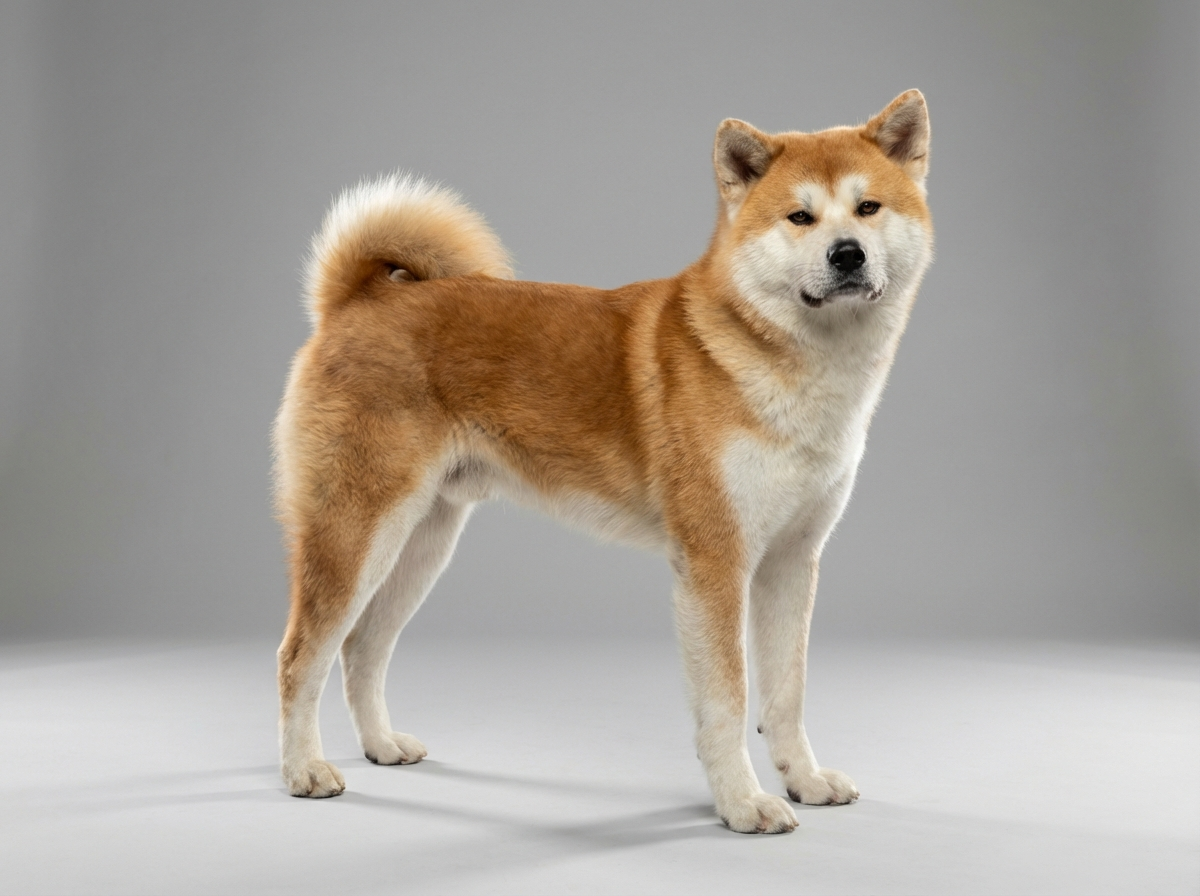
Health
What's the difference between regurgitation and vomiting?
Regurgitation is passive and effortless, bringing up undigested food shortly after eating; vomiting involves active abdominal effort.

Quick answer
What's the difference between regurgitation and vomiting?
Regurgitation is passive and effortless, bringing up undigested food shortly after eating; vomiting involves active abdominal effort.
Regurgitation right after eating looks similar to vomiting but points toward a completely different part of the digestive tract — and in a breed prone to autoimmune conditions, that distinction matters.
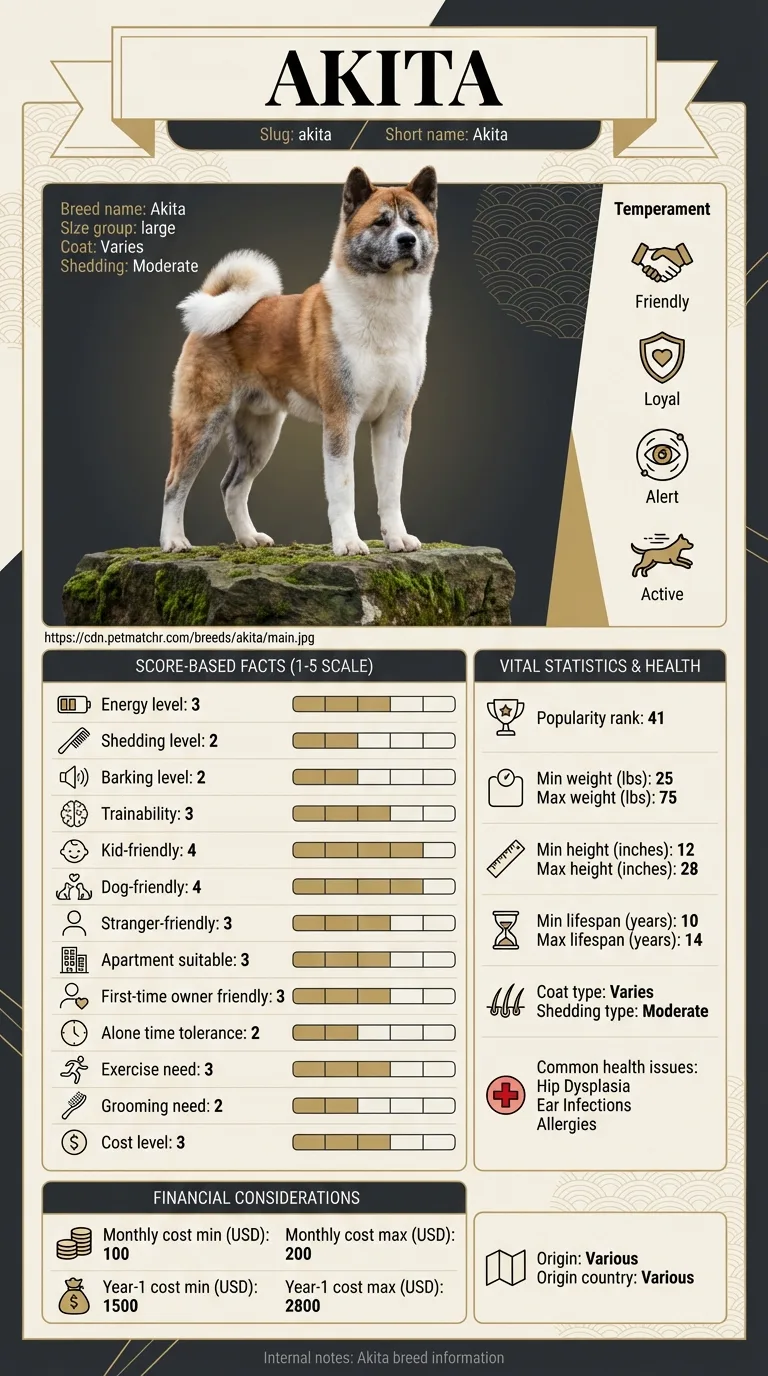
Owners who notice their Akita regurgitating undigested food shortly after eating, particularly if the dog also has or is being evaluated for an autoimmune condition, are the audience here.
This guide is not medical advice. If your dog shows pain, sudden behavior change, or worsening symptoms, consult a licensed veterinarian.
Some links may be affiliate links. We may earn a commission at no extra cost to you. We only suggest products we believe are helpful for dog owners.
We research and check what we publish, but we do not warrant that any figure, date, price, or statement is accurate, complete, or current, and we accept no liability for any loss, cost, injury, or other harm arising from the use of this site. Use it as one reference among several. You remain responsible for your own decisions and for your dog's care - confirm anything that matters with a licensed veterinarian or another qualified professional before you act on it. Full disclaimer.
Check this first
Difficulty breathing, a new cough with fever or lethargy following a regurgitation episode, or repeated regurgitation with visible distress all warrant same-day veterinary care. These can indicate aspiration pneumonia, a serious complication where regurgitated material enters the lungs, which needs prompt treatment.
Occasional regurgitation of undigested food shortly after eating, without breathing difficulty or other systemic symptoms, is not necessarily an emergency but does warrant a prompt vet visit to identify the underlying cause and start appropriate management.
Because megaesophagus can sometimes be connected to an autoimmune neuromuscular condition, any Akita with known or suspected autoimmune disease that develops new regurgitation symptoms should be evaluated promptly given the potential connection between the two.
If any of these apply, call your vet or an emergency clinic now. The rest of this page is for the cases that are not an emergency.
Esophageal disease, most notably megaesophagus, involves the esophagus losing its ability to move food normally to the stomach, causing regurgitation. While not a primary standalone documented Akita risk, it's a genuine secondary concern connected to myasthenia gravis and other autoimmune neuromuscular conditions, which are relevant given this breed's broader documented tendency toward autoimmune disease.
Esophageal disease isn't independently documented as a common Akita-specific finding, but given the breed's documented predisposition to autoimmune conditions like thyroiditis and chronic hepatitis, the neuromuscular autoimmune pathway to megaesophagus is a plausible, worth-watching secondary risk rather than a coincidental one.
The Akita's relevant connection to esophageal disease is indirect, through its documented broader tendency toward autoimmune conditions. Myasthenia gravis specifically, an autoimmune disorder affecting communication between nerves and muscles, is a recognized cause of acquired megaesophagus in adult dogs, making this pathway more plausible in a breed already known for immune-mediated disease than in a breed without that background.
Because the relevant pathway to this condition in Akitas is primarily autoimmune rather than environmental, there are limited modifiable environmental triggers. How promptly an underlying autoimmune cause is identified and treated, however, meaningfully affects whether esophageal function can improve.
See a vet the same day for breathing difficulty, a new cough with fever or lethargy after regurgitation, or repeated regurgitation with visible distress. Schedule a prompt visit for occasional regurgitation of undigested food to identify the underlying cause.
Regurgitation is often mistaken for vomiting, which leads owners down the wrong management path. Avoid these mistakes.
See all Akita health problems, which breeds are prone to esophageal disease, or the full Akita breed guide for temperament, exercise needs and ownership costs.
Diagnostic workup typically takes a few days to identify megaesophagus and investigate underlying causes like myasthenia gravis. If an underlying autoimmune cause is treated successfully, esophageal function can sometimes improve over weeks to months; idiopathic cases are generally managed long-term.
Success is a dog with well-managed regurgitation symptoms, no episodes of aspiration pneumonia, and, where an underlying autoimmune cause is identified and treated, meaningful improvement in esophageal function over time.
Amara noticed her seven-year-old Akita, Sable, regurgitating undigested food shortly after meals over several weeks in Wichita. Her vet distinguished this from vomiting based on the timing and appearance, and X-rays confirmed an enlarged esophagus consistent with megaesophagus. Further bloodwork identified myasthenia gravis as the underlying cause. Amara switched Sable to an elevated feeding setup and started treatment for the myasthenia gravis. Over the following months, as the autoimmune condition responded to treatment, Sable's esophageal function improved enough that regurgitation episodes became rare.
Key takeaway: Distinguishing regurgitation from vomiting and considering an autoimmune cause, given this breed's documented tendencies, can lead to a treatable underlying diagnosis rather than an assumed permanent condition.
It's not a primary standalone documented risk the way bloat or urate stones are, but it's a relevant secondary concern given this breed's documented tendency toward autoimmune conditions, some of which can cause megaesophagus as a complication.
It's a condition where the esophagus loses normal muscle tone and motility, causing it to become enlarged and lose its ability to effectively move food to the stomach, resulting in regurgitation.
Myasthenia gravis, an autoimmune condition affecting nerve-to-muscle communication, is one of the more common identifiable causes of acquired megaesophagus in adult dogs, and this connection is particularly worth considering in breeds like the Akita with documented broader autoimmune tendencies.
X-rays, sometimes with a barium contrast study, can show an enlarged, poorly functioning esophagus; additional testing, including bloodwork for myasthenia gravis antibodies, helps identify an underlying cause.
Elevated feeding (using a Bailey chair or similar setup to keep the dog upright during and after eating), specific food consistency adjustments, and treatment of any underlying cause like myasthenia gravis are the main components of management.
Diagnostic workup including imaging and bloodwork commonly runs $300 to $800; ongoing management costs vary depending on food and feeding equipment needs and any underlying condition's treatment.
This depends heavily on the underlying cause — megaesophagus secondary to myasthenia gravis sometimes improves significantly once the autoimmune condition is treated, while idiopathic cases are typically managed long-term rather than cured.
Regurgitation is passive and effortless, bringing up undigested food shortly after eating; vomiting involves active abdominal effort.
Yes, indirectly — myasthenia gravis, an autoimmune condition this breed can develop, can cause secondary megaesophagus.
Elevated feeding positions and specific food consistency adjustments are central to management.
Imaging and bloodwork commonly run $300 to $800 for an initial workup.
Sometimes, if connected to a treatable underlying cause like myasthenia gravis; idiopathic cases are usually managed long-term.
A one-page prep sheet for this condition: the signs, the questions to ask, what to get priced. Unlocks here.
You get: Vet visit prep sheet
No spam. One-click unsubscribe. See our privacy policy.
Preview page 1 before you decide.