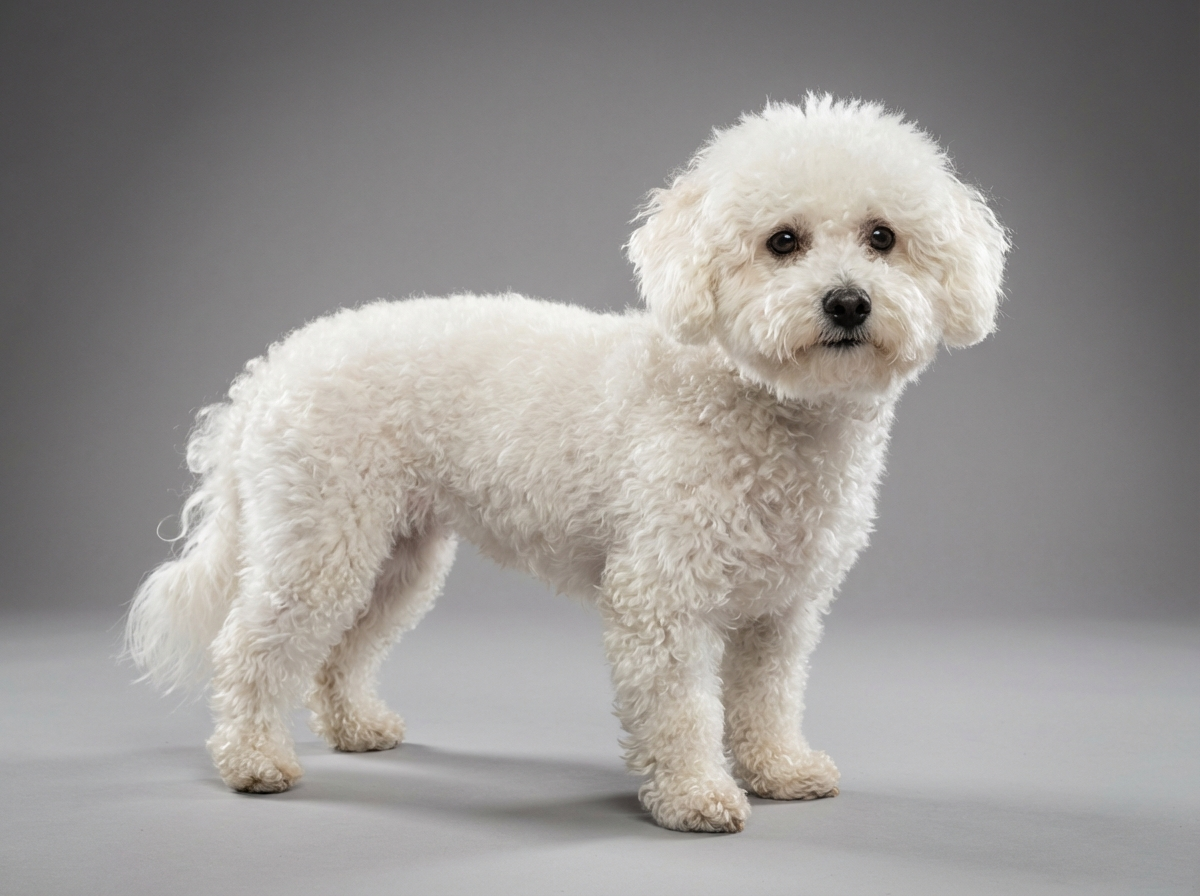
Health
Is elbow dysplasia a Bichon Frise concern?
No. It is a large and giant breed developmental disease and does not appear on this breed's documented health list.

Quick answer
Is elbow dysplasia a Bichon Frise concern?
No. It is a large and giant breed developmental disease and does not appear on this breed's documented health list.
A Bichon Frise limping on a front leg is very unlikely to have elbow dysplasia, and working systematically from the toes upward finds the real cause more often than worrying about the joint does.
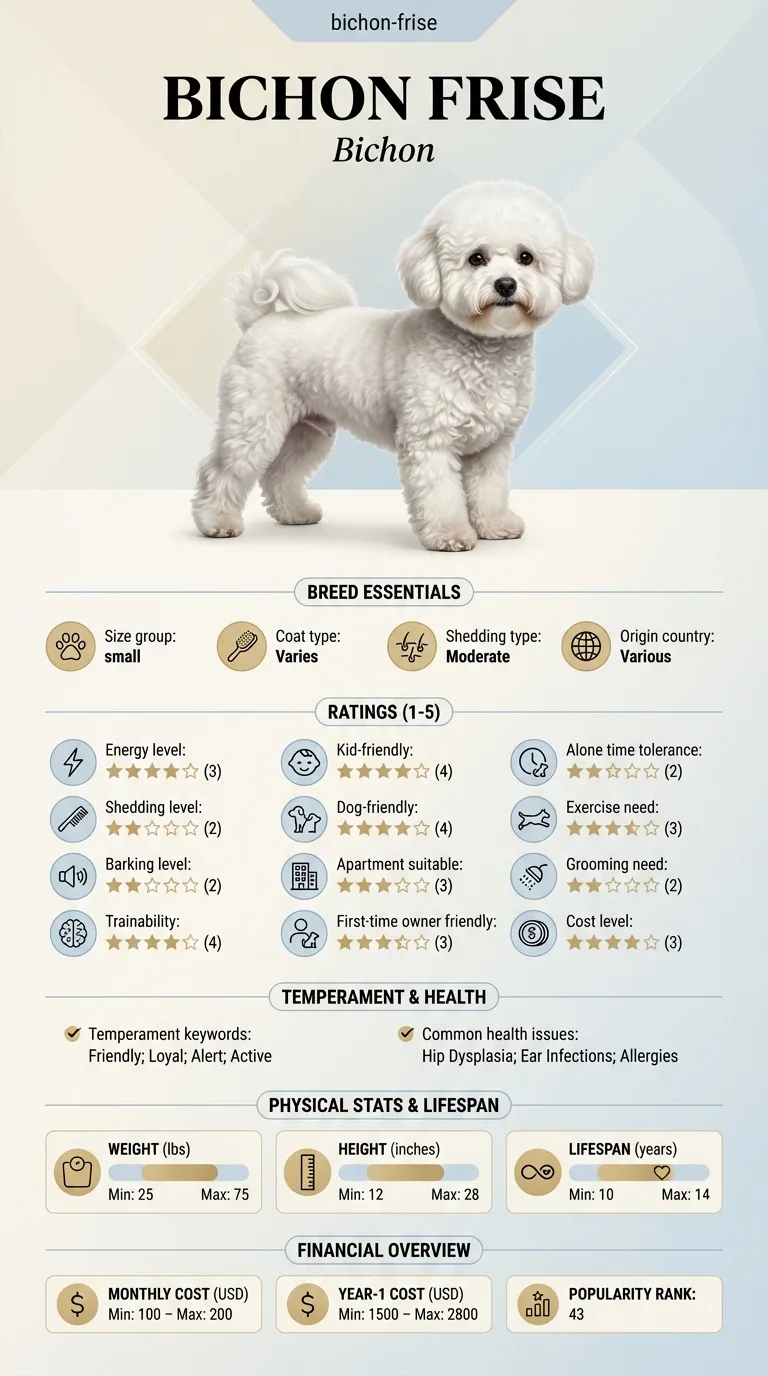
Owners whose Bichon has come up lame on a front leg and who have found a page about a large-breed joint disease. It also suits anyone who wants a practical method for examining a small dog's front leg before phoning the vet.
This guide is not medical advice. If your dog shows pain, sudden behavior change, or worsening symptoms, consult a licensed veterinarian.
Some links may be affiliate links. We may earn a commission at no extra cost to you. We only suggest products we believe are helpful for dog owners.
We research and check what we publish, but we do not warrant that any figure, date, price, or statement is accurate, complete, or current, and we accept no liability for any loss, cost, injury, or other harm arising from the use of this site. Use it as one reference among several. You remain responsible for your own decisions and for your dog's care - confirm anything that matters with a licensed veterinarian or another qualified professional before you act on it. Full disclaimer.
Elbow dysplasia describes several developmental abnormalities in which the bones of the elbow fail to align correctly during growth, concentrating load on small areas of cartilage and producing early arthritis. It affects large, fast-growing breeds and typically appears in dogs under a year old. It is not documented in the Bichon Frise, where a front leg limp usually originates in the paw, in soft tissue, or in an injury.
One of the most frequently diagnosed developmental orthopaedic conditions in large breeds, with formal screening schemes in place for several of them. Absent from the Bichon Frise health list. In practice, a general practitioner seeing a limping Bichon will begin with the paw and the soft tissues, and will find the explanation there in the great majority of cases.
Developmental joint disease is a function of growth rate, growth volume and load, and a Bichon Frise scores low on all three. It reaches its adult 12 to 18 pounds early, the total amount of bone laid down is modest, and the forces travelling through a front leg carrying a fifteen pound dog are small. The breed's documented orthopaedic problem is patellar luxation, which is in the hind limb and arises from a shallow groove rather than from a growth mismatch. Where breed traits do contribute to front leg problems here, they do so through the coat, which conceals paw injuries and mats between the pads.
For a small coated dog, the environment supplies most front leg lameness. Walks through stubble, long grass and gravel put grass seeds and grit between the pads. Hot pavement in summer burns pads on a dog whose belly and feet sit close to the ground. Hard flooring without grip produces skids that strain shoulders and wrists. Jumping down from furniture concentrates impact through the front limbs, since dogs land forelegs first. And a grooming schedule that neglects the feet allows mats to form between the pads, which pull the toes apart and cause pain with every step.
Book an appointment for any limp lasting more than two days, for lameness that keeps returning, or for a leg your dog holds up entirely. Book promptly if you find swelling, heat, a torn nail, or a wound between the pads that you cannot clean safely. Go the same day, or to an emergency clinic out of hours, if your Bichon will not bear any weight on a front leg after a fall, if a limb looks bent, swollen or is held at an abnormal angle, if there is bleeding you cannot control, or if your dog cries when the leg is touched. In a small breed, a fall from a person's arms or from furniture can fracture the slender bones of the forearm, and that needs radiographs rather than rest.
See all Bichon Frise health problems, which breeds are prone to elbow dysplasia, or the full Bichon Frise breed guide for temperament, exercise needs and ownership costs.
A limp caused by a foreign body, a mat or a torn nail typically resolves within days once the cause is removed. Soft tissue strains generally settle over two to three weeks with genuine rest. A fracture repaired surgically needs six to eight weeks of restriction with radiographic rechecks. Arthritis arising from an old injury is managed for life rather than cured, and improvement from weight loss and physiotherapy shows over six to twelve weeks rather than immediately.
Success is an owner who can examine a front leg confidently from the toes up, who finds the mat or the overgrown dewclaw before it produces a limp, and who knows which findings mean a phone call. For the dog it means even, comfortable movement on all four legs, clean feet, and front joints that reach old age without arthritis from an injury that could have been prevented by a rug and a set of steps.
Front leg lameness in a small dog is far more often a foot problem than a joint problem, and the foot is the part a curly coat hides most effectively. Check in this order, gently, and stop if anything causes pain.
The elbow is a demanding joint. Three bones meet there and must fit together with very little tolerance, and all three are growing at once during puppyhood.
In a fast-growing large breed, the amount of bone laid down over a few months is enormous, and the margin for error in coordinating the growth of three bones is correspondingly small. A slight mismatch in length between two of them tips load onto a small area of cartilage. Cartilage under concentrated load fails, fragments separate, and the joint develops arthritis while the dog is still young.
A Bichon Frise reaches its adult height of 9 to 12 inches early and finishes at 12 to 18 pounds. The absolute amount of growth is small, it happens over a shorter period, and the forces through the joint are a fraction of those in a dog five times the weight.
Elbow dysplasia does not appear on the breed's documented health list, which covers skin allergies, patellar luxation, bladder stones, cataracts and dental disease. Notably, the joint problem this breed does have is in the hind leg rather than the front.

If you think your Bichon has elbow dysplasia, the plan is three steps: write down what you have seen and when it started, book a veterinary appointment rather than waiting for the next flare, and take video of the behaviour or symptom before you go — the thing you are worried about rarely happens in the consulting room. Screening in the parents covers skin allergies, patellar luxation, bladder stones.
What the vet visit should produce is a diagnosis and a written plan, not just reassurance: what is being ruled out, what the monitoring interval is, and which signs mean you come back sooner. Ask what the treatment costs across a year rather than per visit, because that is the number that decides whether you are managing this condition or reacting to it.
Between appointments, keep a short log — dates, what you saw, what changed. It is the single most useful thing an owner brings to a follow-up, and for elbow dysplasia it is often what separates a clear pattern from a guess.
Hector had limped intermittently on his front right leg for six weeks. His owner, Dan, had rested him twice, and each time the limp improved and then returned within days of normal walks resuming. By the third episode Dan was reading about elbow problems and preparing himself for radiographs. His vet examined the leg systematically and never got past the paw. A hard, tightly compressed mat had formed between the two central pads, invisible under the coat and firmly wedged. It had been pushing the toes apart with every step. The skin beneath was reddened and sore. It was clipped out in under a minute. Hector walked out of the consulting room sound, and stayed sound. Dan now trims the hair between all four sets of pads whenever he brushes, which is roughly every other day. He describes the six weeks as an expensive lesson in checking the cheap possibilities first.
Key takeaway: In a coated small breed, start every front leg limp at the toes, because the answer is under the fur far more often than it is inside the joint.
It is not documented in the breed. Elbow dysplasia is concentrated in large and giant breeds where rapid growth and heavy loading combine, and it is typically diagnosed in dogs under a year old. A Bichon with front leg lameness almost always has something else, and often something simpler.
Intermittent lameness lasting weeks deserves examination whatever the cause. It could be a partially torn nail, a repeatedly irritated pad, a soft tissue strain, or early joint change. Persistence is the significant feature rather than the severity on any given day, and a vet can localise it far more accurately than an owner can.
It sits on the inner side of the front leg, above the paw, and it never touches the ground so it does not wear down. Part the coat, look at the whole nail including the tip, and check whether it has curved round toward the skin. Overgrown dewclaws are a genuinely common cause of unexplained front leg discomfort.
Yes. Nerve roots supplying the front leg leave the spinal cord in the neck, and neck problems can produce front limb lameness. That is one reason a vet examines the neck as part of a front leg workup, and one reason a persistent front leg lameness with no local finding needs proper investigation.
For a sudden new limp, forty-eight hours of genuine lead-only rest is reasonable while you see whether it settles. If it does not, or if your dog will not bear weight at all, book rather than continuing to rest. Prolonged unsupervised rest wastes the muscle that supports the joint, so it is not a neutral option.
They can, usually secondary to a previous injury rather than to developmental dysplasia. A Bichon that fractured a forearm as a puppy, or that has had a significant elbow injury, may develop arthritis in that joint later. That is a different pathway from the developmental disease seen in large breeds.
No. It is a large and giant breed developmental disease and does not appear on this breed's documented health list.
The paw. Nails, dewclaw, between the pads and the pads themselves account for most front leg lameness in small coated dogs.
An overgrown dewclaw curling into the skin, hidden under coat on the inside of the leg where owners rarely look.
If it lasts more than two days, if your dog will not bear weight, or if the leg is swollen, hot or held at an odd angle.
An examination is inexpensive and often finds the answer. Radiographs under sedation cost more and are used when the examination cannot localise it.
A one-page prep sheet for this condition: the signs, the questions to ask, what to get priced. Unlocks here.
You get: Vet visit prep sheet
No spam. One-click unsubscribe. See our privacy policy.
Preview page 1 before you decide.