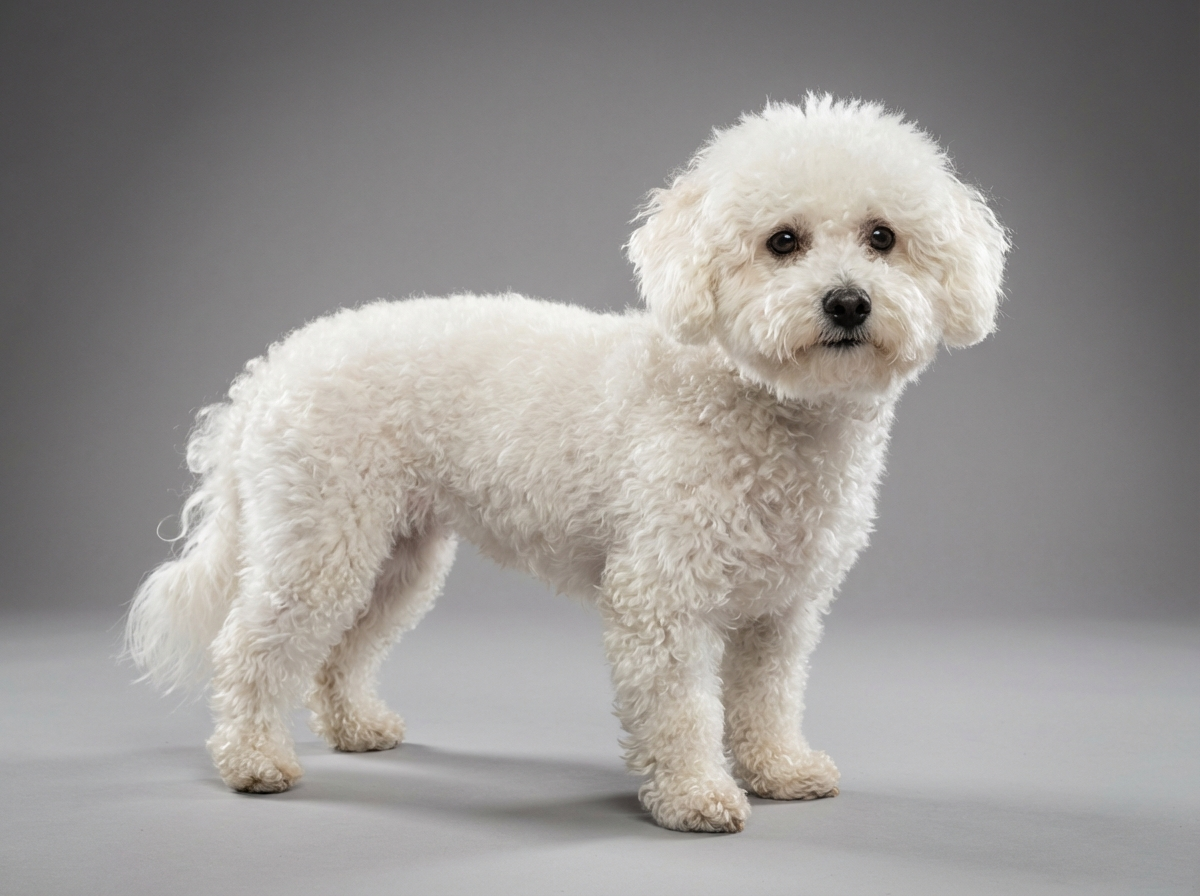
Health
Do Bichon Frises have rapid growth bone problems?
No. Those conditions belong to large and giant breeds. A Bichon reaches its modest adult size early and is not affected in that way.

Quick answer
Do Bichon Frises have rapid growth bone problems?
No. Those conditions belong to large and giant breeds. A Bichon reaches its modest adult size early and is not affected in that way.
The skeleton of a growing Bichon is not at risk from growing too fast; it is at risk from the coffee table, the sofa and a well-meaning owner adding calcium to the bowl.
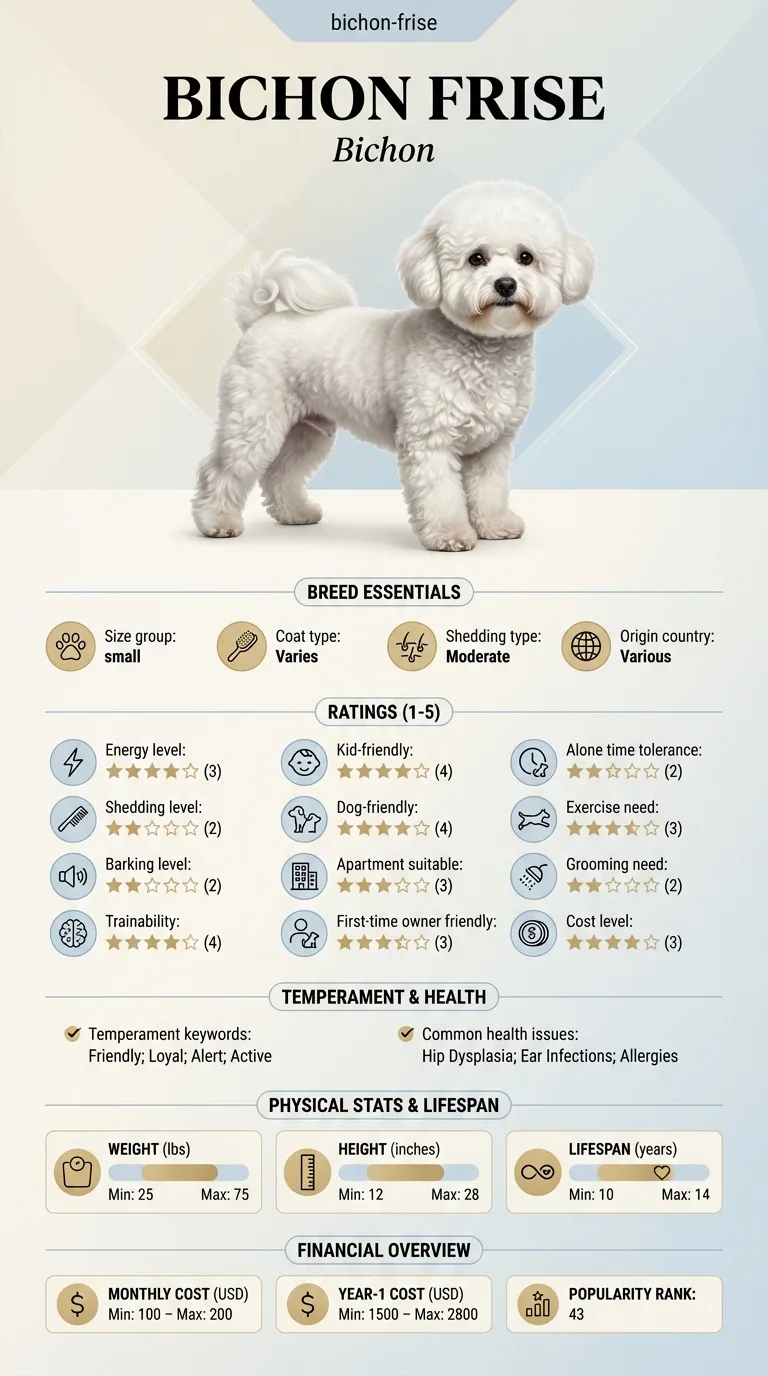
New owners of a Bichon puppy trying to work out what to feed and how much exercise is safe, and owners of a young dog that has come up lame and want to know whether it is a growth problem or an injury.
This guide is not medical advice. If your dog shows pain, sudden behavior change, or worsening symptoms, consult a licensed veterinarian.
Some links may be affiliate links. We may earn a commission at no extra cost to you. We only suggest products we believe are helpful for dog owners.
We research and check what we publish, but we do not warrant that any figure, date, price, or statement is accurate, complete, or current, and we accept no liability for any loss, cost, injury, or other harm arising from the use of this site. Use it as one reference among several. You remain responsible for your own decisions and for your dog's care - confirm anything that matters with a licensed veterinarian or another qualified professional before you act on it. Full disclaimer.
Bone and growth issues in dogs cover developmental conditions where the skeleton fails to form correctly during puppyhood. The best-known examples are driven by the sheer speed and volume of bone growth in large breeds. In a Bichon Frise, which finishes growing early at a modest 12 to 18 pounds, the practical concerns are traumatic injury to slender young bones, joint loading from excess weight, and nutritional imbalance introduced by supplements.
Developmental bone disease is not among the health issues documented for the Bichon Frise, whose recognised list covers skin allergies, patellar luxation, bladder stones, cataracts and dental disease. Forearm fractures, by contrast, are a familiar presentation in small-breed puppies at any general practice. The distinction matters, because one is a risk to prevent with household management and the other is a large-breed concern to set aside.
A Bichon Frise puppy is building a small skeleton over a short period, which is precisely why the rapid-growth conditions of giant breeds do not apply. The breed-relevant vulnerability is proportion. The bones of the forearm in a dog destined to weigh 15 pounds are slim, and they finish growing while the dog is still bouncing off furniture designed for humans. Patellar luxation is documented in this breed, and although the shallow groove behind it is a conformational trait rather than a growth disease, it becomes apparent during the same first year and can be spotted at puppy checks.
Almost every genuine risk to a growing Bichon lives in the house rather than in the food bowl. Sofas, beds and armchairs represent drops of two or three times the puppy's own height onto laminate or tile. Children carrying a wriggling puppy account for a real share of small-breed fractures. Kitchens where several people feed treats produce a heavy puppy without any one person noticing. And households that treat a small dog as a permanent baby, carrying it everywhere, produce a dog with poor coordination and weak supporting muscle, which raises injury risk rather than lowering it.
Have any lameness in a puppy examined rather than rested and watched, because young small-breed dogs break bones in ways that are easy to underestimate. Go the same day, or to an emergency clinic out of hours, if your Bichon puppy will not put a leg down at all after a fall, if a limb looks bent, swollen or is held at an odd angle, if it cries when the leg is touched, or if it is quiet, cold and unwilling to move after any accident. A puppy that has fallen from a height and seems fine but then becomes lethargic also needs assessment, since internal injury is not always immediately obvious.
See all Bichon Frise health problems, which breeds are prone to bone growth issues, or the full Bichon Frise breed guide for temperament, exercise needs and ownership costs.
Expect your Bichon to reach most of its adult height by eight to ten months and to fill out through the following few months. Household furniture rules matter most during that first year and are worth keeping permanently anyway. A simple fracture repaired surgically typically needs six to eight weeks of restricted activity with radiographic rechecks, and young bone heals well. Weight established in puppyhood tends to persist, so a lean start is worth more than any later correction.
Success is an unremarkable first year: a lean, well-coordinated young dog with straight limbs, no fractures, no supplement history, and a set of household habits that are already permanent by the time the growth plates close. It is not a puppy that has been wrapped in cotton wool. A confident dog that moves well on varied surfaces is better protected than a carried one, and it starts its fourteen to fifteen year life with joints that have not been overloaded.
Rather than the rapid-growth conditions of giant breeds, a Bichon puppy faces a short and specific list. All three are largely preventable, which makes them worth knowing before rather than after.
It seems intuitive. Bones are made of calcium, a puppy is building bones, therefore more calcium should build better bones. It does not work like that, and in some cases it does real harm.
A growing puppy on a complete and balanced diet formulated for growth is already receiving calcium in the right ratio to phosphorus and vitamin D. Those ratios matter more than the absolute quantity. Adding calcium supplements, bone meal, cheese or eggshell on top disturbs the balance rather than improving it, and the skeleton develops with that disturbance built in.
The same logic applies to home-cooked diets assembled from recipes found online. Adult dogs have some tolerance for an imperfect diet. A puppy laying down its permanent skeleton over a few months does not, and mistakes made during that window are not correctable later.
So the honest advice is dull. Feed a complete growth or all-life-stages food from a reputable manufacturer, follow the feeding guide as a starting point, adjust to keep your puppy lean, and add nothing on top without your veterinarian telling you to.

Basil was fourteen weeks old and had learned to climb onto the coffee table to look out of the window. His owner, Jonas, thought it was funny until the afternoon Basil launched off it onto tiled floor and screamed. He would not put his right front leg down at all. The radiographs showed a fracture through both bones of the forearm, the classic small-puppy injury, and it needed surgical repair. Basil healed well over six weeks of confinement and rechecks, and Jonas learned two things. The first was that a fourteen inch drop is enormous for a dog that stands eight inches tall at the time. The second was that the answer was not to carry Basil everywhere afterwards, which was his instinct, but to remove the launching points and teach him to wait to be lifted. Basil is four now, sound on all four legs, and still has a set of steps beside the sofa.
Key takeaway: The furniture in an ordinary living room is the real growth-stage hazard for a small breed puppy, and the fix is rearranging the room rather than rethinking the food bowl.
The condition owners mean by growing pains, panosteitis, is a large-breed disease with a shifting lameness in dogs heading for a big adult size. It is not typical of a small breed. A limping Bichon puppy is far more likely to have injured something, and that deserves examination rather than waiting for it to pass.
Most reach close to their adult height of 9 to 12 inches by around eight to ten months, filling out slightly afterwards. Small breeds finish growing considerably earlier than large ones, which is one reason the extended exercise restrictions written for giant breed puppies do not translate.
Short, frequent and varied beats long and repetitive. Free play on grass, sniffing walks and gentle social outings suit a growing dog. What to avoid is repetitive forced exercise such as jogging alongside a bicycle, and repeated jumping down from height onto hard floors.
In a small breed, injury is the more likely answer, and a young dog that will not bear weight on a front leg after a fall needs seeing promptly rather than at the next convenient appointment. Forearm fractures in small puppies can be subtle and are diagnosed on radiographs, not by watching.
Supervise and limit them, particularly going down, and carry a very young puppy on long staircases. The bigger and more overlooked risk is jumping off sofas and beds, which is a much larger drop relative to a nine inch dog than any single stair.
Timing of neutering does influence when growth plates close, and the evidence has been studied most in larger breeds. It is a genuine conversation to have with your vet about your individual dog, weighing several factors together. It is not something to decide from a forum post.
No. Those conditions belong to large and giant breeds. A Bichon reaches its modest adult size early and is not affected in that way.
No, not unless your veterinarian specifically prescribes one. A complete growth diet already has the right mineral balance and adding to it causes harm.
A broken forearm from a fall or a jump. Small puppies have slender front leg bones and short drops are proportionally very large.
Block access until it is older, and teach it to wait to be lifted. Steps or a ramp make the habit permanent once it is allowed up.
Slightly, but the amounts are small for a breed this size. It is one of the cheapest places to get nutrition right during a short and irreversible window.
A one-page prep sheet for this condition: the signs, the questions to ask, what to get priced. Unlocks here.
You get: Vet visit prep sheet
No spam. One-click unsubscribe. See our privacy policy.
Preview page 1 before you decide.