Health
Is BOAS relevant to Welsh Springer Spaniels?
No — BOAS is documented in brachycephalic breeds like Bulldogs and Pugs, not in Welsh Springer Spaniels.

Quick answer
Is BOAS relevant to Welsh Springer Spaniels?
No — BOAS is documented in brachycephalic breeds like Bulldogs and Pugs, not in Welsh Springer Spaniels.
BOAS makes for alarming reading, but the syndrome is defined by a skull shape the Welsh Springer Spaniel simply doesn't have.
Owners who've read about BOAS in general dog-health content, or who've noticed their Welsh Springer panting hard or snoring and want to know if it signals the same syndrome, are the audience here.
This guide is not medical advice. If your dog shows pain, sudden behavior change, or worsening symptoms, consult a licensed veterinarian.
Some links may be affiliate links. We may earn a commission at no extra cost to you. We only suggest products we believe are helpful for dog owners.
We research and check what we publish, but we do not warrant that any figure, date, price, or statement is accurate, complete, or current, and we accept no liability for any loss, cost, injury, or other harm arising from the use of this site. Use it as one reference among several. You remain responsible for your own decisions and for your dog's care - confirm anything that matters with a licensed veterinarian or another qualified professional before you act on it. Full disclaimer.
Brachycephalic Airway Syndrome is a well-characterized breathing disorder in flat-faced breeds like Bulldogs, French Bulldogs, and Pugs, whose short skulls crowd the airway's soft tissue. It is not established as occurring in Welsh Springer Spaniels, whose moderate, standard-length muzzle falls outside the anatomy the syndrome requires.
BOAS affects a large share of dogs in severely brachycephalic lines, but it isn't recognized as occurring in Welsh Springer Spaniels at all, since the breed's head shape sits well outside the anatomy the syndrome depends on.
BOAS results from generations of selective breeding for a flattened face, which shortens the skull bones faster than the soft tissue inside shrinks to match. The Welsh Springer Spaniel's breed standard calls for a moderate, proportional muzzle, and there's no documented history of this skull-shortening pattern in the breed's lines.
Because the underlying anatomy isn't present, heat and exertion don't create airway obstruction in this breed the way they do in brachycephalic dogs. They can still contribute to ordinary heavy panting, or in extreme heat, to general heatstroke risk that applies to any energetic, working-bred dog.
See a vet promptly for labored breathing at rest, blue or pale gums, collapse, or breathing trouble that follows a seizure — these are general emergency signs in any breed. In a Welsh Springer, the workup will reasonably focus on heatstroke, cardiac causes, or infection rather than BOAS.
General canine health content about BOAS is everywhere online, and it's easy to misapply it to a breed where it doesn't belong. Watch for these specific mix-ups.

See all Welsh Springer Spaniel health problems, which breeds are prone to brachycephalic airway syndrome boas, or the full Welsh Springer Spaniel breed guide for temperament, exercise needs and ownership costs.
There's no BOAS timeline to track in this breed, since the condition doesn't apply here. A more useful timeline is the first few months with a new dog, spent learning what normal panting and snoring sound like for your individual Welsh Springer.
Success looks like confidently telling ordinary exertion noise apart from genuine emergency signs, and putting that attention instead toward the conditions this breed is actually documented to face.
BOAS develops when generations of breeding for a flat face shorten the skull bones faster than the soft tissue inside shrinks to match, crowding the soft palate, nostrils, and throat into too little space. Bulldogs, French Bulldogs, Pugs, Boston Terriers, and Pekingese are the breeds where veterinary literature documents this pattern, sometimes affecting a majority of dogs in severe lines.
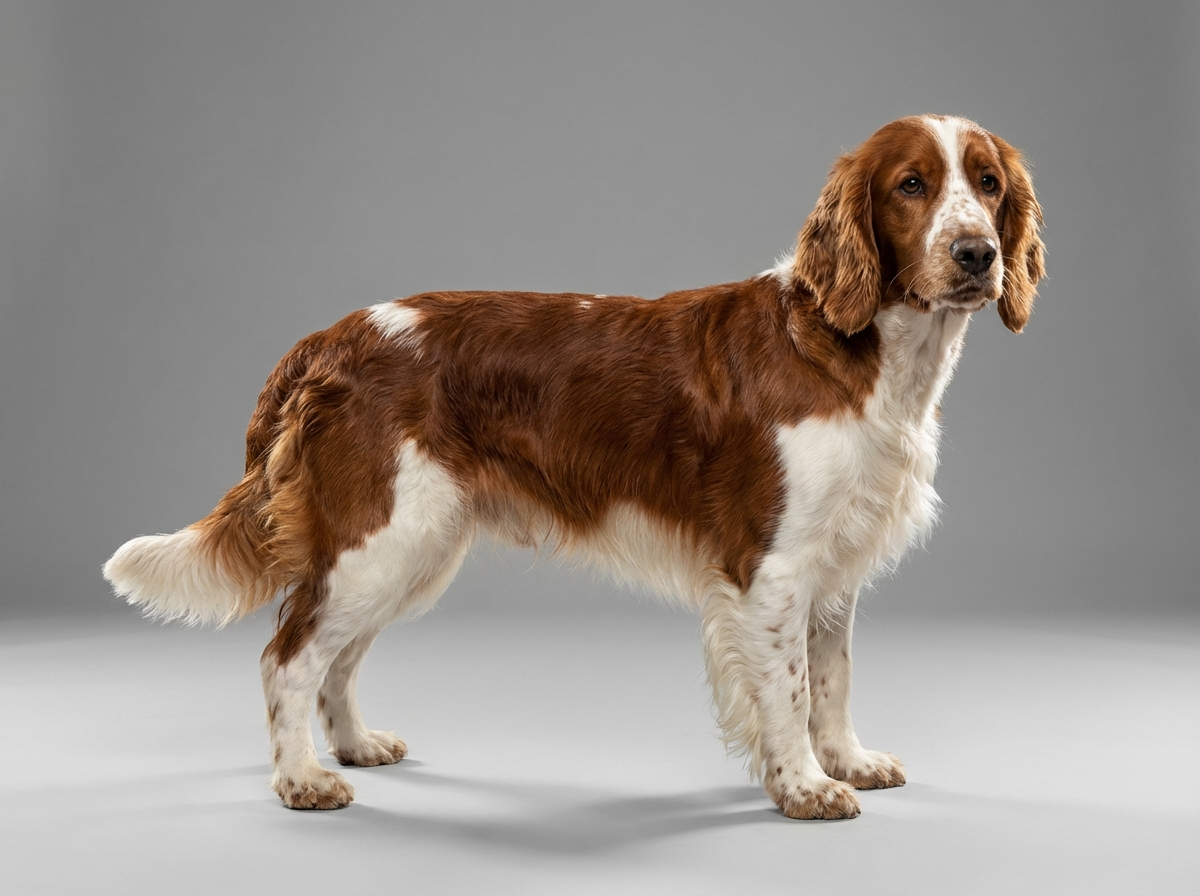
The Welsh Springer Spaniel's breed standard calls for a fairly long, level muzzle proportional to the skull, the opposite build from a brachycephalic breed. Without the shortened skull, the airway has normal room, and there's no documented case series or veterinary literature describing BOAS in this breed.
Some breathing changes deserve a same-day vet visit no matter the breed: blue or pale gums, open-mouth breathing at rest that doesn't settle, collapse, or breathing distress after a seizure. In a Welsh Springer, the far more likely explanations are heatstroke in an energetic, moderately coated dog worked too hard in warm weather, a cardiac issue, or — in a dog with an epilepsy history — the abnormal breathing that can follow a seizure rather than an airway blockage.
Routine panting after exercise or during a hot afternoon, on the other hand, is simply how the breed cools itself and isn't a BOAS-style emergency. The distinction that matters isn't how loud it sounds, but whether breathing settles down with rest, shade, and water within a reasonable time.

Renata, in Tulsa, heard her two-year-old Welsh Springer Rio snoring loudly on the living room floor one August evening after a long walk in the heat, and a late-night search for "dog snoring breathing problems" turned up article after article about BOAS in Bulldogs and French Bulldogs. Worried, she booked a vet visit the next morning. The exam found Rio's muzzle and airway completely normal, with no signs of obstruction, but it did turn up an early ear infection that was likely behind some of the head shaking she'd also noticed. Rio's treatment was a course of ear drops and a recheck two weeks later, not an airway workup. Renata now keeps an eye on his ears year-round and no longer worries about a syndrome that, as the vet explained, simply doesn't apply to his head shape.
Key takeaway: A breathing symptom that sounds alarming in general search results doesn't automatically apply to every breed, and a syndrome documented in flat-faced dogs isn't a realistic worry for a Welsh Springer Spaniel's normal muzzle.
No — BOAS is documented in flat-faced breeds like Bulldogs, French Bulldogs, and Pugs, whose short skulls crowd the airway's soft tissue. Welsh Springer Spaniels have a moderate, standard-length muzzle, and no veterinary literature describes the syndrome occurring in this breed.
Heavy panting after exercise, especially in warm weather, is this energetic breed's normal way of cooling down. It's not a sign of airway obstruction the way it can be in a brachycephalic dog.
Sleep snoring is common across many breeds and head shapes and isn't specific to BOAS. Because this breed's muzzle isn't shortened, snoring here is far more likely tied to sleeping position than to any airway crowding.
Yes — Welsh Springer Spaniels' heavy, low-set ears are a genuinely documented risk for chronic ear infections, and the head shaking, discharge, or snuffling that comes with one is often mistaken for a breathing problem. A vet exam can tell the two apart quickly.
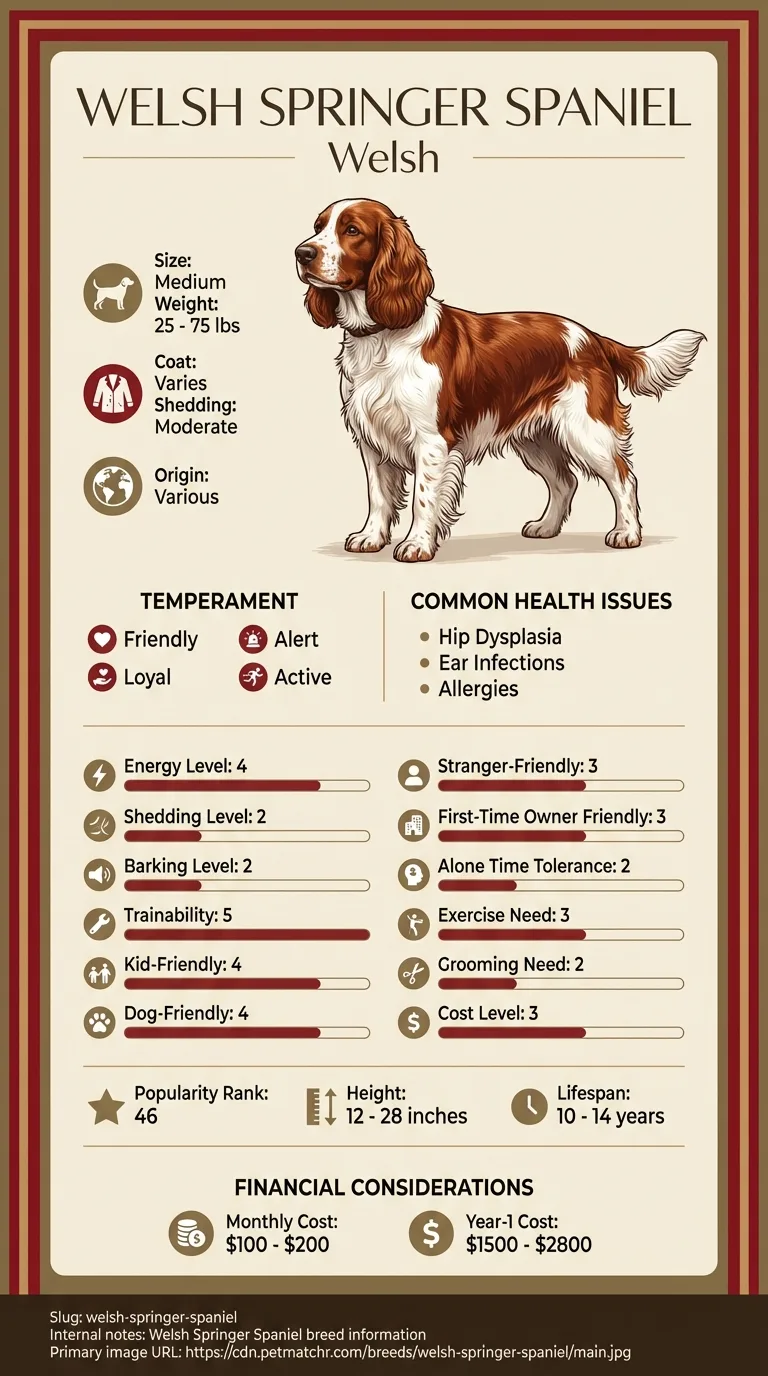
The breed's documented risks are hip dysplasia, ear infections, epilepsy, glaucoma, and hypothyroidism. None of these are airway conditions, so routine screening should focus there rather than on BOAS.
Yes — any energetic, moderately coated breed can overheat during hard exercise in high heat, regardless of muzzle shape. Shade, water, and shorter exertion on hot days matter for this breed even though BOAS itself isn't the concern.
Go promptly for blue or pale gums, labored breathing at rest, collapse, or breathing trouble following a seizure. These are general emergency signs, and in this breed the workup will look at heatstroke, cardiac causes, or infection rather than BOAS.
No — BOAS is documented in brachycephalic breeds like Bulldogs and Pugs, not in Welsh Springer Spaniels.
This breed's moderate, standard-length muzzle means it lacks the airway-crowding anatomy that causes BOAS.
Heavy panting after exercise or in summer heat is normal cooling for this energetic breed, not airway obstruction.
Chronic ear infections, a real risk from this breed's low-set ears, are the far more likely cause of head shaking or snuffling.
Budget for ear-infection treatment and hip and eye screening in this breed rather than BOAS-related surgery, which doesn't apply.
A one-page prep sheet for this condition: the signs, the questions to ask, what to get priced. Unlocks here.
You get: Vet visit prep sheet
No spam. One-click unsubscribe. See our privacy policy.
See a sample page before you decide.
Early access list
The free prep sheet covers the same-day warning signs, a symptom log and the questions to ask. We are considering a fuller kit that adds a cost worksheet for the usual tests and treatments (US price ranges with their sources) and a plain-English guide to ways of covering the bill. It is not built yet; this list tells us whether it is worth building.
One email, no spam, unsubscribe anytime. Information only, not veterinary advice.