Health
Is bloat (GDV) common in Welsh Springer Spaniels?
No — it's mainly documented in large, deep-chested breeds and isn't part of this breed's established health profile.

Quick answer
Is bloat (GDV) common in Welsh Springer Spaniels?
No — it's mainly documented in large, deep-chested breeds and isn't part of this breed's established health profile.
Bloat sounds terrifying in any breed, but the breeds where it's actually well documented look nothing like a Welsh Springer Spaniel's build.
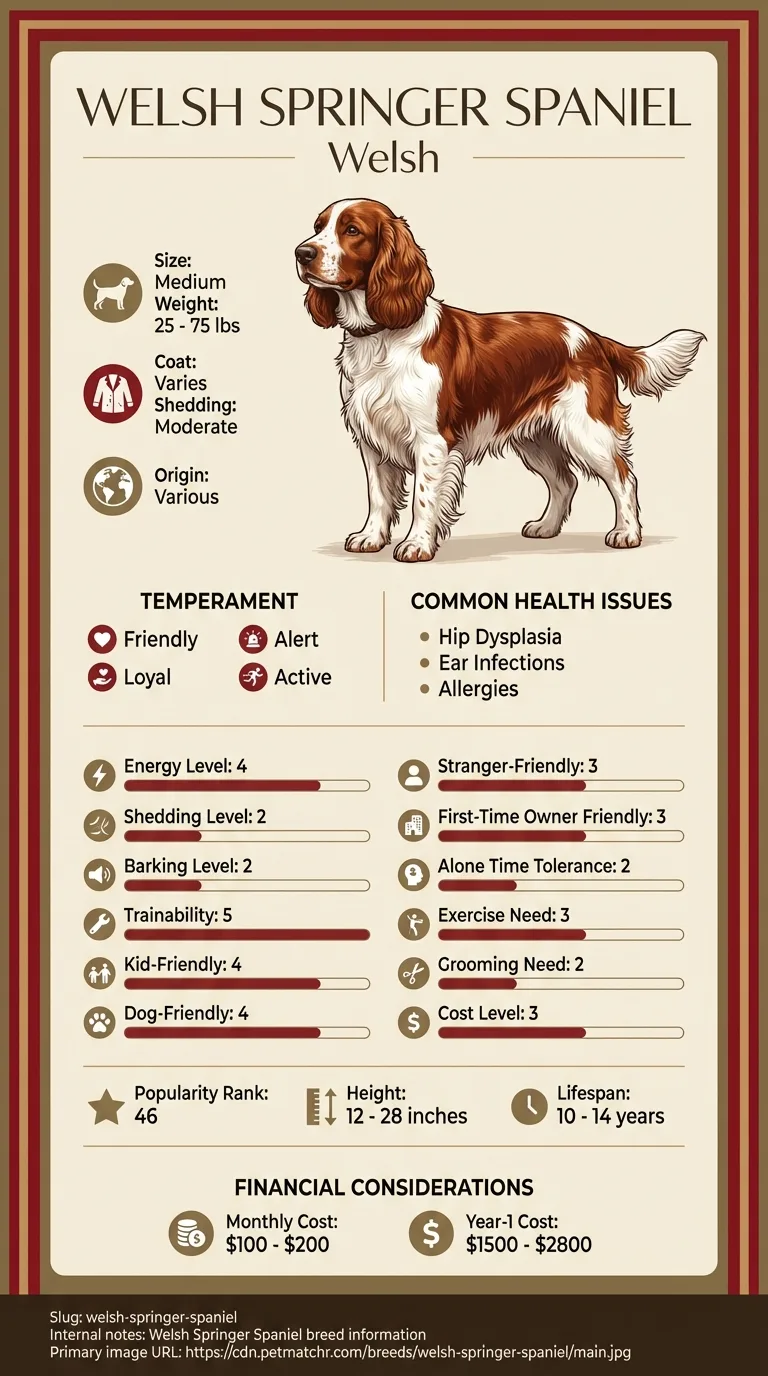
Owners who've read general bloat warnings aimed at deep-chested breeds and want to know whether any of it genuinely applies to their Welsh Springer Spaniel are the audience here.
This guide is not medical advice. If your dog shows pain, sudden behavior change, or worsening symptoms, consult a licensed veterinarian.
Some links may be affiliate links. We may earn a commission at no extra cost to you. We only suggest products we believe are helpful for dog owners.
We research and check what we publish, but we do not warrant that any figure, date, price, or statement is accurate, complete, or current, and we accept no liability for any loss, cost, injury, or other harm arising from the use of this site. Use it as one reference among several. You remain responsible for your own decisions and for your dog's care - confirm anything that matters with a licensed veterinarian or another qualified professional before you act on it. Full disclaimer.
Check this first
Even at lower breed risk, GDV can progress fast enough that recognizing it matters more than statistics do. Watch for this cluster of signs together, not any single symptom in isolation.
If any of these apply, call your vet or an emergency clinic now. The rest of this page is for the cases that are not an emergency.
Bloat (GDV) is a real, fast-moving emergency, but it's documented almost entirely in large and giant deep-chested breeds rather than in Welsh Springer Spaniels. This breed's genuinely established health concerns are hip dysplasia, ear infections, epilepsy, glaucoma, and hypothyroidism, which deserve far more of an owner's attention.
GDV is uncommon overall and concentrated heavily in a specific list of large and giant deep-chested breeds where lifetime incidence can run several percent. Welsh Springer Spaniels don't appear on that elevated-risk list, and bloat isn't part of the breed's documented common health issues the way hip dysplasia or ear infections are.
The breeds most affected by GDV share a specific anatomical trait: a deep, narrow chest that gives the stomach room to rotate once it fills with gas. Welsh Springer Spaniels have a sturdier, less extreme chest conformation, consistent with why veterinary breed-risk research hasn't flagged this breed the way it has Great Danes or Standard Poodles.
Across all breeds, the environmental triggers researchers point to are large single meals, fast eating, and vigorous exercise too close to mealtimes. None of these factors are documented as especially elevated for Welsh Springer Spaniels specifically, but they're still reasonable habits to manage in any medium or larger dog.
Any dog showing unproductive retching, a suddenly swollen abdomen, restlessness, and drooling together needs emergency veterinary care immediately, not a scheduled appointment. Outside of that emergency picture, routine annual exams are the right setting to monitor this breed's actual common conditions.
See all Welsh Springer Spaniel health problems, which breeds are prone to bloat gdv, or the full Welsh Springer Spaniel breed guide for temperament, exercise needs and ownership costs.
Because bloat isn't an elevated risk for this breed, there's no ongoing management timeline to track for it specifically. If true GDV ever occurred, it would be a sudden-onset surgical emergency measured in hours, not a condition that develops gradually.
Success here looks like knowing the emergency signs without spending ongoing worry on a risk this breed doesn't carry at elevated levels. That attention is better spent on the ear checks, joint monitoring, and seizure awareness the breed's real health profile actually calls for.
Gastric dilatation-volvulus happens when a dog's stomach fills with gas and then twists on itself, cutting off blood flow within minutes to hours. The condition is most heavily documented in large and giant breeds with deep, narrow chests — Great Danes, Weimaraners, Standard Poodles, and Saint Bernards carry the highest published incidence rates.
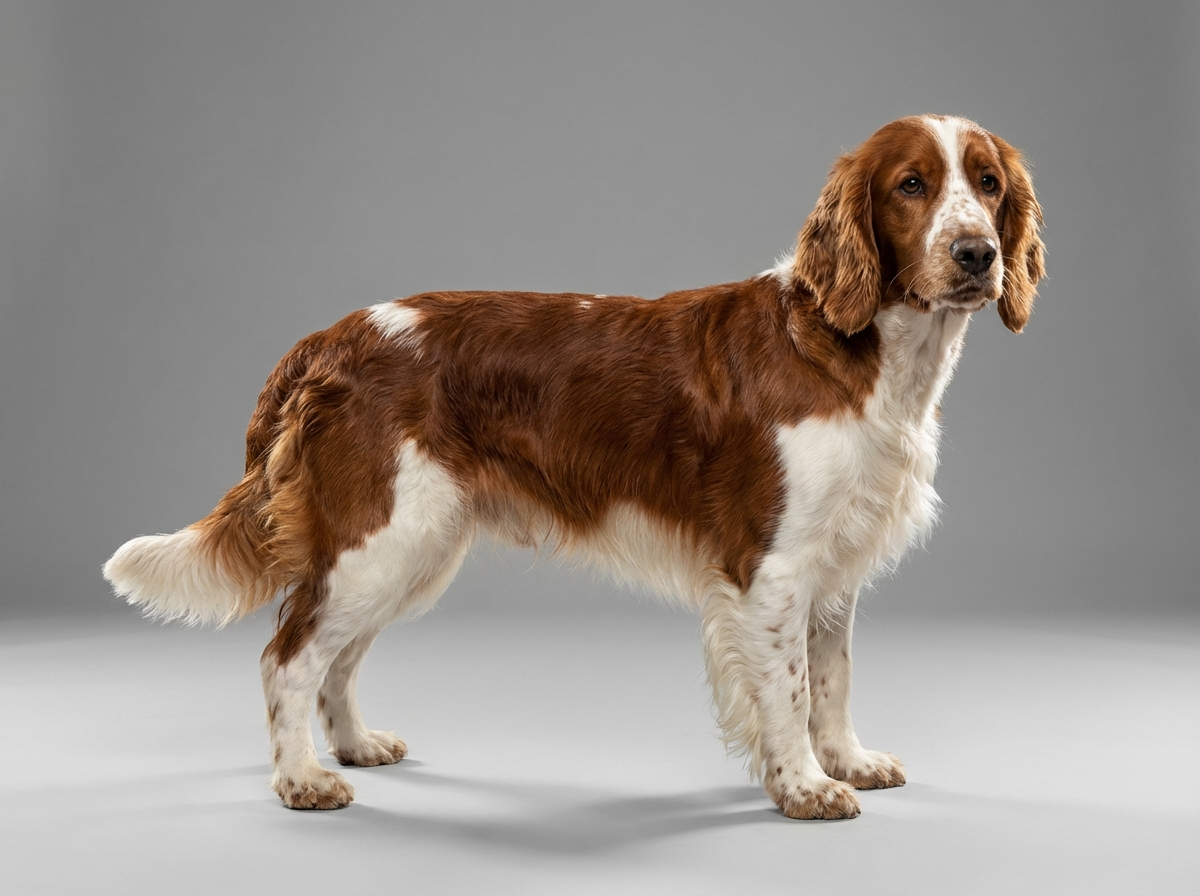
Welsh Springer Spaniels are medium-sized sporting dogs, typically 35 to 55 pounds, with a sturdier, less narrow chest cavity than those classic high-risk breeds. Bloat isn't part of this breed's well-documented health profile the way hip dysplasia or epilepsy are, and veterinary breed-risk studies don't single out Welsh Springer Spaniels as an elevated-risk group.
That doesn't mean bloat is impossible in this breed — it can occur in almost any dog, particularly one eating a large single meal or exercising heavily right after eating. It means the odds are meaningfully lower here than in the breeds bloat research actually centers on.
Because bloat isn't a defining risk for Welsh Springer Spaniels, the more useful place to direct ongoing attention is the breed's actual documented health profile. Hip dysplasia, chronic ear infections, epilepsy, glaucoma, and hypothyroidism are the conditions veterinary sources consistently link to this breed.
The Welsh's long, floppy ears in particular need routine checking given how prone the breed is to ear infections, and any seizure activity should prompt an epilepsy workup rather than a bloat scare. Glaucoma screening and thyroid panels are worth raising at routine adult wellness visits.
A Welsh owner who spends their vigilance budget on these five conditions is targeting where the real, documented risk actually sits for this breed.

After reading an alarming article about bloat in large breeds, Marisol in Boise, Idaho started watching her Welsh Springer Spaniel Fenn nervously after every meal. One evening Fenn seemed restless and drooled more than usual, and she rushed him to an emergency vet certain it was GDV. The vet examined him, found a normal, soft abdomen, and diagnosed mild indigestion from a new treat, resolved with a bland diet for a day. The vet also pointed out that Fenn's ears, not his stomach, were what actually needed a closer look given how prone the breed is to infections. Marisol left with simple feeding advice and a reminder to schedule the ear check she'd been putting off.
Key takeaway: A breed-mismatched emergency worry can distract from routine care that's actually relevant — for a Welsh Springer Spaniel, that's ear health, not bloat vigilance.
Technically any dog can develop GDV, but Welsh Springer Spaniels aren't among the breeds where it's heavily documented — that list centers on large and giant deep-chested breeds like Great Danes and Weimaraners. It isn't part of this breed's established common health issues.
Welsh Springer Spaniels have a medium build and a chest cavity that's less deep and narrow than the classic high-risk breeds research has focused on. Veterinary breed-risk data simply doesn't single this breed out the way it does Great Danes or Standard Poodles.
The hallmark signs are unproductive retching, a visibly swollen or tight abdomen, restlessness, and drooling, often within a couple hours of a large meal. These signs together warrant an immediate emergency vet visit in any breed, not a wait-and-see approach.
Splitting meals into two smaller portions a day is a reasonable, low-cost habit for most medium and larger dogs regardless of breed-specific bloat risk. It supports general digestion even though this breed isn't in the elevated-risk category.
Hip dysplasia, ear infections, epilepsy, glaucoma, and hypothyroidism are the conditions genuinely documented in Welsh Springer Spaniels. Routine vet visits, ear checks, and awareness of seizure activity are far more relevant here than bloat prevention.
Raised feeding was once popular bloat advice, but some studies have actually linked elevated bowls to higher bloat risk in susceptible breeds, and it isn't a documented concern for Welsh Springer Spaniels either way. It's reasonable to just feed at floor level.
Emergency GDV surgery generally runs $3,000 to $7,500 depending on region and complications, regardless of breed. Because this condition isn't a primary risk for Welsh Springer Spaniels, routine care for the breed's actual common conditions is far more likely to come up.
No — it's mainly documented in large, deep-chested breeds and isn't part of this breed's established health profile.
Great Danes, Weimaraners, Standard Poodles, and other large deep-chested breeds carry the highest documented bloat risk.
Feeding two smaller meals a day is a reasonable general digestive habit even without elevated breed-specific bloat risk.
Hip dysplasia, ear infections, epilepsy, glaucoma, and hypothyroidism are the breed's genuinely established health concerns.
Emergency GDV surgery typically costs $3,000 to $7,500 regardless of breed, though it's an unlikely scenario for this one.
A one-page prep sheet for this condition: the signs, the questions to ask, what to get priced. Unlocks here.
You get: Vet visit prep sheet
No spam. One-click unsubscribe. See our privacy policy.
Preview page 1 before you decide.